Samsung averts strike with $340,000 bonuses for semiconductor workers

Skye Jacobs

Posts: 2,012   +59
Staff
What just happened? A last-minute labor deal at Samsung Electronics has averted a strike that could have seriously disrupted the global chip supply chain at a moment when demand for AI hardware is surging. Unionized workers at the company approved a compensation agreement that includes average bonuses of about $340,000 for semiconductor employees. The vote came shortly before a planned walkout that, if carried out, could have interrupted production at the world's largest memory chipmaker.
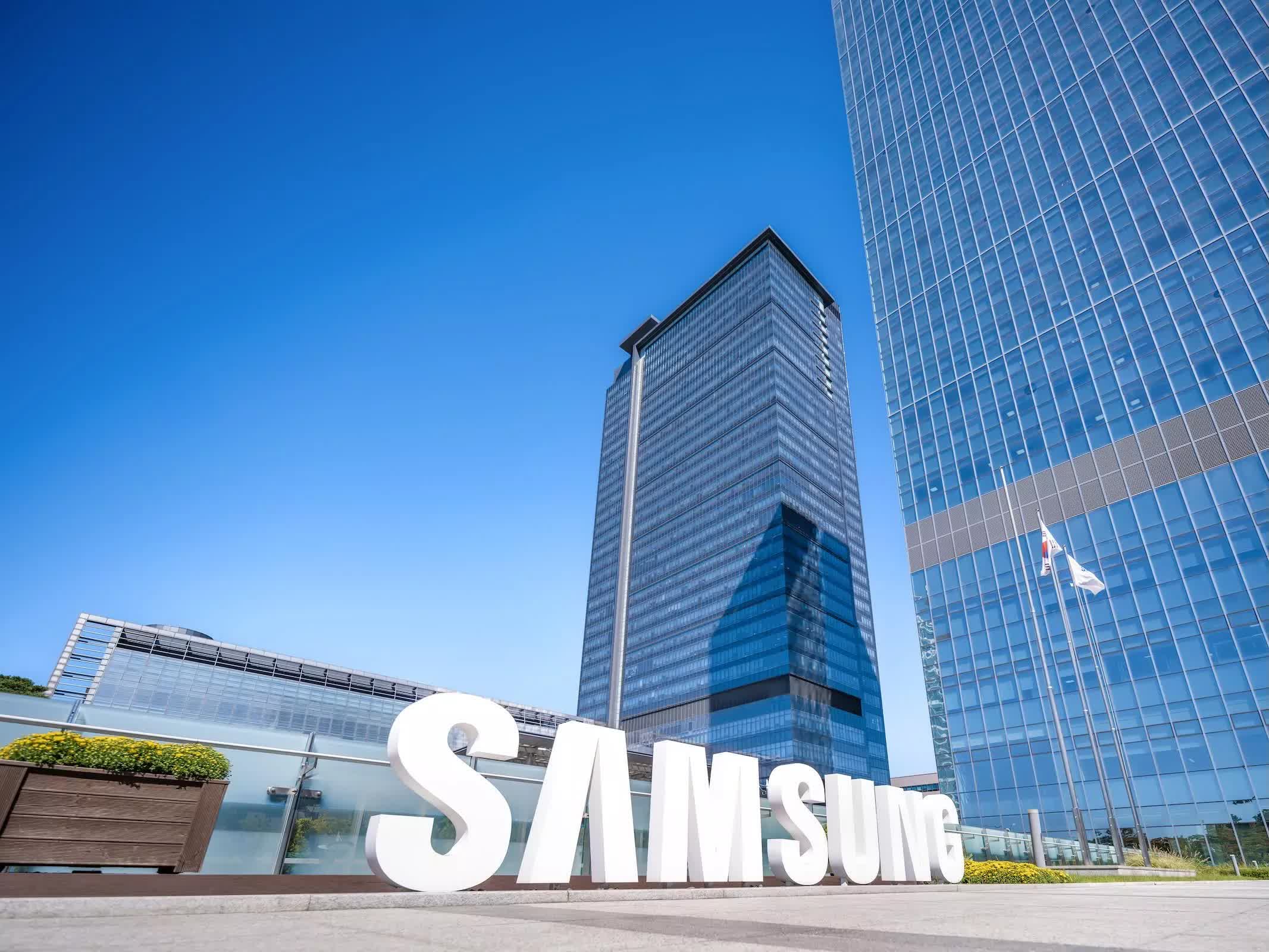
Samsung sits at the center of today's computing stack, turning out memory chips used in smartphones, electric vehicles, and the high-performance servers that run large-scale AI models. With the memory sector already facing shortages and sharply higher prices, even a short stoppage could have rippled across multiple industries.

Markets reacted quickly. Samsung shares rose as much as 8% in Seoul following news that the agreement had been reached, reflecting investor relief that a key supplier would remain fully operational.

The dispute itself was driven by the scale of profits flowing into the semiconductor business, particularly as AI infrastructure spending continues to climb. Samsung's chip division reported a 48-fold jump in profit in the March quarter, largely fueled by demand for advanced memory used in AI workloads. That surge has sharpened expectations among workers, who are pushing to capture more of the upside.

"This clears up a massive headache that's been hanging over them for months," Kim Dae Jong, a professor at Sejong University's Business School, told Bloomberg. "But the way the deal went down left a lot of people at Samsung feeling pretty bitter – they will need to work on fixing this internal divide and getting everyone back on the same page."

Compensation across Samsung varies widely depending on business unit performance, and the gap has widened alongside the AI boom. Some workers in the memory division could receive bonuses of up to 600 million won. In other parts of the company, payouts may be closer to 6 million won, creating a disparity that has become difficult to ignore.

Image credit: AP

Samsung employs roughly 78,000 people in its semiconductor unit, though the company does not disclose how those roles are distributed. For context, average employee pay was about 158 million won in 2025, making the new bonuses a substantial increase tied directly to current market conditions.

The voting results reflected those uneven outcomes. The company's largest union, made up mostly of semiconductor workers, backed the agreement, with more than 80% voting in favor. A smaller union representing more non-chip employees showed far less support, with only about one-fifth voting in favor.

"While there were some disappointing moments during this wage bargaining process, I believe that management and labor have reached a meaningful agreement after prolonged dialogue and discussion," said Choi Seung-ho, the union leader who led the talks.

Samsung is not alone in navigating this dynamic. Rival SK Hynix reached a similar agreement last year as competition for talent and worker pressure intensified. Both SK Hynix and Micron Technology have recently surpassed $1 trillion in market value, reflecting investor confidence that demand for AI-related chips will remain strong.

The Samsung standoff also shows that the semiconductor industry's biggest constraints are no longer purely technical. Manufacturing capacity, advanced packaging, and memory bandwidth still matter, but so does labor stability. As AI systems scale and hardware demand grows, disruptions within a handful of companies like Samsung could affect everything built on top of them.

Permalink to story:

 
This is going to be disastrous for Samsung. When demand is low, bonuses will be 0 as Samsung's semiconductor business occasionally operates at a loss. Employees only working there for ludicrous bonuses will likely leave in droves.

The only way to solve that problem is to stabilize pay (exactly the opposite of what lofty bonuses do). If Samsung is smart, they will need to set aside more money than 10.5% of their profits so they can save for future employee pay raises to offset the loss of bonuses. That means even less money will be spent on future growth, the company's later success will stagnate, and future memory price swings will be even more extreme (due to overall less supply in the market). That said, Samsung will likely increase their memory prices to account this new 10.5%+ cost, so if memory prices increase more in the near term then you know why.

The way to counter this sort of issue would've been to issue stock to employees as part of their compensation starting long ago. Any employee who didn't sell their stock until now would've seen accumulated stock compensation jump 4-6x. That's the right way to reward loyalty to employees and spread compensation more evenly. However, most unions are against stock compensation because it aligns employee interests with company success and gets employees to think about the bigger picture (rather than union propaganda).
 
I completely understand that Samsung employees are demanding their share of the pie, and honestly, their rebellion against the enormous profits primarily captured by shareholders is quite healthy. When a company rakes in billions thanks to the AI ​​boom, it's logical that those who keep production running refuse to be mere spectators.

But we also need to be realistic: their workload hasn't increased eightfold or tenfold, either in quantity or intrinsic value. Only global demand and AI-related prices have. A large portion of current profits comes from exceptional market gains, not from a proportional increase in employee effort.

So yes, their demand is understandable from a profit-sharing perspective, but without idealizing the situation: they too are trying to make the most of an extremely favorable period, just as shareholders usually do.
 
I completely understand that Samsung employees are demanding their share of the pie, and honestly, their rebellion against the enormous profits primarily captured by shareholders is quite healthy. When a company rakes in billions thanks to the AI ​​boom, it's logical that those who keep production running refuse to be mere spectators.

But we also need to be realistic: their workload hasn't increased eightfold or tenfold, either in quantity or intrinsic value. Only global demand and AI-related prices have. A large portion of current profits comes from exceptional market gains, not from a proportional increase in employee effort.

So yes, their demand is understandable from a profit-sharing perspective, but without idealizing the situation: they too are trying to make the most of an extremely favorable period, just as shareholders usually do.
And why are they less deserving of it? Unlike shareholders, they actually make the product.

If corporations are going to gouge, then so should their employees.
 
...But we also need to be realistic: their workload hasn't increased eightfold or tenfold...
So yes, their demand is understandable from a profit-sharing perspective, but without idealizing the situation: they too are trying to make the most of an extremely favorable period, just as shareholders usually do.
Worker wage increases hasn't kept up with productivity increases in much of the developed world for ages (eg. For 60 or 70 continuous years for the US).

So if workers are finally acting like C suite execs and shareholders who have been getting a much bigger slice of the pie and get paid way more now than in the past despite their workload not increasing as much for 6-7 decades then it is about time.
 
Back