Samsung's Odyssey G80HS combines a razor-sharp 6K 165Hz display with a 3K 330Hz dual mode, promising the best of productivity and gaming, but its hefty sticker price comes with compromises.
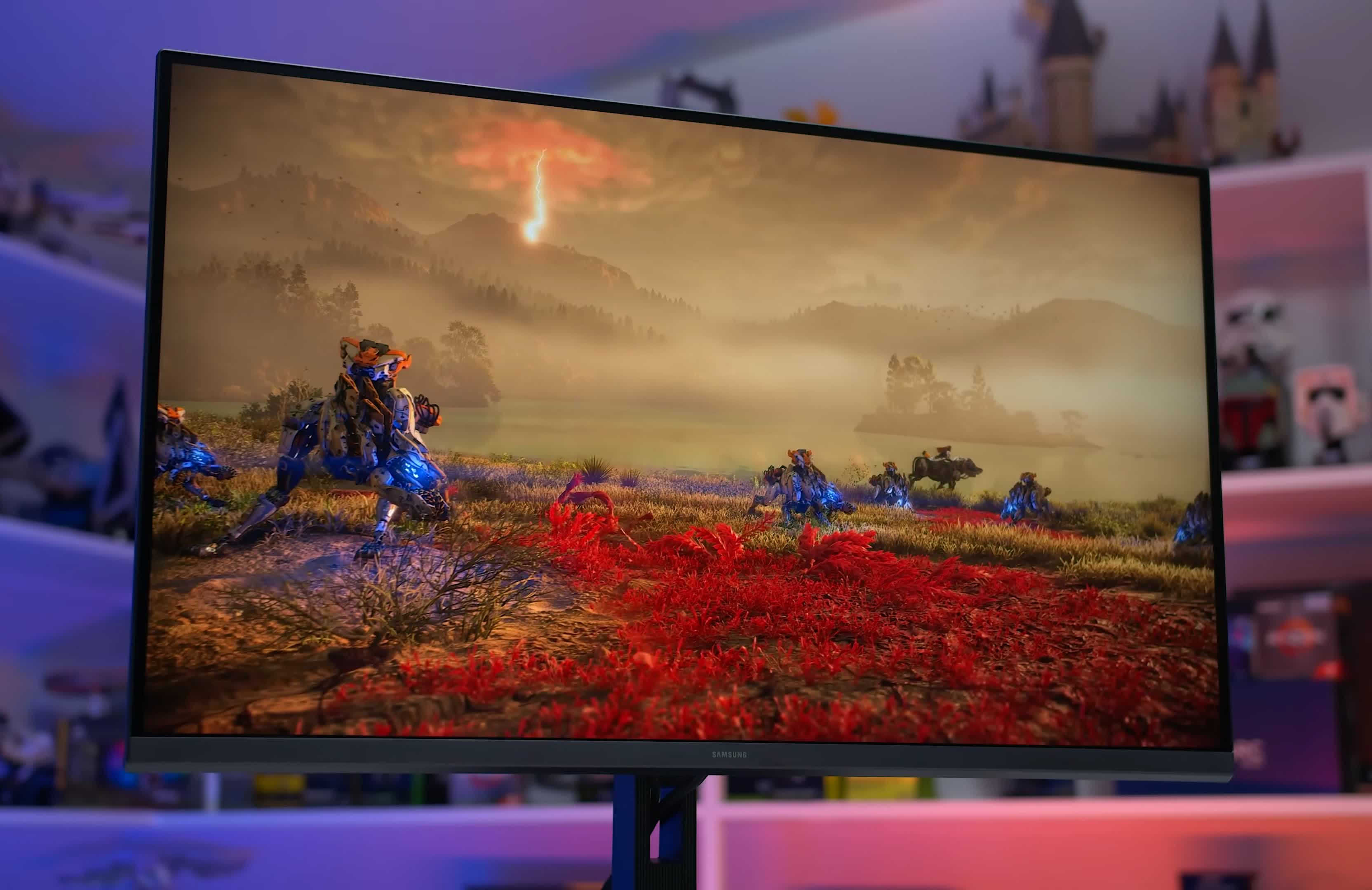
Samsung's Odyssey G80HS combines a razor-sharp 6K 165Hz display with a 3K 330Hz dual mode, promising the best of productivity and gaming, but its hefty sticker price comes with compromises.

Are people still falling for the refresh rate nonsense where bigger number = more better? The perception of refresh rate once you’re north of 120 is so far into diminishing returns it’s not worth it
Every blind side by side test says it’s notThe difference between 120 and 240 is very noticeable in fps games. 240 vs 480 is also very noticeable in the UFO test, but I can't speak to gaming because I don't really want to test a 1080p picture on my 32 inch monitor.
You are aware that 8K is basically pointless? You can’t see individual pixels on a 32” 4K display after about 50cm or a safe viewing distance.In my lifetime I hope to see monitors with resolutions and refresh rates high enough to make users think they are looking through a window. My 4k/240hz OLED monitor is the closest thing I've seen thus far, but we still have a long way to go. 8k/480hz would be much closer.

Having just gone from 60fps (over clocked to 75 fps) to 180 fps with a recent monitor upgrade then I can see a marked difference in smoothness/blurriness. Given there is no noticeable blur at 180 on the UFO test I doubt a 240 or 360 will make that much difference to my eyes - maybe notice a bit in fast paced games but certainly not the obvious differences a 60 to 180 jump made. Whilst I'd like a higher pixel density than I have at the moment (110 ppi) cost for the gpu grunt required is a limiting factor. There are physical limits on what the eye can transmit to the brain (consensus has it at 10 Mbps - barely enough for 1080p 60Hz with compression - though the brain does insert frames where required to smooth and blend the visual experience). I would go to say anything above 240 and we are looking at either superhuman abilities to notice the difference or audiophile levels of self delusion.The difference between 120 and 240 is very noticeable in fps games. 240 vs 480 is also very noticeable in the UFO test, but I can't speak to gaming because I don't really want to test a 1080p picture on my 32 inch monitor.
In my lifetime I hope to see monitors with resolutions and refresh rates high enough to make users think they are looking through a window. My 4k/240hz OLED monitor is the closest thing I've seen thus far, but we still have a long way to go. 8k/480hz would be much closer.
Every blind side by side test says it’s not
You are aware that 8K is basically pointless? You can’t see individual pixels on a 32” 4K display after about 50cm or a safe viewing distance.
Having just gone from 60fps (over clocked to 75 fps) to 180 fps with a recent monitor upgrade then I can see a marked difference in smoothness/blurriness. Given there is no noticeable blur at 180 on the UFO test I doubt a 240 or 360 will make that much difference to my eyes - maybe notice a bit in fast paced games but certainly not the obvious differences a 60 to 180 jump made. Whilst I'd like a higher pixel density than I have at the moment (110 ppi) cost for the gpu grunt required is a limiting factor. There are physical limits on what the eye can transmit to the brain (consensus has it at 10 Mbps - barely enough for 1080p 60Hz with compression - though the brain does insert frames where required to smooth and blend the visual experience). I would go to say anything above 240 and we are looking at either superhuman abilities to notice the difference or audiophile levels of self delusion.
I think you’re getting a rather large placebo effect.Either you two have poor vision, you've never tested anything beyond your low standards, or both.
Go run the UFO test on a 480hz monitor and tell me you can't see a difference. Until you actually run tests, you are speaking from ignorance.
120hz provides virtually zero detail.
240hz is much improved, but small details (the alien's eye and lights on the ship) blur together.
480hz is close to looking at a static image.
Resolution is a different matter, as viewing distance is a huge variable that is hard to control for. However, aliasing is still a factor on 4k resolutions from pretty much any normal pc desktop viewing distance. Some 4k monitors are much better than others for reading text, as an example. If you don't think 8k would provide a superior image for aliasing and text then nothing I say here will change your mind.
I think you're speaking from experiences you've never had.I think you’re getting a rather large placebo effect.
No I’m speaking from experience and blind testing results. Typically people can’t really perceive the diffenrce between 120 and 240 reliably and diminishing returns start at the 60-90 range. Ontop of that there’s no actual advantage to high refresh rate displays in frequently cited “needs” for one like competitive FPS games outside of competitions in the same building.I think you're speaking from experiences you've never had.
No I’m speaking from experience and blind testing results. Typically people can’t really perceive the diffenrce between 120 and 240 reliably and diminishing returns start at the 60-90 range. Ontop of that there’s no actual advantage to high refresh rate displays in frequently cited “needs” for one like competitive FPS games outside of competitions in the same building.
360 but the point is the drop off is well before thenSo you've personally run the UFO test at 480hz?
I don’t think you know what diminishing returns means.Diminishing returns technically start well before 60 fps (even below 1fps). The 60-90 range is just your personal threshold for not being able to tell the difference.
That’s that the justification is given for higher framerates.Nobody here has mentioned "needs" until you did. Do I need ultra high resolutions and refresh rates to maximize performance... no. Do I want those two things to enjoy my gaming experience as much as possible... yes.
360 but the point is the drop off is well before then
I don’t think you know what diminishing returns means.
That’s that the justification is given for higher framerates.
You are getting a placebo effect. In a blind test you wouldn’t notice the difference or if I labelled 10 displays with refresh rates of 120-360 in intervals you’d day the higher was better even if they’re all actually set to 120, because that’s what happens in tests. Things like input lag are far more important than the jump from 120-240 and are actually noticeable
Because the blind tests are all conducted wrong. They put a few people in front of 60, 120 and 240 monitors for a few minutes. Then randomly switch the refresh rate. It's jumbled mess where people have even mistaken 120 as better than 240 which is not physically possible.Are people still falling for the refresh rate nonsense where bigger number = more better? The perception of refresh rate once you’re north of 120 is so far into diminishing returns it’s not worth it
Or maybe it’s because they can’t tell a difference and just guess?Because the blind tests are all conducted wrong. They put a few people in front of 60, 120 and 240 monitors for a few minutes. Then randomly switch the refresh rate. It's jumbled mess where people have even mistaken 120 as better than 240 which is not physically possible.
The correct way to test refresh rate is as follows:
1. Give a person who's using 120Hz a higher refreshrate monitor. Say even 240Hz. It doesn't have to be 480Hz.
2. Then have them use it for a few weeks.
3. Then after a few weeks lower it back to 120Hz and inform them of it.
4. Then and only then will the user truly feel the loss of the extra refreshrate. Not by their refreshrate increasing, but by getting used to the new high and then losing it.
It's the same way with a new bigger sized TV. At first taking it out of the package it seems comically large, but after a few weeks of adjusting it seems normal, but going back to the old one, the old seems small now despite the fact that it was normal before.
Humans are creatures of convenience. When they get something better then it's jarring and hard to go back to the old one. Unless the new one awful for some reason.
Of course they cant with a few minutes and cameras rolling. I doubt I could either (aside from identifying 60Hz as crap). It's fun to watch, but never gives any meaningful results.Or maybe it’s because they can’t tell a difference and just guess?
If they can’t in a few minutes then they won’t be able to in a few hours. If you can’t immediately identify the difference between 120Hz and 360Hz then you’ve gone way passed the point of finishing returns and you’ve proven my point.Of course they cant with a few minutes and cameras rolling. I doubt I could either (aside from identifying 60Hz as crap). It's fun to watch, but never gives any meaningful results.
Good data takes time. That is why Steve does hundreds of benchmarks runs.
Weird take. So if a person cant immediately see the difference of increased refreshrate it must not exist?If they can’t in a few minutes then they won’t be able to in a few hours. If you can’t immediately identify the difference between 120Hz and 360Hz then you’ve gone way passed the point of finishing returns and you’ve proven my point.
Not even remotely the same, the same methodology cannot be used for every test and running benchmarks for accuracy in numbers and outliers isn’t the same as a biological perception test. For example if you wanted to see if someone is colourblind would you have them take the test once or five times? Taking it 5 times won’t give you a different answer as they’re either colourblind or they’re not.
You need to understand the difference between Quantitative and Qualitative research.
If you can’t perceive it you can’t perceive it. If anything you’re more likely to notice it immediately than with prolonged use.Weird take. So if a person cant immediately see the difference of increased refreshrate it must not exist?
I guarantee you if you just change the refresh rate they won’t.I guarantee you take away 240Hz from a person who has used it for a few weeks and they will notice it right way. Very few people notice the increase in refreshrate right way, but nearly everyone notices it when it's decreased after prolonged use.
After a few minutes of use - yes they wont.I guarantee you if you just change the refresh rate they won’t.
"tests". Like I said these all use flawed methodology and cannot be taken seriously.Nope, not what actual tests say.
They really wouldn’t notice at all, the majority of use cases also don’t really benefit from high refresh at all which is why VRR is a thing.After a few minutes of use - yes they wont.
They do longer review cycles for UX cases not for the spec.Longer test does not invalidate the claim. Reviewers often do longer duration tests for things that cannot be perceived right away. That doesn't mean those tests dont reveal anything useful or are invalid because what is being tested was not seen right away.
Again how are they flawed? If you cannot perceive something you can’t perceive it. It doesn’t matter if you spend a minute or a year with it. Just because they don’t line up with your placebo doesn’t make it false. You might get used to a lower frame rate display over time but that doesn’t impact your floor or ceiling ti see a diffenrce. Just because you exclusivity use a 60FPS panel doesn’t mean you can’t perceive 120 being better pretty much instantly."tests". Like I said these all use flawed methodology and cannot be taken seriously.
Most of the audiophile things are also snakeoil which more expensive equipment often actually being worse than cheaper equipment. You can only hear certain frequencies and after sampling at nyquist increasing it further is useless for listening yet people will often pretend they can hear the difference despite it being biologically impossible.I willing to admit my eyesight is worse than average - it's why I've worn contact lenses for the last 30 years. But then again only 35% of people have 20/20 vision without corrective lenses. I suspect the amount of people who can consistently perceive a difference in 480 v 240 fps is probably within that 35% and kudos to them. In the same vein I use marantz audio equipment as it is reasonably priced and I struggle to hear any difference with higher end gear (as I play on stage regularly I suspect my ears have been somewhat abused). Perception is a very personal thing (some people are happy listening to music through their phone speaker ffs) - and in the end even with objective measuring the subjective wins out (or this https://www.audiosciencereview.com/...kimber-ks-1036-silver-rca-cable-review.70121/ wouldn't happen).
Wrong. Longer tests are also conducted to test hardware reliability like OLED screens. Phone reviewers also dont do longer tests just to test the UI.They do longer review cycles for UX cases not for the spec.
Of course it matters. Hence why short tests are flawed.Again how are they flawed? If you cannot perceive something you can’t perceive it. It doesn’t matter if you spend a minute or a year with it.
Just because they do line up with your placebo doesn’t make it true.Just because they don’t line up with your placebo doesn’t make it false.
Which is effectively useless as you need at least a year to test that by which point the model isn’t sold anymore. They have things for a few weeks at most which isn’t enough to test durability of electronics. It is enough for UX gripes and software issues to pop up.Wrong. Longer tests are also conducted to test hardware reliability like OLED screens. Phone reviewers also dont do longer tests just to test the UI.
Aside from the fact it doesn’t matter. Again you can either perceive something or you can’t. Staring at something you can’t see isn’t going to magically let you see it becaure it’s been 300 hours rather than 5 minutes. Not all tests have to be the same length for accurate results.Of course it matters. Hence why short tests are flawed.
I don’t think you understand what a placebo is. Actual testing shows that in blind tests seeing the difference in refresh rate between 60 and 120 is about a 90% hit rate, 120-240hz is noticeable to a small minority of people at low confidence limits where it’s likely just a guess and 240+ is imperceptible.Just because they do line up with your placebo doesn’t make it true.