Samsung's next Odyssey monitors push refresh rates to 1,024Hz

Daniel Sims

Posts: 2,484   +76
Staff
Something to look forward to: Competition between gaming monitors is entering a new phase, as multiple manufacturers plan to release models capable of 1,000Hz in 2026. Samsung is the latest to enter the race with a new Odyssey lineup that also includes a 6K glasses-free 3D panel and new high-resolution, high-refresh-rate OLED models.
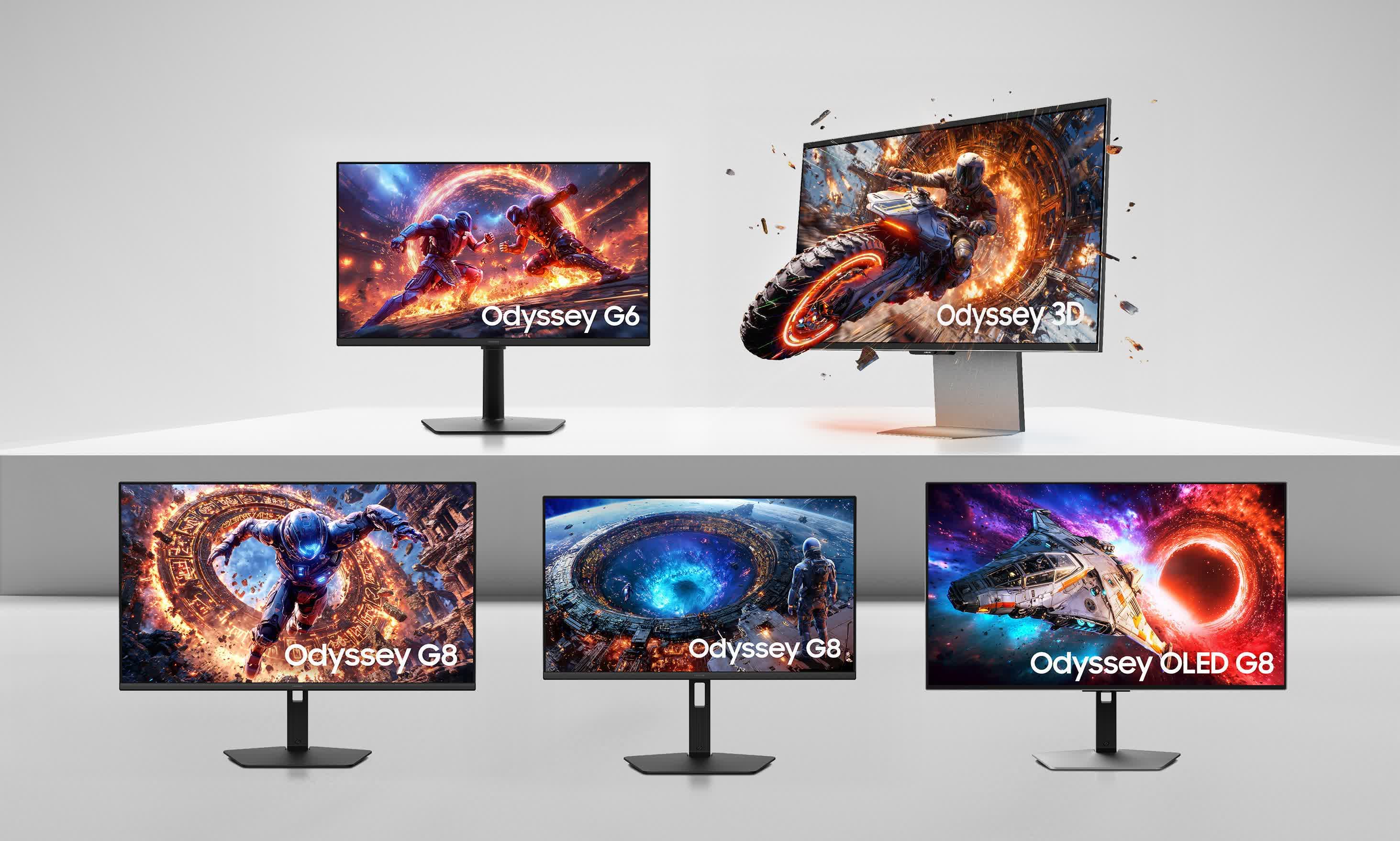
Samsung will showcase five new Odyssey gaming monitors at CES in January. Although three are relatively straightforward updates to the G8 series, the other two push new boundaries in stereoscopic and high-refresh-rate technology.

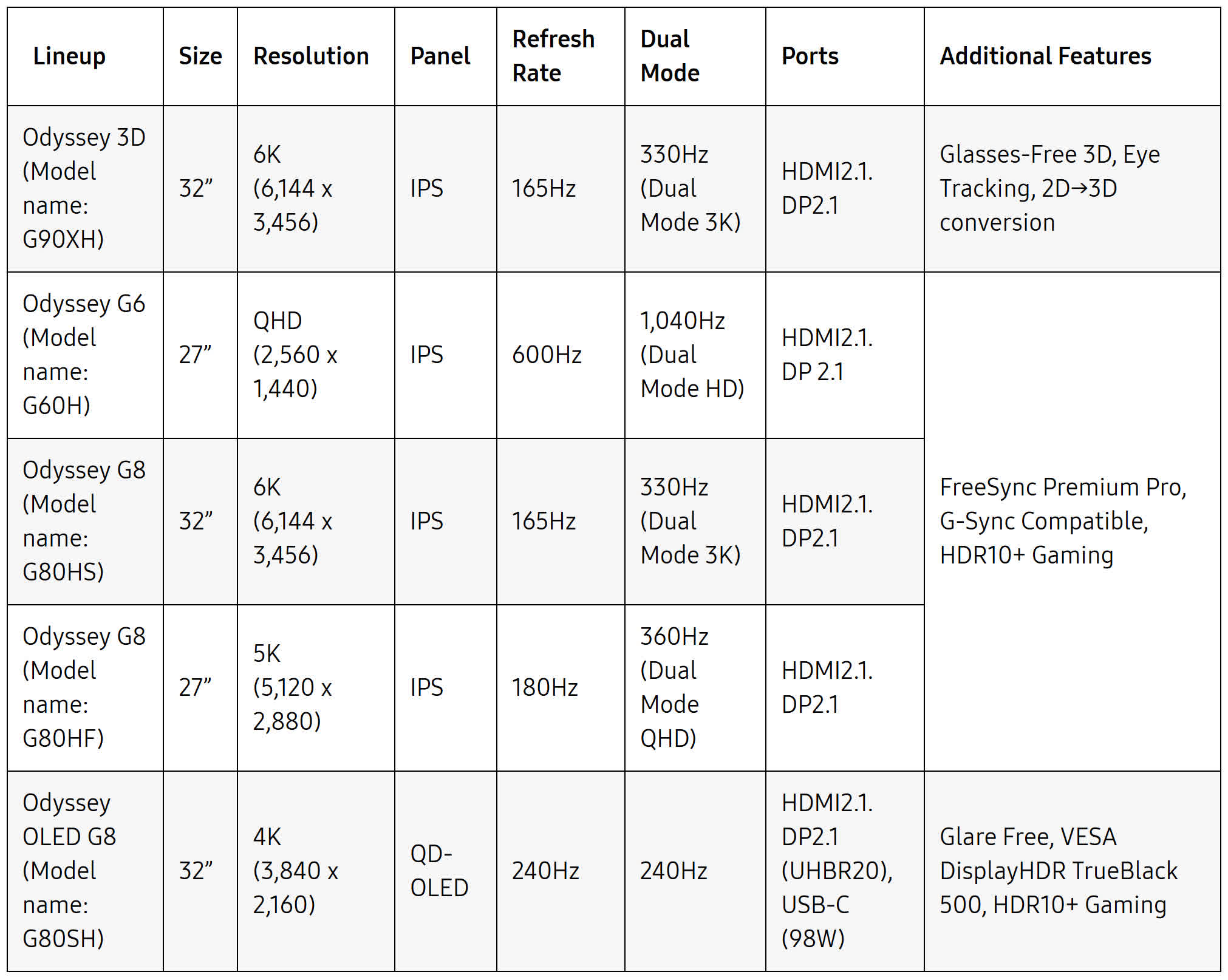
The 27-inch Odyssey G6 (G60H) is the first commercial gaming monitor to achieve 1,024Hz, slightly surpassing the 1,000Hz models that AOC and AntGamer also plan to launch next year. Samsung's IPS panel reaches this unprecedented refresh rate in HD (presumably 1080p) but also operates in 1440p at a still impressive 600Hz.
Also read: Why Refresh Rates Matter

Monitors with extremely high refresh rates are gaining popularity in esports circles, where split-second timing is crucial. Increasing refresh rates beyond 300Hz or 400Hz also significantly enhances motion clarity when viewing fast-moving scenes, sometimes resembling the motion clarity achieved on CRTs in the 1990s and early 2000s.

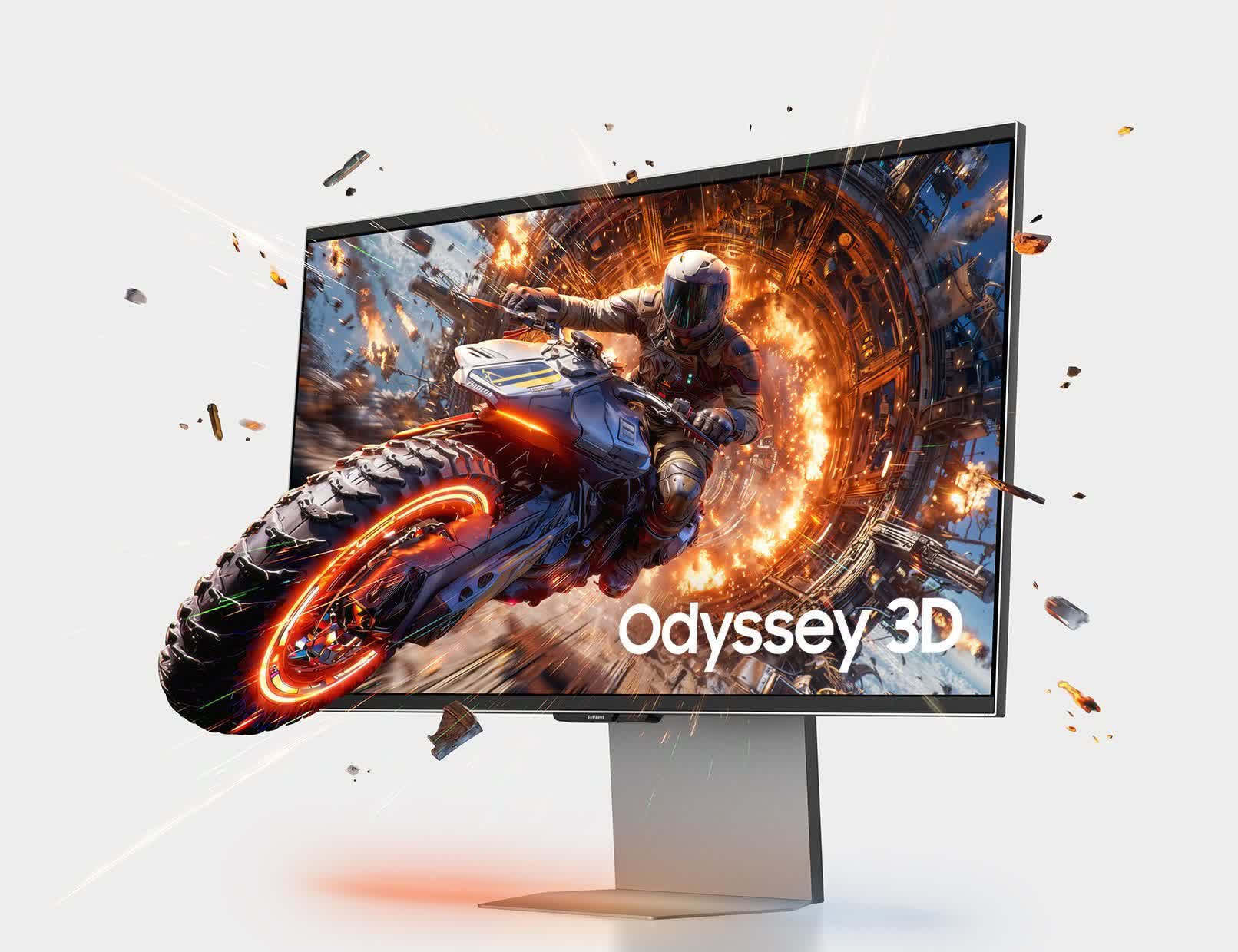
Meanwhile, the company has also upgraded the Odyssey 3D, a glasses-free 3D IPS monitor, from 4K to 6K (6,144 x 3,456 pixels), delivering the first 3D display at that resolution. Using eye tracking to adjust the image to the viewer's position, the 32-inch IPS panel creates a stereoscopic effect during video playback and for certain PC games. However, only three titles are currently supported: The First Berserker: Khazan, Lies of P, and Stellar Blade. The new Odyssey 3D (G90XH) achieves 165Hz in 6K and 330Hz in 3K resolution.
Also see: The Best Gaming Monitors - Late 2025 Update

The 6K Odyssey G8 (G80HS) is essentially a non-3D version of the new Odyssey 3D, featuring identical size, resolution, and refresh rate. Likely to be offered at a lower price, it also supports FreeSync Premium, G-Sync, and HDR10+. A 27-inch variant lowers the resolution and raises the refresh rate slightly, to 180Hz in 5K (5,120 x 2,880) and 180Hz in 1440p.

Finally, the new QD-OLED 4K G8 (G80SH) features a glare-free 32-inch panel, VESA DisplayHDR TrueBlack 500, and 98W USB-C power delivery. All of the upcoming Odyssey monitors support HDMI 2.1 and DisplayPort 2.1.

CES 2026 will be held in Las Vegas from January 6 to January 9.

Permalink to story:

 
These will look great when videocards and RAM don't exist anymore. I see $3000 entry level and $5000 midrange PCs being a thing by the end of 2026. Midrange builds had been hovering around $1500-1700 before the RAM shortage.

I also can't wait to see how game sales pan out. Developers working on games with the latest tech are going to be in for a rude awakening when the predicted hardware specs at time of release are almost not existent.
 
Last edited:
I could be remembering history wrong here, so correct me if I’m wrong but, the reason screens have a refresh rate in the first place was due to the local grids electrical frequency, used to make images smooth.

Surely now that all modern screens can effectively just show images instantly and don’t actually run by the grids electrical frequency, rather than ramping up frequency’s on the main board, we should be looking to an entirely new standard whereby the screen takes any input from a GPU and outputs it as fast as possible to the screen, meaning you essentially get an “infinite” frequency range and your real limitations are Pixel Response times / how many frames your GPU can actually push out, also means no need to sync a frequency to frame times, simplifying G-Sync / Freesync as it just won’t be an issue, (no drawing and outputting a frame in the middle of a screen refresh since the screen won’t be refreshing as a whole, just updating pixels as fast as it can).

I guess that puts more burden on GPU and game devs, if parts of your game run slower than others, rather than being able to wait to render the whole frame to make the image look good, you might get instances where images look droopy or feel weird, as different parts of the screen are updating at different speeds.

I don’t know, just food for thought I guess.
 
I could be remembering history wrong here, so correct me if I’m wrong but, the reason screens have a refresh rate in the first place was due to the local grids electrical frequency, used to make images smooth.

Surely now that all modern screens can effectively just show images instantly and don’t actually run by the grids electrical frequency, rather than ramping up frequency’s on the main board, we should be looking to an entirely new standard whereby the screen takes any input from a GPU and outputs it as fast as possible to the screen, meaning you essentially get an “infinite” frequency range and your real limitations are Pixel Response times / how many frames your GPU can actually push out, also means no need to sync a frequency to frame times, simplifying G-Sync / Freesync as it just won’t be an issue, (no drawing and outputting a frame in the middle of a screen refresh since the screen won’t be refreshing as a whole, just updating pixels as fast as it can).

I guess that puts more burden on GPU and game devs, if parts of your game run slower than others, rather than being able to wait to render the whole frame to make the image look good, you might get instances where images look droopy or feel weird, as different parts of the screen are updating at different speeds.

I don’t know, just food for thought I guess.
Analog broadcast signal and signal receivers were heavily linked to the grid frequency, but CRTs had a scan rate of around something absurd like 10,000hz(I actually want to go with 100,000hz, but that seemes too high and I'm too lazy to look it up right now). But when it came time to make a digital standard, the broadcast standards linked to the grid frequency seemed like a natural play to start.

So screen tearing was technically a thing, but due to the displays absurdly fast scan rate and human persistence of vision, the refresh rate of the image never had perceivable screen tearing problems. The screen tears were there, we just couldn't see them.

And now that I'm thinking about it, if refresh rates get fast enough then things like variable refresh rate become kind pointless. Although I'm sure someone will say"I can see the difference when I don't have VRR turned on on my 10,000hz display and I'm only getting 2000fps!"
 
I could be remembering history wrong here, so correct me if I’m wrong but, the reason screens have a refresh rate in the first place was due to the local grids electrical frequency, used to make images smooth.

Surely now that all modern screens can effectively just show images instantly and don’t actually run by the grids electrical frequency, rather than ramping up frequency’s on the main board, we should be looking to an entirely new standard whereby the screen takes any input from a GPU and outputs it as fast as possible to the screen, meaning you essentially get an “infinite” frequency range and your real limitations are Pixel Response times / how many frames your GPU can actually push out, also means no need to sync a frequency to frame times, simplifying G-Sync / Freesync as it just won’t be an issue, (no drawing and outputting a frame in the middle of a screen refresh since the screen won’t be refreshing as a whole, just updating pixels as fast as it can).

I guess that puts more burden on GPU and game devs, if parts of your game run slower than others, rather than being able to wait to render the whole frame to make the image look good, you might get instances where images look droopy or feel weird, as different parts of the screen are updating at different speeds.

I don’t know, just food for thought I guess.
My guess would be that, like with most tech, we’ve built complex systems to work on top of predecessor tech and have done so for so long that to reimagine this in the way you’re describing would be tantamount to rebuilding the entire supply chain, end-to-end.

Systems are optimized to rely on other systems that rely on still other systems. So to make a change in how displays work would probably require a rebuild of that entire chain of dependencies (or huge parts of it) rather than just the display. That would likely require an insurmountable problem to draw the investment.

So, although you’re probably right in the thought exercise and history, and if I was to speculate, it’s probably more of an: if it ain’t broke don’t fix it scenario. It’s likely far cheaper to keep pushing the limits of what we have than to reimagine the entire ecosystem.
 
Can people even "see" the difference?
I remember when 120hz smartphones came along. My new one at the time had
120hz refresh, but I set it to 60hz because I'm not a gamer and wanted longer
battery life. BUT I didn't tell my coworkers it was set to 60hz. Told them to look
how smooth it was at 120hz. EVERY one of them said it was butter smooth.
Then I showed them, and changed it to 120hz and they couldn't tell the difference.
Yeah, maybe hard core gamers could see a difference, but most won't.
 
Can people even "see" the difference?
I remember when 120hz smartphones came along. My new one at the time had
120hz refresh, but I set it to 60hz because I'm not a gamer and wanted longer
battery life. BUT I didn't tell my coworkers it was set to 60hz. Told them to look
how smooth it was at 120hz. EVERY one of them said it was butter smooth.
Then I showed them, and changed it to 120hz and they couldn't tell the difference.
Yeah, maybe hard core gamers could see a difference, but most won't.
I know this isn't in all cases, but in some cases the panel and backlight are still running at 120hz even if the SOC is processing and sending the display driver a 60hz sigal. Unless you are running an OLED, you really aren't getting any power savings going from 120 to 60.

You can test what your displays is doing by making a custom resolution where you set the refresh to a non multiple of the refresh rate. Say. 57hz on a 120hz display. it'll either make it really uncomfortable look at it, something will just feel off or it will go black for several seconds and then turn back on
 
I doubt the 1000hz plus refresh rate dual mode is 1080p and most likely 720p. The fastest 1080p monitor today is by BenQ 600 hz tn panel. The flaw is a pixelated that has improved motion clarity. These hyper marketing displays are an oxymoronic in target demographic audience imo.
 
I wonder how much g90HX will cost. 3k at the very least. This is a toy I would be interested in if I had lying
~5k around.
 
Back