Samsung workers threaten strike, demand share of $38 billion AI memory windfall

Skye Jacobs

Posts: 2,002   +58
Staff
In a nutshell: Samsung Electronics is facing a labor dispute that comes at a time when the global memory market is already tight, adding new uncertainty for AI systems and consumer hardware. Tens of thousands of Samsung Electronics employees gathered at the company's Pyeongtaek campus in South Korea this week, warning they will launch an 18-day strike starting May 21 if talks fail. The confrontation centers on how the profits from a historic surge in memory demand – driven largely by AI workloads – should be distributed.

Samsung's memory business is central to the current upswing in the chip market. Alongside SK Hynix and Micron, the company is one of the three major producers of DRAM and high-bandwidth memory (HBM). These chips are now critical for AI training and inference systems, where memory bandwidth has become as much of a bottleneck as raw compute.

That shift has produced a sharp jump in profits. Analysts estimate Samsung generated roughly $38 billion in operating profit in the first quarter of 2026, driven by higher memory prices and heavy orders from large data center customers. Like other major chipmakers, the Korean giant has been ramping up production of higher-margin HBM for AI accelerators, while placing less emphasis on conventional memory for consumer devices.

Workers now want a direct share of that upside. The union is demanding that Samsung remove its performance bonus cap and allocate 15% of operating profits to employees. Based on current profit forecasts, that could run to roughly $25-30 billion a year in bonus payouts. The company has not accepted those terms, and the gap between the two sides remains wide.

Pressure on Samsung has grown as rival SK Hynix is reportedly preparing to pay average bonuses of around $400,000 to roughly 35,000 employees. The gap with SK Hynix is fueling resentment inside Samsung, a company that has long been seen as a top destination for South Korean engineers.

The timing of a strike is awkward for the tech industry. Data centers are expected to consume around 70% of high-end memory chips this year, leaving a limited supply for other sectors. As a result, prices for conventional DRAM have climbed sharply since early 2025, and availability has tightened across consumer electronics, including PCs and mobile devices.

Any disruption at Samsung would be felt quickly across the market. With only three major suppliers operating at scale, even a temporary slowdown in production lines could constrain already limited inventories of both HBM and conventional DRAM. That could delay GPU server deployments for major cloud providers and push up hardware prices across the industry.
Samsung has been taking steps to brace for a possible walkout. The company has sought court intervention to prevent illegal actions during a potential strike, including attempts to block production facilities. Meanwhile, the show of force at Pyeongtaek – where attendance estimates ranged from 30,000 to 39,000 – suggests strong internal support for escalation.

This is not uncharted territory for Samsung. Employees staged the company's first strike in 2024, a 25-day walkout that ended partly because many workers could no longer afford to stay off the job. The current dispute, however, is unfolding under very different market conditions. Memory, once treated as a cyclical side story, has become one of the main constraints on how fast AI systems can scale.

Masthead credit: The AP

Permalink to story:

 
If prices dropped they'd just cut production.
This future is not for workers. Good luck.
I don't think you understand how companies are run. If Samsung cut production just because prices lowered, their competition would benefit. They would cut production if they needed to in order to stay profitable. As a matter of fact they've continued producing memory when it was unprofitable in 2023. How are they going to survive in those times unless they cut production as needed? Are the unions going to pay for the $10B USD when Samsung lost money then?

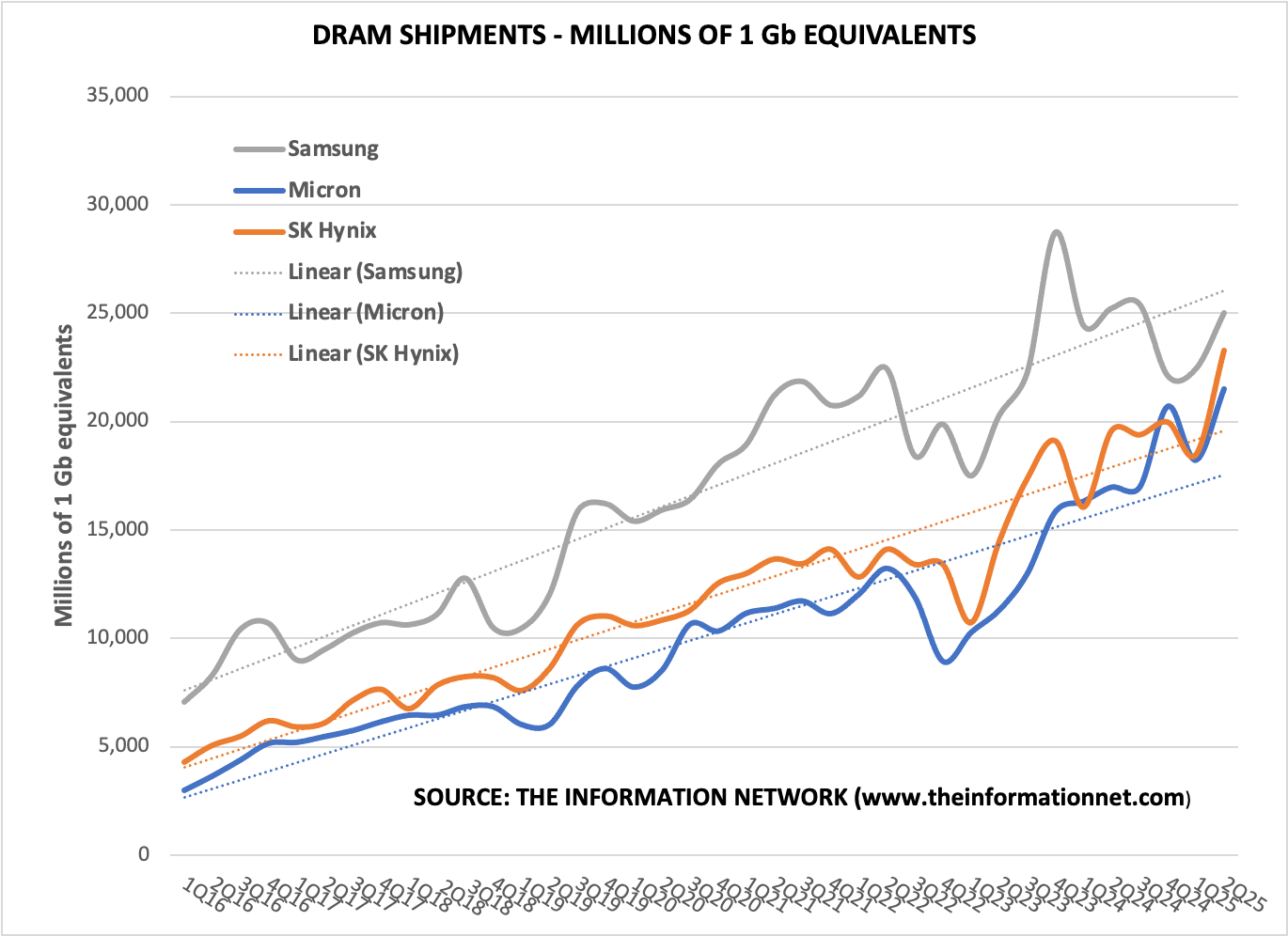
Here's Samsung's memory sales over time vs operating profit margin of the larger semiconductor business (they don't report profits for memory):
 
I don't think you understand how companies are run. If Samsung cut production just because prices lowered, their competition would benefit.
I'm utterly flabbergasted by how few people understand the most basic principle of economics -- firms always maximize profits by increasing production until mc = mr. This used to be required learning in high school economics, much less college.
 
Last edited:
I don't think you understand how companies are run. If Samsung cut production just because prices lowered, their competition would benefit.

1996 - DRAM crash, cut production
2001 - Dotcom bust, cut production
2008 - Financial crisis, cut production
2018 - Memory downturn, cut production
2022 - Four short years ago, RAM was dirt cheap and guess what? Cut production.

Tell me again how they'd never do something they do routinely.
 
I'm mad they are ripping off everybody with artificial scarcity (still remember February last year news), so I'm more than inclined to support the worker's share on that fat juicy pie. Make it 30%.

The CEO can still choke to death on caviar in a double decker Yacht instead of a triple decker.
 
Because workers don't have a golden parachute that pay millions if they screw up, like CEOs do. That is why.
You're confused. CEOs are employees like any other worker. It is the company owners and investors who lose money when the firm loses money. Nor do they have "golden parachutes" to protect them from these losses.
 
Everything but wages go up. Maybe if investors would stop buying up all the necessities, raising the prices and selling them back to us we wouldn't need wage increasing. But inflation means if you don't get a raise you make less this year than you did last year. And all these companies posting record profits quarter after quarter isn't helping.
 
Everything but wages go up.
Wages have been rising faster than inflation since 2024 (they rose slower than inflation throughout most of BIden's term).

Maybe if investors would stop buying up all the necessities, raising the prices and selling them back to us we wouldn't need wage increasing.
Oops! These "necessities" are all bought and sold on an open market. There's nothing stopping you from buying anything before these "evil investors" do.

...And all these companies posting record profits quarter after quarter isn't helping.
Company profits don't cause inflation. Government deficit spending does. Long-term, profitable companies actually cause deflation -- a general lowering of prices.
 
1996 - DRAM crash, cut production
2001 - Dotcom bust, cut production
2008 - Financial crisis, cut production
2018 - Memory downturn, cut production
2022 - Four short years ago, RAM was dirt cheap and guess what? Cut production.

Tell me again how they'd never do something they do routinely.
Samsung doesn't care about the list prices of their products, they care about profits lol. You can see in 2024+ that they increased memory production to all-time records despite margins being near record lows. If they didn't do that, memory prices would be even higher. Should they have done that?

And in 2022 as you can see in the chart, production was barely cut. In 2022 Q3, Samsung's profits start dropping dramatically and they made no money in 2022 Q4, then in 2023 they lost $10B.

Are you saying Samsung should've instead lost $25B to make aging RAM with no buyers? All because, what you want RAM to be even cheaper and so Samsung as a whole risks its entire future? And tell me, do you think those workers should work for free since they're making memory for no buyers and Samsung also has to pay suppliers for materials?
 
I'm mad they are ripping off everybody with artificial scarcity (still remember February last year news), so I'm more than inclined to support the worker's share on that fat juicy pie. Make it 30%.

The CEO can still choke to death on caviar in a double decker Yacht instead of a triple decker.
Samsung has literally reached record production levels based on the materials suppliers can provide. How is it artificial scarcity? It's unprecedented demand. You can see here that consumer memory prices were stable until they started rising in September 2025 and stabilized at high prices in February 2026, despite the memory shortage going back to mid-2024: https://pcpartpicker.com/trends/price/memory/
 
Samsung doesn't care about the list prices of their products, they care about profits lol. You can see in 2024+ that they increased memory production to all-time records despite margins being near record lows. If they didn't do that, memory prices would be even higher. Should they have done that?
Of course Samsung doesn't care, that's why they keep hiking NAND prices despite prices already being through the atmosphere.
In 2024 they've only increased memory production for AI, I'll get out the world's tiniest violin for the apparent low margins, the RAM cartel needs to lose trillions at this point.
Also meanwhile prices really couldn't get any worse because people aren't buying it anyway.
Samsung has literally reached record production levels based on the materials suppliers can provide. How is it artificial scarcity? It's unprecedented demand. You can see here that consumer memory prices were stable until they started rising in September 2025 and stabilized at high prices in February 2026, despite the memory shortage going back to mid-2024: https://pcpartpicker.com/trends/price/memory/
It's artificial scarcity because there aren't any real shortages on RAM, NAND, or products using memory, they're colluding in price fixing yet again, but the regulators have been bought off this time so things will likely get worse before they get any better. Or if they ever do get better for the PC market, as the goal seems to be renting a PC in the cloud instead of owning the hardware.
 
Last edited:
1996 - DRAM crash, cut production
2001 - Dotcom bust, cut production
2008 - Financial crisis, cut production
2018 - Memory downturn, cut production
2022 - Four short years ago, RAM was dirt cheap and guess what? Cut production.

Tell me again how they'd never do something they do routinely.
Oops! Memory makers have reduced production for a couple of quarters before, but if you look at the running average below, it's steadily upwards -- even at times when they're losing money on each unit sold. And next year, we'll see the largest upward increase in history, with total output expected to increase six-fold by the end of 2027.

https%3A%2F%2Fsubstack-post-media.s3.amazonaws.com%2Fpublic%2Fimages%2F486bae1f-b164-4403-9b19-43a89575c451_1370x996.png
g
 
"Wages have been rising faster than inflation since 2024 (they rose slower than inflation throughout most of BIden's term)."

Where? It doesn't matter regardless. If wages go up say 10% but the 20 items you pay for every month also went up by 10% per item then that wage increase is trash. I don't understand how people don't understand that low level of math lol.

Companies in my area are still hiring Welders for $20/hr while requiring MIG+TIG, possibly stick on top of that while also reading a blueprint, assembling, fabricating, parts fetching and forklift driving with no air conditioning compared to the $15/hr minimum to flip burgers. If I'm not going to have any buying power, I'll just flip burgers.

Wages going up...my *** rofl. They've never went up compared to inflation.
 
It's artificial scarcity because there aren't any real shortages on RAM, NAND, or products using memory, they're colluding in price fixing yet again, but the regulators have been bought off this time so things will likely get worse before they get any better. Or if they ever do get better for the PC market, as the goal seems to be renting a PC in the cloud instead of owning the hardware.

And these opinions are based on what facts or evidence, as opposed to your personal opinions?

When a company has to ramp up production of a specific form of the products they make (HBM) in order to fulfill the orders they have for that form (for the AI bubble), they will retool the production lines to produce as much of that product as possible. That means turning down production of ram modules that are lower demand (and yes, lower profit margin), and that means your home PC ram. When you aren't producing as much of one type in order to fulfill orders for a different type, it's not 'artificial' scarcity, it's actual scarcity. Every company follows the money. The money is flowing freely for HBM and other ram that's not prevalently used in the consumer market.

While raw wholesale prices have gone up dramatically for consumer ram, the prices you're seeing at retail are due to the middlemen and retailers; the product they sell is in (actual) short supply; their income is dramatically reduced; they raise prices even further to compensate for the loss of revenue from smaller sales. The reason Samsung increased wholesale prices is because they are, still, manufacturing standard consumer ram - which means they're sacrificing (not the ideal word) even greater revenue and profits they could make by completely shutting down production of consumer ram.

Samsung's not alone in that, because all three of the big three are in the same position. One has to naive and guilless to immediately jump to conspiracy theories about collusion. Yes, collusion has happened in the past. The real world market right now makes collusion a laughable conclusion - they don't need to conspire to raise prices; the AI companies are essentially shipping pallets of blank checks to the ram manufacturers.

Sorry for the length, I blame coffee.

Coffee: without caffeine, life itself would be impossible.

(You have to be over a certain age to get the reference).
 
If wages go up say 10% but the 20 items you pay for every month also went up by 10% per item then that wage increase is trash. I don't understand how people don't understand that low level of math lol.
That's a rather basic math error you've made. The difference between nominal wages and real wages is that real wages are adjusted for inflation. If real wages rise by 2%, it means they rose 2% faster than inflation.
 
Of course Samsung doesn't care, that's why they keep hiking NAND prices despite prices already being through the atmosphere.
In 2024 they've only increased memory production for AI, I'll get out the world's tiniest violin for the apparent low margins, the RAM cartel needs to lose trillions at this point.
Also meanwhile prices really couldn't get any worse because people aren't buying it anyway.

It's artificial scarcity because there aren't any real shortages on RAM, NAND, or products using memory, they're colluding in price fixing yet again, but the regulators have been bought off this time so things will likely get worse before they get any better. Or if they ever do get better for the PC market, as the goal seems to be renting a PC in the cloud instead of owning the hardware.
If that was the case, then any market entrant would be able to disrupt that by making and selling cheaper memory themselves. For instance, that's happened to incumbents in the auto and airline industries many times (despite a high barrier to market entry).

In reality, massive demand to build data centers are to blame. For example OpenAI has committed to buying up to 40% of the global supply of DRAM wafers. Do you think they would do that if there wasn't already a supply shortage (albeit in high bandwidth memory)? https://www.tomshardware.com/pc-com...to-the-tune-of-up-to-900-000-wafers-per-month

Anyways, if there was "artificial" scarcity then there would be a growing stockpile at higher prices. There isn't though, because all that memory is being bought, just not by consumers like you want. And contrary to what you think, a growing stockpile is a serious problem for memory manufacturers because every customer who figures out they don't need to make a purchase after all represents an actual loss in revenue for the manufacturer. They would make more money by lowering prices enough to fulfill market demand (unless it became unprofitable, THEN they cut production).
 
They should be receiving a piece of that. Every employee of the IT company that is AI money pouring on them should be rewarded.
 
Back