Scientists create "living plastic" that can self-destruct on command

midian182

Posts: 11,683   +177
Staff member
In brief: Plastic that can breaks itself down when no longer needed sounds like something from sci-fi, but Chinese scientists have moved the idea closer to reality. Their prototype embeds dormant bacteria inside a polymer, creating a material that can activate on command and degrade without leaving behind microplastic fragments.
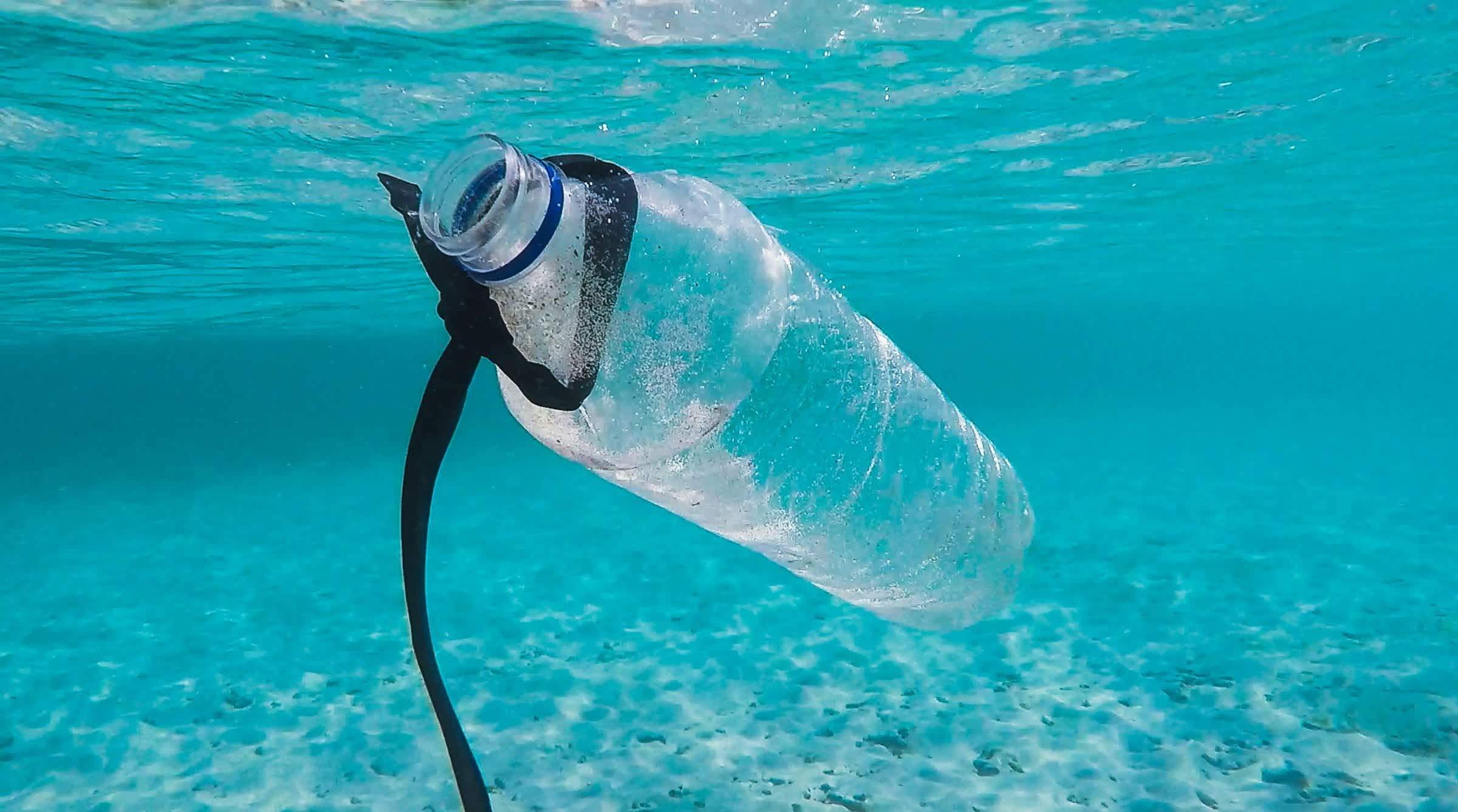
Scientists at the Shenzhen Institutes of Advanced Technology have developed a "living plastic" with a built-in kill switch. The material contains spores from engineered Bacillus subtilis, a common soil bacterium, that remain inactive during normal use.

When exposed to the trigger, the spores wake up and produce enzymes that digest the plastic from within.
The work, published in ACS Applied Polymer Materials, builds on earlier living-plastic experiments that mostly relied on a single enzyme.

The team used two separate bacterial strains that cooperate. One produces Candida antarctica lipase, which randomly cuts long polymer chains into shorter pieces. The other produces Burkholderia cepacia lipase, which chews through those fragments from the ends until they are reduced to small molecules.

Plastic's long, tightly packed molecular chains make the material durable but difficult for enzymes to attack. By creating fresh break points, the first enzyme gives the second one more places to work.

The researchers mixed the dormant spores into polycaprolactone, a polyester used in 3D-printing filaments and some dissolvable surgical sutures. The resulting film reportedly had mechanical properties similar to ordinary polycaprolactone, suggesting the embedded microbes did not ruin the material's usefulness.

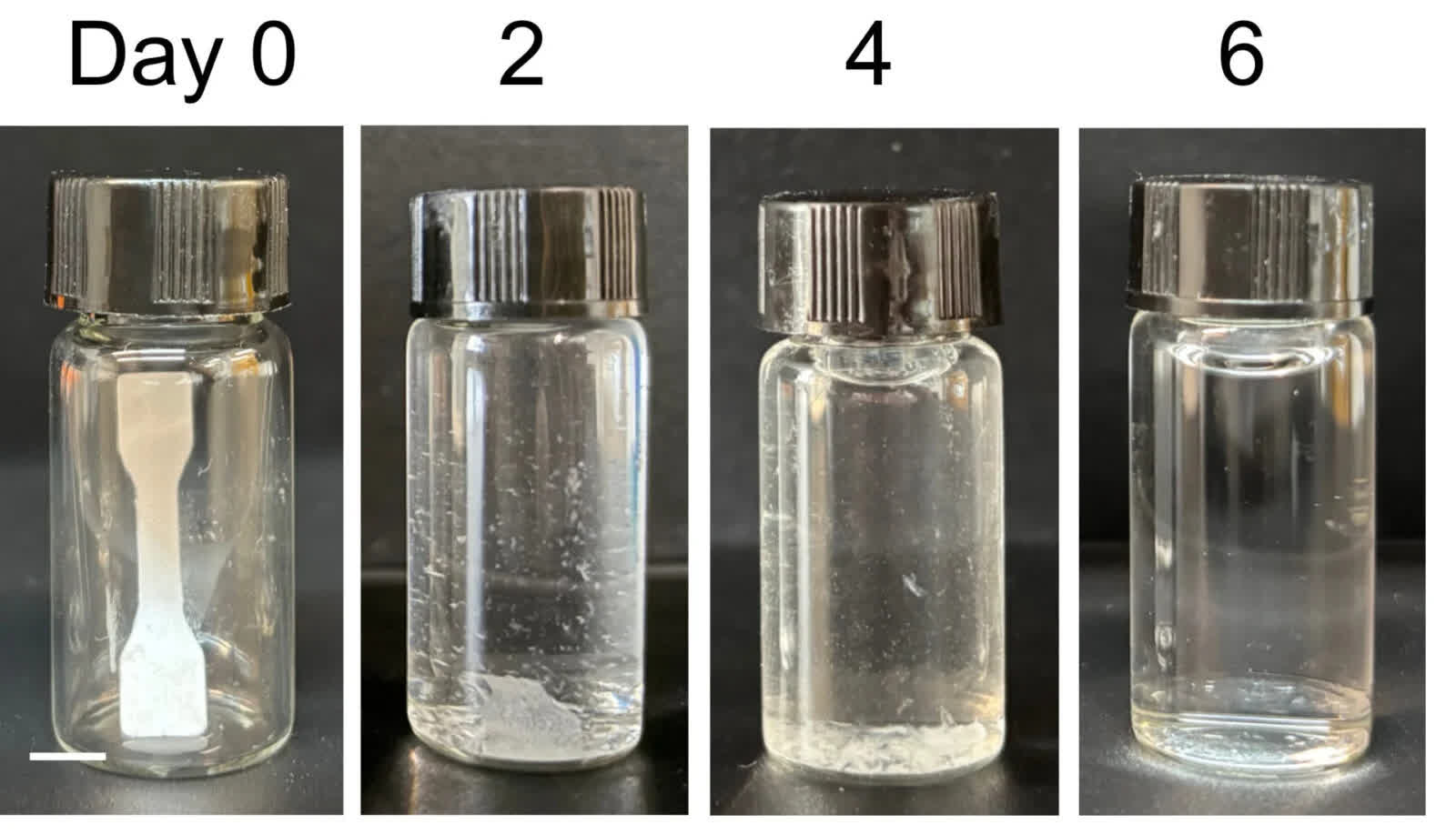
When the plastic was placed in a nutrient broth heated to 122 degrees Fahrenheit, the spores activated and the film fully degraded within six days.

The researchers said the process did not create microplastic particles, which could make this more appealing than conventional biodegradable plastics, which often fragment before they fully break down.

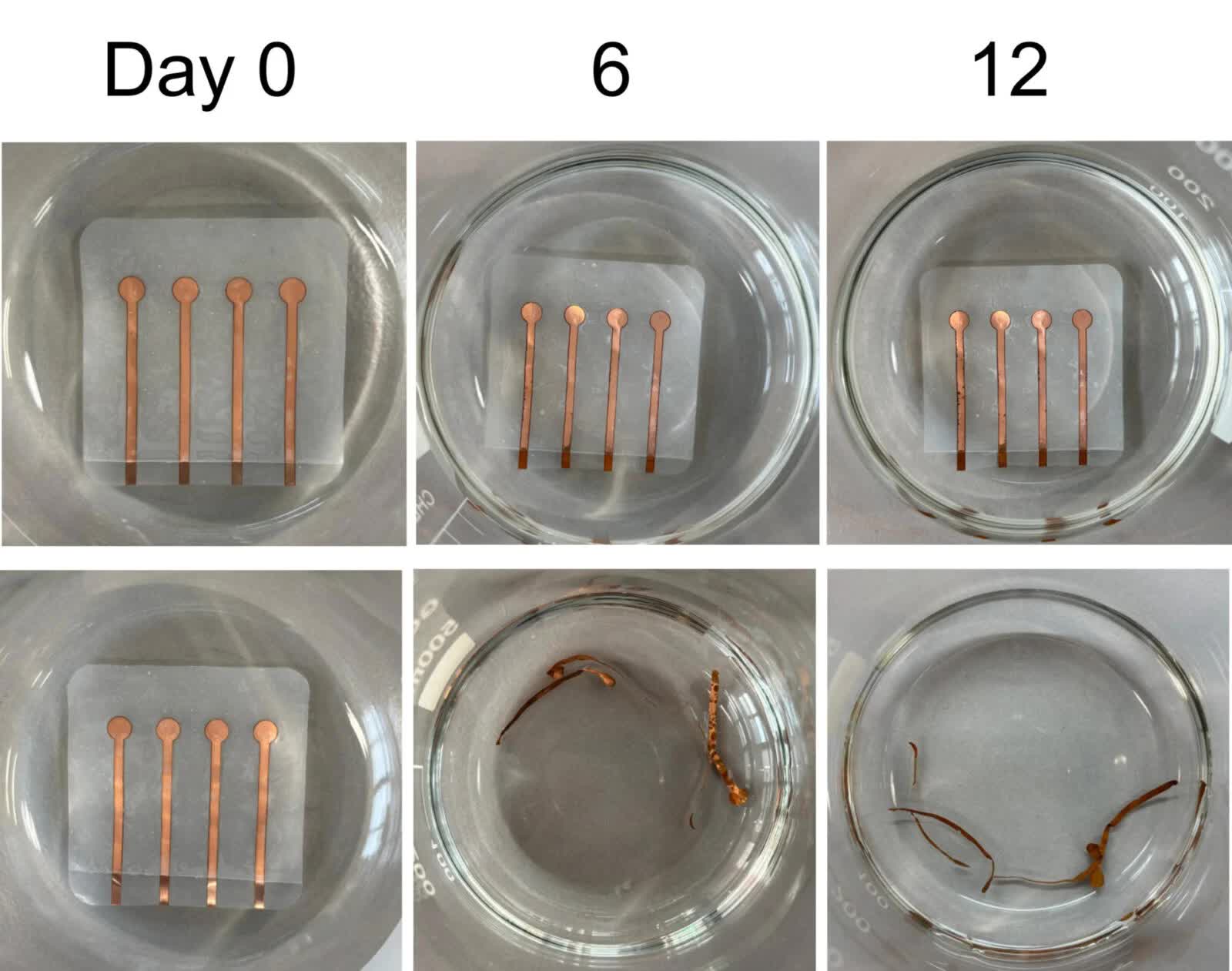
The team also built a prototype wearable electrode (below) using the living plastic. It detected muscle signals from the arm, then degraded within about two weeks after the same activation treatment. The copper circuitry remained behind, meaning similar materials could eventually help separate recoverable electronics from disposable polymer layers.
There are some caveats. The demonstration used a relatively easy-to-degrade polymer, not the polyethylene, polypropylene, or PET found in much of the world's plastic waste. The trigger also required warm nutrient broth, which is fine in a lab but not exactly practical for ocean waste or consumer packaging.

Permalink to story:

 
I see uses for this. While there will still be a need to control the stream of plastic going directly from consumer into the environment, this could at least reduce the solid waste stream passing recycling centers and affecting finite landfill space. I do have a question. What is the final liquid product...bacteria + other organic chemicals? Health and environmental effects...I.e. does this just replace solid waste with a liquid hazardous waste? Dissolving the plastic still results in whatever byproducts the bacteria produce....safe or unsafe?
 
Thanks, but no.
Who in their right mind would use something loaded with bacteria that's supposed to wake up and digest something from within after activating a 'kill switch'? And especially made in China something?

We had enough adventures with Chinese viruses up to very recently, please keep the Chinese bacteria away. Thanks.
 
This isn't an enviromental solution. It is a WEAPON. If actually put into use, once activated the bacteria would consume the plastic they were embedded in ... and then go on into the environment to continue consuming all other plastics they come into contact with that are compatabile with their enzymatic systems. What a horrible idea. One can only hope it being tested only in a level III biohazard lab. Even then, I'd say it is the type of "science" that should be banned as being too dangerous and of little to no benefit.
 
The wearable electrode application is lowkey the most interesting part of the whole thing. The copper stays behind, the plastic dissolves. If you could generalize that to separate recoverable components from structural plastic in consumer electronics, that's a genuinely different approach to e-waste than anything currently being tried at scale. Medical device recycling alone would be a massive market.
 
Ahhhh the good ole days of everything coming in REUSABLE glass bottles and what not.
And as a kid, running around collecting empty pop bottles for extra summer spending money. :)
Now, lets just use plastic everything and toss it in a landfill.
 
Thanks, but no.
Who in their right mind would use something loaded with bacteria that's supposed to wake up and digest something from within after activating a 'kill switch'? And especially made in China something?

We had enough adventures with Chinese viruses up to very recently, please keep the Chinese bacteria away. Thanks.
Please, tell me again how much you don't like China.
 
This isn't an enviromental solution. It is a WEAPON. If actually put into use, once activated the bacteria would consume the plastic they were embedded in ... and then go on into the environment to continue consuming all other plastics they come into contact with that are compatabile with their enzymatic systems. What a horrible idea. One can only hope it being tested only in a level III biohazard lab. Even then, I'd say it is the type of "science" that should be banned as being too dangerous and of little to no benefit.
Right?! I've seen many movies where good intentions lead to catastrophic results. Just one example is I am Legend.
 
Please, tell me again how much you don't like China.
I rather don't like the idea of killswitch -activated bacteria, but when you think about it .. yeah, I don't like authoritarian dictatorships either. If both are somehow mixed, there's really nothing left to like.
 
Thanks, but no.
Who in their right mind would use something loaded with bacteria that's supposed to wake up and digest something from within after activating a 'kill switch'? And especially made in China something?

We had enough adventures with Chinese viruses up to very recently, please keep the Chinese bacteria away. Thanks.
I think the idea is to use it on items that normally get thrown away rather than in satellites and military hardware. I do a lot of litter picking in my local area and plastic waste is an issue that needs to be solved.
 
Back