Scientists develop nanomaterial that targets cancer cells while sparing healthy tissue

Alfonso Maruccia

Posts: 2,593   +975
Staff
In brief: A team at Oregon State University has developed a promising new method that could effectively eliminate malignant tumors. The technique proved successful in laboratory mice, but significant work remains before it can be developed into a clinical treatment for humans.
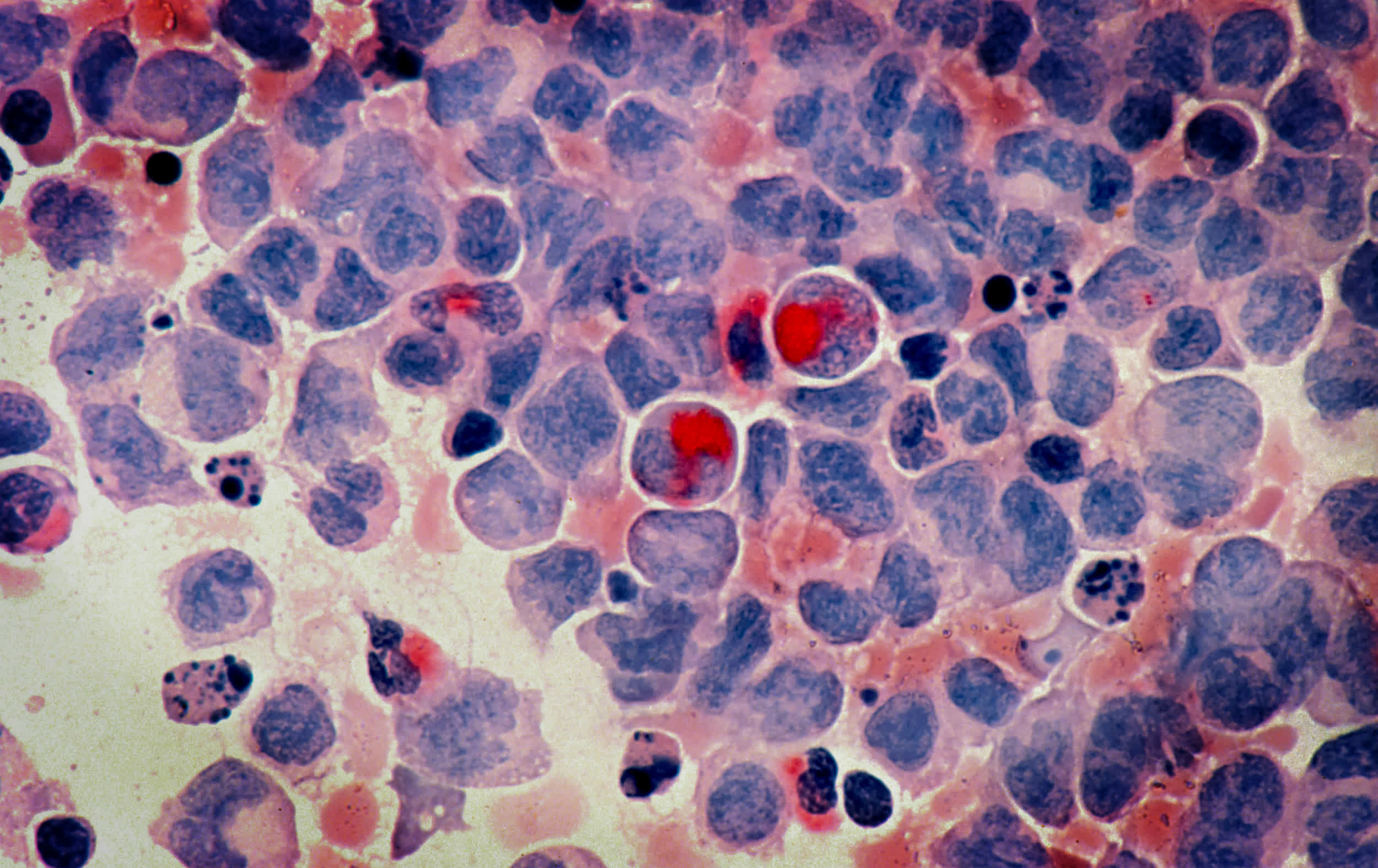
Iron is essential to biological function, and iron-based nanomaterials may become valuable tools in the long-term effort to develop cancer treatments. Researchers at Oregon State University have engineered a new "nanoagent" using an iron-based metal-organic framework (MOF) structure and demonstrated its ability to destroy cancerous cells in laboratory experiments.

The MOF structure is designed to exhibit high toxicity toward malignant cells while minimizing damage to healthy tissue. The researchers describe the nanoagent as part of a growing field of oncology research known as chemodynamic therapy. CDT-based approaches aim to exploit the unique chemical environment inside tumors, which often contain elevated acidity and increased concentrations of hydrogen peroxide.

Traditional CDT techniques primarily focus on promoting the formation of hydroxyl radicals – highly reactive oxygen-containing molecules that can induce cellular damage through oxidation. These radicals can disrupt essential biological structures by removing electrons from critical cellular components, including lipids, proteins, and DNA.
Other chemodynamic therapy approaches primarily aim to generate singlet oxygen, another highly reactive oxygen compound. Oleh Taratula, who led the new study, said existing CDT agents face several significant limitations.

"They efficiently generate either radical hydroxyls or singlet oxygen but not both, and they often lack sufficient catalytic activity to sustain robust reactive oxygen species production," the researcher said.

In preclinical research, CDT agents typically produce only partial tumor regression without long-term therapeutic effects. In contrast, the new metal-organic framework nanomaterial is designed to generate both hydroxyl radicals and singlet oxygen at the same time.

In experiments involving mice implanted with human breast cancer cells, the Oregon team injected the nanoscale structure to evaluate its therapeutic potential. The MOF particles accumulated within tumor tissue, producing highly reactive oxygen species that destroyed malignant cells. The tumors regressed completely and did not reappear during the observation period, while the treated mice showed no apparent severe side effects.

The researchers are now investigating whether the nanomaterial could produce similar effects against other tumor types, including aggressive pancreatic cancer. Although efforts to develop safe and effective cancer treatments continue worldwide, scientists caution that significant challenges remain before such approaches could be considered definitive cures.

Permalink to story:

 
Wonder how much AI is helping this.. I'd wager a lot...

We have indeed entered an era where the world and its technology is changing at a quicker and quicker pace. AI will get smarter and smarter each year, and will become widespread. New possibilities for good and evil will appear rapidly. Cancer might become far more treatable, while governments and the elites will have even more power to keep control of their peasants. Etc etc.
 
Wow, I wish I would be this naive. Anyway, it's going to be another one of those discoveries we'll never hear about again.
 
Wow, I wish I would be this naive. Anyway, it's going to be another one of those discoveries we'll never hear about again.

More likely it will take a few decades to get to the point where we get a trail that is used on humans. It took 20 years for mRNA based vaccines to reach that point.
 
Wonder how much AI is helping this.. I'd wager a lot...
Depends. What is your definition of "AI" here?

ChatGPT and/or similar? The amount they are helping is pretty darn close to "zero".

Specifically designed neural nets and linear algebra models, written in R and Matlab (or something else entirely)? A ton. Except those have been around for decades now, and we never called them "AI" until ChatGPT became popular (kind of like how every piece of software became an "App" after the iPhone launched)

Its important to keep in mind that LLMs are just a piece of software that exploit the statistical correlations between words used in written languages. They aren't scientific tools.
 
Big pharma, with their money on K-Street in DC will find a way to block it anyway.
To them, cancer is something you only TREAT, not CURE. No money made in a cure.
Just treat it, make it go away for a while, then come back more aggressive, requiring even
more EXPENSIVE treatment, which typically ends up taking your life anyway.
 
Amazing all the broken-record conspiracy nutters come out in force with every single medical article. Maybe use wccftech for that crap.
 
If you are referring to the message by @p51d007 concerning K-Street (which, being a Brit, I had to google), then I think you are giving too much credit to those crooks who presumably inhabit the aforementioned street. You seem to presume that they have souls. Lobbying (aka bribery) is a stain on your country's character (oops.. I'm presuming that you are an American) . In my opinion they will ABSOLUTELY move into high gear to block any and all permanent remedies for cancer, or any other life-threatening diseases etc. Those kind of people are the scum of the Earth.
 
.... In my opinion they will ABSOLUTELY move into high gear to block any and all permanent remedies for cancer, or any other life-threatening diseases etc.
My sarcasm meter is a bit unreliable at times ... is this a joke, or do people actually believe this conspiracy-theory stuff? In the US alone, we spend $60B a year researching cancer, learning how to better combat it. Cancer isn't one disease; it's a cluster of several hundred different diseases, each with multiple mutagenic origin pathways.

A full outright "cure" for all forms of cancer will likely mean advancing biophysics to the point that we can create cells from scratch, modify human DNA at will, and extend lifespans indefinitely. Those who don't understand just how difficult this is should probably stick to their comic books and videogames.
 
Big pharma, with their money on K-Street in DC will find a way to block it anyway.
To them, cancer is something you only TREAT, not CURE. No money made in a cure.
Just treat it, make it go away for a while, then come back more aggressive, requiring even
more EXPENSIVE treatment, which typically ends up taking your life anyway.
Oh please… first off, a “cure” for cancer wouldn’t be the same for each variant (lots of different types of cancers in case you weren’t aware). Second off, do you know how profitable a cure for any variant would be?

Big pharma wants profits - and a cure for cancer woukd take in more money than viagra… people will ALWAYS be dying - so until we become immortal, big pharma will never go out of business. If any company researches a cure for ANYTHING, it will be on the market as soon as possible.
 
Oh please… first off, a “cure” for cancer wouldn’t be the same for each variant (lots of different types of cancers in case you weren’t aware). Second off, do you know how profitable a cure for any variant would be?

Big pharma wants profits - and a cure for cancer woukd take in more money than viagra… people will ALWAYS be dying - so until we become immortal, big pharma will never go out of business. If any company researches a cure for ANYTHING, it will be on the market as soon as possible.
Exactly. Even if they came up with a "magic bullet" cure for cancer that was "pop a pill, your cancer is gone by the morning", they would simply charge just as much - if not more - than the total course of a 'traditional' treatment would be. After all, there is a Premium™ to having your cancer taken care of "today" instead of "tomorrow", and without any of the pain & suffering, either.

Never doubt an MBA's ability to charge extra money for something. Its a losing bet.
 
Back