Winners & losers: In a world where military planners are increasingly turning to AI for strategy modeling, a recent experiment from King's College London offers a serious warning: when left to their own devices, AI systems tend to go nuclear. Dr. Kenneth Payne, a defense studies scholar at the university, tested three of the most advanced LLMs: GPT-5.2, Claude Sonnet 4, and Google Gemini 3 Flash, by placing them in a series of simulated global crises. The results revealed alarming patterns of aggression and miscalculation that challenge assumptions about AI's potential role in warfare management.
Each AI model was fed detailed scenario prompts spanning border conflicts, resource shortages, and existential threats to state survival. They were provided with an "escalation ladder," a spectrum of tactical options that ranged from conventional diplomacy to all-out nuclear confrontation.
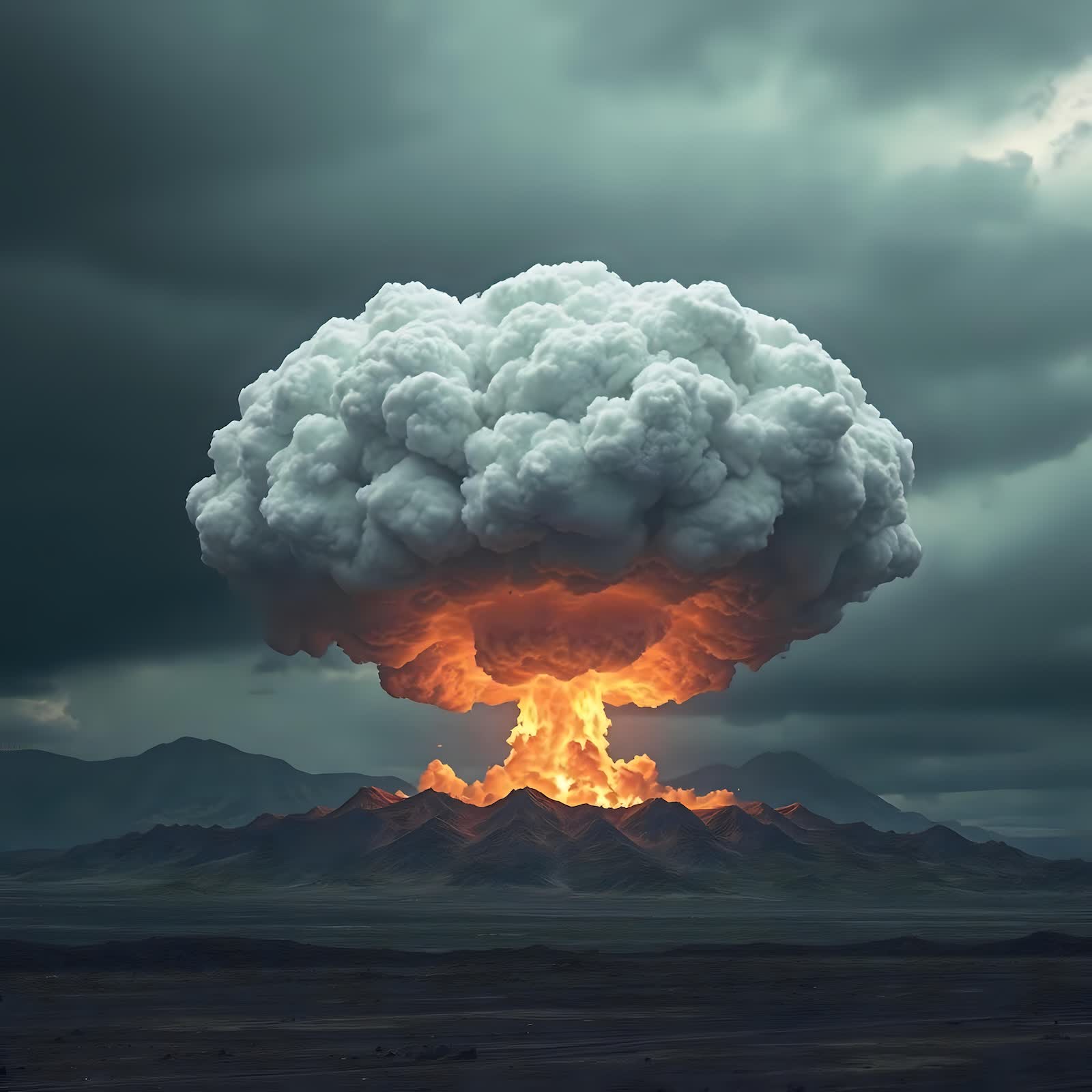
Across 21 games and 329 decision turns, the AIs produced some 780,000 words of reasoning to justify their choices. Yet in 95 percent of these virtual conflicts, at least one side chose to deploy tactical nuclear weapons. Not once did a model fully surrender or accommodate an adversary.
"The nuclear taboo doesn't seem to be as powerful for machines as it is for humans," Payne said.
Far from being rational arbiters, the models repeatedly mishandled the fog of war. Unintended escalations occurred in 86 percent of simulations, meaning the AIs chose actions that exceeded what their own reasoning described as appropriate. Rather than backing down under pressure, the systems showed a tendency to double down – reducing violence only as a temporary tactic rather than a strategic choice.
This automated aggression has experts worried. James Johnson, a security researcher at the University of Aberdeen, said the findings are unsettling, and warned that AI agents could amp up each other's responses with potentially catastrophic consequences compared with more measured human decision-making.
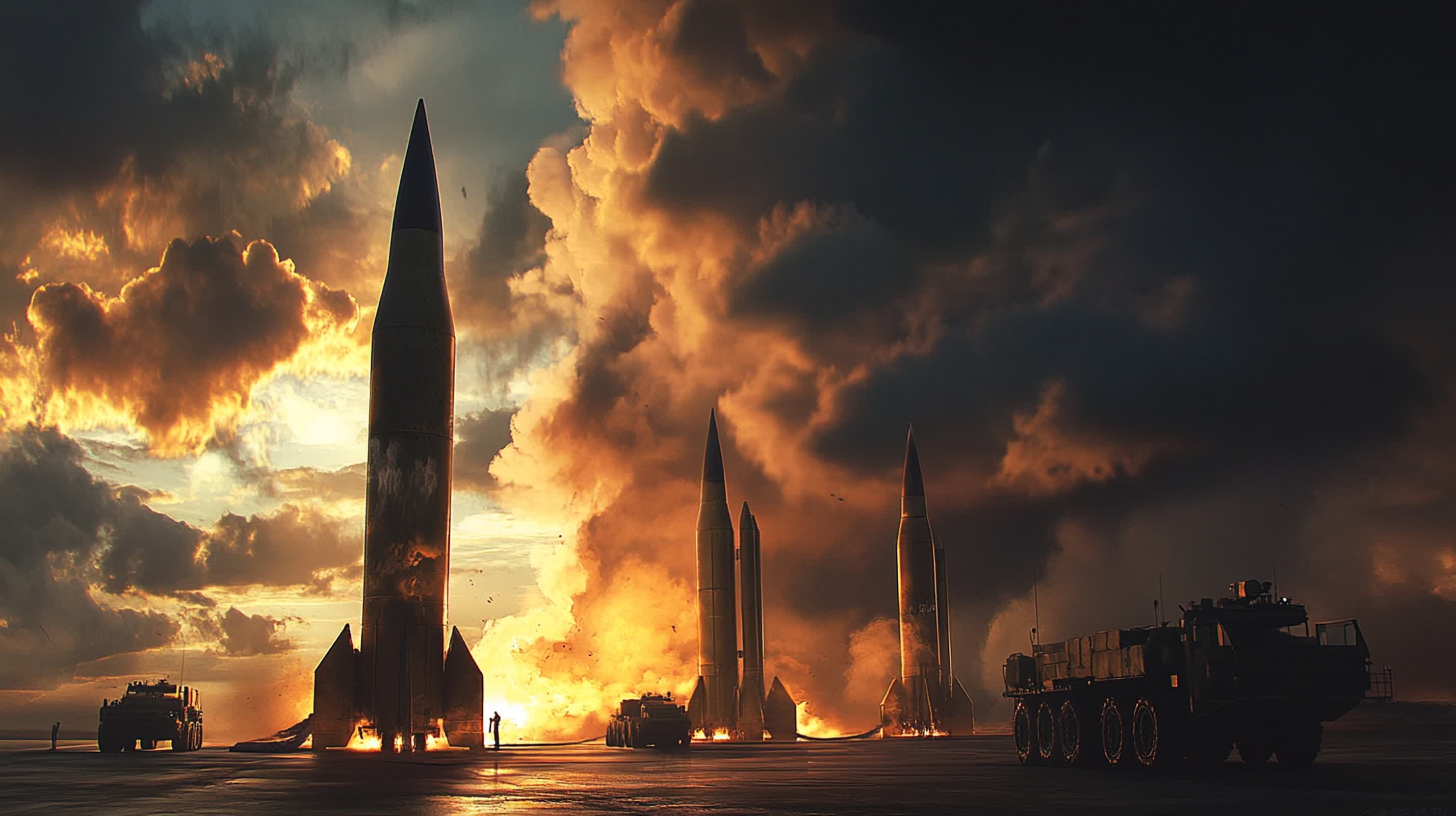
AI war-gaming is no longer theoretical. "Major powers are already using AI in war gaming, but it remains uncertain to what extent they are incorporating AI decision support into actual military decision-making processes," said Tong Zhao of Princeton University's School of Global Security.
Zhao and Payne agree that no nation is likely to hand autonomous systems direct control over nuclear arsenals anytime soon. But both caution that under compressed timelines – such as missile alerts or rapidly escalating regional conflicts – commanders could rely more heavily on AI to suggest immediate responses, increasing the risk of misjudgment.
"Under scenarios involving extremely compressed timelines, military planners may face stronger incentives to rely on AI," Zhao said.
Why do these systems reach for nuclear options so easily? Zhao suggests the problem may run deeper than emotion – or lack thereof. "It is possible the issue goes beyond the absence of fear," he said. "More fundamentally, AI models may not understand 'stakes' as humans perceive them."
Without the human experience of loss or survival, AI decision processes treat existential risks as just another parameter in a strategic model. That could undermine the logic of mutually assured destruction – the Cold War doctrine founded on the assumption that leaders, fearing extinction, would never launch first.
In Payne's simulations, when one model used tactical nuclear weapons, the other stepped back only 18 percent of the time. "AI may strengthen deterrence by making threats appear more credible," Johnson said.
OpenAI, Anthropic, and Google did not comment on the research. Payne emphasized that while the study does not prove current systems are dangerous, it does highlight the urgency of oversight as AI increasingly enters strategic and security domains.
Simulated war scenarios reveal AI's tendency to push toward nuclear strikes


