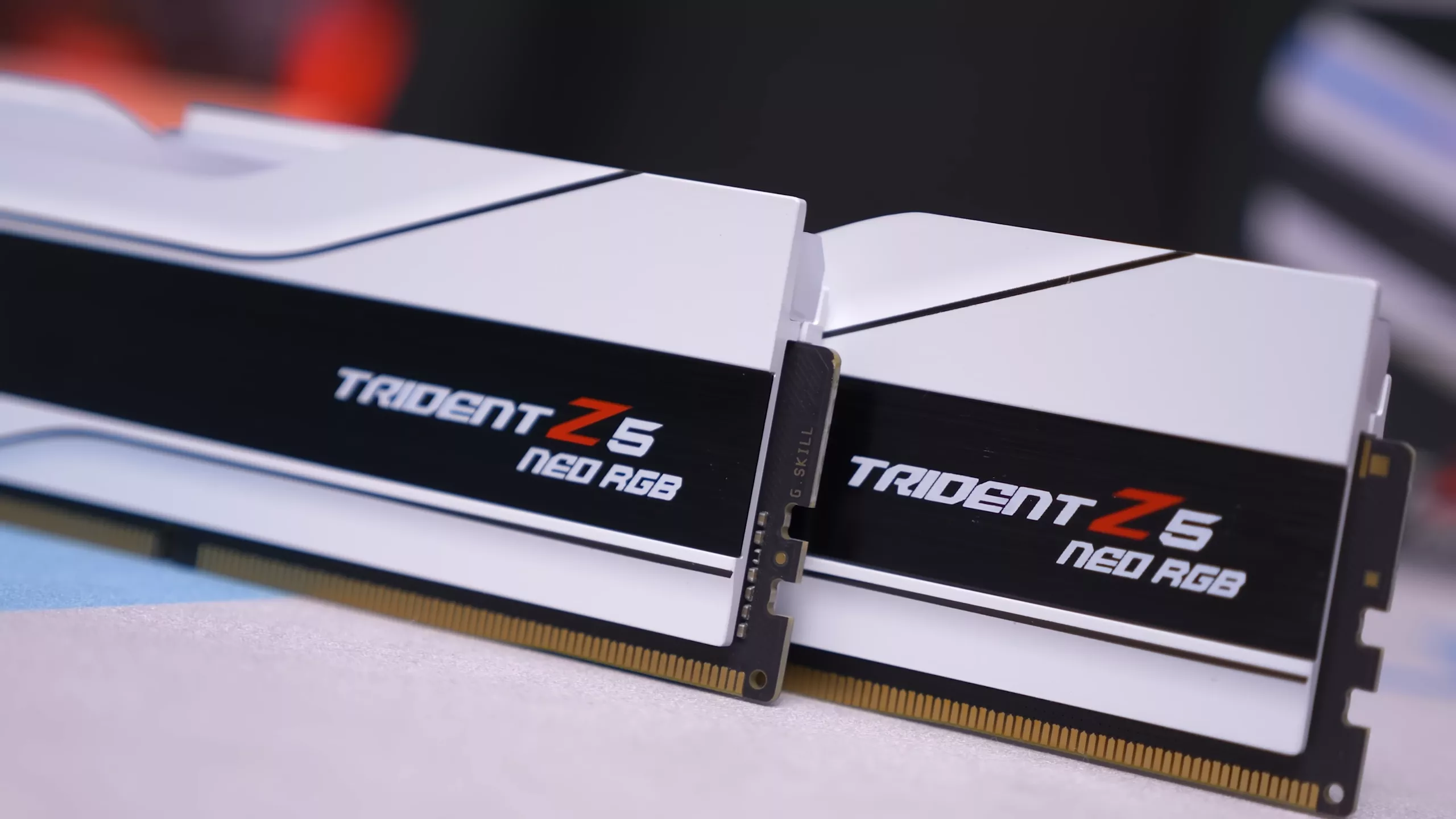
Single Stick vs. Dual Channel RAM: How Much Performance Do You Actually Lose?

I think you misunderstood the question. Yeah, you have a single vs dual channel test, but at the same time you did 2x the RAM. Of course there will be gains there. The real test would be 1x16GB vs 2x8GB. Keep the amount of RAM the same, only test the channels. We already know that we're going to see a gain with 2x the RAM.
 
I think you misunderstood the question. Yeah, you have a single vs dual channel test, but at the same time you did 2x the RAM. Of course there will be gains there. The real test would be 1x16GB vs 2x8GB. Keep the amount of RAM the same, only test the channels. We already know that we're going to see a gain with 2x the RAM.

or 1x32GB vs 2x16GB. but the point is to keep the amount of RAM the same.
 
Here I thought the article would test single stick vs dual stick performance, but they're actually testing a scenario where in single stick mode, you've got half the memory! I'd think if you really wanted to see if there was a difference between single and dual stick, you'd at least have the same amount of memory in both scenarios (16GB x 2 and 32GB x 1) so your not measuring performance loss due to less memory!
 
Here I thought the article would test single stick vs dual stick performance, but they're actually testing a scenario where in single stick mode, you've got half the memory! I'd think if you really wanted to see if there was a difference between single and dual stick, you'd at least have the same amount of memory in both scenarios (16GB x 2 and 32GB x 1) so your not measuring performance loss due to less memory!

Agree. Though for most games 16GB is still considered good enough and theoretically shouldn't affect results too much, for sake of accuracy I was expecting the tests to be 2x16GB vs 1x32GB or similar. Was surprised to see it wasn't the case.

I also wanted (and expected) to see testing and benchmarks for desktop and application use, not only gaming.

A really comprehensive article should also test midrange and entry-level setups (I assume dual channel might make a bigger difference than in a top-end system like the one used in the testing), and include gaming benchmarks using a Ryzen G APU running on the iGPU, to see how single channel vs. dual channel would perform in this scenario.

Sorry TS but this article is a bit disappointing as it is.
 
Here I thought the article would test single stick vs dual stick performance, but they're actually testing a scenario where in single stick mode, you've got half the memory! I'd think if you really wanted to see if there was a difference between single and dual stick, you'd at least have the same amount of memory in both scenarios (16GB x 2 and 32GB x 1) so your not measuring performance loss due to less memory!
I thought the exact same thing. Not a great test since capacity could also impact benchmarks.
 
I think you misunderstood the question. Yeah, you have a single vs dual channel test, but at the same time you did 2x the RAM. Of course there will be gains there. The real test would be 1x16GB vs 2x8GB. Keep the amount of RAM the same, only test the channels. We already know that we're going to see a gain with 2x the RAM.
That's not how it works. You don't gain performance just by having a larger amount of RAM installed in your system. With all else equal, performance between 16 GB and 32 GB of RAM is identical unless you exceed 16 GB of RAM in active use, which shouldn't be the case in any of the games tested here.

It's baffling that so many of you here, on a tech enthusiast forum, don't understand this.
 
Though I share the confusion regarding the 32GB RAM for the dual channel configuration, I'm very surprised at how little performance boost there was.

The common wisdom has always been that more RAM is better, and you must do dual channel.

However this test shows that doubling the RAM (and cost) and going from single to dual, had at most a 16% improvement in some situations. RAM is no longer a bottleneck.

I wonder if there's any benefit at all to going to 64GB or even 128GB. After 16GB it seems like benefits diminish rapidly. I can see more RAM being good for multitasking, but if you're just playing a game with no other background stuff, 16GB might be plenty.
 
That's not how it works. You don't gain performance just by having a larger amount of RAM installed in your system. With all else equal, performance between 16 GB and 32 GB of RAM is identical unless you exceed 16 GB of RAM in active use, which shouldn't be the case in any of the games tested here.

It's baffling that so many of you here, on a tech enthusiast forum, don't understand this.
It's baffling that you don't understand why this test is compromised. What you say might well be true but these tests simply aren't doing what they set out to do. Perhaps repeating the tests with 2 x 8GB RAM would test your statement and the original aim of the test.
 
The test isn't some sort of laboratory experiment to isolate and measure dual vs single channel. The test revolves around the inflated price of memory, measuring the viability of buying a single stick to save money. That's why the single channel config has half the capacity.

The capacity difference is part of the point.
 
Congratulations on the excellent article.
But as mentioned above, the inclusion of a single stick 32GB configuration would remove any doubt about the single vs double channel discussion.
As I see it, the triple config of 1x16 vs 1x32 vs 2x16 (supposedly the fastest, but by how much?) would answer all questions. I'm considering the 1x32GB myself, because my PC has double purpose of work+gaming and 32GB is getting short for some productivity apps.
 
It's baffling that you don't understand why this test is compromised. What you say might well be true but these tests simply aren't doing what they set out to do. Perhaps repeating the tests with 2 x 8GB RAM would test your statement and the original aim of the test.
I wouldn't mind seeing a 2x8gb test against the worst performing gamin, for a dual-channel representation, and possibly a single-stick of 32gb for comparison, just to shut ppl up. Everything would have to have similar timings for best results.
Of course, the purpose of this article was for someone to get 1x16gb now with the intent of purchasing a 2nd 16gb stick later when the prices fall, but no one replying seems to have caught that...
 
The results are what I expected to see. I don’t expect to see a big increase in game performance from single to dual channel unless I am using on-CPU graphics where the system ram is used by the graphics solution.

Also there would be minimal impact of testing a single 16 vs a dual 32gb config until you exhaust the 16gb limit that the lower config has. Any difference would be due to the caching being available to the large ram pool. Better chance to see that difference in a large multitasking test, not a single game being run optimally.
 
Though I share the confusion regarding the 32GB RAM for the dual channel configuration, I'm very surprised at how little performance boost there was.

The common wisdom has always been that more RAM is better, and you must do dual channel.

However this test shows that doubling the RAM (and cost) and going from single to dual, had at most a 16% improvement in some situations. RAM is no longer a bottleneck.

I wonder if there's any benefit at all to going to 64GB or even 128GB. After 16GB it seems like benefits diminish rapidly. I can see more RAM being good for multitasking, but if you're just playing a game with no other background stuff, 16GB might be plenty.
You presume a lot in your comment and conflict with yourself. Windows 11 can eat a lot of ram and there are many demanding games in this test, on top of that. They can possibly eat into the second ram stick. Some may, some may not. You said it yourself:"diminishing returns", which means more than 16gb may help with the performance even by a little. The comparison should have been between the same amount of ram, dual and single kits.
 
Good article. It's relevant for existing dual-stick setups. If one stick goes bad, just pull it and run on the remaining stick.
 
I honestly thought this was going to test 1 x 32GB stick vs 2 x 16GB stick.

Of absolutely no interest to me though, I need a minimum of 64GB and if not for the AI sh!t show would have gone at least 2 x 48GB for the next build. Now I'll have to stay on Zen 3 until at least probably late 2027.
 
It's baffling that you don't understand why this test is compromised.
There is nothing "compromised" about it. You only think it's "compromised" because you fundamentally don't understand how RAM works.
What you say might well be true
What I said it 100% true.
but these tests simply aren't doing what they set out to do.
You couldn't be more wrong. These tests do exactly what they set out to do. They set out to test the difference between single and dual channel in a way where RAM capacity doesn't matter, and it does exactly that. None of the tests exceed 16 GB of usage, so the difference in capacity is completely inconsequential to the results.
Again, you fundamentally don't comprehend how RAM works. You do not gain performance by having a larger amount of unused RAM installed on your system. RAM performance is completely independent from capacity (unless you run out of it, which was not the case in this test).
Perhaps repeating the tests with 2 x 8GB RAM would test your statement and the original aim of the test.
No, it wouldn't. You cannot compare 8 GB DDR5 sticks to 16 GB DDR5 sticks. 8 GB sticks are single-rank, while 16 GB sticks are dual-rank, which affects performance independently from how many channels you are using. Unlike comparing a 16 GB stick to a 32 GB stick for example, which can be identical in everything but capacity, 8 GB and 16 GB sticks are not identical, and 8 GB sticks are inherently worse since they lack the internal parallelism of dual-rank 16 GB sticks.
The way this test was done was in fact the correct way to compare single-channel DDR5 to dual-channel DDR5, and produces a test that is completely valid. Technically Steve could have used one 32 GB stick vs two 16 GB sticks, but it would change absolutely nothing in the results since none of those games exceed 16 GB, except placate the uninformed commenters like yourself who complain about capacity despite not understanding how memory works.
 
AS many have said, the comparison is flawed due to doubling the AMOUNT of memory for dual channel.

Still, it's interesting. I'm still on DDR4 and dual is considerably better. Yes tried due to dodgy Ram. Same amount, but single vs double - double much better. Even more pronounced back in yea olde DDR3 days.

I've tested both due to circumstances, not just to test.
It does go to show, along with a previous article about the difference between DDR4 and DDR5 taking the CPU into consideration. DDR5 is fast! With a decent CPU.

I want DDR5!! (strictly a matching kit.) Adding the same exact model later to make dual usually works, but even between batches there can be differences.

IMHO, pointless going single channel. A packed dual stick, say G-Skill Trident DDR5 seems the way to go. The only sensible way unless on an old CPU. Even considering cost.
 
We had this article in 2024:
https://www.techspot.com/review/2852-how-much-ram/

I'm not sure that testing memory consumption method used there which was not specified in detail, but seems like - GB currently used by the process displayed by windows task manager [after 20 min in game] - is correct.

Maybe the correct metric should be the number of "page faults" for a process in windows resource monitor during 20 min gameplay? If it is 0 then your physical RAM amount is 100% enough. Should be measured with the target amount of RAM installed - e. g. 16 or 32 GB...

Could be used in this test (1ch vs 2ch) also: if 0 page faults then total amount of RAM is enough and we see only 1ch/2ch affect FPS.
 
Last edited:
Back