Smart homes are out, "dumb" homes are the new luxury

Skye Jacobs

Posts: 2,026   +59
Staff
Editor's take: For years, tech companies and real estate agents have sold the promise of the fully automated smart home – a space where voice-activated lights, cameras, and climate systems work seamlessly together. But in 2025, a growing share of homeowners seem to be moving in the opposite direction. The same technologies that once promised convenience and control are now being reassessed, as many Americans reconsider what kind of home feels most
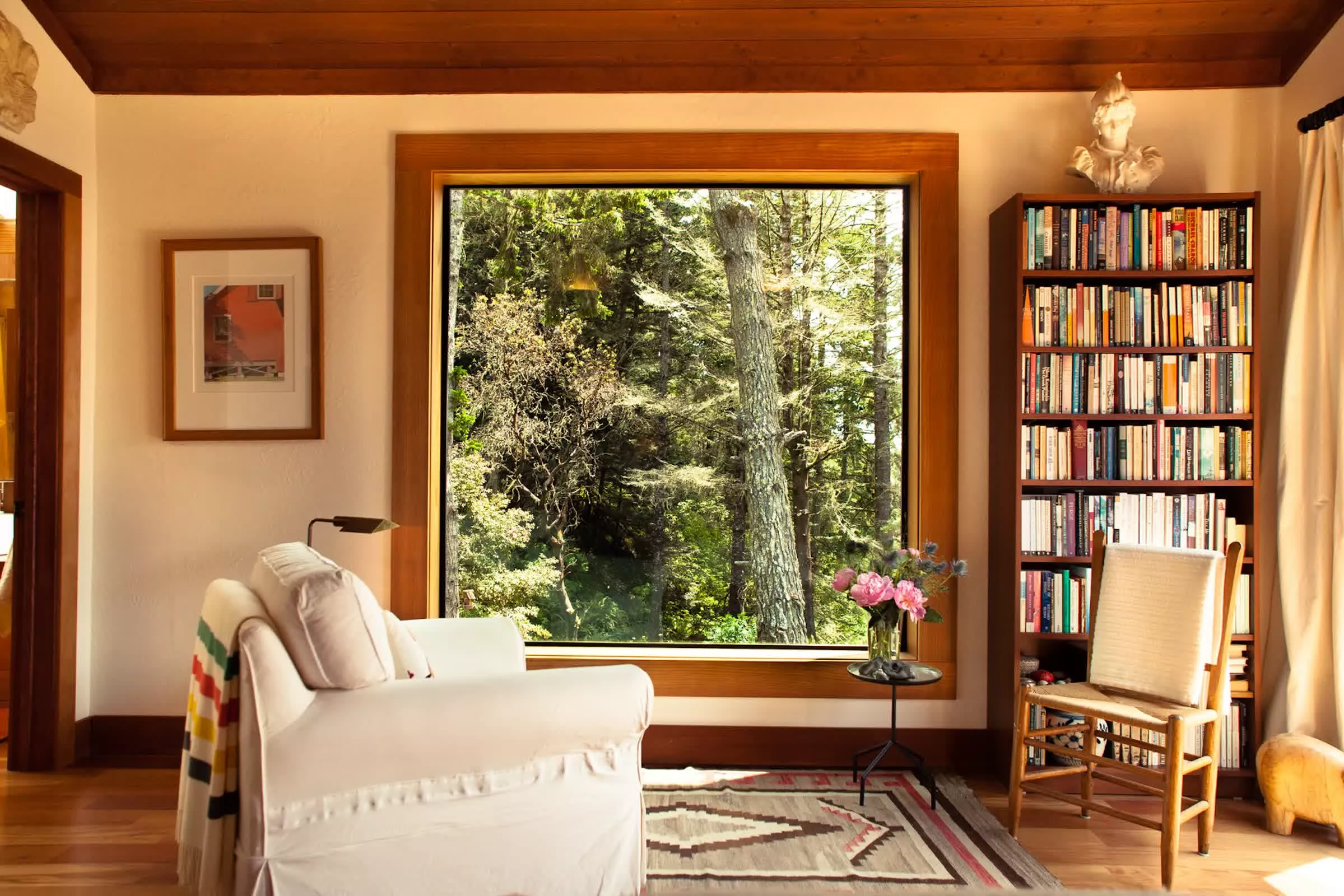
Rising costs, privacy concerns, and digital fatigue are fueling an unexpected "dumb home" movement, where simplicity is part of the appeal. Beth McGroarty, vice president of research at the Global Wellness Institute, told Axios that homeowners are moving from "NASA-style setups" toward manual switches, dials, and mechanical controls. The trend, she said, reflects a broader "analog wellness" mindset – one focused on creating calmer, less connected living spaces.

Architect Yan M. Wang added that many clients now find constant background technology – from listening devices to smart sensors – more stressful than soothing. For them, designing homes that minimize digital presence has become essential to achieving a sense of restoration.
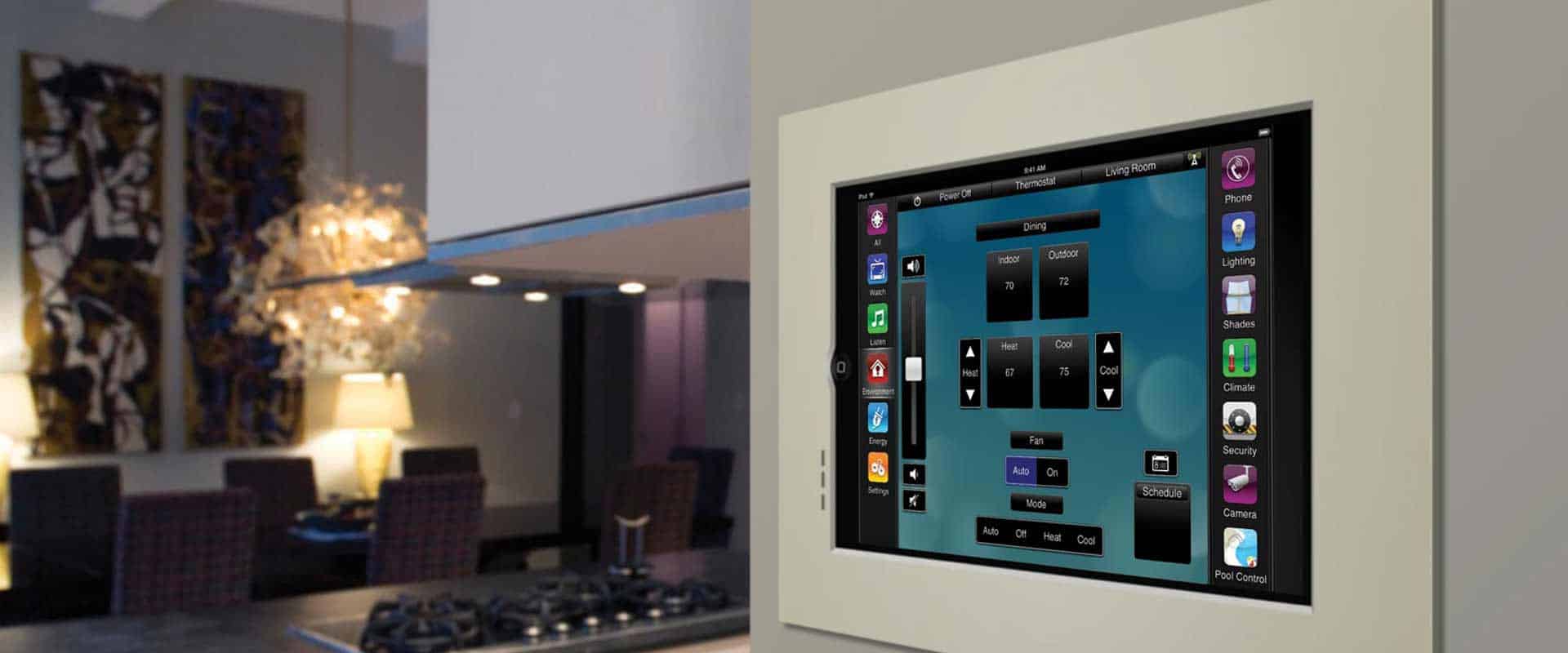
The financial side of the shift is also becoming clearer. Smart home technology is a $100 billion industry, but costs can quickly add up for consumers. Frequent software updates, device incompatibility, and short upgrade cycles make systems expensive to maintain. Some high-income buyers in Los Angeles have reportedly begun avoiding homes filled with Wi-Fi-enabled devices altogether, viewing them as unnecessary expenses that contribute little to resale value.

Data from Zillow underscores how buyers' priorities are changing. The company's 2026 Home Trends Report showed that mentions of "reading nooks" in home listings rose 48 percent compared with a year earlier. Zillow interprets the increase as a sign that people are now seeking spaces for "unplugged relaxation," where screens and automation play a minimal role. Dwell magazine also listed the decline of smart homes as a defining design trend for 2025 and beyond, citing growing interest in tactile, tech-free interiors.

The national mood surrounding connectivity has shifted beyond home design. Landline phones have seen a modest resurgence, according to The Washington Post, particularly among parents who want to limit their children's screen time. Even some members of Generation Z – who grew up with smartphones – are embracing retro telephones, a movement that The New York Post has described as both an aesthetic choice and a form of digital escape.

Still, the share of homes relying on landlines remains small. Federal data from the National Center for Health Statistics shows that by the end of 2024, roughly 79 percent of adults and 87 percent of children lived in wireless-only households – up from just 13 percent in 2006.

The move away from high-tech living isn't universal. Realtors say smart home features continue to add value in innovation-driven markets such as San Francisco and Austin, where buyers often expect advanced systems to be integrated into daily life.

However, Andrew Fortune, a Colorado brokerage owner, told Realtor.com earlier this year that in second-home and leisure markets, the return on investment for home automation features has been inconsistent. Buyers in those areas, he said, are often looking for the opposite: properties designed as a refuge from constant connectivity.

Permalink to story:

 
Funny, when I think of a "smart home" I don't think of consumer electronics at all. I think of a home with net positive pressure, completely sealed with the ZIP system, and with alternative electricity systems that allow me to live comfortably off the grid.
 
The problem with most smart home devices is they become worthless once the manufacturer decides to shut down the app and/or cloud-based service they rely on to run. And DIY home auto services are neat until you try to sell the house and realize nobody is interested in whatever system you set up.
 
There was never anything "smart" in compromising security and privacy of one's house through many unsecure control points. It was always very dumb.

And pretty much every manufacturer of such "smart" gadgets has been lying through their teeth about the security that's just not there.
 
Last edited:
About time. Why would anyone with 1/2 brain want devices all over your place recording every move you make...and, sending the data to some cloud server that you have ZERO control over.
I see these as two separate issues.

Pretty sure I have at least 1/2 a brain (although who wouldn’t say that). But, my Home Assistant is fully in my control and brings some pretty nice enhancements into my life. For example, I can now track my energy use down to the lightbulb, which has revealed some pretty interesting things about my living habits that I was previously unaware of.

But my monitoring sensors also don’t send data anywhere outside my LAN. They’re fully isolated on my network and unable to access the internet without explicit approval. So I get full control. But that requires some basic management—like how, if you own a house, you should be regularly checking its structural condition.

It’s not that we can’t have these things, it’s that too many people are too lazy to want to bother to learn how to manage them. Instead, they’d prefer someone else to do all the work so they can just plug/play. Which I totally get—people throughout history love free labor. But these things take hard work to set up, and someone’s going to get paid to do that for you one way or another. Seems to me, at this point, it takes some superior-level incompetent obliviousness to NOT know any SaaS company is going to use whatever methods they can to, you know, make a profit. As they should; that’s how economy works. We all want to get paid for our labor. I mean, how long have we been talking about the value of your metadata? Gimme a break.

As an aside, I’ve discovered that there are often too many variables to make many automations actually beneficial. The novelty wears off rather quickly. There are some, like when I want my porch light to always come on 30 minutes before sunset, that are pretty nice. But too many automations fall victim to the randomness of me NOT wanting that automation right now. Like, I don’t always want my robot vacuum to start at the same time every day because I work from home and my at-home schedule fluctuates—which means I have to stop the automation too often for it to be useful; it becomes annoying.

So automations can be great and all, but only when the world they exist in is nearly 100% predictable. Too many things in the real world have nuanced complications that change the dynamic, and too often trying to automate things in that space simply creates micro-managing inconveniences we didn’t consider.
 
The best smart home feature is the WiFi-enabled, SMART dishwasher and laundry machine. WTF are people thinking, that it’s going to load itself?

By the way, “SMART” = Self Monitoring And Reporting Technology, it’s not “smart” how it’s spoken or generally understood to be. The tech is designed to track and report whatever it’s programmed to do. A year ago, we paid $500 MORE for “dumb” washers and dryers… They want this tech in our houses for a reason.
 
The best smart home feature is the WiFi-enabled, SMART dishwasher and laundry machine. WTF are people thinking, that it’s going to load itself?

By the way, “SMART” = Self Monitoring And Reporting Technology, it’s not “smart” how it’s spoken or generally understood to be. The tech is designed to track and report whatever it’s programmed to do. A year ago, we paid $500 MORE for “dumb” washers and dryers… They want this tech in our houses for a reason.

YEP. Soon it will be impossible to buy dumb appliances. Then a market will grow for ways to disable the Smart tech.
 
"SMART" tech is just a way for a manufacturer of an appliance to toss in a cheap LCD screen, a couple chips, charge a subscription and make a low quality product that breaks in 2-5 years so you have to buy a new one.
Gone are the days when a dishwasher, stove, washer/dryer, refrigerator lasted 10-30 years and didn't cost an arm and a leg.
 
This is no surprise to me. The only way I would do a "smart" home is its system exists inside my house and not connected to the internet. But I'm fine with a light switch too. So many of my appliances have wifi now and yet I refuse to connect them.
 
Some smart appliances make sense when they protect the home or reduce energy usage. Some examples are a water usage monitor that can shut off the water if it detects a leak, a smart thermostat that can adjust based on your schedule or home/away patterns, a smoke alarm or CO2 monitor which can ping your phone if it detects an issue (for when you are away and can't hear it), a smart doorbell which doubles as security monitoring, or a smart circuit that cuts power to, say, a dumb water heater from midnight to 6am or some such to reduce energy usage (or, of course, a smart water heater that does the same). I have some of these (admittedly never bothered to set up the smoke alarm monitor), but I made sure to put them all on a separate network.

Other things like a smart fridge, stove, microwave, (dish)washer, or dryer don't make sense to me with their limited functionality (put some robot arms on those that actually do some work, then you've got my interest). Smart locks seem like a vulnerability. Some things like smart vacuums or lawn mowers aren't really part of the home but still fall into home automation, and so can be decided upon "on demand" so to speak (rather than tied to a home permanently).
 
Old appliances lasted longer b/c they were generally more expensive. First microwave in household lasted 15 yrs… but cost $500 1979 dollars. An acquaintance had top-of-line GE kitchen stove & wall oven from 50’s… in speckled pink… wanted them to die b/f she did.

It is still early days on “smart” appliances, markets will shake the weak and superfluous ones out. Records/reeltoreel/8-tracks/tapes/CDs… and records again(?). Niches will emerge/recede. The past is the past for a reason.
 
The only built-in technology I want in the home is Cat5 wiring and ample outlets. Everything else is a privacy nightmare and additional failure point.

There's no reason to require software that can be EOLed or compromised on every appliance and in every room. I spend all day with data and efficiency. Let me come home to simple controls and easy maintenance.

I dread replacing our aging appliances and trying to find non-networked versions. Apparently even dishwashers require an app these days.
 
As long as the sheeple swallow the hype and keep buying into the "smart" brainwash it will keep people wasting their money on bells and whistles that add nothing useful to daily life.

I recently had to replace a crt television that had been giving very good service since bought new in the mid 90s. A non-smart TV was unavailable in today's market and my research told me that a new smart TV was unlikely to give reliable service more than 4 or 5 years. Inevitable failure was laid at the feet of either LED burnout or software no longer being supported. Early failure = early replacement = more landfill = more profit. I found one that works perfectly well even though I deny it access to the internet. TV programs are such rubbish these days I won't bother replacing it when it goes wrong.
 
Get a commercial TV or don’t connect your TV to WiFi & hook up to a streaming box

I do the same. I have a x86 Console-PC (with a console interface) connected to my TV. I control it via Wireless keyboard/mouse/controller. However, I had some guests over a few weeks ago and they stayed over for a couple nights. We set them up in the tv room. To my horror, they preferred using the youtube app built into the smart tv over the Console-PC. They preferred typing in the search box from the TV remote rather than a real keyboard. I realised that day most people are ACTUALLY SHEEP!!! They do what everyone does and are too incompetent to learn new things/think for themselves. Reminds me of an old XKCD meme "Casuals ruin everything"


PS: My guests also had no clue about picture quality or sound quality (I tested it)
 
I do the same. I have a x86 Console-PC (with a console interface) connected to my TV. I control it via Wireless keyboard/mouse/controller. However, I had some guests over a few weeks ago and they stayed over for a couple nights. We set them up in the tv room. To my horror, they preferred using the youtube app built into the smart tv over the Console-PC. They preferred typing in the search box from the TV remote rather than a real keyboard. I realised that day most people are ACTUALLY SHEEP!!! They do what everyone does and are too incompetent to learn new things/think for themselves. Reminds me of an old XKCD meme "Casuals ruin everything"


PS: My guests also had no clue about picture quality or sound quality (I tested it)
My partner has no idea why I prefer using a Chromecast to built in apps and doesn't want the extra step. Butife goes on.
 
I wonder what George Orwell would think if he could see that we willingly go out and buy a Ring doorbell to record everything happening in front of our home, drones that fly around inside our house recording everything in the house, cameras in our bedrooms and smartphones that are always listening to us - often offering us advice when we never asked for it.

 
Back