Spain plans under-16 social media ban, Elon Musk calls prime minister a "tyrant"

midian182

Posts: 11,763   +179
Staff member
In brief: Countries around the world are banning young people from social media. Following similar moves by Australia and France, Spain plans to ban under-16s from platforms such as Facebook and X, and hold those companies accountable for illegal user-generated content. X's owner, Elon Musk, responded by calling the Spanish prime minister a "tyrant."
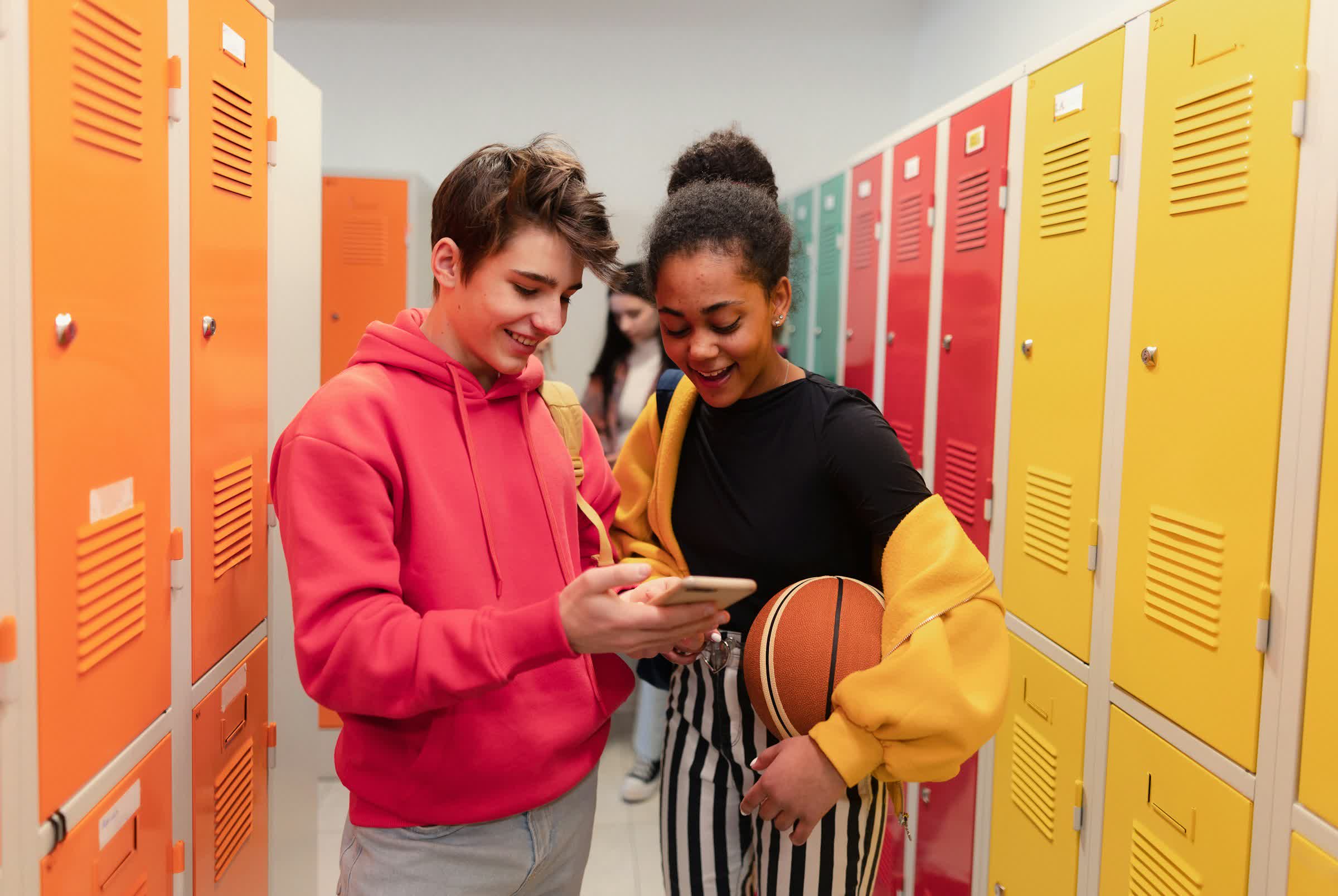
Spain's under-16 ban, which still requires parliamentary approval, is part of a series of measures announced by prime minister Pedro Sánchez.

Speaking at the World Governments Summit in Dubai on Tuesday, Sánchez said the measures will protect children from the "digital wild west" and hold tech companies responsible for illegal and harmful content on their platforms.

Sánchez said the ban was required as social media was a "failed state where laws are ignored and crimes are tolerated."

The changes will require social media platforms to implement effective age verification systems, "not just check boxes, but real barriers that work." The prime minister is likely referring to Australia's ban, which has seen teens circumvent the restrictions by making unusual facial expressions, applying makeup, using VPNs, or simply uploading a photo of an adult.

Sánchez said another measure would be to "investigate and prosecute the crimes committed by Grok, TikTok, and Instagram."

The Spanish PM singled out Elon Musk, accusing the billionaire of using X to "amplify disinformation" over the administration's plans to regularize 500,000 undocumented migrants and asylum seekers. Sánchez pointed out that Musk himself was a migrant.

Musk responded with an X post that read: "Dirty Sánchez is a tyrant and a traitor to the people of Spain." He added in a later post that "Sánchez is the true fascist totalitarian."

About 82% of people in Spain said they believed children under 14 should be banned from social media, according to an Ipsos poll – an increase over the 73% that said the same in 2024.

Following Australia's ban on under-16s from opening and operating social media accounts in December – the first democratic country to impose such restrictions – France approved a bill to ban under-15s from the platforms last month.

With Spain set to bring in its own restrictions, it appears that Greece will soon follow suit. A senior government official told Reuters that the country is "very close" to announcing a social media ban on children under 15.

Germany, Italy, and Britain are also considering introducing restrictions on children's social media use.

Permalink to story:

 
Musk: "I don't fancy that someone is standing up to profitable, if psychologically-harmful platforms such as my own, so let me throw dirt on them, using the cant of democracy and free speech. Always works."

Despite being rebellious at times, children both want and need to be told "no," and be subject to a fair set of rules.
 
Isn’t this a slippery slope?

While the idea of banning kids from social media might be well-intentioned and partly justified, the way it’s likely to be enforced (at least here in the UK) could mean mass ID collection for everyone, making online tracking and accountability for every adult far too easy. The only way to verify who’s a child and who’s an adult would be a blanket restriction on access until you prove your age.

In a country where people are already being arrested for comments that offended someone or expressed disagreement, adding another layer of ID requirements with easy traceability feels worrying. As a gamer, I already feel treated like a predator under the strict Online Safety Bill. Refusing to hand over my passport or undergo background checks has meant restricted access to Xbox and Discord, with constant reminders to verify my identity “for the safety of children.” Steam will follow suit by April.

Meanwhile, VPNs are being used to bypass these measures, and the government isn’t happy - so will they be banned next, or made subject to the same ID rules? It feels like the free internet is disappearing fast, with “protecting the children” as the catch-all excuse to vet everyone for any site or service with a social element. On top of that, companies often misinterpret the laws and overreach - like Spotify asking me last year to verify my ID to keep using a 15-year-old account paid for in my name with my credit card.

I can't see this path we and other countries are heading down working out too well in the long run.
 
Banning social media for children (which should have happened long ago) will solve only some problems.

What should happen is banning the anonymous usage. Each post, photo, video etc. should have a verifiable source - a human with a known full name, age or age category, and country of residence.
Otherwise social media will die soon. They are less and less real humans, on many places above 80% are trolls and bots.

The idea to hold companies accountable for user generated content is truly idi0tic and frightening at the same time, but if anonymous usage is no longer possible objectionable content will disappear practically overnight.
 
Are they trying to stop social interactions by the young online? Or is it something more specific? If it is more specific, maybe these platforms can fix it without a total ban?

I havent seen an exact definition of ”social media” with these announcements. Like what is it that makes reddit social media but not discord?

This is just pop-politics, it sounds good and looks good, but is empty inside.
 
Banning kids from social media is a good idea.

HOWEVER, the only way to effectively do that is to tie all online accounts for kids and adult to a government issued id, therefore increasing adult tracking and eliminating anonymous citizen dissent.

That's why this is happening globally so quickly. Nothing spreads faster than a good story that gives the government more power.

No one wants everything online tracked. Take our (not full name) usernames on this forum as an example.
 
Isn’t this a slippery slope?

While the idea of banning kids from social media might be well-intentioned and partly justified, the way it’s likely to be enforced (at least here in the UK) could mean mass ID collection for everyone, making online tracking and accountability for every adult far too easy. The only way to verify who’s a child and who’s an adult would be a blanket restriction on access until you prove your age.

In a country where people are already being arrested for comments that offended someone or expressed disagreement, adding another layer of ID requirements with easy traceability feels worrying. As a gamer, I already feel treated like a predator under the strict Online Safety Bill. Refusing to hand over my passport or undergo background checks has meant restricted access to Xbox and Discord, with constant reminders to verify my identity “for the safety of children.” Steam will follow suit by April.

Meanwhile, VPNs are being used to bypass these measures, and the government isn’t happy - so will they be banned next, or made subject to the same ID rules? It feels like the free internet is disappearing fast, with “protecting the children” as the catch-all excuse to vet everyone for any site or service with a social element. On top of that, companies often misinterpret the laws and overreach - like Spotify asking me last year to verify my ID to keep using a 15-year-old account paid for in my name with my credit card.

I can't see this path we and other countries are heading down working out too well in the long run.
I think those concerns are valid in general, but also don’t think they’re inseparable from the goal.

Social media does real, measurable harm to kids. Largely because algorithmic engagement engines are designed to maximize time-on-platform and leverage well-know psychological tricks to do so. Regulating or banning those systems (for minors, or even more broadly) would likely do far more than blunt ID checks ever could. Frankly, if feeds simply weren’t optimized for addiction, a lot of the damage simply wouldn’t exist.

I think that slippery slope only becomes real if age limits are enforced via identity collection instead of age assurance. It is possible to (mostly) prove you’re over 16 without handing over passports or tying accounts to a real-world identity (zero-knowledge proofs, attribute tokens, payment-based checks, device-level assertions, etc.). The problem is we don’t insist our governments require privacy-preserving methods, so companies over-comply. Once collected that data is irresistible.

So I don’t think the choice is “protect kids vs free internet.” It’s whether we rein in algorithmic engagement engines, use anonymous one-time age assurance, legally block reuse of age data, and protect VPNs and pseudonymous access for adults.

Without those guardrails, your worries make complete sense. With them, tackling child harm doesn’t require turning the internet into an ID-gated space. Advocacy over how this is done really matters.
 
Here in the UK they're looking to ban mobile phones from school entirely. The problem for kids (and many adults) is that they compare themselves to those in videos and wonder why they're not living the same lives. When it's repeated endlessly it becomes harmful. To quote the B52's:
you may ask yourself
"Where is that large automobile?"
And you may tell yourself
"This is not my beautiful house!"
And you may tell yourself
"This is not my beautiful wife!"
 
I think those concerns are valid in general, but also don’t think they’re inseparable from the goal.

Social media does real, measurable harm to kids. Largely because algorithmic engagement engines are designed to maximize time-on-platform and leverage well-know psychological tricks to do so. Regulating or banning those systems (for minors, or even more broadly) would likely do far more than blunt ID checks ever could. Frankly, if feeds simply weren’t optimized for addiction, a lot of the damage simply wouldn’t exist.

I think that slippery slope only becomes real if age limits are enforced via identity collection instead of age assurance. It is possible to (mostly) prove you’re over 16 without handing over passports or tying accounts to a real-world identity (zero-knowledge proofs, attribute tokens, payment-based checks, device-level assertions, etc.). The problem is we don’t insist our governments require privacy-preserving methods, so companies over-comply. Once collected that data is irresistible.

So I don’t think the choice is “protect kids vs free internet.” It’s whether we rein in algorithmic engagement engines, use anonymous one-time age assurance, legally block reuse of age data, and protect VPNs and pseudonymous access for adults.

Without those guardrails, your worries make complete sense. With them, tackling child harm doesn’t require turning the internet into an ID-gated space. Advocacy over how this is done really matters.

That's the thing: these systems were designed to be addictive, and even adults would benefit from limiting use. People feel more depressed after looking at others' fake lives, with the fancy sports car, the ideal body, or kicking back on the beach.
 
I mean, how many countries that have implemented these band have now once again moved to ban VPNs using the same language, and are also arresting people for saying mean things on social media? The UK, australia, france, china, ece.

At what point does the slippery slope stop being a fallacy and start being reality? Cause it sure looks like countries are using these rules to oppress people.
 
I mean, how many countries that have implemented these band have now once again moved to ban VPNs using the same language, and are also arresting people for saying mean things on social media? The UK, australia, france, china, ece.

At what point does the slippery slope stop being a fallacy and start being reality? Cause it sure looks like countries are using these rules to oppress people.

These concerns are valid, and we are seeing how the suppression of dissent is on the rise in many countries, the Gaza war being illuminating in this regard. Banning children from social media—a positive, one hopes, both to themselves and society—can surely be implemented in a way that isn't dangerous to privacy and identity at large.
 
I mean, how many countries that have implemented these band have now once again moved to ban VPNs using the same language, and are also arresting people for saying mean things on social media? The UK, australia, france, china, ece.

At what point does the slippery slope stop being a fallacy and start being reality? Cause it sure looks like countries are using these rules to oppress people.

I certainly feel "oppressed" in my own backyard... /s .. Yet in your backyard (or more likely the Blue States), teargas and bullets are readily thrown.

I know which one I prefer.. and in which place I feel safer.
 
Here in the UK they're looking to ban mobile phones from school entirely. The problem for kids (and many adults) is that they compare themselves to those in videos and wonder why they're not living the same lives. When it's repeated endlessly it becomes harmful. To quote the B52's:
you may ask yourself
"Where is that large automobile?"
And you may tell yourself
"This is not my beautiful house!"
And you may tell yourself
"This is not my beautiful wife!"

The Talking Heads, shirley?
 
Are they trying to stop social interactions by the young online? Or is it something more specific? If it is more specific, maybe these platforms can fix it without a total ban?

I havent seen an exact definition of ”social media” with these announcements. Like what is it that makes reddit social media but not discord?

This is just pop-politics, it sounds good and looks good, but is empty inside.
It is just excuse to get everyone's ID that is online!🤬 Also the ID collection would attract hackers trying to get that info! 😱
 
Here in the UK they're looking to ban mobile phones from school entirely. The problem for kids (and many adults) is that they compare themselves to those in videos and wonder why they're not living the same lives. When it's repeated endlessly it becomes harmful. To quote the B52's:
you may ask yourself
"Where is that large automobile?"
And you may tell yourself
"This is not my beautiful house!"
And you may tell yourself
"This is not my beautiful wife!"
That would be "the Talking Heads"
 
Musk: "I don't fancy that someone is standing up to profitable, if psychologically-harmful platforms such as my own, so let me throw dirt on them, using the cant of democracy and free speech
Free speech and democracy is more than "cant". It's time the authoritarian Left learned that.

Personally, I strongly disagree with Musk on this. But I'll fight tooth and nail for his right to express it.

That's the thing: these systems were designed to be addictive....
Like any and all products offered since the dawn of time, they were designed to offer people more of what they actually wanted.

...even adults would benefit from limiting use. People feel more depressed after looking at others' fake lives, with the fancy sports car, the ideal body, or kicking back on the beach.
You've just described the rationale for nearly every Hollywood film and and glamour magazine ever produced.
 
Free speech and democracy is more than "cant". It's time the authoritarian Left learned that.

Personally, I strongly disagree with Musk on this. But I'll fight tooth and nail for his right to express it.
As Dickens pointed out regarding the difference between religion and the cant of religion, so there is a difference between free speech, democracy, and their pretence. Also, using the lip service of a noble principle for personal gain is common.

The right of free speech means that Musk should be allowed to say what he wants—with the proviso that it doesn't breach the rights of others. Equally, it is important to counter falsehood, fallacies, etc., that issue forth under free speech. I have the right to say 2+2=5, spreading it far and wide, so mathematicians need to counter why that is false.

Like any and all products offered since the dawn of time, they were designed to offer people more of what they actually wanted.
Social-media systems, such as Facebook, were designed to be addictive. Nor was it done unwittingly. Like drugs, or sugar-laden foods, one can target the brain's reward system, tying it to artificial loops of validation, the appeal to vanity, etc. No doubt, social media has had both good and harmful effects. We must ask, do the harmful outweigh the good? Can they be mitigated, or are they part and parcel of the system?

You've just described the rationale for nearly every Hollywood film and and glamour magazine ever produced.
If a certain class of cinema or magazine has a depressing effect on one because of social comparison, the individual should limit its use and ponder the roots of their insecurity or desire. However, many can watch Cary Grant and Grace Kelly in a glamorous classic film without being troubled by comparison. Somehow, social media is different, perhaps by the nearness. "Look at her wispy figure and complexion. Oh, my belly is too big, and all these blemishes and wrinkles. No wonder John won't touch me any more. Could he be seeing someone like her? He's always on his phone."
 
Last edited:
As Dickens...The right of free speech means that Musk should be allowed to say what he wants—with the proviso that it doesn't breach the rights of others....why that is false.
None of those rather banal truisms support that Musk has committed any of the crimes you accuse him of. As for "profiting" off his support of free speech, the ever-more fascist anti-Musk crowd never tires of crowing about how much money he's lost by purchasing Twitter.

Social-media systems, such as Facebook, were designed to be addictive. Nor was it done unwittingly. Like drugs, or sugar-laden foods...
By your logic, all deserts and candies are addictive. Wagyu beef is addictive. Videogames and Hollywood film franchises are addictive. Barbie dolls and GI Joes. All-inclusive vacation resorts. Pro sporting events. Hot tubs. Buying a new car. Stylish clothing.

ALL products and services are designed -- wittingly and intentionally -- to give consumers what they want, and leave them demanding more. And many are successful at getting consumers to overindulge. Stop blaming Facebook for what every vendor since time began has done.

Somehow, social media is different, perhaps by the nearness. "Look at her wispy figure and complexion. Oh, my belly is too big, and all these blemishes and wrinkles. No wonder John won't touch me any more.
That's not even remotely why social media is harming children. It's not because they're seeing glamorous models and Hollywood starlets "up close". It's because they're being subjected to constant, incessant peer pressure with real-time feedback, all of it without adult supervision. It's the teasing, bullying, and pressure to conform of public schools times a thousand ... with no escape from it at home.

In other words, the problem isn't Facebook ... it's the other people who interact with on Facebook.
 
Last edited:
None of those obvious and rather banal truisms support that Musk has committed any of the crimes you accuse him of. As for "profiting" off his support of free speech, the ever-more fascist anti-Musk crowd never tires of crowing about how much money he's lost by purchasing Twitter.
In my reply to your comment, I addressed free speech, not Musk specifically. At any rate, X seems to comply with many censorship requests: https://english.elpais.com/internat...ip-requests-by-authoritarian-governments.html

My first comment addressing the article is that when Musk or his platform is criticised, he lashes out, as he did with Sanchez, attacking with ad hominem instead of addressing the issue. He is a touchy fellow, it seems.

By your logic, all deserts and candies are addictive. Wagyu beef Videogames and Hollywood film franchises are addictive. Barbie dolls and GI Joes. All-inclusive vacation resorts. Pro sporting events. Hot tubs. Buying a new car.

ALL products and services are designed -- wittingly and intentionally -- to give consumers what they want, and leave them demanding more. And many are successful at getting consumers to overindulge in them. Stop blaming Facebook for what every vendor since time began has done.
Precedent doesn't make something right. If a consumer product is affecting people's lives negatively, limits are called for, certainly at the individual level. Social media abstracts human interaction and status, packaging it into a distorted model, and has been well-documented to have both positive and negative effects, perhaps more so on adolescents, who are at a formative age. Facebook is one example.


That's not even remotely why social media is harming children. It's not because they're seeing glamorous models and Hollywood starlets "up close". It's because they're being subjected to constant, incessant peer pressure with real-time feedback, all of it without adult supervision. It's the teasing, bullying, and pressure to conform of public schools times a thousand ... with no escape from it at home.

In other words, the problem isn't Facebook ... it's the other people who interact with on Facebook.
Yes, with adolescents, the bullying, both Mean Girls-style or direct, is the chief problem. I cited body image because that was the context of my comment to JMGuy, touching on adults, status, body, not teenagers. Anyhow, body image is affecting many youth, no doubt.
 
Back