Streamflation intensifies as Netflix, Disney+, and others continue raising prices

Skye Jacobs

Posts: 1,996   +58
Staff
The big picture: The industry now operates less like a series of experiments in digital disruption and more like an established marketplace with clear hierarchies and consistent revenue logic. Profitability has become the new growth story. If the last decade was about building audiences, the next one will be about pricing them correctly. "This is akin to what life was like in the legacy pay-TV days," said Forrester Research's Mike Proulx.
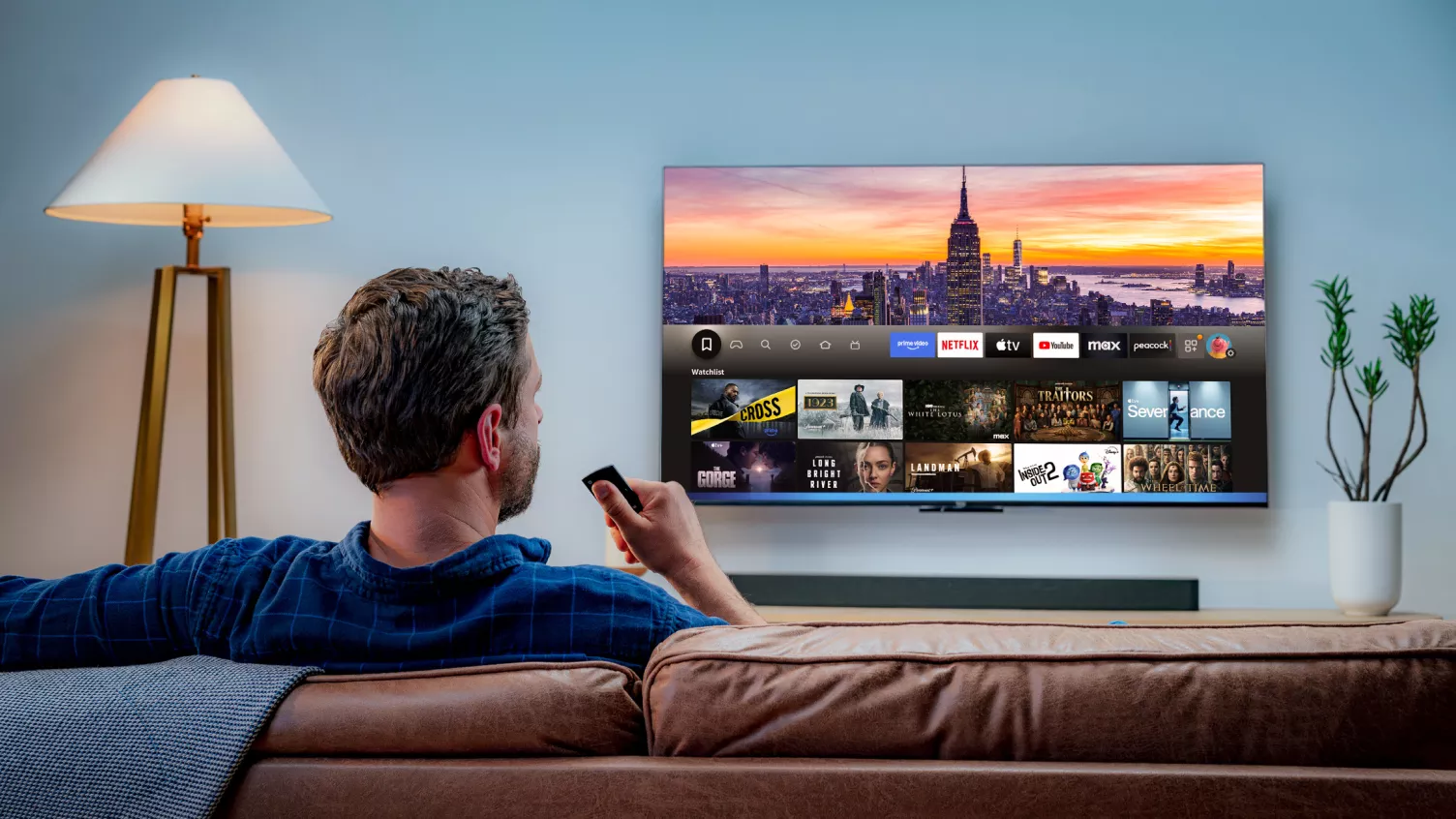
The economics of streaming are shifting from expansion to monetization. Nearly every major platform – from Netflix to HBO Max and Apple TV – has raised its prices over the past year, marking one of the sharpest rounds of increases since the subscription model upended cable television. Paramount+ will follow early next year, continuing a wave of "streamflation" that has reshaped how audiences and advertisers value digital entertainment.

The latest round of pricing changes reflects how mature the streaming business has become. The first decade of fierce competition centered on subscriber growth, fueled by deep losses and constant content expansion. That phase is ending.
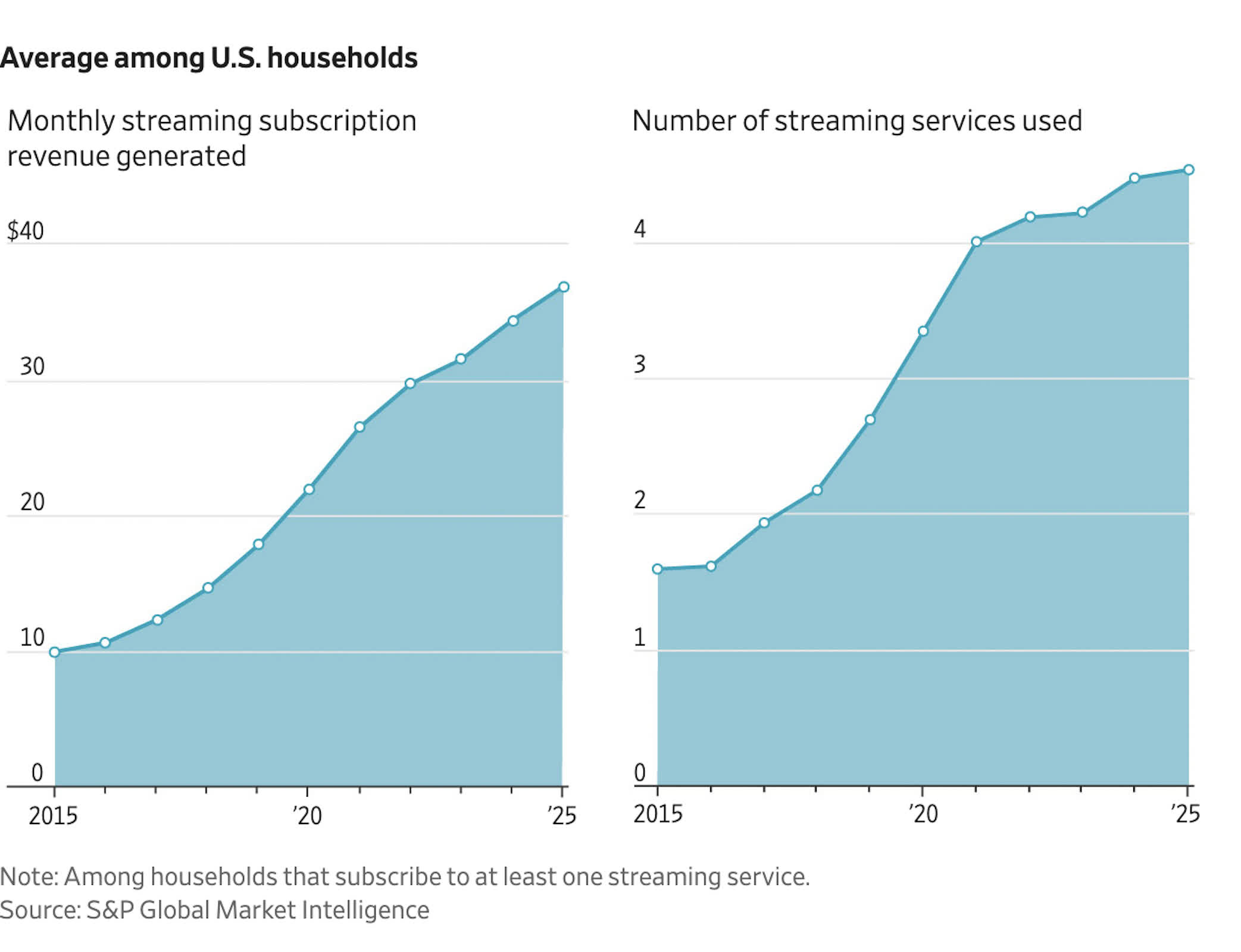
Platforms now emphasize profitability, pushing consumers to costlier ad-free tiers or nudging them toward new, ad-supported plans that promise lower monthly bills – and new revenue streams for the companies behind them.

Streaming leaders have linked much of the price pressure to escalating costs for live programming, particularly sports. Warner Bros. Discovery, which raised the price of its HBO Max basic tier to $10.99 a month, has invested heavily in NASCAR, Big 12 football and basketball, and upcoming playoff coverage. The same platform will drop its NBA games this season and discontinue CNN's live news feed, which will relaunch as a separate service.

The changes illustrate a broader recalibration: rights deals remain expensive, but the content mix keeps shifting as companies refine where live sports, serialized drama, and news content belong.
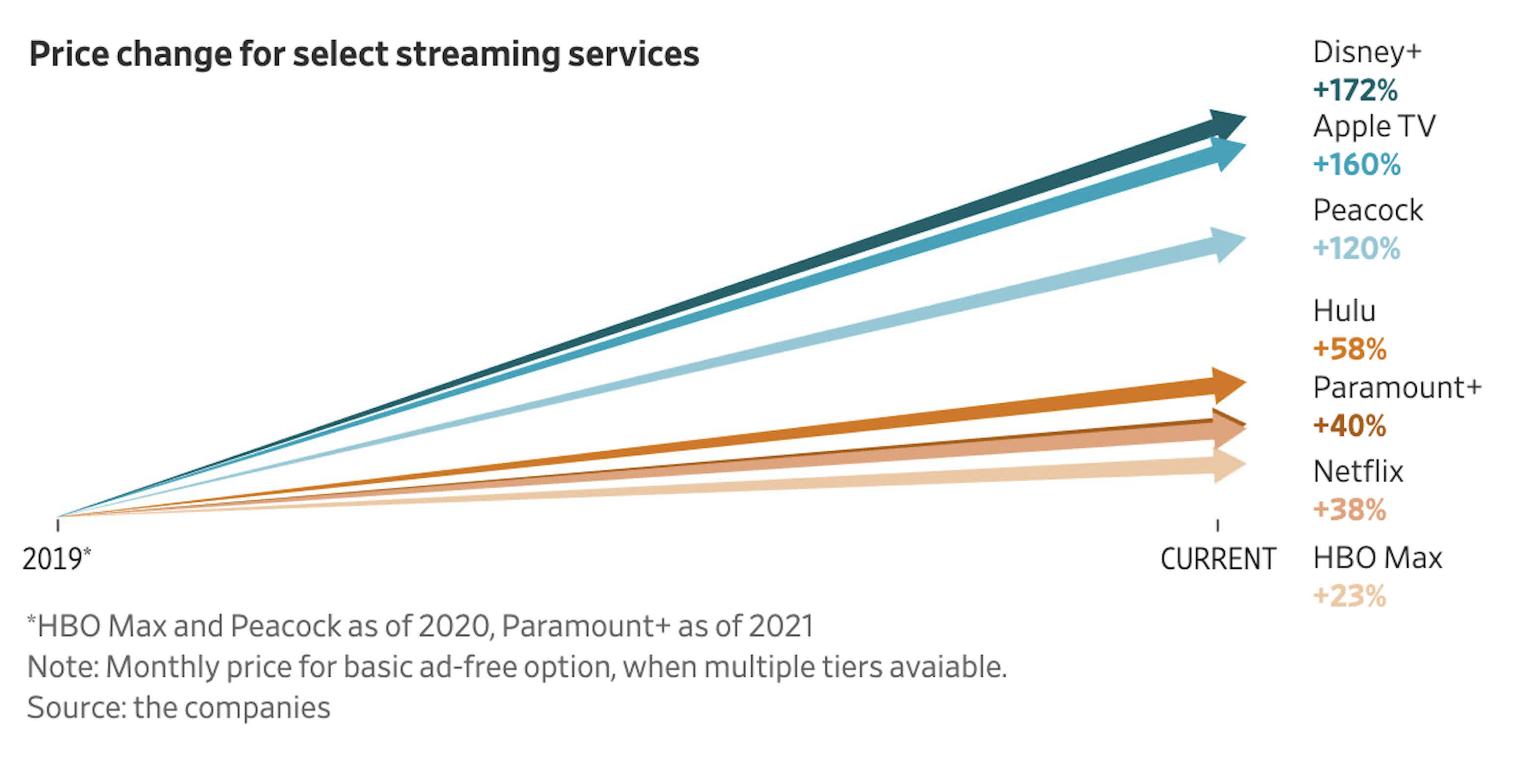
Apple TV and Peacock followed similar pricing moves in mid-2024, and Hulu and Disney+ raised their rates soon after. Netflix, which raised prices in January, maintains one of the most tiered strategies, spanning from a $7.99 ad-supported option to a $24.99 premium plan.

MoffettNathanson analyst Robert Fishman tells The Wall Street Journal that Netflix's pricing framework is helping it maintain one of the lowest cancellation rates in the industry, flat at around 2 percent since mid-2023. "Netflix has really cracked the code in terms of pricing," Fishman said.

Other streamers are finding that customers rarely cancel outright. Instead, they downgrade to cheaper, ad-supported versions. Forrester Research's Mike Proulx says that behavior reflects a maturing market rather than disillusionment. "Rather than ditching a service entirely, consumers now have more options to switch to lower-cost ad-supported tiers," he said. Nearly half of Netflix's US viewing hours now occur on its ad-backed plan, up from roughly one-third a year earlier, according to Comscore's State of Streaming report.

As ad-funded tiers grow, so does the need to prove their reach. The result has been a surge in partnerships and bundles that mimic the old cable packaging logic. Peacock and Apple TV introduced a joint plan in October priced at $14.99 a month with ads, or $19.99 without, far cheaper than subscribing to both separately. Over the summer, ESPN joined forces with Fox to offer a new sports-centric bundle for $39.99 a month.

These platform-to-platform alliances extend into other industries. Disney, Warner Bros. Discovery, and others have built distribution partnerships with companies such as Verizon and American Express, using promotions and rewards to soften the impact of rising fees.

Streaming's transformation comes with contradictions. Some services are smaller after years of contraction – shedding rights, shows, or news coverage to improve margins – while still charging more. Yet users appear reluctant to abandon them. Antenna's data shows subscriber exit rates are stable across most major platforms, even as high-profile controversies at Disney and Hulu in September briefly dented retention rates before quickly rebounding.

Image credit: The Wall Street Journal

Permalink to story:

 
This is what companies do. Bait you in with lower prices and then jack them up once they got you hooked. Its a story as old as time.

All this BS about cord cutting is the solution was just a marketing ruse. Now instead of dealing with one "cable provider" screwing you over, you now have 4 or 5 streaming services screwing you over with ever increasing costs and less new content. It is all one big fractured mess.

Humans are just gullible and lazy. Once they subscribe they rarely cancel and just keep paying. These streaming companies will continue to raise prices until they can't.

If the last several years have taught us anything, it is that consumers just need to buy stuff and will just keep paying. They will complain the whole way, but just keep on buying. We have all just learned to except that GPUs now cost $500 for entry level, and many people no longer complain about spending $1000+ for a GPU. That would have been unheard of just 5 years ago. If people have "extra" money they are going to spend it. That is how they have been raised over the last several decades: buy, buy, buy to be happy. The greater part of the economy does not have to worry about bills or food. All spare money goes to fun stuff. We will not see a true change in consumer behavior until a large US (thus the world) economy goes into recession, like back in 2008. Hard times have a way of readjust people's priorities.

Now excuse me, I have some clouds to go yell out.
 
My father told me they're dropping hulu+sports when it comes up for renewal due to price increases. They dropped Netflix last year. Grandma is dropping Netflix now too.

The high seas are where its at for, well, anything old. Nothing new is worth the $$$.

This is what companies do. Bait you in with lower prices and then jack them up once they got you hooked. Its a story as old as time.

All this BS about cord cutting is the solution was just a marketing ruse. Now instead of dealing with one "cable provider" screwing you over, you now have 4 or 5 streaming services screwing you over with ever increasing costs and less new content. It is all one big fractured mess.

Humans are just gullible and lazy. Once they subscribe they rarely cancel and just keep paying. These streaming companies will continue to raise prices until they can't.

If the last several years have taught us anything, it is that consumers just need to buy stuff and will just keep paying. They will complain the whole way, but just keep on buying. We have all just learned to except that GPUs now cost $500 for entry level, and many people no longer complain about spending $1000+ for a GPU. That would have been unheard of just 5 years ago. If people have "extra" money they are going to spend it. That is how they have been raised over the last several decades: buy, buy, buy to be happy. The greater part of the economy does not have to worry about bills or food. All spare money goes to fun stuff. We will not see a true change in consumer behavior until a large US (thus the world) economy goes into recession, like back in 2008. Hard times have a way of readjust people's priorities.

Now excuse me, I have some clouds to go yell out.
This may shock you, but inflation is a thing. Your money today is worth less then half what it was 5 years ago.

The geforce GTX 8800 ultra was $1000 in 2006. ?A standard 8800 was $650. Adjusted for inflation, the standard card would be nearly $1000.

Everybody assumes that post GFC pricing of Fermi was the norm, no, it was not. Fermi was cheap because we were in the middle of a massive recession with suppressed wages and widespread unemployment, fueled by dirt cheap debt. None of that was sustainable.
 
Short hairs anyone? Just look at the trash they have you pay for. There is so much entertaining free stuff on youtube why watch scantily clad buxom chicks beat up men? Check out Waldo's World on youtube, great, inspiring stuff.
 
This may shock you, but inflation is a thing. Your money today is worth less then half what it was 5 years ago.

125% ≠ 200%. Maybe you meant 25 years ago, a quarter century?


The geforce GTX 8800 ultra was $1000 in 2006. ?A standard 8800 was $650. Adjusted for inflation, the standard card would be nearly $1000.

Still not 200% 19 years later but getting closer.
 
With 5 major Free to Air providers delivering a total of 64 free to air channels and huge free streaming libraries via their apps on our smart TV's, theirs plenty for the average Aussie to watch here in Australia (I personally suppliment that in a very small amount via torrents, problably 20 movies and 10 TV seasons a year... I just add them to my PLEX server and my far-flung family members benefit too)
 
AARRR ME MATIES!

Price hikes are not the problem; it's the lack of consumer-friendliness.

Back in the day, before torrenting, downloading a movie or series was slow. There were different programs, and we all wished that when a download finished, we wouldn't get a virus-infected file in return. But downloading was easier than driving to a Blockbuster to hope the movie you wanted to see was still there, renting it, and then returning it. Downloading became faster, with better speeds, and really took off.

Then Netflix came, offering a small monthly price for access to almost everything, and piracy dropped hard. Netflix was great, with a good and easy interface, and all series and movies in one place, all accessible from your home with the push of a remote.

But because of Netflix's success, all others wanted a piece of that pie: ITV, HBO, Disney, Amazon, Paramount, etc. All of a sudden, I had to look up where to watch a movie, subscribe, and a little after that, things splintered. I could watch movie 1 on Netflix, but movie 2 on Disney, and the same with series and seasons on different platforms.

The simple use now is multiple accounts on a lot of different streaming services, and that will hurt them.

In the last year, piracy has been picking up. Why? It's easy: get a paid VPN, find a good peer-to-peer network, and with great programs like Kodi, Plex, or Emby that now do what Netflix used to, it's easy to use with a great interface and an all-in-one solution.

And on top of that, downloading a 4K movie is a breeze with the fast internet we have these days. Want to watch a movie? Download it in the time it takes to get a cup of coffee or some drinks and snacks.

The illegal way is once more the more consumer-friendly way, and that's why it's winning.
 
I hear bittorrent is on the rise again. These streaming platforms were supposed to be a revolution against the Blockbuster & Cable streaming madness...but now they're more expensive than both!
 
**** em.. I've gone back to stealing... they've enshitified them so much, it's no longer worth paying for any of them for a full month.
The worst thing to me is that I do not even see things I want to steal. I watch mocking review on Youtube and have no desire to watch that stuff myself.
Never in my life I felt so undesiring to watch or play things. On the other side, I rewatch older content.
I really hope we can pass this period in our culture. Or else, I will stick to the books.
 
This is what companies do. Bait you in with lower prices and then jack them up once they got you hooked. Its a story as old as time.

All this BS about cord cutting is the solution was just a marketing ruse. Now instead of dealing with one "cable provider" screwing you over, you now have 4 or 5 streaming services screwing you over with ever increasing costs and less new content. It is all one big fractured mess.

Humans are just gullible and lazy. Once they subscribe they rarely cancel and just keep paying. These streaming companies will continue to raise prices until they can't.

If the last several years have taught us anything, it is that consumers just need to buy stuff and will just keep paying. They will complain the whole way, but just keep on buying. We have all just learned to except that GPUs now cost $500 for entry level, and many people no longer complain about spending $1000+ for a GPU. That would have been unheard of just 5 years ago. If people have "extra" money they are going to spend it. That is how they have been raised over the last several decades: buy, buy, buy to be happy. The greater part of the economy does not have to worry about bills or food. All spare money goes to fun stuff. We will not see a true change in consumer behavior until a large US (thus the world) economy goes into recession, like back in 2008. Hard times have a way of readjust people's priorities.

Now excuse me, I have some clouds to go yell out.

Except you don't need to buy it. The graphics I can get for <250W on my "entry-level" $500 5070 are insane thanks to DLSS 4 tech and the occasional FG boost. Even the 9070 XT has now dropped below $600 and that's a high end GPU. These 2 classes of cards were the same price in 2020 (BEFORE the crypto crunch more than doubled them). And when I want to watch a Netflix series, I'll pay $15, then promptly cut the "cable" again. (Of course that's not happening for awhile based on what I've read about Witcher S4...)
 
Weirdowood's main competition isn't the East but Youtube and people making content and they've lost. Thereis now more content available than we could possibly ever consume and ever more is created. Ever fewer films of quality are made as their main goal is to "Enforce (gay) behaviour" (Fink), thus why pay for the propaganda they try to shove down our throats when you can turn to Youtube, Rumble or whichever service you like and enjoy far better content?
Short hairs anyone? Just look at the trash they have you pay for. There is so much entertaining free stuff on youtube why watch scantily clad buxom chicks beat up men? Check out Waldo's World on youtube, great, inspiring stuff.
This is how you describe Phoebe Waller-Bridge and Cynthia Erivo? We definitely have different tastes.
 
This is how you describe Phoebe Waller-Bridge and Cynthia Erivo? We definitely have different tastes.

Perhaps but since I know nothing of them other than the names you just posted I cannot say I describe them that way. Writing that people have differing tastes is a waste of bandwidth
 
Back