Taiwan says shifting 40% of chip production to the US is "impossible"

Shawn Knight

Posts: 15,833   +202
Staff member
In a nutshell: Taiwan has said it would be "impossible" to relocate a large percentage of its chip production to the US, but is open to the possibility of expanding its presence in America. Officials in Washington had previously floated the idea of moving nearly half of the country's chipmaking capacity to America, and threatened to significantly increase tariffs if it didn't happen.
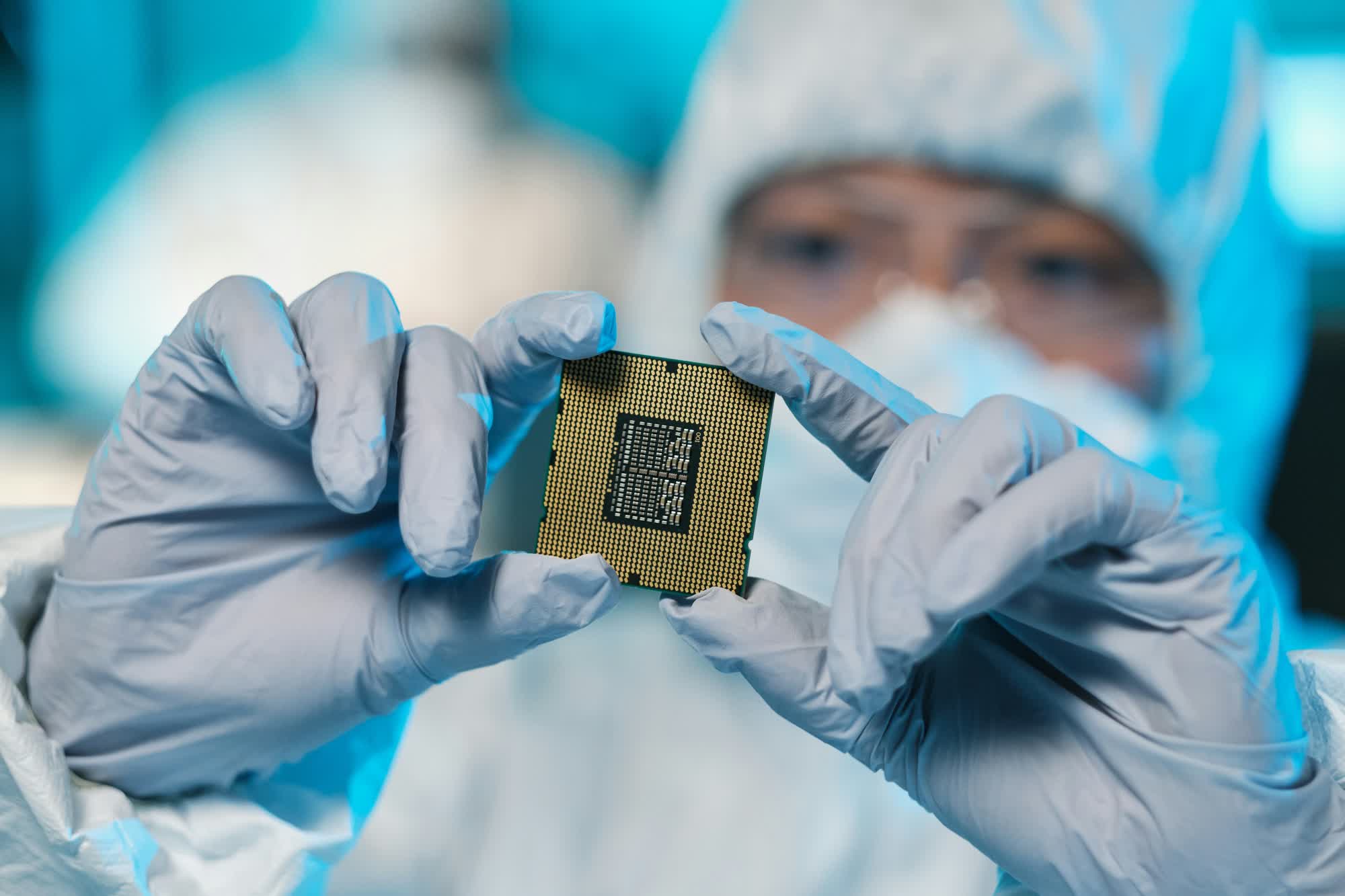
During a recent interview with Taiwanese television channel CTS, Taiwan Vice Premier Cheng Li-chiun said she made it very clear to Washington that the country couldn't move 40 percent of its semiconductor manufacturing capacity to the US.

The Chinese chipmaker has spent decades building out its semiconductor footprint. At present, Taiwan accounts for around 90 percent of the globe's advanced semiconductor production. Uprooting a huge chunk of that capacity and moving it elsewhere would likely devastate the local economy, and simply doesn't seem like a logical ask by US officials.
Li-chiun said Taiwan's cutting edge technology would not be transferred to other countries, adding that it needs to continue locally for research and development purposes. While open to the possibility of international expansion, Li-chiun said that possibility is based on the premise that they remain firmly rooted in Taiwan and continue to invest locally.

Last week, US Secretary of Commerce Howard Lutnick said it was illogical to have all semiconductor manufacturing "80 miles from China." As such, he said his goal before leaving office is for the US to have a 40 percent market share in leading-edge semiconductor manufacturing.

Despite the impasse, the two sides have cooperated as of late. Last month, the US agreed to lower tariffs on Taiwan exports from 20 percent to 15 percent. Conversely, Taiwan agreed to increase its investment in the US. And the world's largest contract chipmaker, TSMC, is already working on $165 billion worth of factories in Arizona.

Full terms and conditions of the tariff agreement are expected to be released in the coming weeks. For now, it seems most of Taiwan's manufacturing expertise is staying put.

Permalink to story:

 
Everything is "impossible" because nobody wants to build anything anymore.

"oh we cant source screws, oh there's not enough workers, oh it just isnt possible".

TSMC said that bringing cutting edge nodes to the US was impossible too....until it suddenly wasnt, with 3nm now coming to the arizona fab. OOPS. Guess it wasnt all that impossible eh?
 
I doubt even the people who proposed this are surprised by the outcome.
IThe US govt is currently a freaking clown show.

To some extent, sure. But the U.S. government is more than the morons currently in the executive. There are plenty of smart people doing real work. Trump et al. doesn’t equal the entire government, and most political mouthpieces on either side don’t actually do much anyway. If they did, nothing would ever get accomplished because they’re all self-serving twits.

Everything is "impossible" because nobody wants to build anything anymore.

"oh we cant source screws, oh there's not enough workers, oh it just isnt possible".

TSMC said that bringing cutting edge nodes to the US was impossible too....until it suddenly wasnt, with 3nm now coming to the arizona fab. OOPS. Guess it wasnt all that impossible eh?
Agreed to some degree. Fabs can clearly be built outside Taiwan—Arizona proves that. But I don’t think that necessarily means moving 40% of global leading-edge capacity is realistic, affordable, or economically sustainable either. These ecosystems aren’t plug-and-play and we can’t reasonably expect to easily forklift half an industry.
 
Asking Tiawan to MOVE 40% to US soil seems to be indifferent to the local economic impact that would have on Tiawanese economy and workers... quelle suprise!
 
If Taiwan wants to start really playing hardball, they should make a show of cozying up to China.

Yes, Taiwan needs the US to defend against a Chinese invasion, but ipso facto the US promise to defend Taiwan because they're the global hub for high tech semi-conductor manufacturing.

If Taiwan ever peacefully unified with China, or even came under the Chinese sphere of influence, the US would have its balls in a vice.

Good thing our current Admin isn't in the process of pissing off basically everyone and anyone.
 
Asking Tiawan to MOVE 40% to US soil seems to be indifferent to the local economic impact that would have on Tiawanese economy and workers... quelle suprise!

Having 40% marketshare does not mean removing 40% from Taiwan. Building a US fab doesn't shrink the existing business in Taiwan. It just adds more capacity in total. Given the demand for chips, the world can easily fund more fabs and not see any negative impacts to Taiwan's business. If anything, it allows TSMC to focus more on R&D efforts when production capacities aren't constantly under extreme pressure with no reserve capacity available for experimenting that would be entirely cost prohibitive vs. selling the wafers to everyone else.
 
Having 40% marketshare does not mean removing 40% from Taiwan. Building a US fab doesn't shrink the existing business in Taiwan. It just adds more capacity in total. Given the demand for chips, the world can easily fund more fabs and not see any negative impacts to Taiwan's business. If anything, it allows TSMC to focus more on R&D efforts when production capacities aren't constantly under extreme pressure with no reserve capacity available for experimenting that would be entirely cost prohibitive vs. selling the wafers to everyone else.
The original article above uses the specific word/phrasing "shifting" and "relocating"... as the US' requirement...
It's Tiawan who stated they are open to the possibility of "expanding" its presence, which would align with your statement.
 
I wonder how many of these companies are just trying to take it slow until the end of Trump's final presidency so that business can go back to normal once he's gone?
 
If Taiwan wants to start really playing hardball, they should make a show of cozying up to China.

Yes, Taiwan needs the US to defend against a Chinese invasion, but ipso facto the US promise to defend Taiwan because they're the global hub for high tech semi-conductor manufacturing.

If Taiwan ever peacefully unified with China, or even came under the Chinese sphere of influence, the US would have its balls in a vice.

Good thing our current Admin isn't in the process of pissing off basically everyone and anyone.
I don’t agree and think this is backward. Despite the popular talking point to the contrary, the U.S. is not a fragile, one-dimensional player that doesn’t know how to hedge its bets on national and military security. We hold huge leverage.

Taiwan sits at the center of the first island chain, blocks Chinese naval access to the Pacific, and anchors US alliances with Japan, Korea, and the Philippines. Even if Taiwan made zero chips, its strategic geography alone keeps it relevant. The U.S. doesn’t back Taiwan just because of chips—geography, alliances, and containing China matter just as much.

If Taiwan seriously drifted toward Beijing, the U.S. would not “be in a vice,” it would simply move fast to decouple by cutting off advanced tools, IP, and design access, onshore more fabs despite higher costs, and friend-shore production to Japan, Korea, and Europe. Any China-aligned TSMC fabs would be technologically constrained and sanctioned, limiting their leverage. The “silicon shield” only works while Taiwan is seen as aligned and reliable, not as a swing player flirting with China.

I think the reality is more likely, that if Taiwan moves toward China, its capability (TSMC, etc.)—especially at cutting-edge nodes—is what would likely degrade. Advanced fabs rely on Western tools, software, and a highly specialized workforce, all of which could be restricted or disrupted. Global supply chains and R&D feedback loops would be strained, and major clients like Apple and NVIDIA would likely reduce orders. Physically the fabs could still operate, but maintaining 3nm, 2nm, and future nodes at scale and quality would become much harder, threatening TSMC’s technological leadership.
 
ANY fabs outside of Taiwan is a good thing. Considering China is just sitting on their hands to wait til the opportunity gives them the chance to blockade/invade Taiwan they should expand outside of Taiwan.
China since 1949 has said Taiwan IS part of China. Now that their military has been built up, they want to take back Taiwan, similar to how they took over Hong Kong after England pulled out. "Oh, we'll have have a hands free approach to controlling them" Yeah, just like you did after taking control over Hong Kong.
It's been said that Taiwan has a "dead mans" switch on their fabs that they could destroy if China invades, but who knows.
 
I don’t agree and think this is backward. Despite the popular talking point to the contrary, the U.S. is not a fragile, one-dimensional player that doesn’t know how to hedge its bets on national and military security. We hold huge leverage.

Taiwan sits at the center of the first island chain, blocks Chinese naval access to the Pacific, and anchors US alliances with Japan, Korea, and the Philippines. Even if Taiwan made zero chips, its strategic geography alone keeps it relevant. The U.S. doesn’t back Taiwan just because of chips—geography, alliances, and containing China matter just as much.

If Taiwan seriously drifted toward Beijing, the U.S. would not “be in a vice,” it would simply move fast to decouple by cutting off advanced tools, IP, and design access, onshore more fabs despite higher costs, and friend-shore production to Japan, Korea, and Europe. Any China-aligned TSMC fabs would be technologically constrained and sanctioned, limiting their leverage. The “silicon shield” only works while Taiwan is seen as aligned and reliable, not as a swing player flirting with China.

I think the reality is more likely, that if Taiwan moves toward China, its capability (TSMC, etc.)—especially at cutting-edge nodes—is what would likely degrade. Advanced fabs rely on Western tools, software, and a highly specialized workforce, all of which could be restricted or disrupted. Global supply chains and R&D feedback loops would be strained, and major clients like Apple and NVIDIA would likely reduce orders. Physically the fabs could still operate, but maintaining 3nm, 2nm, and future nodes at scale and quality would become much harder, threatening TSMC’s technological leadership.

-Ehhhh.

If the US could just move chip production off Taiwan then we would have. Words are easy, actually doing what you proposed would be a Herculean task.

Ironically, the company that actually makes TSMC's lithography machines is Dutch, a country we are actively in the process of pissing off by threatening to annex Greenland.

So where are these magical high tech fabs coming from? We can't build high speed rail, we can't build housing, we can't build infrastructure for data centers, we can't even build enough weapons and equipment to supply Ukraine.

But we're going to stand up fabs that rival TSMC on our own? C'mon.
 
-Ehhhh.

If the US could just move chip production off Taiwan then we would have. Words are easy, actually doing what you proposed would be a Herculean task.

Ironically, the company that actually makes TSMC's lithography machines is Dutch, a country we are actively in the process of pissing off by threatening to annex Greenland.

So where are these magical high tech fabs coming from? We can't build high speed rail, we can't build housing, we can't build infrastructure for data centers, we can't even build enough weapons and equipment to supply Ukraine.

But we're going to stand up fabs that rival TSMC on our own? C'mon.
RE: Greenland, this is politics. I really don’t think we’re pissing anyone off in any meaningful sense outside of headlines designed for clicks. Geopolitics is far more layered than cable-news framing.

Where we disagree, I think, is the collapsing of “hard” into *“impossible.” I’m not claiming the U.S. can magically recreate TSMC overnight. That would be slow, painful, and expensive. But the issue isn’t instant replacement, IMHO—it’s leverage and trajectory.

We haven’t moved fabs off Taiwan because the status quo is cheap and stable, not because we lack capability. The CHIPS Act, Intel’s pivot, TSMC Arizona, Samsung Texas, and Japan’s subsidies exist precisely because risk has risen. That’s the hedging in progress. Those slow moves are already happening.

ASML actually reinforces this point. The Dutch aren’t going to abandon the U.S. and EUV being Dutch doesn’t weaken U.S. leverage—it strengthens the Western chokehold. If Taiwan aligned with Beijing, China-aligned fabs wouldn’t keep getting EUV tools, servicing, or upgrades. Advanced nodes are politically embedded, not neutral assets.

Pointing to housing or rail failures also misses how the U.S. historically behaves under security pressure. Civil infrastructure dysfunction is real, but defense and high-tech supply chains have always been treated differently. We were “incapable” of scaling weapons production—until suddenly we weren’t. We are not strategically incapable.

And rivaling TSMC really isn’t the right bar. The real question, and point I’m making I think, is whether the U.S. can deny China frontier nodes, maintain sufficient supply for defense and key industries, and erode Taiwan/China’s leverage over time. All of that seems to be achievable, even if costs rise and efficiency falls.

If Taiwan drifted toward China, the pain wouldn’t be symmetric. TSMC’s edge depends on Western tools, IP, customers, talent, and trust. Break that ecosystem and the fabs don’t instantly die—but leadership degrades. Orders shift, R&D feedback weakens, talent leaks, and node leadership slips.

So yes, decoupling would hurt. But it would hurt Taiwan’s cutting-edge capability more than it would trap the U.S. The “silicon shield” only works while alignment and trust hold. Once those go, the leverage erodes fast.

We can agree to disagree. I just don’t think the populist take that the U.S. is weak, stupid, or incapable lines up historically or with how geopolitical power works.
 
Everything is "impossible" because nobody wants to build anything anymore.

"oh we cant source screws, oh there's not enough workers, oh it just isnt possible".

TSMC said that bringing cutting edge nodes to the US was impossible too....until it suddenly wasnt, with 3nm now coming to the arizona fab. OOPS. Guess it wasnt all that impossible eh?
Uh-huh, here's a crazy idea, maybe all these companies DON'T want to be forced to move their production to the US. It has nothing to do with being able to or not being able to do it. It has more to do with having to lie and twist the truth to appease the Orange Orangutan that's running America right now.

You know, because if you don't at least promise (even if you have zero intention of doing it) to something he wants, then you have to deal with constant threats of tariffs and other harassment and bullying and just non-stop verbal diarrhea coming your way.

Guess what buddy, the whole world pretty much hates America. So you can whine and moan about screws, and workers, and immigrants stealing your jobs, and China this and China that, and everything is the fault of the woke liberals, etc. At the end of the day America has no friends left, since someone burned every bridge there was.
 
Uh-huh, here's a crazy idea, maybe all these companies DON'T want to be forced to move their production to the US. It has nothing to do with being able to or not being able to do it. It has more to do with having to lie and twist the truth to appease the Orange Orangutan that's running America right now.

You know, because if you don't at least promise (even if you have zero intention of doing it) to something he wants, then you have to deal with constant threats of tariffs and other harassment and bullying and just non-stop verbal diarrhea coming your way.

Guess what buddy, the whole world pretty much hates America. So you can whine and moan about screws, and workers, and immigrants stealing your jobs, and China this and China that, and everything is the fault of the woke liberals, etc. At the end of the day America has no friends left, since someone burned every bridge there was.
Sorry, but this is just some grade-A nonsense. It doesn’t track. It’s simply not, even remotely, true. Stop falling for Tump’s dog-wags and hook/line/sinker on the media rage-bait.
 
Having 40% marketshare does not mean removing 40% from Taiwan. Building a US fab doesn't shrink the existing business in Taiwan. It just adds more capacity in total. Given the demand for chips, the world can easily fund more fabs and not see any negative impacts to Taiwan's business. If anything, it allows TSMC to focus more on R&D efforts when production capacities aren't constantly under extreme pressure with no reserve capacity available for experimenting that would be entirely cost prohibitive vs. selling the wafers to everyone else.
It does to some degree, there's no making chips without machines from ASML and ASML can't exactly start selling multitudes of what they're currently doing.
ASML is the big bottleneck to scaling up production. Considering China's latest and greatest counterpart is quite literally using parts from older ASML machines I don't think there's any relieve coming out of that corner either.

If you want the US to become a far bigger player in the short term it's only possible by moving the machines out of Taiwan which afaik is an extremely complicated process. It would cost TSMC many production hours, it's very high risk and reduces the incentive for the US to actually have Taiwan's back.
So basically it's asking TSMC to ruin it's own business and compromise its countries national security in exchange for....?
What are the ramifications going to be, tariffs? That will just have the US tech industry paying for it. Blacklisting? Good luck without TSMC to the US economy reliant on the AI bubble.

At best the US would offer some security guarantees but its word is worth nothing going by how amongst other examples it tried to force Ukraine into a mineral deal (hello, Budapest memorandum?) and is actively making claims on the territory of its neighbours (Canada, Greenland).

TSMC would be insane to offer more than anything but lipservice to this.
 
Asking Taiwan to move 40% of its chipmaking is like asking Silicon Valley to relocate to Ohio because it’s safer. You don’t just forklift decades of talent, supplier density, and institutional know-how without breaking the thing that made it valuable.
 
"The Chinese chipmaker" - I don't think this Taiwanese company would thank you for that statement, although I'm sure the Chinese will agree with you.
 
Back