Tesla admits that remote humans can sometimes take control of its robotaxis

midian182

Posts: 11,747   +178
Staff member
A hot potato: Tesla has admitted that its robotaxis are not always as autonomous as the name implies. In a letter to Senator Ed Markey, the company said human operators can, in rare cases, remotely take direct control of its vehicles. This sets Tesla apart from rivals that insist their support staff only advise the driving system, not actually drive the cars.
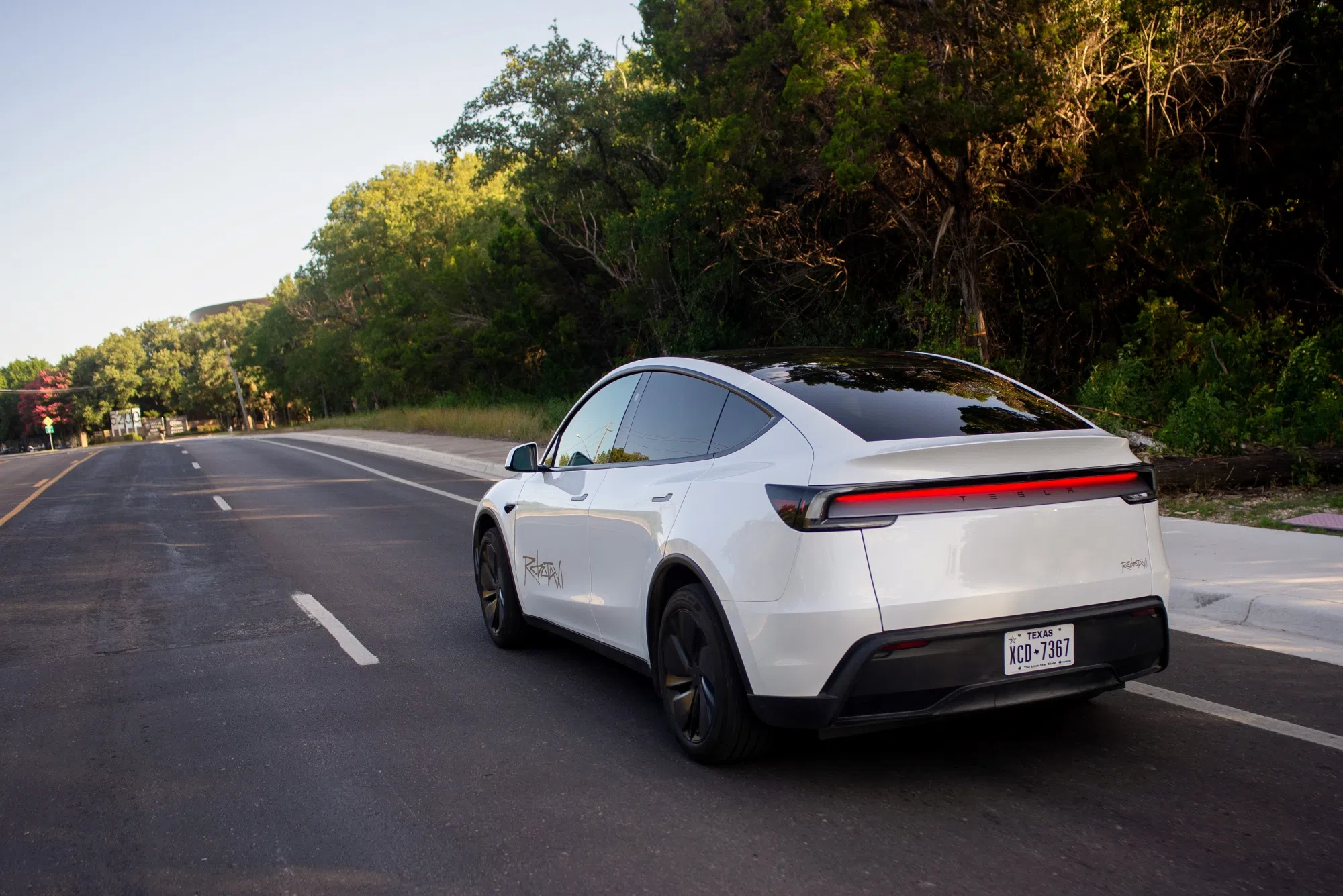
The revelation comes from a March 26 response to Markey's investigation into how autonomous vehicle companies use remote assistance operators.

Tesla wrote that while its vehicles are not remotely driven under normal conditions, operators are allowed to "temporarily assume direct vehicle control" as a last-resort escalation step after other interventions have failed.

According to the letter, these operators can only take temporary control at 2 mph or less. If the automated driving system grants direct access, the maximum speed is capped at 10 mph.

Waymo, which has also come under scrutiny over its use of remote assistance workers, says its personnel provide advice and support but do not directly control, steer, or drive the vehicle.

It was reported in February that Waymo has about 70 remote assistance agents on duty at any given time, with centers in the US and the Philippines. Tesla, by contrast, says all of its remote operators are in-house employees based in Austin, Texas, and Palo Alto, California.

This is another reminder that robotaxis still involve plenty of humans behind the scenes. Tesla launched its Austin ride-hailing service in June 2025, and most of the roughly 50 robotaxis currently operating still have human safety operators sitting in the front passenger seat, ready to intervene if needed.

Markey is not impressed. In a report released Tuesday, the senator said every company he contacted refused to disclose how often remote operators intervene, calling it a major transparency problem.

He has urged NHTSA to investigate the industry's remote assistance practices and says he is working on legislation that would create rules around operator qualifications, latency, overseas staffing, and reporting requirements.

Tesla's robotaxis may be able to drive themselves much of the time, but the company has essentially confirmed that, when things get tricky enough, a human can still grab the wheel, just from a desk instead of the driver's seat.

Permalink to story:

 
This should be obvious to anyone who has ever watched a video of a Robotaxi. There’s a support button for the passengers, and a remote operator is able to direct the car if assistance is needed.

Tbh this is good news for Tesla investors because many of us were under the impression that it was more like Waymo, where it could be a remote operator directing it at any given situation. The fact that remote control has only been severely limited bodes well for future expectations. We did already learn that Robotaxi support only employs Americans unlike Waymo.
 
when things get tricky enough, a human can still grab the wheel, just from a desk instead of the driver's seat.
I really don't understand that. In a critical situation, an operator will not be able to immediately asses the situation and then act. Even if one operator monitors one car (which would be seriously stupid), their reaction will not be fast enough. If one operator monitors tens of cars or more, all that makes even less sense.
 
I really don't understand that. In a critical situation, an operator will not be able to immediately asses the situation and then act. Even if one operator monitors one car (which would be seriously stupid), their reaction will not be fast enough. If one operator monitors tens of cars or more, all that makes even less sense.
All of this, from Tesla, Waymo, Ece is band aids to make their self driving" tech look way more advanced then it actually is.

Kinda like how AI is Actually Indians.
 
All of this, from Tesla, Waymo, Ece is band aids to make their self driving" tech look way more advanced then it actually is.

Kinda like how AI is Actually Indians.
OK but that's not the issue here. I just don't get it how a remote operator may react so fast as to avoid a dangerous situation - this requires to be focused all the time, like an actual driver. If one operator monitors many cars that's totally impossible to work every time, which means it's risky.
 
OK but that's not the issue here. I just don't get it how a remote operator may react so fast as to avoid a dangerous situation - this requires to be focused all the time, like an actual driver. If one operator monitors many cars that's totally impossible to work every time, which means it's risky.
They...don't. That's my point. In an emergency the car is supposed to slam on the brakes and refuse to move until a human takes over.
 
I really don't understand that. In a critical situation, an operator will not be able to immediately asses the situation and then act. Even if one operator monitors one car (which would be seriously stupid), their reaction will not be fast enough. If one operator monitors tens of cars or more, all that makes even less sense.

SSSSSOOOOOO much this
 
I have no intention of ever using a robotaxi.

Do such remote operators hear the conversations of the passengers?
 
Read carefully. The remote operators can only take control if the taxi is moving 2 mph or less. Essentially that must mean a situation where the vehicle stops and refuses to move. The remote operator would then move it out of the way but can never accelerate it to more than 10 mph in the process.

As far as a remote operator taking over at normal traffic speeds -- forget it -- impossible, absurd. Oh my God, the latency. Especially if the remote operator is in the Philippines or somewhere like that. The car would be 50 feet from where the human sees it.
 
We already knew this from the first moment. Zealots denied it, because who knows why, but this was obvious from the get-go, since it's mandated by the authorities. FSD is not ready PERIOD, therefore it cannot drive without a human observing. What's so hard to understand about this?

They even have a ghost car following each robotaxi. Yet they have the nerve to call it "unsupervised", because the supervisor sits in another car, and by some braindamaged logic it makes it unsupervised to them. Don't ask, I really don't understand either.
 
Back