Bottom line: The two-seater EV requires a monthly subscription to run, can't be driven manually, and can't be used to earn money. Yet Tesla is now selling its Cybercab, the robotaxi with no steering wheel or pedals, to private buyers for $29,990. The sales are beginning before federal safety regulators have decided whether the car can legally be on public roads.
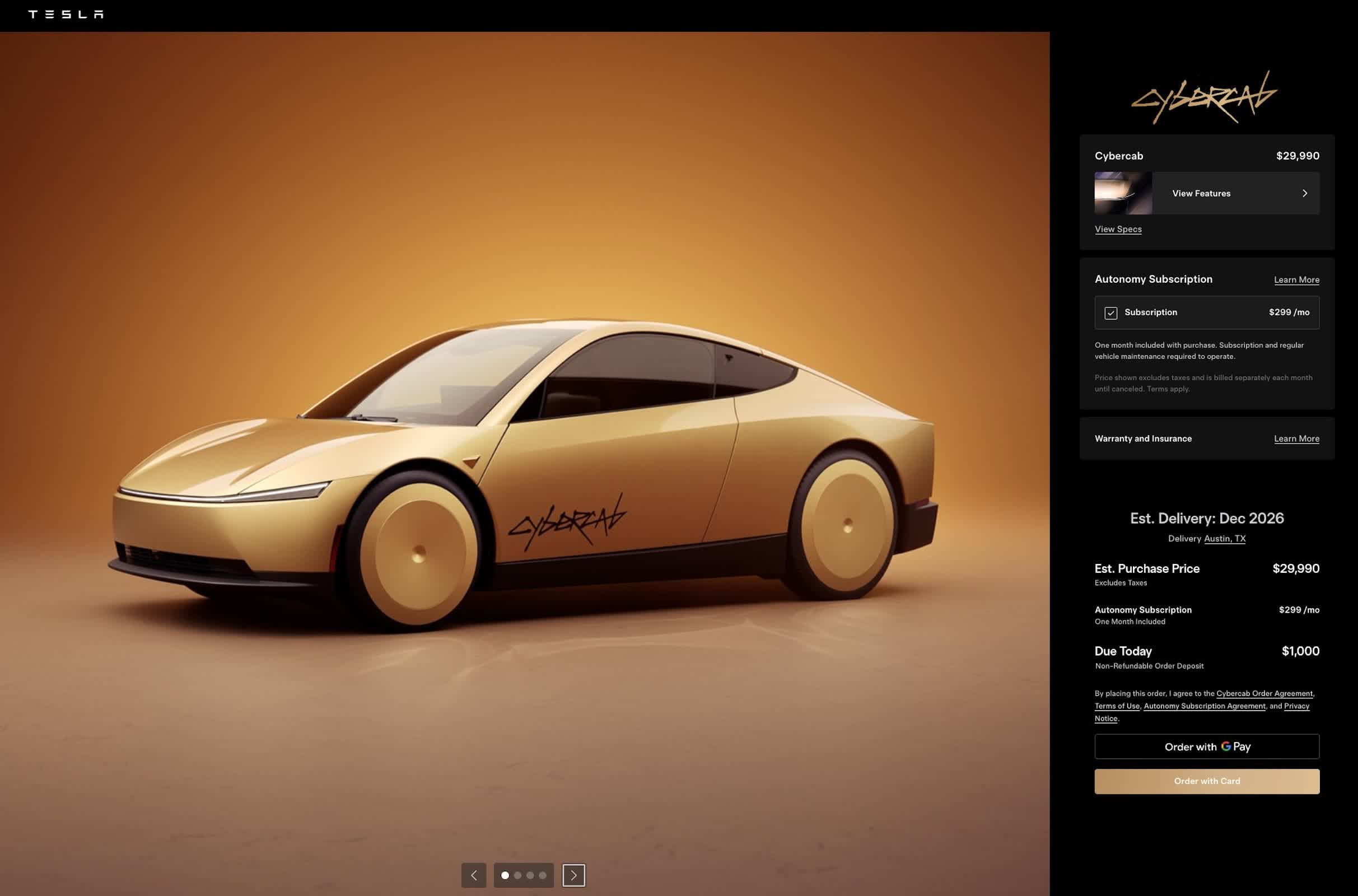
The offer to buy is invitation-only for now. Tesla announced it on its Robotaxi account on X and posted screenshots of the order page with an email inviting "select customers" to buy the car for "personal use." Owners will have to pay $299 a month for the software that does all the driving and they won't be allowed to use the car to make money.
The Cybercab will "only be available in supported service areas," so buyers have to live in a city where Tesla already runs its Robotaxi service. The email also says "Initial availability is limited." Buyers have to pay a $1,000 non-refundable deposit to hold a December delivery window, and Tesla doesn't guarantee that date. The company hasn't said how it picks who gets an invitation or how many cars will go to private buyers instead of its own fleet.
The vehicle is already carrying passengers. In September, Tesla added the Cybercab to its Austin Robotaxi service, which had been running on Model Y vehicles. The crowdsourced Robotaxi Tracker counts 278 Cybercabs in operation, about 40% of Tesla's fleet.
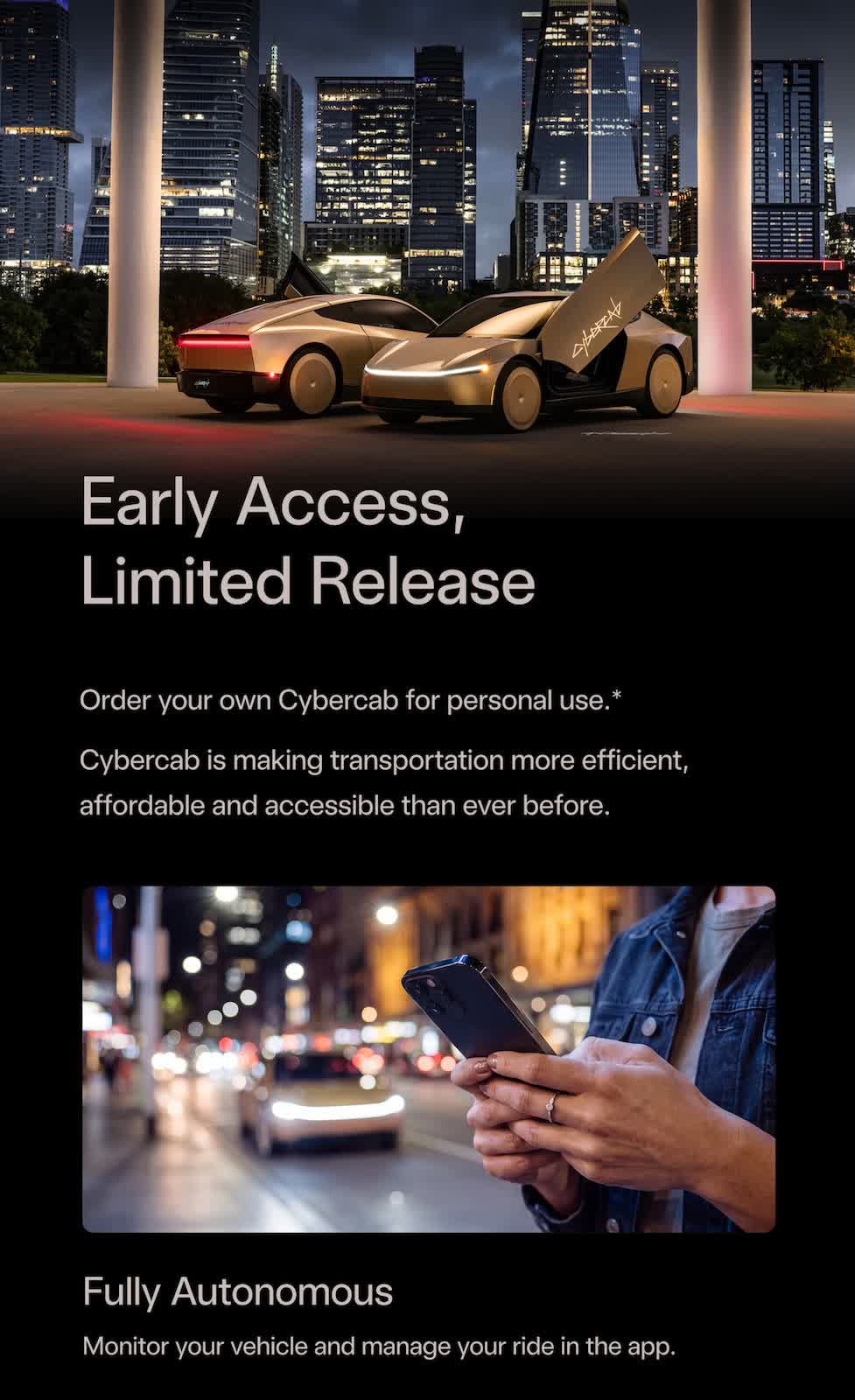
The design is what sets this purchase apart from buying any other Tesla. The company charges $99 a month for Full Self-Driving on its regular models, and an owner who drops that plan can still drive the car normally. The Cybercab has no controls a person can use.
The Autonomy Subscription is the only thing that makes it move, so if an owner cancels or Tesla suspends the account, the car can't be used on public roads. The plan covers autonomous driving, maintenance and towing, but not insurance.
The monthly fee adds a lot to the cost. If the first month comes with the purchase, five years of payments add about $17,600, which puts the base cost near $47,600 before taxes, charging and insurance. That's more than a new Model 3 or Model Y, both of which can be driven anywhere in the country.
Tesla only has to give 30 days' notice before raising the price, and owners who keep using the service after the rules change are treated as having agreed to them. There are no partial refunds for the rest of a month if an owner cancels or Tesla cuts off access.
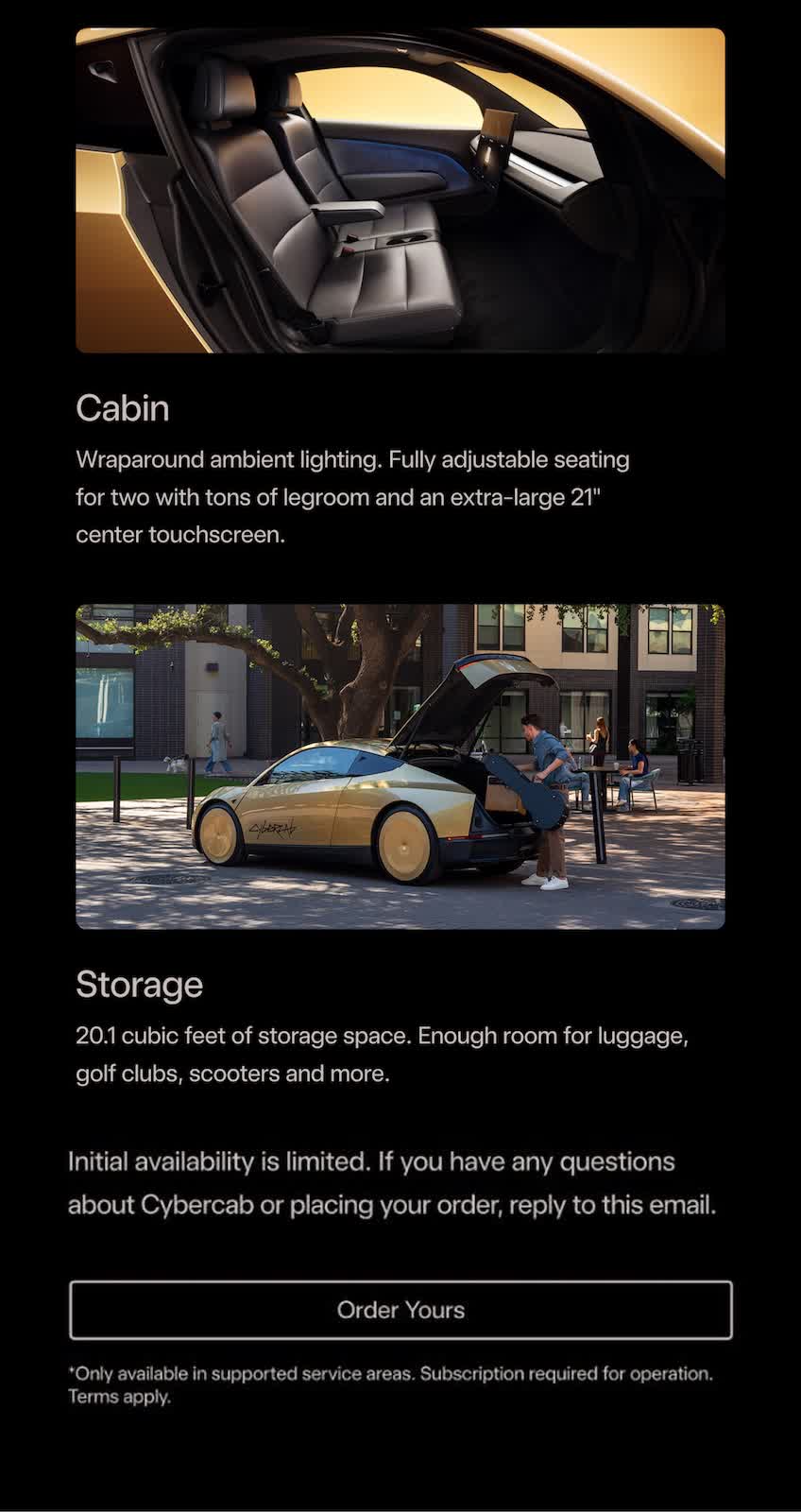
The ban on commercial use is a clear break from how the car was first pitched. When Elon Musk introduced the Cybercab at the "We, Robot" event in 2024, he described a $30,000 driverless car that owners could put on Tesla's Robotaxi network to earn money while they slept or worked. He didn't mention a subscription. The purchase terms now rule out ride-hailing, delivery work and Tesla's own network. Tesla AI chief Ashok Elluswamy has suggested the second quarter of 2027 as a possible date for letting customer-owned cars join the network. Until then, owners have no way to offset the monthly fee.
Musk has posted about the rollout on X, saying it will grow, subject to "regulatory approval." He also called the $299 fee "too high" and said it should be $115 a month, or closer to the $99 FSD price.
Musk mocked YouTuber Marques Brownlee, who had promised to shave his head if Tesla delivered a Cybercab for under $30,000 before 2027. Brownlee replied that he thinks his hair is safe.
The regulatory question is still open. Federal Motor Vehicle Safety Standards require traditional controls like steering wheels and pedals. NHTSA has opened a formal audit into how Tesla self-certified a vehicle with no steering wheel, pedals or side mirrors. Tesla sent its legal justification to the agency in October and asked that the whole response be kept confidential. The agency hasn't ruled yet.
Insurance and liability are also unsettled. Tesla hasn't explained how personal auto insurers will cover a car that never has a human driver, or how responsibility would be split between the owner and Tesla if the car causes a crash while driving itself.


