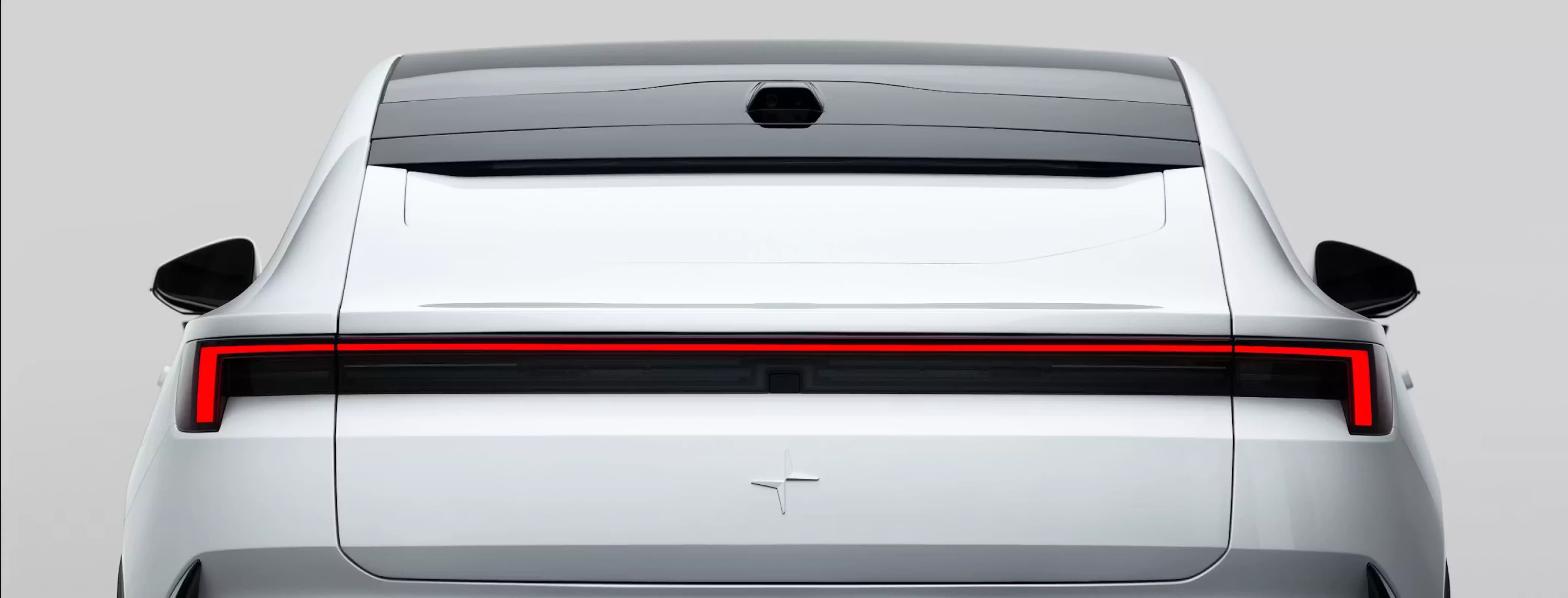
First look: The 2026 Polestar 4 removes a feature that has defined automotive design for more than a century: the rear window. In its place, the vehicle uses cameras and sensors to provide rearward visibility, a move that is dividing opinion.
Instead of a traditional rear window, the Polestar 4's glass roof extends back to meet the rear deck, leaving no glass behind the rear seats. The trunk is built into the body lines, so the surface stays smooth and uninterrupted. Inside, the glass roof ends just past the rear headrests, with an enclosed section behind it.
The system integrates side mirrors, ultrasonic sensors, four short-range cameras for 360-degree imaging, and a dedicated rear-facing camera. The feed appears on a screen mounted at the top of the windshield, designed to resemble a conventional rearview mirror.

Rear visibility is already limited in many modern SUVs. The distance to the rear glass, combined with headrests and a taller ride height, can make the mirror less useful, especially for objects close behind the vehicle. Sports cars have dealt with the same issue for years, often trading rear visibility for design and packaging.
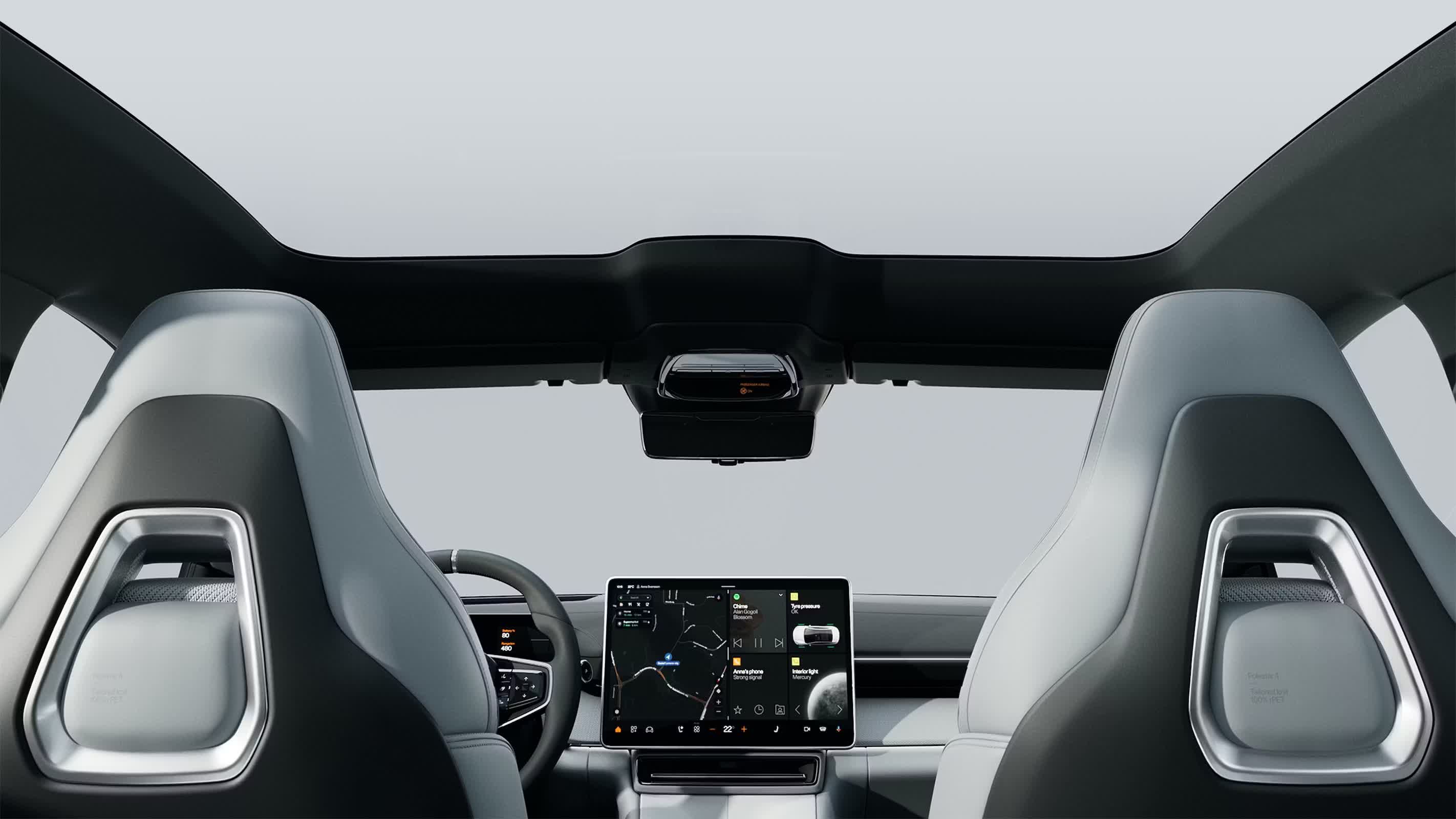
Eliminating the rear window also improves aerodynamics. A traditional backlight disrupts airflow across the rear of the vehicle, increasing turbulence and drag. For an all-electric vehicle like the Polestar 4, reducing drag directly supports driving range.
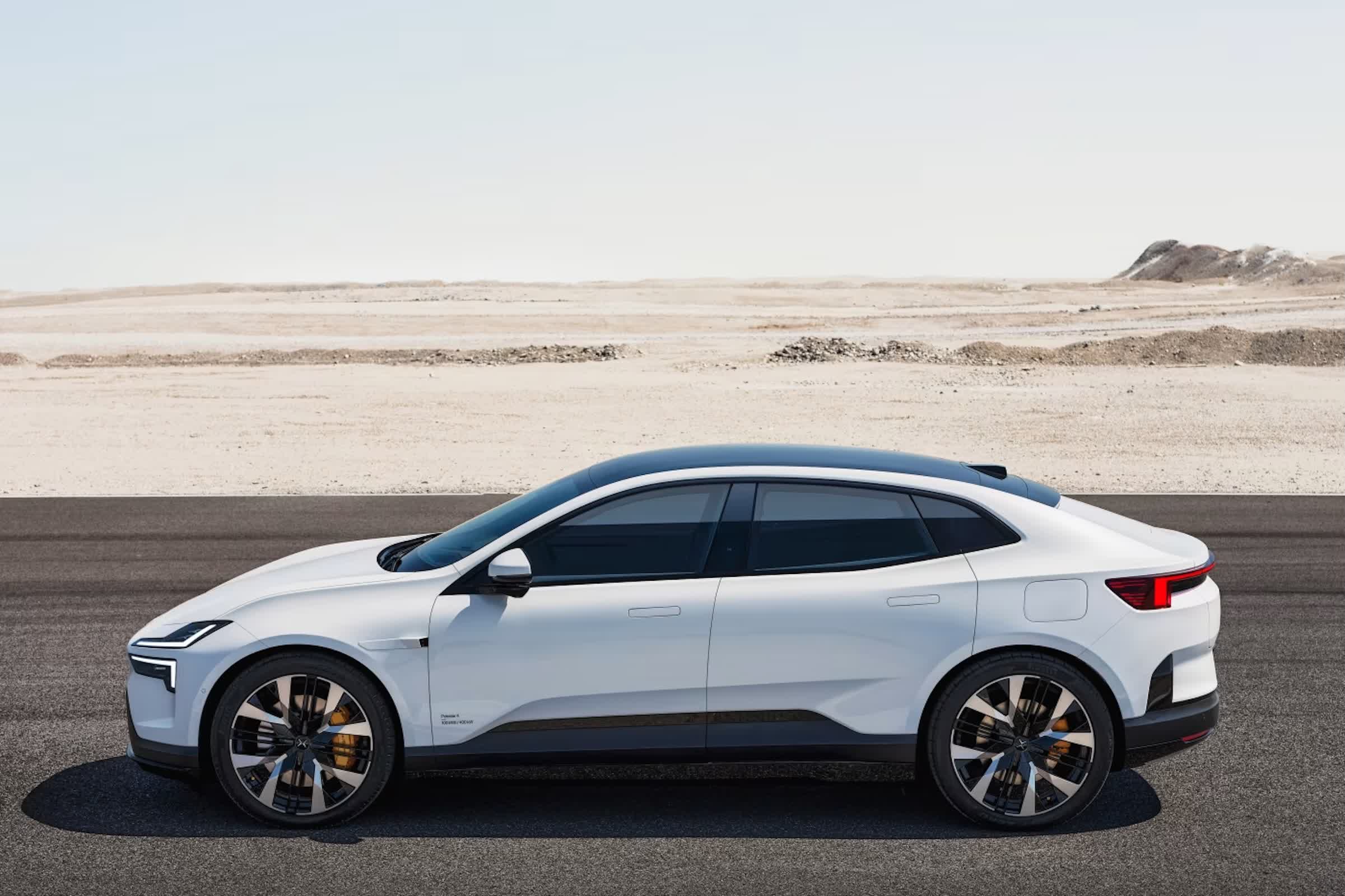
The Polestar 4 is positioned as an SUV coupe, though its proportions and styling lean toward a lower, more car-like profile. It is the fourth model from Polestar, the Swedish-Chinese brand developed from Volvo Cars' performance division. Exterior options include metallic finishes and accent details such as colored seat belts, brake calipers, and valve caps, alongside body-colored lower trim.
The model range begins with a single-motor, rear-wheel-drive configuration producing 272 horsepower and an estimated 310 miles of range, starting at $56,400. The dual-motor variant, priced at $81,800, adds a second electric motor on the front axle, delivering a combined 544 horsepower and 506 lb-ft of torque. The vehicle rides on 22-inch forged aluminum wheels.
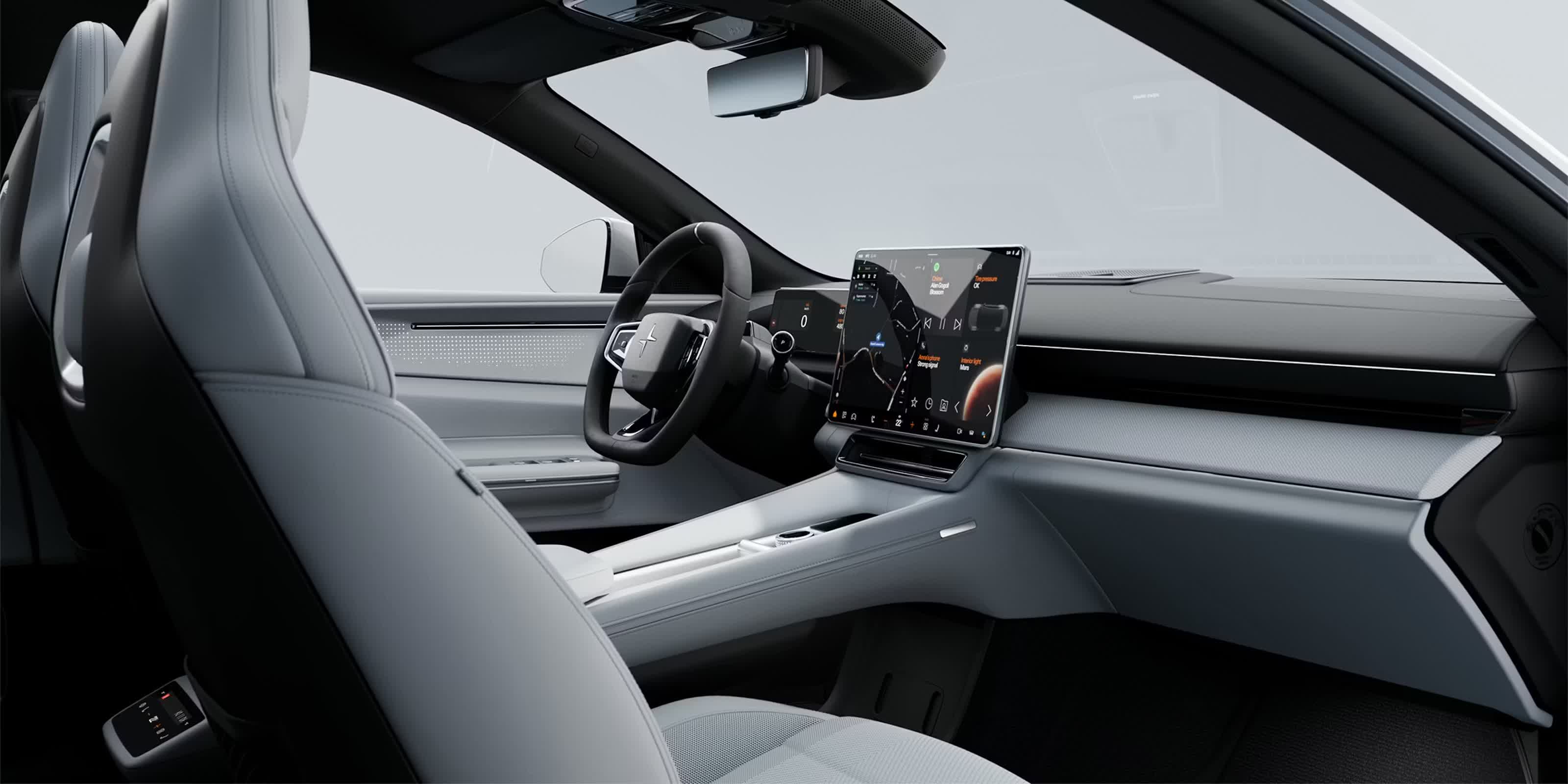
The dual-motor version ranks among the quicker EVs in its class. It accelerates from 0 to 60 mph in 3.7 seconds and remains responsive at highway speeds.
Energy storage is provided by a 100kWh battery pack using nickel-manganese-cobalt chemistry. The system operates on a 400-volt architecture, with a maximum charging rate of 200kW, which allows the battery to charge from 10% to 80% in approximately 30 minutes. In the dual-motor variant, the estimated range is 255 miles.
The battery system uses current-generation technology from Geely's portfolio, which also includes newer lithium-iron phosphate batteries and 800-volt charging platforms in other vehicles. As a result, it lacks the newer battery chemistry and faster charging systems used in some related models.