The Handheld Gaming "Holy Grail": FSR 4 INT8, XeFG, and XeLL

Can't have that happening. That wouldn't sell faster hardware. Quick, game devs, make me a game that performs badly with these new features enabled.
 
I would like to point out a couple of caveats with review. One is that there is that he original compiled dll of FSR4.0.2 Int8 had a bug that cause performance issues on RDNA2. So the old test that HU made is no longer valid for comparison. The new FSR4.0.2b that is used here also has some minor bugs, but for image quality. The 4.0.2c dll is will look slightly better.
The other thing to consider is that running Optiscaler with ASI mode will result in lower overhead and a slight improvement to upscaling time. From what I see in the review, you are using the "normal" injection mode.
 
I think the obvious reason for INT8 still sitting in development is the tech press itself. The problem is, AMD has just released it's latest "wanted by popular demand" hardware, the X3D3 CPU. Almost since the day the dual CCD X3D was released, users wanted the cache enabled CCDs on BOTH chips, due to scheduling issues and imagined gains. AMD knew it was a marginal upgrade at best for a number of reasons, which made them look even more like they were "hiding something" good and easy to do. After the big AI hardware vacuum appeared, I guess AMD decided "what the heck" and made one. The predictable result was that the "tech press" took a hatchet to this chip for it's "very small performance increase" and cost. While a few reviews did mention this wasn't AMD's idea, they still hammered home the value proposition. "What's the point..." seem to be the subtile for the reviews, which was probably obvious from the get go.
I can see the INT8 FSR getting the same press for the same reasons. It bites compared to the "real" FSR, too many artifacts, and my personal favorite "it's not as good as DLSS", especially when looking at screen captures under a microscope.
The problem with releasing a "not ready for prime time" product is that no matter how many times we're told it's not ready for prime time, the public and the press will quickly forget this during review time.
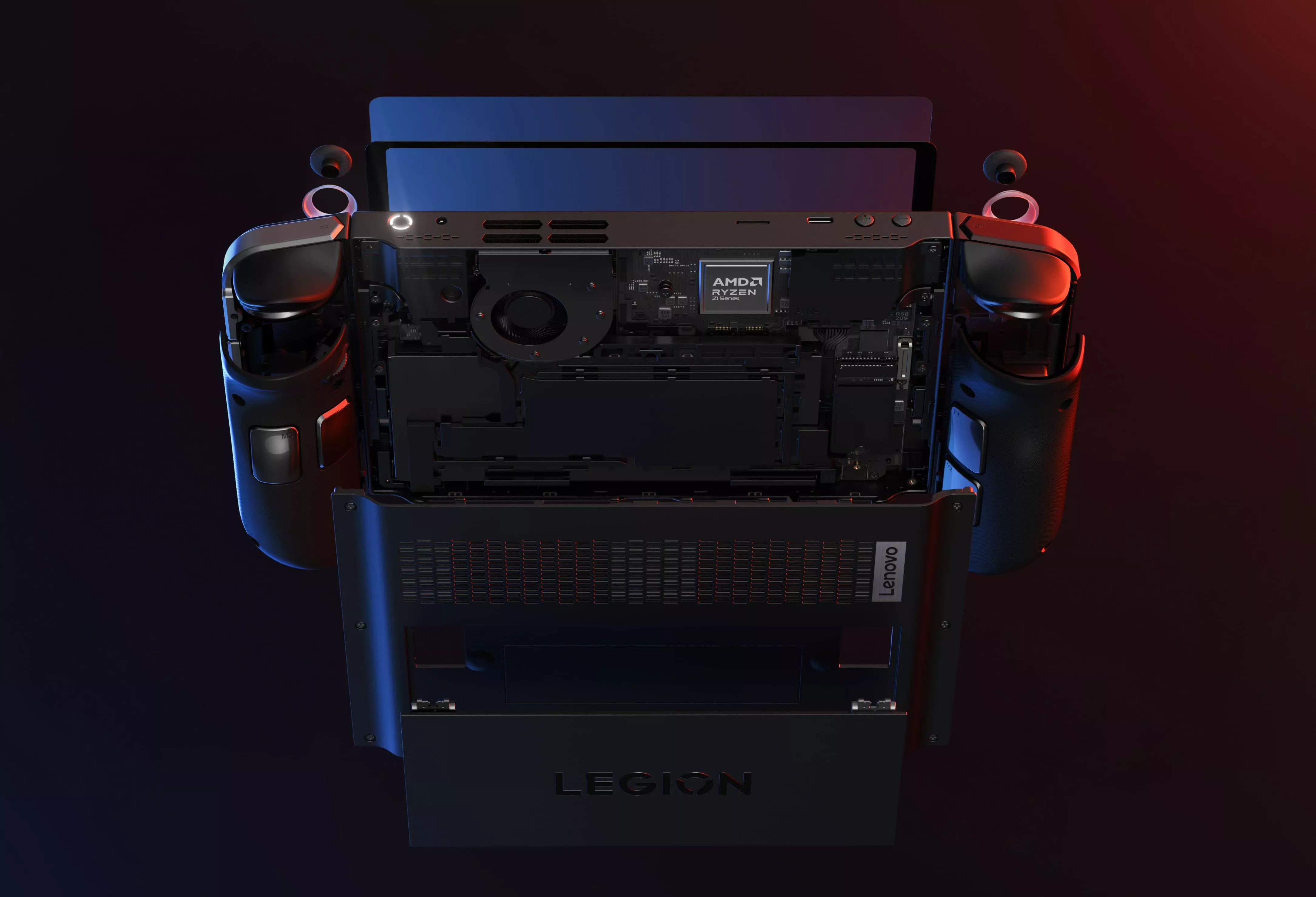
 
Yeeeeaaaahhhhh, im not doing all that.

I own a legion go 2, I play games that its tiny body can handle, and honestly it can do well with alot of games, but if I'm gonna play something that needs horsepower then my desktop with its 4080 will be called upon.

I get the article said their gpu was down but even then I'd rather fall back on one of the current consoles than deal with the hassle of a handheld(I wouldnt because my 2070S is stashed in the closet in case of emergency)even my own, these things are great sidekick devices but thats pretty much it.

imho if anyone is looking at getting a current handheld, looking for a laptop instead would probably be the better option.
 
I think the obvious reason for INT8 still sitting in development is the tech press itself. The problem is, AMD has just released it's latest "wanted by popular demand" hardware, the X3D3 CPU. Almost since the day the dual CCD X3D was released, users wanted the cache enabled CCDs on BOTH chips, due to scheduling issues and imagined gains. AMD knew it was a marginal upgrade at best for a number of reasons, which made them look even more like they were "hiding something" good and easy to do. After the big AI hardware vacuum appeared, I guess AMD decided "what the heck" and made one. The predictable result was that the "tech press" took a hatchet to this chip for it's "very small performance increase" and cost. While a few reviews did mention this wasn't AMD's idea, they still hammered home the value proposition. "What's the point..." seem to be the subtile for the reviews, which was probably obvious from the get go.
I can see the INT8 FSR getting the same press for the same reasons. It bites compared to the "real" FSR, too many artifacts, and my personal favorite "it's not as good as DLSS", especially when looking at screen captures under a microscope.
The problem with releasing a "not ready for prime time" product is that no matter how many times we're told it's not ready for prime time, the public and the press will quickly forget this during review time.
Or the much simpler reason: AMD is a multi billion dollar corporation that wants you to buy the new thing, so they restrict features to the new thing.

They have done FAR WORSE PR damage to themselves by screwing over older customers then they ever would have received from the press by just releasing int8.
 
Now I did a few test. I have the RX6600XT so read up on the fsr mod. I want to point out that I used the worst game on Gods given earth to run the test and that is Titan Quest 2 but it was the only game I had installed after doing a clean install for the test.

Well it was still on an old driver 25.x or something. I did read they updated it for newer drivers but I cannot confirm that. So I ran a few test. There was a clear Image quality improvement which I cannot deny but I could not really test the performance. Not sure if they fixed it yet but TQ2 even with fsr on could not run at 60fps on my system regardless of the settings. It ran over 60 then all off a sudden massive frame drops which makes no sense as I run Borderlands 4 on higher settings and get over 60.

Thus I used the worst game to actually test the FSR mod on. I am planning to run a few more test in the future but I do need time as I am really busy at the moment. I don't have a lot of FSR games as I play more classic games but I may browse around and buy something on special or I can test it on midnight suns but I am not sure if epic will block me if I mod the game.
 
AMD is giving handheld users a killer feature through a leaked unofficial pathway, while not officially supporting it. That is the most AMD thing I’ve read all week.
 
Downloading more RAM was a joke. Dropping DLLs into a game folder to get ray tracing and 60 FPS on a handheld somehow turned into reality. We live in strange times.
 
Since the author loves to mention their RTX 5090 so much, I learned if you cannot easily afford two RTX 5090s, don't buy one. Luckily if my 5090 goes down I have a 4090 as my back up, because I always keep my previous card, and a laptop with a 5090 in it.
 
Back