The hidden fingerprints inside 3D-printed ghost guns

Skye Jacobs

Posts: 1,918   +58
Staff
TL;DR: A small group of forensic researchers is challenging the belief that 3D-printed ghost guns – unserialized firearms built at home – are completely untraceable. Their work offers a glimmer of hope to investigators and lawmakers grappling with the growing threat of criminals using these weapons.
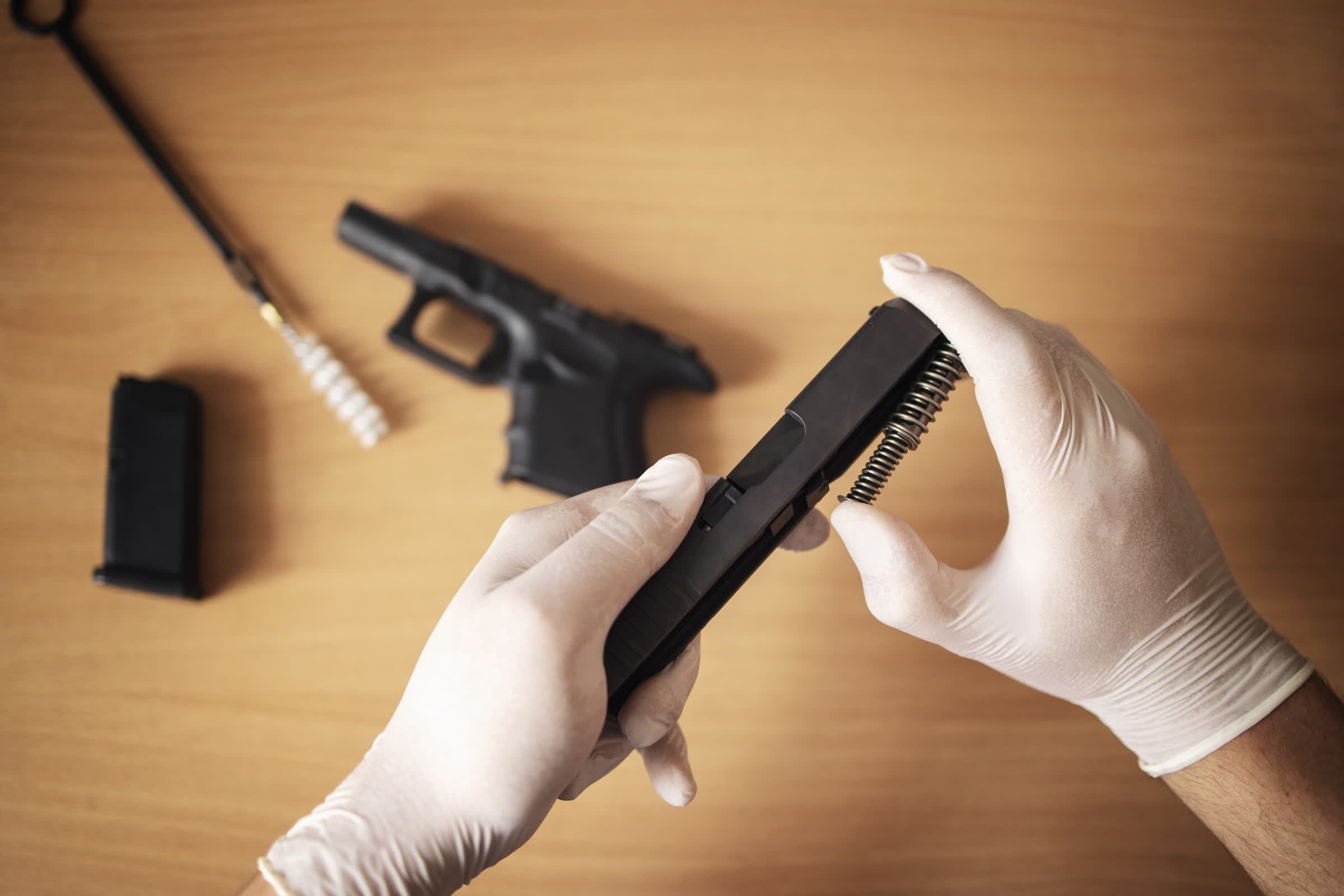
Kirk Garrison, a forensics expert with the San Bernardino Sheriff's Department, has spent years working at the intersection of digital blueprints, heated plastic filaments, and real-life criminal cases. He recently told 404 Media that he has started finding ways to match 3D-printed objects to the specific machines that produced them.

"That's when I was like, 'We might need to know a little bit more about this now if we're actually going to be seeing this stuff and potentially have to testify to it,'" Garrison said. "What I'm doing is in its infancy and it might be years before authorities can reliably match a gun to the machine that made it, if they can do it at all."

The science is still young, and Garrison makes clear he speaks only for himself, not his department. His journey into 3D-printed forensics began in 2018, when he started seeing a wave of gun parts produced with consumer-grade printers. Most were 80 percent kits or conversion kits – small plastic components that enable standard firearms to fire automatically. The first time he worked a case involving a fully 3D-printed gun frame, he realized more specialized expertise would be necessary.

A pivotal moment came when Garrison, attending a conference in Atlanta, heard FBI lab technician Corey Scott describe seeing consistent toolmarks on objects printed with a 3D printer.

"He was just like, 'Hey, I noticed on these 3D-printed items, there are these marks, but I'm not actually a firearms or toolmark examiner,'" Garrison recalled.

In forensics, toolmarks – unique scratches and impressions left by a manufacturing tool – act as a kind of fingerprint. They include the gouges left by a screwdriver on a screw head or the bite marks bolt cutters leave on a chain. A 3D printer's nozzle can leave behind a similarly consistent signature that investigators can use to link an object to a specific printer.
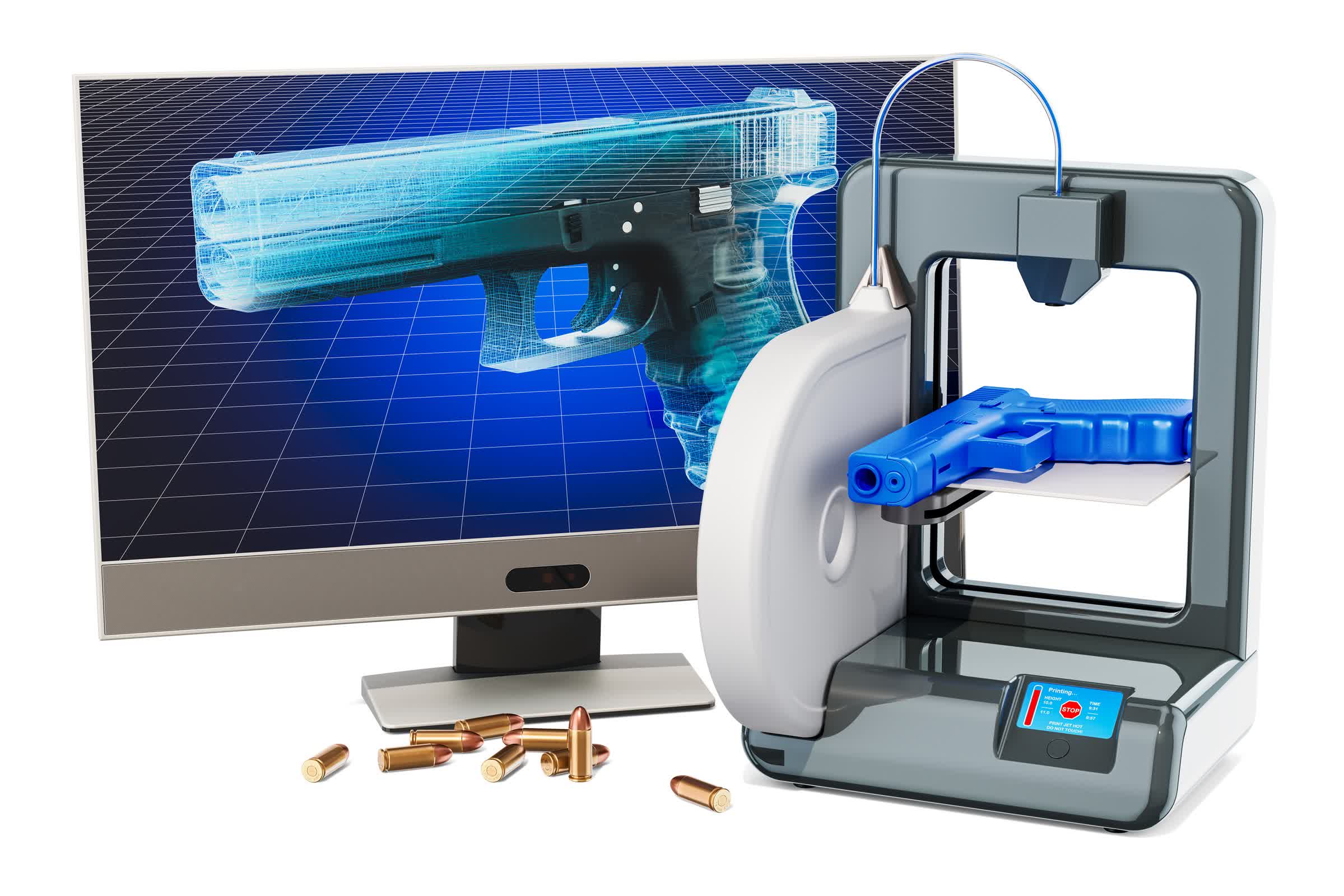
Back at his lab, Garrison investigated printed weapon frames under a microscope and began noticing what he called stria – microscopic scratch marks deposited during the printing process. The implication: every 3D printer, working much like a hot glue gun, might inscribe a unique pattern as it lays down hundreds of layers of melted plastic.

"So on the firearm, I'm seeing consistent marks from the trigger guard – maybe print line 200 – to the top of the magazine well – print line 400," he explained.

The findings were tantalizing, but Garrison cautions they are far from courtroom-ready. He emphasized that, despite the promise of eventually matching a printer to the object it produced, the science is still in its early stages and that it may take years – perhaps even a decade – to understand the relationship between toolmarks and 3D printers fully.

Limited by the demands of his day job and the constraints of self-driven research, Garrison published preliminary results in Forensic Science International but continued to call for more expansive, university-led studies. Answering that call, Eric Law, assistant professor at the University of Central Oklahoma Forensic Science Institute, and graduate student Cooper Blair joined forces with Garrison to coauthor a forthcoming study. Their research aims to break new ground by determining whether investigators can trace 3D-printed objects back to the exact nozzle and print bed that produced them.

The team began by examining print sheets – the surfaces where printers build objects. Since print sheets vary widely in texture and material, they focused on textured sheets, reasoning that those characteristics might transfer to the plastic and make comparisons easier, Law told 404 Media. His team's experiments produced a striking result: they differentiated the sheets 100 percent of the time. Using both visual and computerized analysis, they matched objects to the print bed from which they originated.

This prospect comes with complications. Print positions matter, as objects produced on a different part of the same bed can appear to come from another printer. Additionally, print beds are easy to swap or discard.

The study then moved on to printer nozzles, and although the results were encouraging, they proved less definitive. Law said the algorithm could identify the correct nozzles, estimating accuracy at about 75 percent, though accuracy was probably a bit lower with just visual examination.

This research faces many challenges. So far, all of Law's and Blair's work has focused on a single 3D printer model, the Prusa MK4S – just one among many in a rapidly expanding market. Additionally, wear and tear on brass nozzles, variations in nozzle materials, and the ease of swapping components mean any forensic signature can change or vanish.

For now, Law and his fellow researchers agree that the science may one day offer a breakthrough, but no one is ready to testify in court yet.

Permalink to story:

 
"Assault rifle" means a rifle with select fire, chambered in an intermediate round, usually SCHV. It's a classification that has been used by the military for decades, like Battle Rifle.

You're thinking of "Assault weapon," which is a legal definition that varies from jurisdiction to jurisdiction and is often defined by the presence of various "evil features" such as an adjustable stock and a pistol grip.

 
So TL,DR; High accuracy identification of a printer used to print any arbitrary thing is not currently possible and has tons of variables that make this type of research completely and fully worthless for any type of legitimate forensic science.

 
Duh!
A lot of people probably don't know (except for tech sites), that all color printers, copiers etc, put barely visible yellow dots across the page of the printed document, that can be decoded to give the manufacturer of the machine, and the machine serial number for counterfeiting purposes. Get the serial number, track it to the manufacturer, who can give you the distributor, who can give you the retailer, who can give you the person that purchased it. Wouldn't be surprised if they don't, in the future they would do something like this, but how would that affect the integrity of the object printed?
 
The term "Ghost gun" comes from the fact that it does not have a serial number. It's a "ghost" in the database of manufactured guns.

Which is not legally required for homemade guns, as a matter of fact serials are not a legal requirement, it's done optionally by companies for inventory and warranty tracking. There is nothing scary about homemade fire arms.
 
Which is not legally required for homemade guns, as a matter of fact serials are not a legal requirement, it's done optionally by companies for inventory and warranty tracking. There is nothing scary about homemade fire arms.
Any firearm manufacturered under an FFL is required to be serialized.

Any firearm manufacturered with intent to transfer requires an FFL.

That's why commercial firearms require a serial, and home built ones often do not.
 
Duh!
A lot of people probably don't know (except for tech sites), that all color printers, copiers etc, put barely visible yellow dots across the page of the printed document, that can be decoded to give the manufacturer of the machine, and the machine serial number for counterfeiting purposes. Get the serial number, track it to the manufacturer, who can give you the distributor, who can give you the retailer, who can give you the person that purchased it. Wouldn't be surprised if they don't, in the future they would do something like this, but how would that affect the integrity of the object printed?

Okay. What if the buyer paid with cash. You are not, so far, required to fill out forms and enter yourself into a database before buying a 3D printer. That will probably change, but until then, how will you track him or her?

Oh, I forgot, the ubiquitous cameras claiming to keep us safe and maintain lower prices. Though one hopes probable cause and honest judges will narrow the access to only those minutes of the record when the purchase was made. Otherwise, many not subject to probable cause will be swept into law enforcement records. Which, though claimed otherwise, will be permanent. 'cause that's the way data retention works, no matter what laws may require.

Although if we had honest judges, they would revoke all laws which violate Constitutional Restrictions prohibiting government regulations of firearms. Remember, the Constitution states specifically what government is allowed to do, and if not so stated, government is prohibited. While the 2A was created, according to the Founders' Letters, to specifically forbid government. However, since judges don't seem to know the definition of "is", nothing they proclaim can be trusted to be accurate.

(For those who don't know, the meaning of "is": https://slate.com/news-and-politics/1998/09/bill-clinton-and-the-meaning-of-is.html)
 
Last edited:
Which is not legally required for homemade guns, as a matter of fact serials are not a legal requirement, it's done optionally by companies for inventory and warranty tracking. There is nothing scary about homemade fire arms.
When did I ever state that I was scared of ghost guns? Sir, I am a native Texan. I own more guns than you do.
 
It’s impressive how far this has come for being mostly self-motivated work from a few researchers. If universities and federal labs start throwing serious resources at this, we might see the legal system catch up to the DIY firearm space a lot faster than expected.
 
Any firearm manufacturered under an FFL is required to be serialized.

Any firearm manufacturered with intent to transfer requires an FFL.

That's why commercial firearms require a serial, and home built ones often do not.
Yes and no it is not an actual law it's regulation by the ATF it's not actually in the law The law governing firearms the United States of America would be called the second amendment they haven't passed an amendment that allows restrictions on the second amendment meaning the firearms control acts in 1934 as well as 1986 are legally void we just need somebody to properly challenge them in court because they do interfere with the exercise of amendment and the only way you can block the exercise of an amendment is to make an amendment to the amendment so you don't need to follow those laws they're not legally enforceable we just need somebody to take it to the supreme Court
 
Yes and no it is not an actual law it's regulation by the ATF it's not actually in the law The law governing firearms the United States of America would be called the second amendment they haven't passed an amendment that allows restrictions on the second amendment meaning the firearms control acts in 1934 as well as 1986 are legally void we just need somebody to properly challenge them in court because they do interfere with the exercise of amendment and the only way you can block the exercise of an amendment is to make an amendment to the amendment so you don't need to follow those laws they're not legally enforceable we just need somebody to take it to the supreme Court
Please do not ramble insanity at me without at least using basic punctuation.
 
It’s impressive how far this has come for being mostly self-motivated work from a few researchers. If universities and federal labs start throwing serious resources at this, we might see the legal system catch up to the DIY firearm space a lot faster than expected.
Not really at all - what they have found is that they can accurately link a print to the print sheet it was printed on, as long as a textured sheet was used, and, with significantly lower accuracy, identify which out of a set of nozzles was used to make a print.

Now, both of those are consumable components, that is, they need to be replaced every so often as you continue to use a printer. And these aren't like expensive CNC milling bits, they are dirt-cheap - I ordered a pack of three sheets and two sets of a dozen hardened steel nozzles with my last printer to hold me over a while, and paid maybe $50 for them, together. Basic brass nozzles are even cheaper. So, some nozzles cost more than others, but that is because they last longer - if you were in the business of making disposable guns for criminals, you would simply buy more cheap ones and replace them more frequently. Non-textured print sheets can also be just as easily used as textured ones for printing, they simply require a little more prep for good adhesion. Those leave nothing to go on.

And of course, any kind of layer line smoothing or other post-print processing is going to flat-out remove all of the features they were looking at.

There is also the simple fact that it is quite legal to make your own guns - you simply need to pay the tax stamp and slap the assigned serial number on them. So, finding someone printing a gun is not like walking into a meth lab; there is nothing inherently illegal you can arrest them for at that point.

And, as they said, all of this started with looking into conversion kits and 80% receivers - you can buy 80% receivers online, or anywhere else, perfectly legally; what the name refers to is that the (lower) receiver (the part of a gun that is legally the actual gun and needs to have a serial number) is sold at 80% finished, at which point it is still legally just a piece of metal/ceramic/plastic. It is up to the buyer to complete the final 20% of the millwork (for metal receivers, at least, not sure how that works with a piece of ABS) necessary to legally turn it into a "gun" requiring a serial number, and functionally into a usable part of a gun. So, someone can legally crank out 80% lowers all day long and sell them without restrictions, or even hand them out like candy.

But, I'm straying from my point here. The main thing is, all of the parts of a printer that can be linked to a specific print are consumables that are naturally disposed of and replaced relatively frequently, if you are running your printers 24/7 like a factory. And basic printers, like an Ender 3 variant, quickly end up as a Ship of Theseus. The first printer I ever put together is still technically around, for example, but most of its original parts are not, and the ones that are, are now parts of other printers.

So, how are you going to link a gun to a printer, when the printer that was used to print its components has already been parted out, and any key components for linking the two together have long been disposed of? If you are running a side gig selling illegal 3d-printed guns to people, you'd likely just add the cost of a fresh nozzle and build plate into your sales price, and replace them for the next print (or, at the least, replace them daily), being sure to take each for a quick spin on the belt grinder just to be sure.

This was an interesting academic exercise, but it is never going to lead to the sort of evidence usable in a court of law, as long as your illicit gun smith is even remotely competent.

Making guns is easy, after all, as long as quality and longevity aren't a factor - there is a reason why countries with strict gun control place a lot more emphasis on controlling access to ammunition.
 
Okay. What if the buyer paid with cash. You are not, so far, required to fill out forms and enter yourself into a database before buying a 3D printer. That will probably change, but until then, how will you track him or her?

Oh, I forgot, the ubiquitous cameras claiming to keep us safe and maintain lower prices. Though one hopes probable cause and honest judges will narrow the access to only those minutes of the record when the purchase was made. Otherwise, many not subject to probable cause will be swept into law enforcement records. Which, though claimed otherwise, will be permanent. 'cause that's the way data retention works, no matter what laws may require.

Although if we had honest judges, they would revoke all laws which violate Constitutional Restrictions prohibiting government regulations of firearms. Remember, the Constitution states specifically what government is allowed to do, and if not so stated, government is prohibited. While the 2A was created, according to the Founders' Letters, to specifically forbid government. However, since judges don't seem to know the definition of "is", nothing they proclaim can be trusted to be accurate.

(For those who don't know, the meaning of "is": https://slate.com/news-and-politics/1998/09/bill-clinton-and-the-meaning-of-is.html)
You know what would probably happen to someone trying to "skirt the law"
Once they click on the "license agreement" without reading it, it probably sends telemetry data back to the manufacturer. LOL
 
There is also the simple fact that it is quite legal to make your own guns - you simply need to pay the tax stamp and slap the assigned serial number on them.
There is no federal law or regulation requiring an average citizen to pay a tax or serialize a firearm they have built. State laws may vary.
 
Yes and no it is not an actual law it's regulation by the ATF it's not actually in the law The law governing firearms the United States of America would be called the second amendment they haven't passed an amendment that allows restrictions on the second amendment meaning the firearms control acts in 1934 as well as 1986 are legally void we just need somebody to properly challenge them in court because they do interfere with the exercise of amendment and the only way you can block the exercise of an amendment is to make an amendment to the amendment so you don't need to follow those laws they're not legally enforceable we just need somebody to take it to the supreme Court
They have been challenged in the supreme Court has already rulled on that
 
You know what would probably happen to someone trying to "skirt the law"
Once they click on the "license agreement" without reading it, it probably sends telemetry data back to the manufacturer. LOL
3D printers don't need to be connected to the internet to actually print anything nor do you think sign any agreements for a ton of the open source printers that are easily purchasable online. The firmware is open source everything about most of them is open source. You can print something without ever connecting to the internet. So it's actually rather easy to avoid any kind of tracking dipshit
 
They have been challenged in the supreme Court has already rulled on that
no state laws have, not the big federal bills, but irrelevant, I don't intend to follow illegal federal laws, its my right as an American to own whatever gun I want, if I want to own a 20mm gatlin cannon and I can 3d print that I would.
 
Perhaps parsing a sentence is not your strong point. The colon indicates the extension of the phrase before it, thus explaining it. Might want to try understanding what someone is writing before chiming in.
In the context of the Supreme Court case, "ghost guns" are defined as firearms that are assembled from parts or kits, often purchased online, and lack serial numbers, making them untraceable. They have become a huge contributor to gun-related crime, and the Supreme Court FINALLY ruled that the ATF can regulate them, mostly because the evidence of harm was provable and undeniable.
 
Back