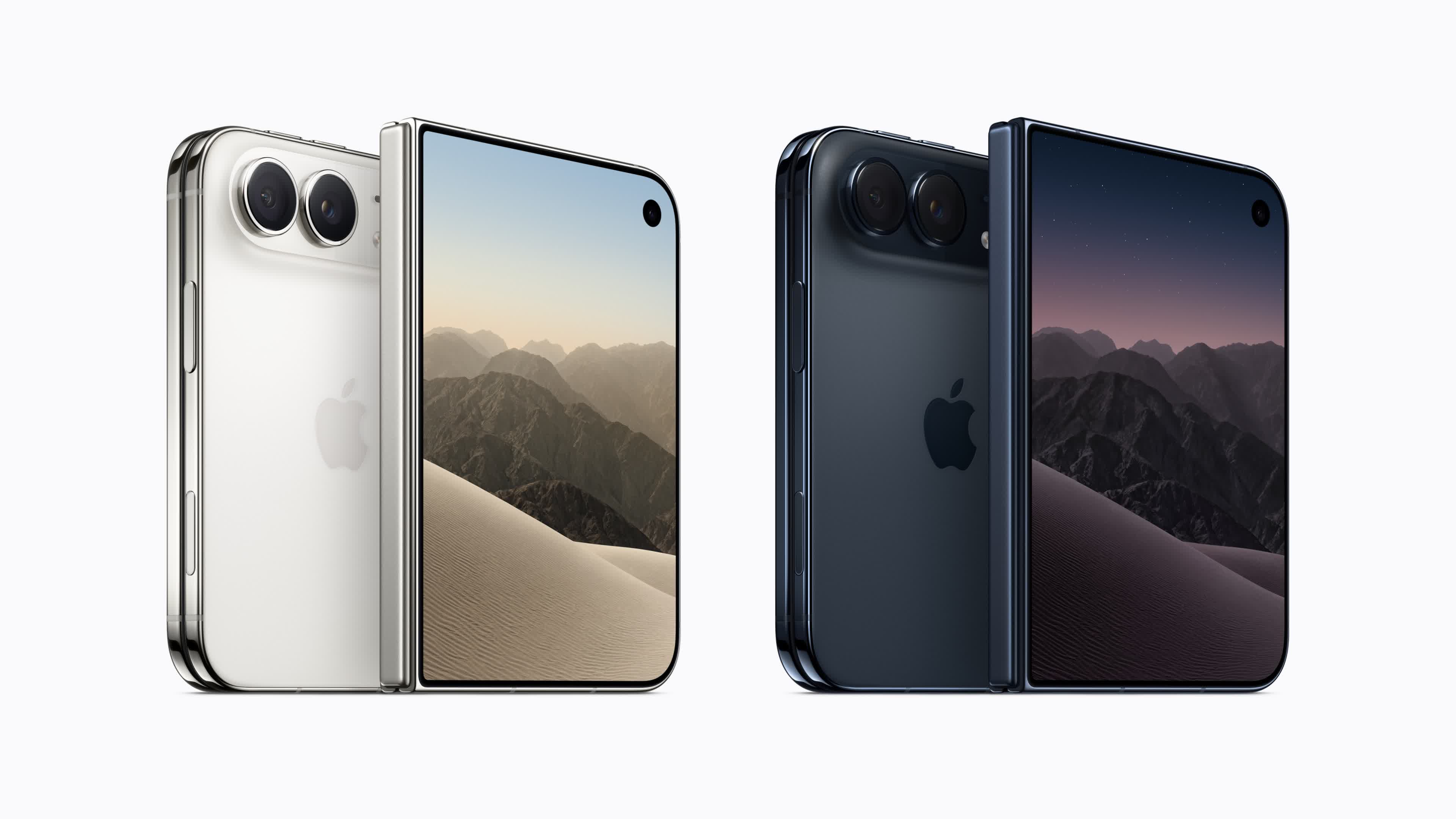
The iPhone Duo's best feature isn't the fold, it's the software built around it

Bob O'Donnell

Posts: 143   +2
Staff member

Sometimes it really is the details that matter.

Or, in the case of cool new hardware, it's the software that can make or break the experience. Apple forcefully made both points with the launch of its new foldable smartphone, the highly anticipated iPhone Duo, which is expected to ship on October 23 at a starting price of $1,999.

The Duo features a very nice, if arguably derivative, hardware design that at first glance looks similar to other recent passport-style phones, such as Samsung's Z Fold 8. But the phone distinguishes itself with a new version of iOS and multiple applications that have been clearly and cleanly optimized for the foldable form factor.

It's these software refinements that make the iPhone Duo stand out among other foldable competitors. In fact, even with very limited hands-on time with the phone, I'd argue that Apple has redefined the foldable category and experience with the launch of the Duo. From simple adjustments, like moving app icons from the bottom of the screen to the side, to more elaborate touches, such as the visual transition from the front display to the larger inner screen, Apple has created a range of enhancements that make foldables feel brand new.

Given that Samsung first introduced the world to foldable phones back in 2019, that's quite an accomplishment. As a vocal and avid supporter of the category since those early days, I've used every single foldable Samsung has created as my daily driver, so I was very curious to see if Apple could use its very delayed entrance into the category to its advantage.

Clearly, it has.
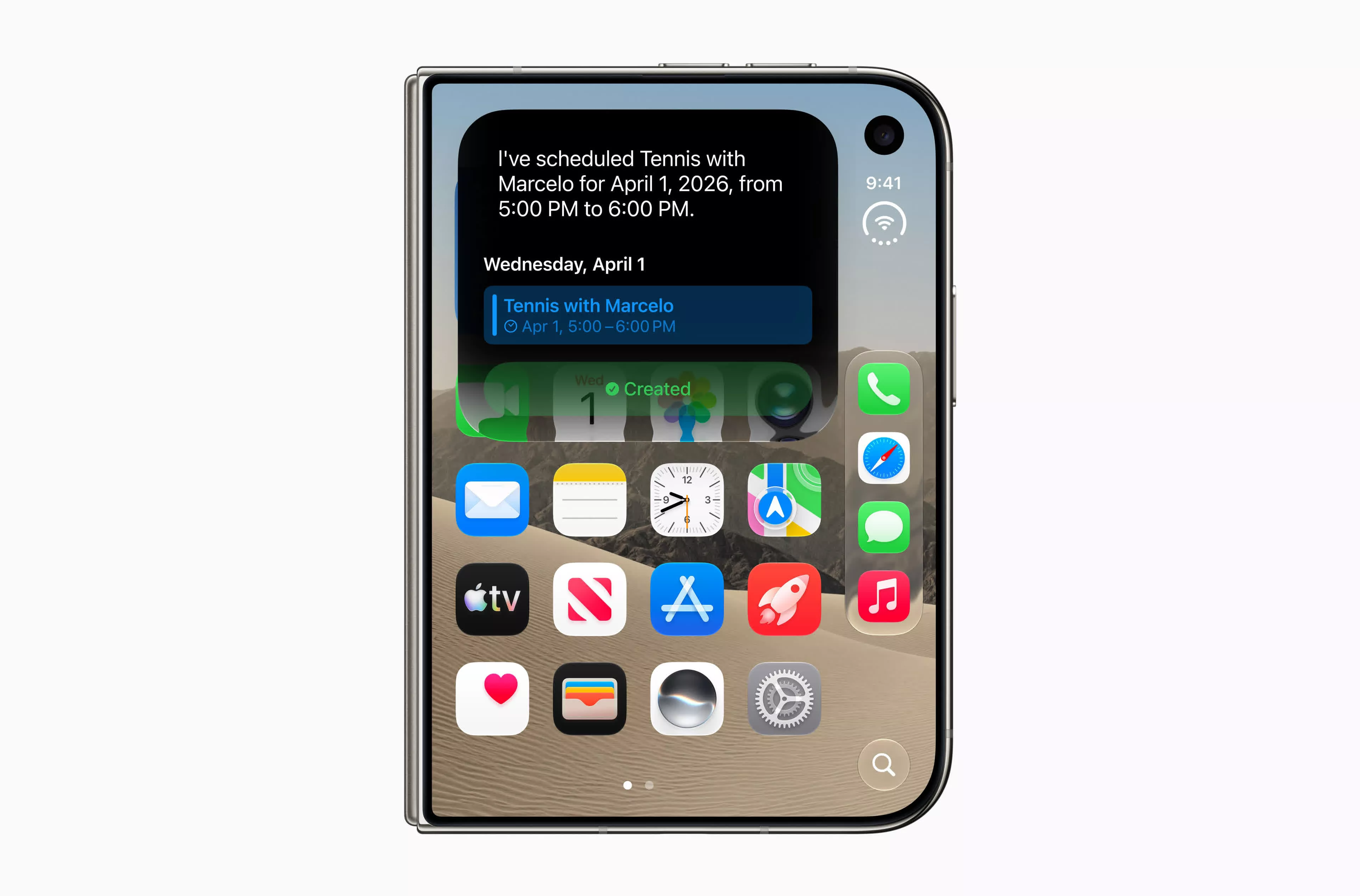
Admittedly, some of the capabilities Apple showed off on the Duo are similar to features we've seen from companies like Samsung, Motorola, and Google over the years. However, the level of refinement and the collective experience Apple demonstrated at the launch event showed how thoroughly the company has thought through the details to create a true foldable experience, rather than simply putting the same software into a different physical package.

I expect the iPhone Duo will end up becoming the hot new tech status symbol in the near term.

Speaking of hardware, on closer inspection the iPhone Duo does have some important differences compared with other foldable designs. Compared with Samsung's Z Fold 8, for example, the Duo is slightly shorter and wider, both when folded and unfolded, giving it a form factor that's a bit easier to hold. However, the Z Fold 8 is a noticeable 1.87 ounces lighter and about 0.7mm thinner, likely reflecting the many years of experience Samsung has had refining and shrinking its foldable designs.
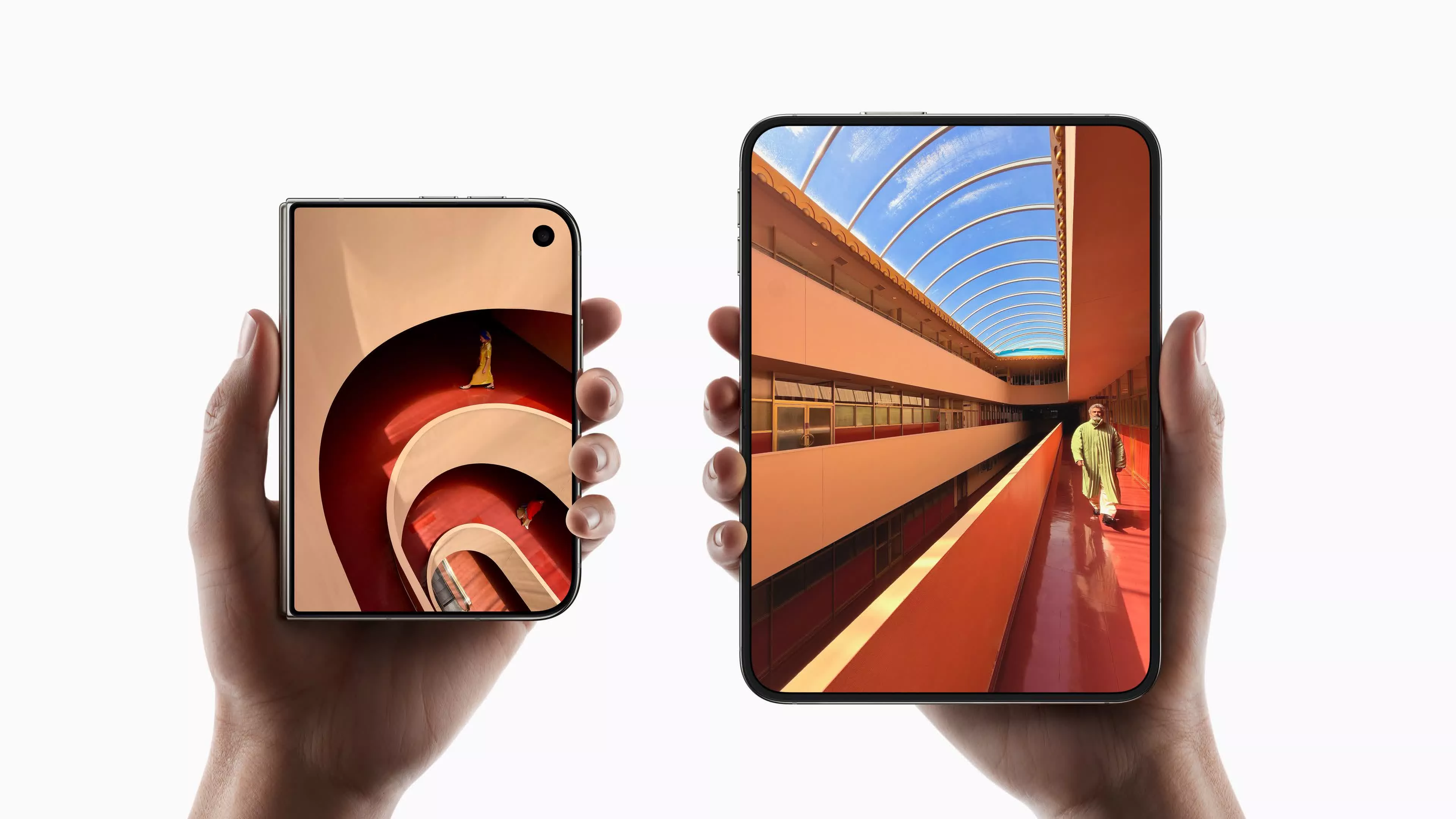
The hinge designs are different as well, which could partially explain the weight difference, with Apple's design feeling a bit firmer, though the distinction is relatively subtle. The iPhone Duo also has a more robust IP68 water and dust resistance rating versus the Z Fold 8's IP48.

In addition to the iPhone Duo's slightly higher-resolution displays, the biggest difference is that, thanks to a new nano-texture finish layer on top of the screen, there's virtually no visible crease. As a very long-time user of foldable phones, I can say with certainty that creases on most modern foldables aren't really noticeable when you're actually using the device. However, for first-time users considering a move to a foldable, it's an important issue to address.

One of the biggest surprises with the iPhone Duo is the price. It starts at $1,999 for a 256GB configuration, which is $100 more than the similarly configured Z Fold 8. Early rumors suggested pricing would begin well above $2,000.

By staying below the psychological $2,000 barrier, Apple managed to keep the Duo within reasonable consideration for people who are now accustomed to paying around $1,500 for well-configured "regular" iPhone Pro and Pro Max models. Of course, at the high end, a 2TB configuration of the iPhone Duo is expected to hit an eye-watering $3,199.

Despite the better-than-expected pricing for the base configuration, the iPhone Duo and foldables in general clearly aren't for everyone. Right now, the category makes up only about 2% of the total smartphone market, although it is one of the few sub-segments that continues to grow.

My expectation is that the introduction of the iPhone Duo will raise interest in the entire category and could eventually help push foldables closer to 10% of the market over the next few years. Apple will undoubtedly be the primary beneficiary of that growth, but companies like Samsung, Motorola, and Google will likely benefit as well.

In the meantime, I expect the iPhone Duo will become the hot new tech status symbol. Initial manufacturing volumes are rumored to be low, and combined with the higher price point, that means it's likely going to be difficult to get one.

Eventually, that will pass, but along the way, I'm hoping a much wider audience will be exposed to the benefits that I think foldables bring to the smartphone category. Combining a large screen with a pocketable form factor is something that, once you've gotten used to it, is very hard to give up.

Bob O'Donnell is the founder and chief analyst of TECHnalysis Research, LLC a technology consulting firm that provides strategic consulting and market research services to the technology industry and professional financial community. You can follow him on Twitter @bobodtech

Permalink to story:

 
I love how Apple reviews all ignore the crease on the foldable iPhone. They all pretend it's not there or it's barely visible if you look really hard. Meanwhile, anyone else (like Samsung) releasing a foldable phone means every review is focused almost entirely on the crease and how bad it gets over time, and how particles get caught in the hinges, etc. Funny how that works.

The article literally says "Apple's first foldable arrives four years late, and it might be worth the wait" Really? Apple basically waited 4 years for others to get it right and then simply copied the design and changed it slightly. But apparently Apple can do no wrong.
 
Minor refinements aside, Apple dropped the ball onto their foot by NOT making iPad apps compatible. Surely the “fastest” A20 processor is capable of running native iPad apps. Hell, many iPads to this day are still on A series processors and not M series. Might hit battery, but so long as they wall that off, I will maintain they are severely limiting the one “killer” feature the Duo may have brought to the fold…

BTW, article has the deprecated “iPhone Ultra” branding in there. Either a Freudian slip, or forgot to edit a pre-prepared article with updates to reflect new public info after official release.
 
I love how Apple reviews all ignore the crease on the foldable iPhone. They all pretend it's not there or it's barely visible if you look really hard. Meanwhile, anyone else (like Samsung) releasing a foldable phone means every review is focused almost entirely on the crease and how bad it gets over time, and how particles get caught in the hinges, etc. Funny how that works.

The article literally says "Apple's first foldable arrives four years late, and it might be worth the wait" Really? Apple basically waited 4 years for others to get it right and then simply copied the design and changed it slightly. But apparently Apple can do no wrong.


Samsung had 8 tries to get it right.

Apple did it in one.

But the real story here isn't a "folding phone".

It's how iOS works on the folding iPhone.

Samsung doesn't compete with Apple. Samsung competes with all those other android phones.

IOS sets iPhone Duo apart.
 
I love how Apple reviews all ignore the crease on the foldable iPhone. They all pretend it's not there or it's barely visible if you look really hard. Meanwhile, anyone else (like Samsung) releasing a foldable phone means every review is focused almost entirely on the crease and how bad it gets over time, and how particles get caught in the hinges, etc. Funny how that works.

The article literally says "Apple's first foldable arrives four years late, and it might be worth the wait" Really? Apple basically waited 4 years for others to get it right and then simply copied the design and changed it slightly. But apparently Apple can do no wrong.

I mean it’s IP68 rather than just IP48 which should help with dust etc. also they apparently have reduced the crease to be effectively unnoticeable. It’s something I’d like to see in demo units at the start of next year though for the longevity. The other issue is screen durability in general which is promising due to them advertising the pencil being used, will wait for a Jerry rig video on that though.
 
I love how Apple reviews all ignore the crease on the foldable iPhone. They all pretend it's not there or it's barely visible if you look really hard. Meanwhile, anyone else (like Samsung) releasing a foldable phone means every review is focused almost entirely on the crease and how bad it gets over time, and how particles get caught in the hinges, etc. Funny how that works.

The article literally says "Apple's first foldable arrives four years late, and it might be worth the wait" Really? Apple basically waited 4 years for others to get it right and then simply copied the design and changed it slightly. But apparently Apple can do no wrong.

Not to mention it pretty much has the SAME display as the Samsung Fold 8 since Samsung was the one that made the display for the Apple fold. Everyone says crease crease crease on the fold 8 but crickets on the iphone fold.
 
Not to mention it pretty much has the SAME display as the Samsung Fold 8 since Samsung was the one that made the display for the Apple fold. Everyone says crease crease crease on the fold 8 but crickets on the iphone fold.
Because it’s not the same display as the fold 8. It’s not even the same aspect ratio or layer stack. Samsung display aren’t the same company as Samsung electronics
 
As OP pointed out..by copying everyone else's work. Apple is the kid who leans over everyone's shoulder in class gets away with it by being the teacher's pet.
You could say that, but it wouldn't be an accurate analogy. There is no deadline, and the only "cheating" would be breaking the law. There is no "teacher"; there's the reviewers (more like critics) and there's the market. So this would be more akin to the movie or music industry. The other creators started out with terrible releases before slowly getting better, and the smart one waited and eventually came out with something good on their first attempt.

The downside to waiting is losing relevance. So unlike with movies or music, becoming a market leader for a product is a cumulative effort. For Apple, this wasn't a problem considering foldables never gained much momentum. Everyone always criticizes Apple's annual refreshes because its hardware is nothing special; well that apparently applies to all those foldables considering Apple was able to "copy" them. What cannot be copied is the software and you seem to be avoiding talking about that.
I love how Apple reviews all ignore the crease on the foldable iPhone. They all pretend it's not there or it's barely visible if you look really hard. Meanwhile, anyone else (like Samsung) releasing a foldable phone means every review is focused almost entirely on the crease and how bad it gets over time, and how particles get caught in the hinges, etc. Funny how that works.

The article literally says "Apple's first foldable arrives four years late, and it might be worth the wait" Really? Apple basically waited 4 years for others to get it right and then simply copied the design and changed it slightly. But apparently Apple can do no wrong.
Did you even read the article? It's about how the software sets it apart, not the hardware. That said, you seem to think the Duo has the same flaws as the competitors; it does not. So Apple didn't copy these flaws, and you're in denial because even the article explains why the Duo doesn't have these flaws.

For one, there's a nano-texture layer over the display which minimizes any visibility of a crease. And unlike what you claim, the article writer doesn't focus on the crease on other foldables. He says "I can say with certainty that creases on most modern foldables aren't really noticeable when you're actually using the device". The other important thing is the Duo actually is rated to be dustproof unlike the competitors. It's rated as such at IP68 (versus the latest Galaxy Fold's IP48 which is not).

So basically, sorry to say, it seems you're flat out wrong here.
 
Back