The new corporate alibi: AI is the go-to excuse for mass layoffs

Skye Jacobs

Posts: 2,030   +59
Staff
The big picture: Executives across tech and neighboring industries are increasingly framing layoffs as the first step toward an artificial intelligence future, even when the automation they cite is still experimental, unfinished, and nowhere near operating at scale. The result is a growing disconnect between what companies pitch to investors about AI-driven restructuring and what's actually happening inside their products, infrastructure, and day-to-day operations.

In 2025, employers said artificial intelligence played a role in more than 50,000 planned job cuts, according to Challenger, Gray & Christmas. That puts AI among the most commonly cited reasons for workforce reductions, alongside familiar corporate standbys like cost-cutting, restructuring, and shifting demand.

And yet, many of the same companies acknowledge their AI efforts remain early-stage – limited pilots, narrow use cases, or small experiments rather than sweeping replacements for large portions of the knowledge workforce.
At the biggest platforms, the numbers are hard to ignore. Amazon has announced 30,000 corporate job cuts since the fall – 14,000 roles last year and another 16,000 this January – while simultaneously signaling to markets that generative AI and software agents are poised to reshape white-collar work.

Other consumer-facing platforms are using layoffs to spotlight a pivot toward AI-centric product development. Pinterest said in January that it would cut about 15 percent of its workforce, framing the decision as a reallocation of resources toward AI-focused roles.

Hardware companies are adopting similar messaging. Hewlett-Packard has been talking about embedding AI across the organization as it plans thousands of job cuts over several years. CEO Enrique Lores told investors that HP sees a "significant opportunity to embed AI into HP," tying that ambition to as many as 6,000 reductions.

Against this backdrop, analysts and researchers argue that "AI" has become a convenient label for decisions that are primarily financial.

Against this backdrop, analysts and researchers argue that "AI" has become a convenient label for decisions that are primarily financial. A January forecast from market research firm Forrester notes that "many companies announcing AI-related layoffs do not have mature, vetted AI applications ready to fill those roles," warning that investors and the public may be "confusing financially driven layoffs with A.I.-driven layoffs."
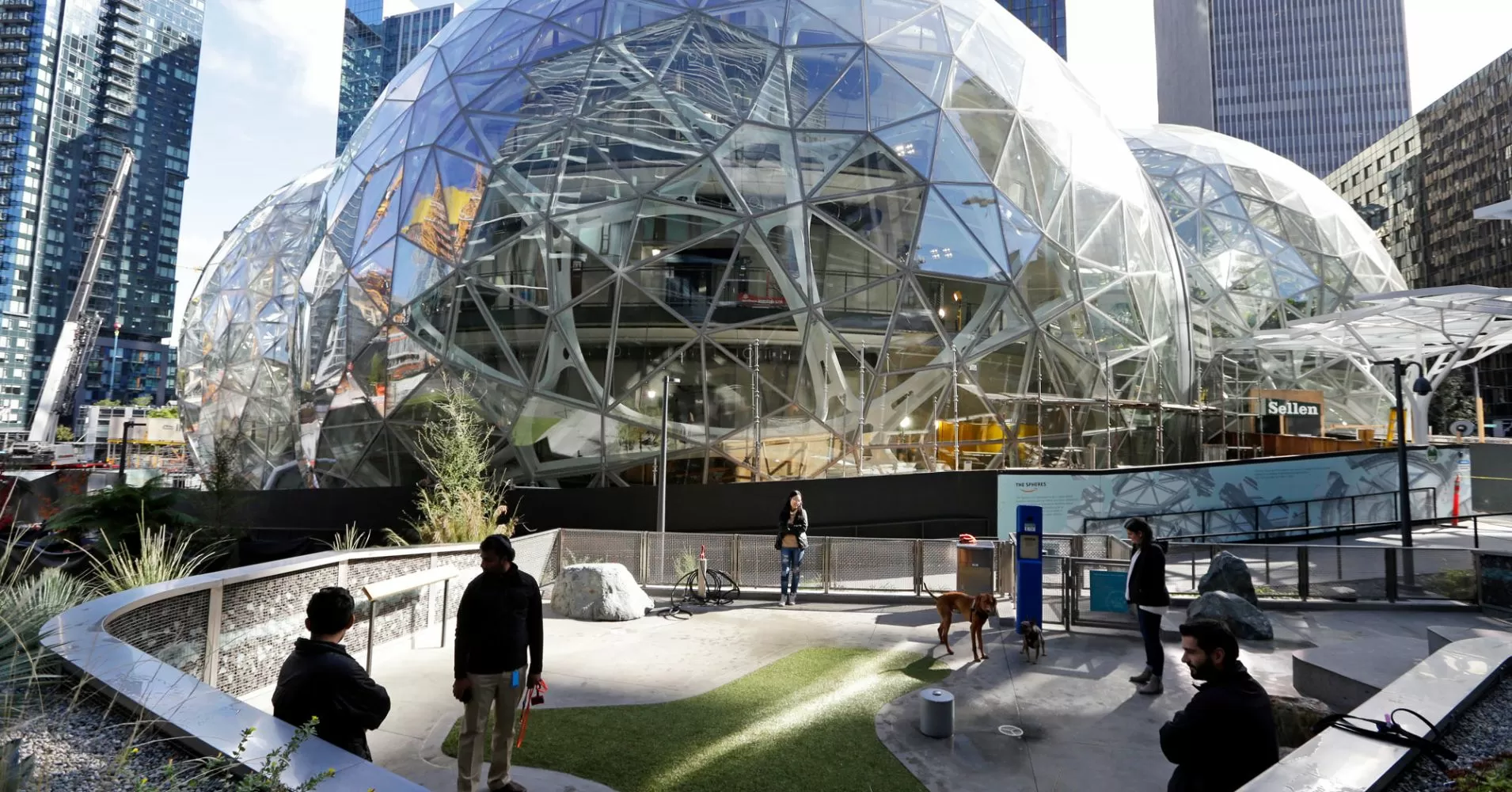
The firm describes this as a form of AI-washing: attributing job cuts to future AI implementation when the immediate drivers are cost control, profitability targets, or corrections after overhiring.

It also points out that overpromising on automation creates operational risk, because companies may discover that promised AI-driven productivity gains do not materialize quickly enough to justify the speed and depth of their cuts.

The phrase "AI-washing" echoes earlier critiques like "greenwashing" and "ethics washing," both used to call out companies that overstate their environmental or ethical commitments.

In its earliest use, AI-washing was aimed at vendors and products that marketed themselves as "AI-powered" without meaningful machine learning behind the scenes, drawing attention from regulators who have warned that such mislabeling can mislead investors.

More recently, the term has expanded into the realm of layoffs: when companies frame staff reductions as the direct consequence of new AI tools, even though those tools aren't yet operating at scale or taking over the specific tasks being eliminated.

Molly Kinder, a senior research fellow at the Brookings Institution who studies AI and labor, describes these anticipatory layoffs as a strategic signal to markets. By linking job cuts to AI adoption, executives can position themselves as modernizing rather than retreating – telling investors, in effect, that they've "adopted AI" and already "figured out savings."

That message lands differently than saying the business is underperforming or correcting past mistakes. It also avoids politically sensitive explanations such as tariffs or other policy shocks.

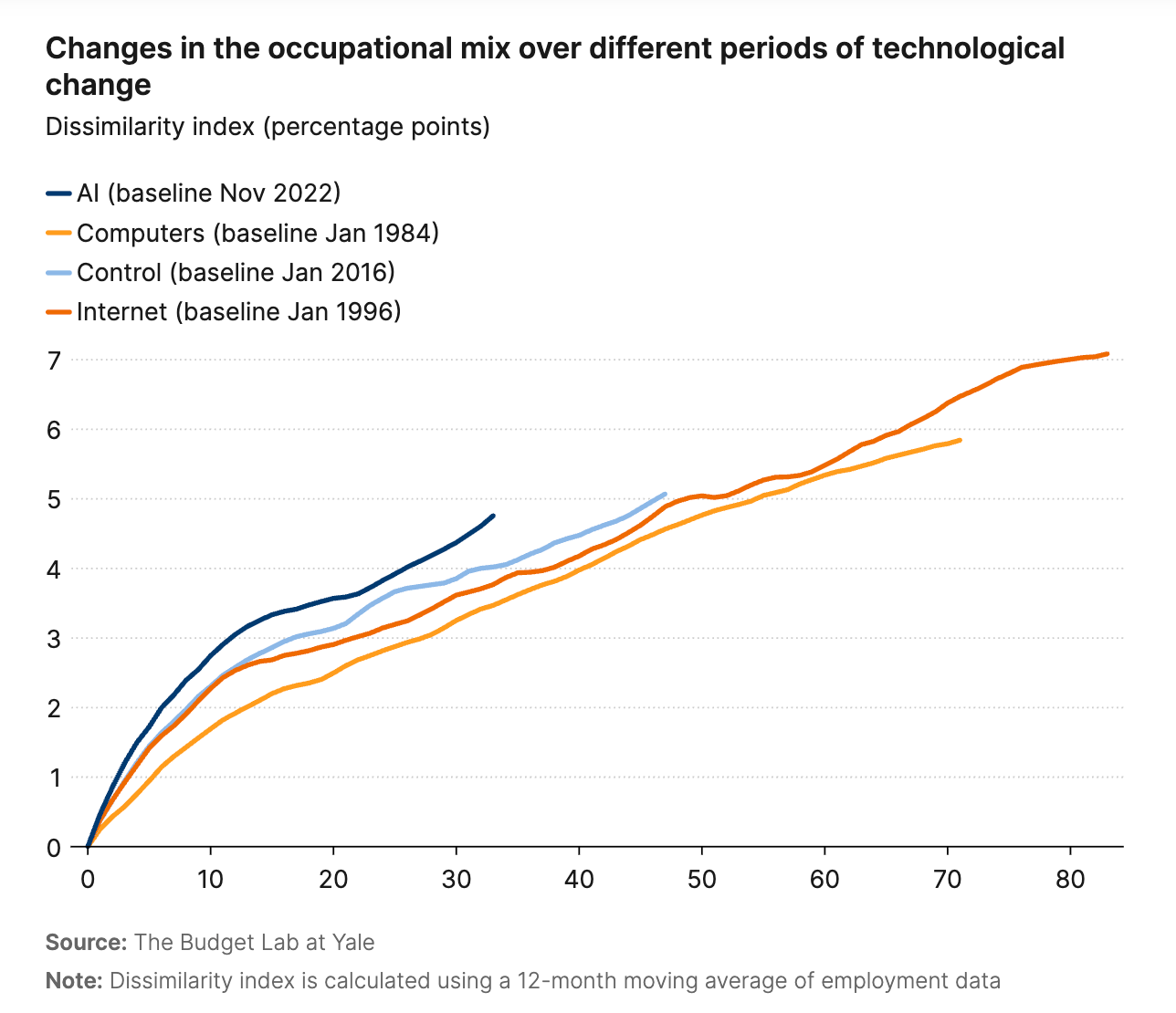
So far, the broader labor data suggests AI has not yet produced a large, measurable disruption to employment. In a recent study for the Yale Budget Lab, Kinder and co-authors examined how AI exposure correlates with employment changes across occupations and sectors. Their conclusion: artificial intelligence has not yet "meaningfully shifted" the overall job market.
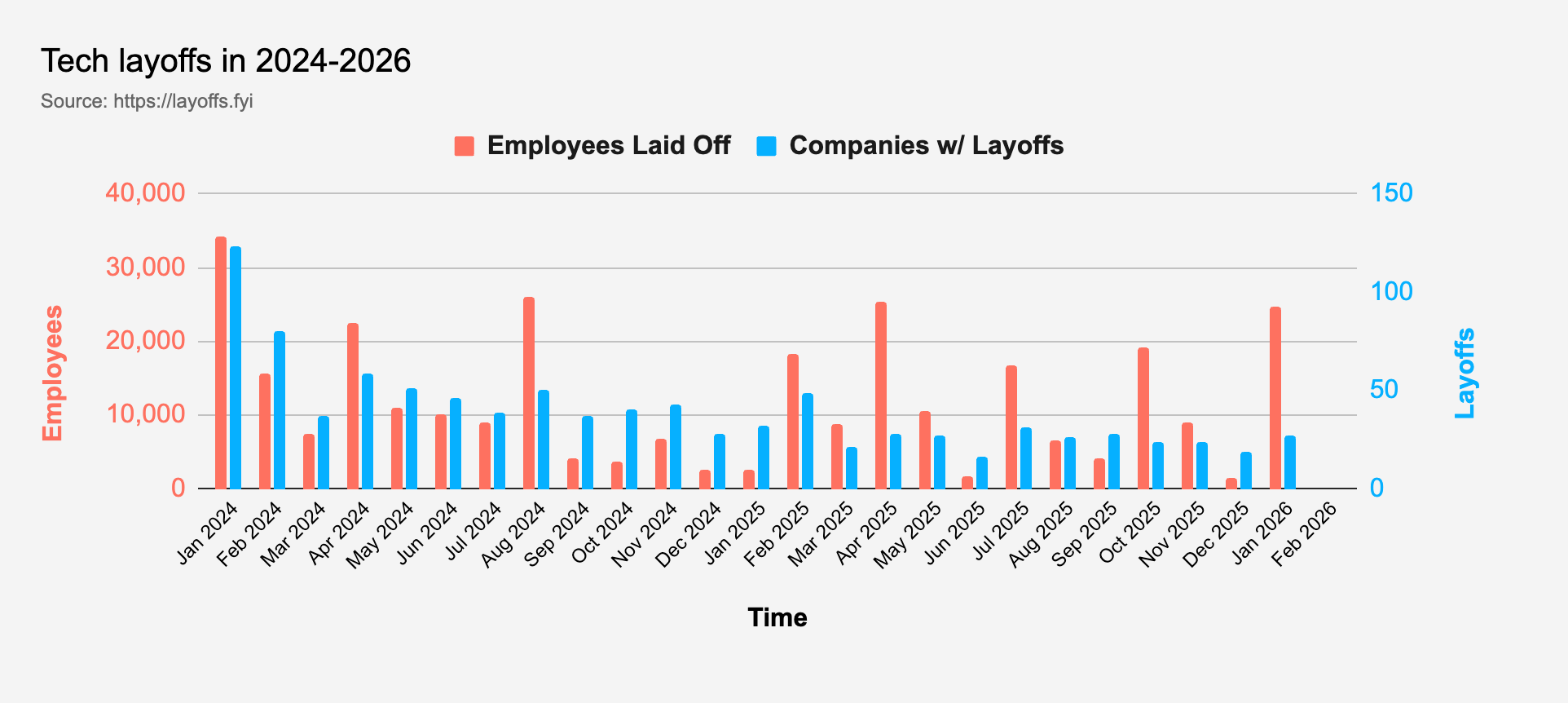
Those findings land amid a very real retrenchment in tech. Since 2022, technology firms have cut more than 700,000 employees globally, according to the Layoffs.fyi tracker, which compiles public reports of job reductions.

Many of those cuts follow a common pattern: companies expanded aggressively during the pandemic, betting on sustained demand for digital services and remote work, then reversed when growth slowed and investors pushed for profitability.

In that context, AI is entering a landscape already shaped by overhiring and conventional cost pressure, making it hard to disentangle what is driven by automation from what is driven by old-fashioned budget math.

Public attitudes add another layer. Surveys show workers are more anxious than optimistic about AI in the workplace, especially when it's tied to job loss. For employers, a narrative emphasizing AI and future competitiveness may feel more palatable than admitting misjudged demand or flawed strategy.

For now, though, the sharpest impact of AI on white-collar employment may be rhetorical.

To be sure, there is genuine technical momentum around AI, which is already handling constrained workloads in support, content drafting, coding assistance and internal knowledge search. That shift is changing the skills employers prioritize: fewer workers dedicated to routine, template-driven tasks, and more roles focused on model design, data engineering, evaluation, and governance.

For now, though, the sharpest impact of AI on white-collar employment may be rhetorical. It is shaping the language of earnings calls and layoff memos, the way executives describe the workforce of the future, and which costs get framed as temporary versus structural. Whether those narratives eventually match the underlying technology – and whether the promised gains justify today's anticipatory cuts – remains an open question.

Permalink to story:

 
Well, we were told this would happen years ago. Despite this, I don’t see any demonstrations to counter this trend. I guess there’s always OnlyFans to fall back on…
 
"Executives across tech and neighboring industries are increasingly framing layoffs as the first step toward an artificial intelligence future...".... Executives across tech and neighboring industries can go F themselves with a jagged branch containing a large hornet nest.
 
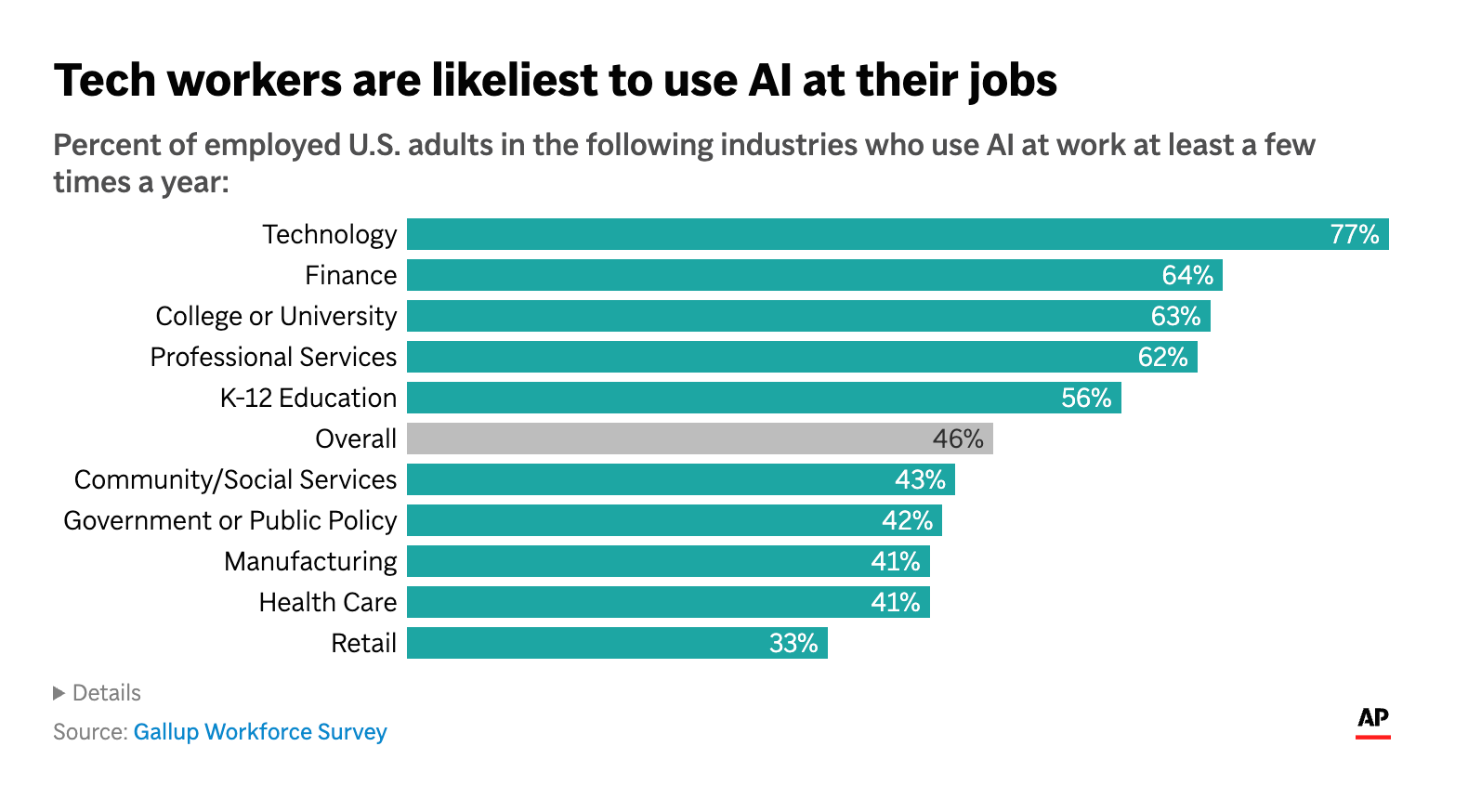
Can we say someone who uses AI at work "a few times a year" (a year !) actually uses AI to work ? Asking one little question to ChatGPT per month does not really make you an actual AI user I think, it has no connection with those layoffs and your productivity.
 
Wondering if any of the commenters actually READ the article…

The article is saying that it’s NOT AI that is responsible for any of these layoffs - it’s being used as an excuse for other factors!

AI WILL be responsible for many job losses - in the future. It will also be responsible for many job hirings… and for raising our quality of life… but not yet…
 
Wondering if any of the commenters actually READ the article…

The article is saying that it’s NOT AI that is responsible for any of these layoffs - it’s being used as an excuse for other factors!

AI WILL be responsible for many job losses - in the future. It will also be responsible for many job hirings… and for raising our quality of life… but not yet…
I have been saying this for awhile now, if AI can't replace a McDonalds employee then it won't be replacing developers, accountants and even some bureaucratic duties like keeping paper work organized
 
As usual, no one reads the article and instead, makes a post to what “they think” it’s about.

If you can not be bothered to read the whole article, refrain from posting stupid commentary.
 
Jensen Said with AI more plumbers is going to be needed. I do not mean this disrespectful as It is an honest job but someone that studied tech and spend thousands of dollars are not going to go into a job direction that they do not want. I actually did a test with Gemini today (chatgpt is even worst) I wrote an incorrect code for a website. I asked Gemini to write it correctly and gave it specific instructions. It could not solve the problem in more than 4 hours. It just basically went in circles the whole time. Then it gives you an explanation on why it doesn't work. Hell it can't even calculate properly.

People lose their jobs because and they want to justify it by automation etc bs. Couple years they will realize what a bad idea it was. Money will only flow between the biggest AI companies. Crime is going to skyrocket. Wars for water/food etc as money will not move around. That is just my theory as humans can't live without money and as it is written, tech is going to ruin the world.
 
AI-washing is such a perfect term. It’s greenwashing all over again, except instead of planting trees they’re planting ChatGPT buzzwords in the layoff memo.
 
Of course, another new tech term, "AI-washing". LOLOLOL Tech folks have the greatest names for stuff ever!

You'd expect companies to use this as an excuse to layoff. It sounds better than the other terms, like they're really doing something "this time". All the other phrases are accounting based, now folks will just blame IT for their job loss instead of bad managers and bean counters.
 
If AI is used as an excuse now, imagine what will happen when it becomes truly viable as a workforce replacement. Which it will.
 
If AI is used as an excuse now, imagine what will happen when it becomes truly viable as a workforce replacement. Which it will.
It's not hard to automate the workforce, when most of the work is trivial sh*t that exists, just to give people something to do. The problem is not that white-collar work is going to disappear, the problem is that bills are still due, even though nobody will have a job―unless we dispense with that as well.

The fact is, either we're going to have to implement some kind of UBI system, backed by automation, or we're going to be bringing back the guillotines. The social contract is on borrowed time and once that time is up, all bets are off. Either a new, better system will be implemented or the entire system will collapse.
 
It's not hard to automate the workforce, when most of the work is trivial sh*t that exists, just to give people something to do. The problem is not that white-collar work is going to disappear, the problem is that bills are still due, even though nobody will have a job―unless we dispense with that as well.

The fact is, either we're going to have to implement some kind of UBI system, backed by automation, or we're going to be bringing back the guillotines. The social contract is on borrowed time and once that time is up, all bets are off. Either a new, better system will be implemented or the entire system will collapse.
Humans will adapt - as they always have - and new jobs will replace the ones that AI takes…

People said the same thing when farming was mechanized… there’s always a period of disruption, but then … well… we find a need for humans again :)
 
Humans will adapt - as they always have - and new jobs will replace the ones that AI takes…

People said the same thing when farming was mechanized… there’s always a period of disruption, but then … well… we find a need for humans again :)
In order for people to matter, in order for human labor to have any value, it will have to be done within an ecosystem of "artisan labor"―which is to say, it will be hand-made and expensive. Automation's two strengths are speed of delivery and economies-of-scale. Because, despite all of the advancements we have made―in terms of medicine and technology―the fact of the matter is, humans are biological beings with programming that is several hundred thousand years old. We were never meant to be rats in cages, like we are now. We are, fundamentally, an agrarian animal. We are not machines.

So, what we should strive for is, automation for automatons and purpose-driven manual work for us, be it mental or physical. Co-existing economies, where some elements of one cross-breed into the other.
 
It's not hard to automate the workforce, when most of the work is trivial sh*t that exists, just to give people something to do. The problem is not that white-collar work is going to disappear, the problem is that bills are still due, even though nobody will have a job―unless we dispense with that as well.

The fact is, either we're going to have to implement some kind of UBI system, backed by automation, or we're going to be bringing back the guillotines. The social contract is on borrowed time and once that time is up, all bets are off. Either a new, better system will be implemented or the entire system will collapse.
UBI? LOLOLOL That's a system for LOSERS, take money from others to redistribute it to the non-working. Yeah, great perk for the lazy that will simply serve to make them lazier!
 
UBI? LOLOLOL That's a system for LOSERS, take money from others to redistribute it to the non-working. Yeah, great perk for the lazy that will simply serve to make them lazier!
What do you propose, instead? The current system is not working, or if it is "working as intended, just not for you", then who does it serve? Who is it for? If we don't implement UBI, then we need to implement something else. We need to do something. People need to do something.

The fact is, corporate America no longer views human employees as assets. Maybe that's always been the case, but it's never been more apparently the case. Even if AI is an excuse, that's only because it's not working as intended. But, what if it did? What if AI was eventually as good as the advertisements claim, sans hallucinations and other flaws in its programming? Well, then, why hire people, when AI can replace the entire labor force? It doesn't take vacations, get sick, ask for promotions or have commitments outside of the company, like a life and a family. It is also available 24/7, doesn't require a PR team (when properly calibrated) and can be made completely subservient to the company's interests.

In short, it is the ideal employee.
 
What do you propose, instead? The current system is not working, or if it is "working as intended, just not for you", then who does it serve? Who is it for? If we don't implement UBI, then we need to implement something else. We need to do something. People need to do something.
Motivation, creativity, intelligence and plain old hard work. It's worked for over 200 years in America or everyone would have left. Very few leave and people from around the globe clamor to come in. The American system works marvelously, it's the best and most successful system in the world. If it's not working for you, then you don't know how to work within it.

In the mean time, don't ask me for part of my paycheck so you can sit around and complain. If you don't like it here, perhaps you should go another country that has your desired free-money "UBI" - which nothing short of theft from the hardworking.
 
Back