Why it matters: High-efficiency battery factories, not faster cars, are emerging as the real test of who wins the next phase of the EV race. The companies that can strip energy use, floor space, and solvents out of cell production are beginning to show how electric vehicles could finally hit mass-market price points without sacrificing range or performance.
Electric vehicles already deliver what most drivers say they want: a quiet, comfortable car that is cheap to run and does not spew exhaust. Yet even as battery-only models pass roughly one-fifth of new car sales worldwide, prices remain too high for many buyers, and several major Western automakers are pulling back on near-term production plans.
That gap ultimately traces back to the battery cell, which dominates the cost of an EV and now makes the difference between a model that can be priced for the mass market and one that cannot.
Batteries account for about 40% of an electric vehicle's total cost, with roughly 70% of a cell's cost coming from its raw materials and the remaining 30% from manufacturing.
Batteries account for about 40% of an electric vehicle's total cost, with roughly 70% of a cell's cost coming from its raw materials and the remaining 30% from manufacturing. That split has pushed engineers on two parallel tracks: refining chemistries such as lithium-iron-phosphate and nickel-manganese-cobalt, and attacking the production methods that turn powders into electrodes.
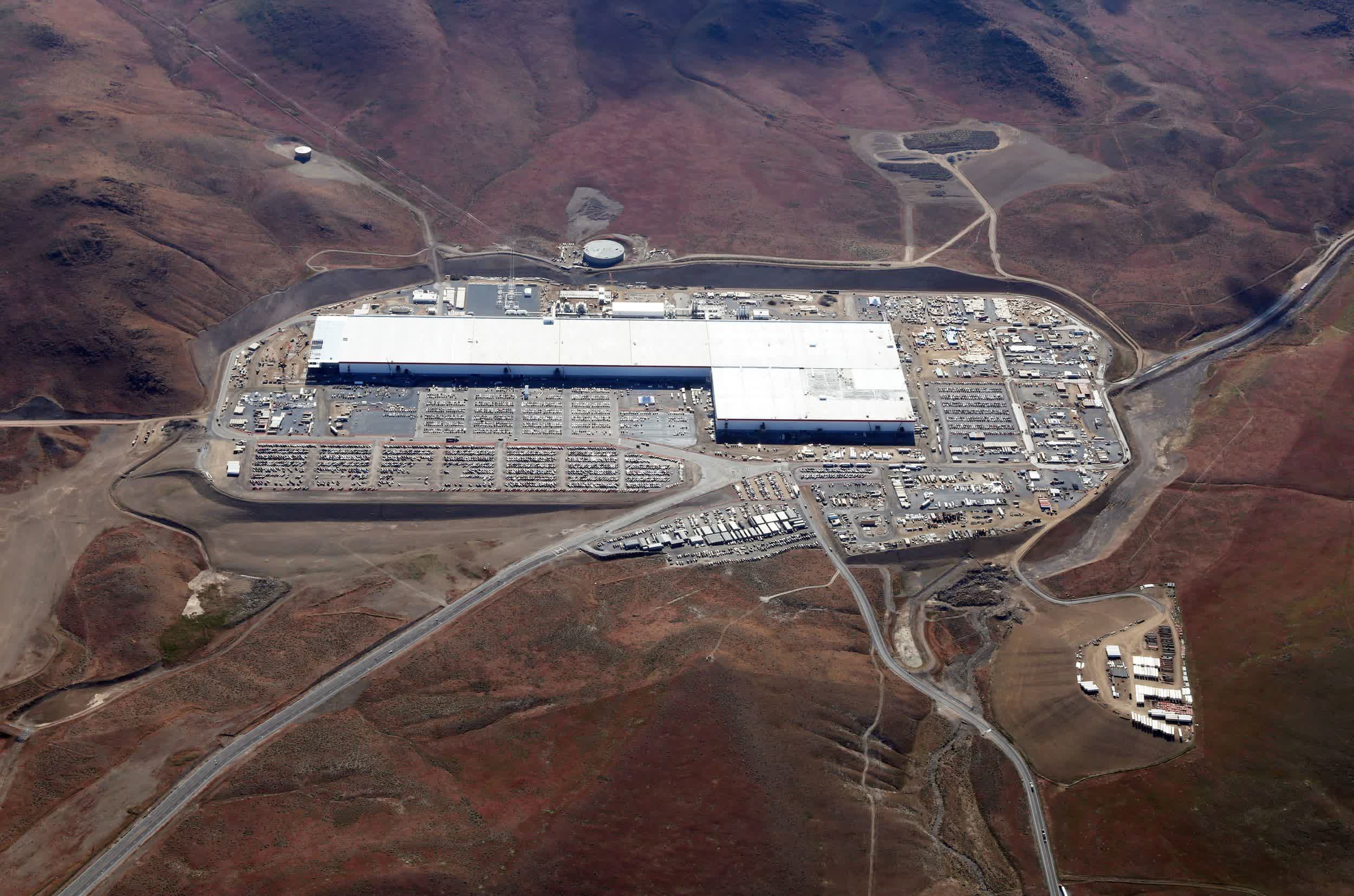
While materials work focuses on cheaper collectors and higher energy density, the basic way most factories still build electrodes looks much the same as it did decades ago.
Today's dominant "wet-coating" process mixes active powders with toxic solvents into a slurry, spreads that mixture onto metal foil, and then runs it through drying ovens that can stretch the length of a football field. A cell plant sized at about 50 gigawatt-hours per year – enough to supply roughly a million vehicles – can require on the order of 50 megawatts of continuous power just to operate those ovens, comparable to the electricity demand of tens of thousands of homes.
The energy load, capital expense, and environmental cost of this setup are enormous, and they scale directly with the push to build more gigafactories. For automakers already facing a multiyear cost disadvantage against Chinese rivals, that burden is increasingly hard to defend.
This is where dry electrode manufacturing has moved from a research topic to a central bet on the factory floor. In concept, eliminating solvents from coating should cut both operating cost and energy use while shrinking plant footprints.

In practice, however, dry processes have run into persistent technical hurdles. Without liquid to help distribute and bind the particles, it becomes much harder to mix fine powders evenly, maintain adhesion to the current collector, and avoid damaging sensitive materials under heat and friction on high-speed lines.
Several companies are now tackling those problems with different approaches, each trying to preserve or improve electrochemical performance while stripping out the ovens and solvents.
Bristol, UK-based Anaphite has built a process it calls Dry Coating Precursor technology, designed to keep the benefits of uniform dispersion while ending up with a dry, printable powder. The method starts by using low-toxicity solvents to disperse the electrode materials thoroughly, then removes the solvent mechanically before the coating step.
What remains is a film-forming powder that behaves a bit like kinetic sand: free-flowing as a granular material but cohesive when compressed. Under pressure during manufacturing, that powder transforms into a smooth, flexible electrode layer that locks tightly onto the current collector foil, aiming to solve the usual adhesion and cracking issues found in other dry routes.
The efficiency gains reported for this process are substantial. By removing the need for long, energy-hungry drying ovens during the coating stage, Anaphite's system can cut coating-related energy use by about 85%. That, along with simplified equipment, translates into as much as a 40% reduction in overall cell production cost and a factory footprint that is about 15% smaller, without sacrificing yield or performance.
Sakuù, a company based in San Jose, California, has taken a different route to solvent-free electrodes with its Kavian manufacturing platform. Instead of starting with a slurry at all, Kavian uses a process the company compares to "frosting a cake – without the mess," fusing dry powders directly onto foil using heat and pressure in a kind of laser-printing-like system.
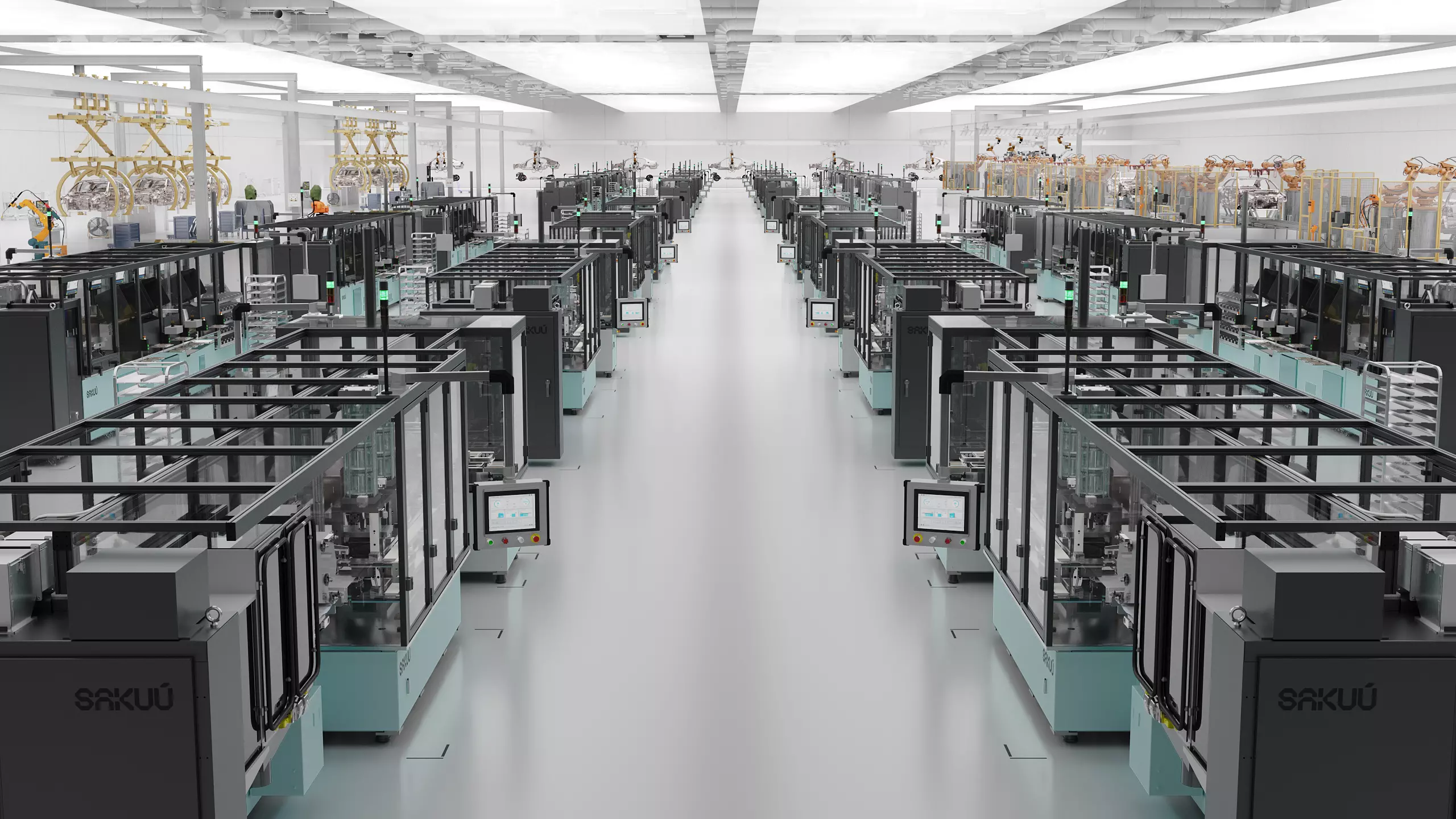
This architecture is designed to be chemistry-agnostic: manufacturers can swap material cartridges to print lithium-iron-phosphate, nickel-manganese-cobalt, or other formulations that may emerge, without redesigning the underlying coating line.
In pilot programs, Sakuù reports that this dry-printing approach can cut carbon-dioxide emissions from production by roughly 55%, shrink factory size by about 60%, and reduce utility costs by more than half.
Just as important, the hardware itself is modular and compact, sized so that units could fit in a space as small as a garage, allowing production to scale by adding more machines rather than constructing massive, centralized plants. That kind of modularity could give automakers and cell suppliers more flexibility to place capacity closer to assembly plants or to ramp volumes in smaller, more distributed increments.
If these dry processes scale as promised, they could tighten the link between EV performance and affordability in a way that conventional process tweaks cannot. Combine higher-density, lower-cost cells with the inherent strengths of electric drivetrains – instant torque, quiet cabins, low running costs – and the case for electrification begins to hinge less on subsidies or early adopters and more on straightforward economics.
The next EV breakthrough isn't the car, it's the battery factory


