The Trump administration suspects an ASML chipmaking machine made it into China. ASML says that's impossible.

Skye Jacobs

Posts: 1,994   +58
Staff
TL;DR: ASML's most advanced chipmaking tools have become the focus of a renewed dispute in Washington over how far the US should go to keep cutting-edge semiconductor technology out of China. In recent months, the Trump administration has pressed ASML over whether one of its extreme ultraviolet (EUV) lithography machines may have slipped past export controls and ended up in China. According to people familiar with the talks, Commerce Secretary Howard Lutnick raised the issue directly with ASML's senior leadership, asking whether a machine that has never been approved for export to China could have nonetheless reached the country.
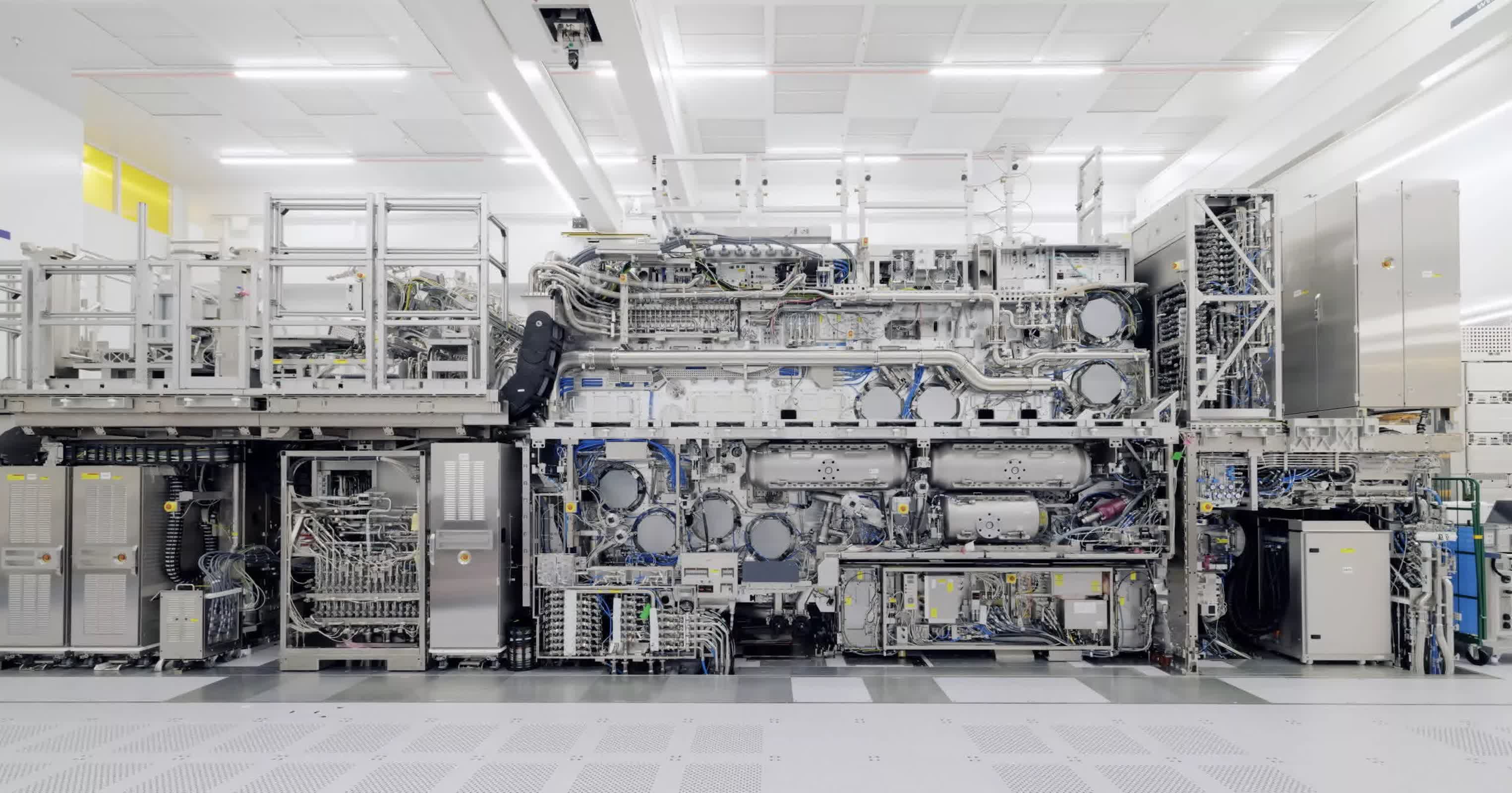
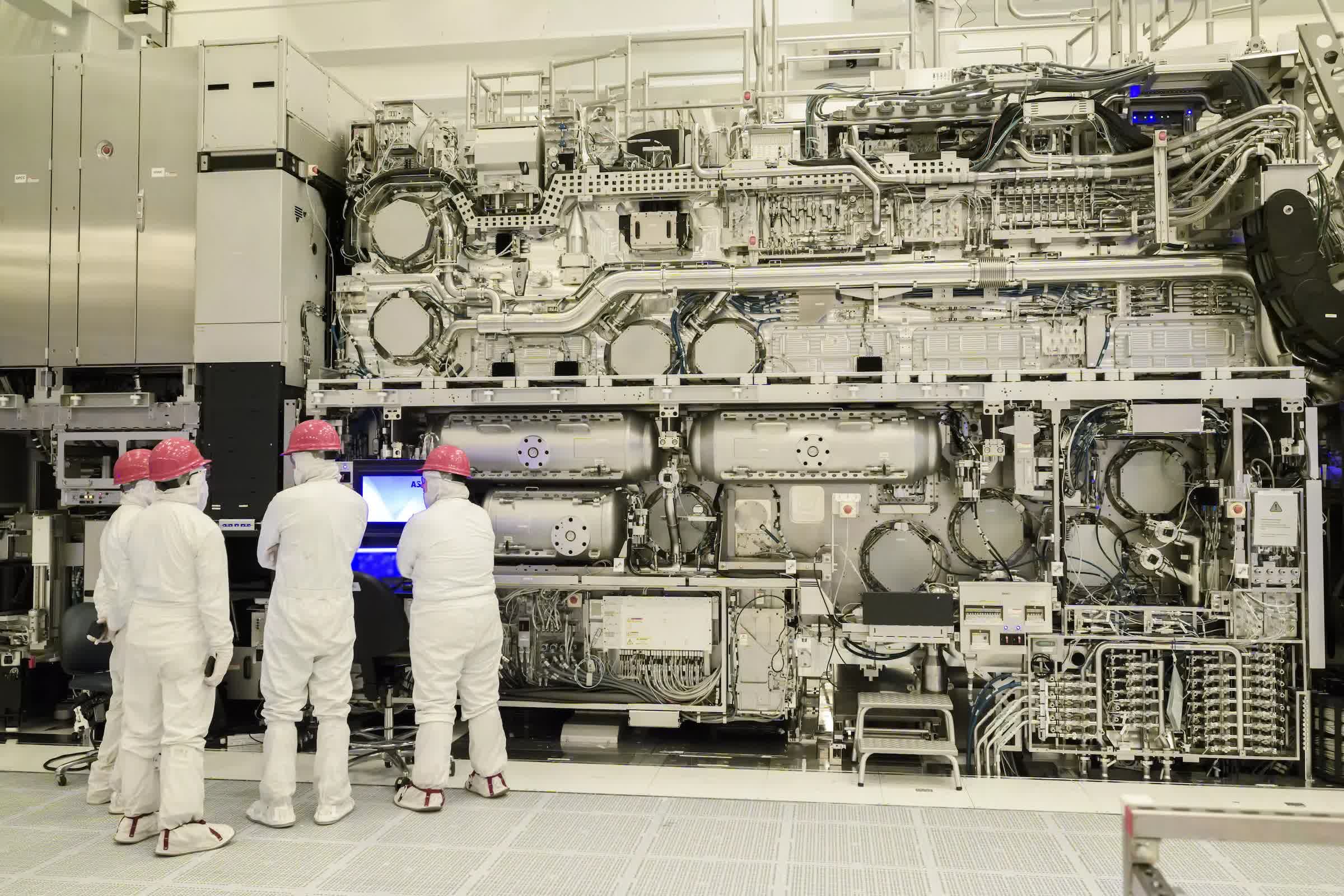
EUV is the technology that underpins today's most advanced processors. The machines are used by companies such as TSMC to manufacture high-performance chips for Nvidia and Apple. They are roughly the size of a school bus, are produced in limited quantities, and require constant maintenance from ASML engineers.

US export rules have long barred ASML from selling EUV tools to China, and the company says it complies with those restrictions. In its discussions with Lutnick, ASML pushed back on the suggestion that an EUV system could be operating in China, according to people familiar with the talks.

A company spokesperson, responding to questions about those meetings, said ASML has never shipped an EUV machine to China and stressed that it regularly engages with governments worldwide while adhering to export regulations.

The conversation has taken on a sharper edge in Washington. Multiple senior Trump administration officials, speaking on condition of anonymity, said they believe ASML is not acting in good faith, citing exports to China of equipment they say is specifically related to EUV tools.

They declined to provide documentation, citing the sensitivity of the information, and did not say they had proof of an actual EUV machine operating in China. ASML, for its part, denied to Bloomberg that it has shipped any EUV-specific equipment to China.
Behind the scenes, the pressure has triggered an internal scramble at ASML. After Lutnick's April meeting, the company prepared a document titled "No Indication of Any ASML EUV System in China" and circulated it among officials in Washington, according to people familiar with the situation.

The document, reviewed by Bloomberg, says there are 314 EUV machines in use worldwide and 26 that have been decommissioned, with none located in China. It also states that ASML can automatically detect "any interruption, abnormal behavior, or loss of connectivity" across its EUV fleet, and that customers "cannot remove, transport, or relocate EUV systems without ASML involvement due to specialized handling procedures."

Those technical constraints are central to ASML's argument. EUV tools are so complex that they effectively remain under the company's oversight throughout their operational life. ASML says customers cannot remove, transport, or relocate EUV systems without its involvement because of specialized handling requirements.

Yet skepticism within the Trump administration persists. Senior officials say they have evidence that ASML shipped specialized transport equipment and other components for use with EUV systems to Chinese customers, though they have declined to provide supporting records.

The technology at the heart of the dispute is critical to China's AI ambitions. Huawei Technologies, which has been cut off from EUV tools, has made progress in producing advanced chips without ASML's most sophisticated equipment, narrowing the gap with TSMC. That absence of EUV capability is widely seen as one of the most significant constraints on Huawei's ability to mass-produce cutting-edge AI chips.

If investigators were ever to confirm that a full EUV system had reached China, it would amount to one of the most serious known breaches of the US-led export control regime designed to limit Beijing's access to high-end AI hardware. For now, officials have declined to explain why, if they suspect such a violation, they have not brought public enforcement actions or further tightened restrictions.

ASML's broader China business is already constrained. The Netherlands has blocked EUV sales to Chinese chipmakers and, under US pressure, has also restricted certain types of immersion deep ultraviolet tools. Washington has been frustrated that ASML accelerated shipments of some DUV systems before the newer rules took effect.
Senior Trump administration officials say those episodes, along with alleged EUV-related exports, point to a company that is too willing to prioritize short-term revenue over national security.

The dispute over EUV is unfolding as Washington debates how far to extend its export control regime. The US has effectively severed Huawei from most foreign technology and has used extraterritorial measures to draw companies such as ASML into that effort.

At the same time, gaps remain in how allied controls are applied and how far they extend to maintenance, servicing, and support for restricted Chinese firms such as SwaySure Technology, which US officials say has received technological support from ASML. The administration has tools to halt those relationships outright but has not done so, and negotiations with the Netherlands and Japan over tighter rules have yet to produce a decisive outcome.

In Congress, lawmakers are pushing a bill that would bring foreign suppliers, including ASML and Tokyo Electron, under restrictions more closely aligned with those on US firms, and would effectively ban ASML's shipments of immersion DUV tools to China.

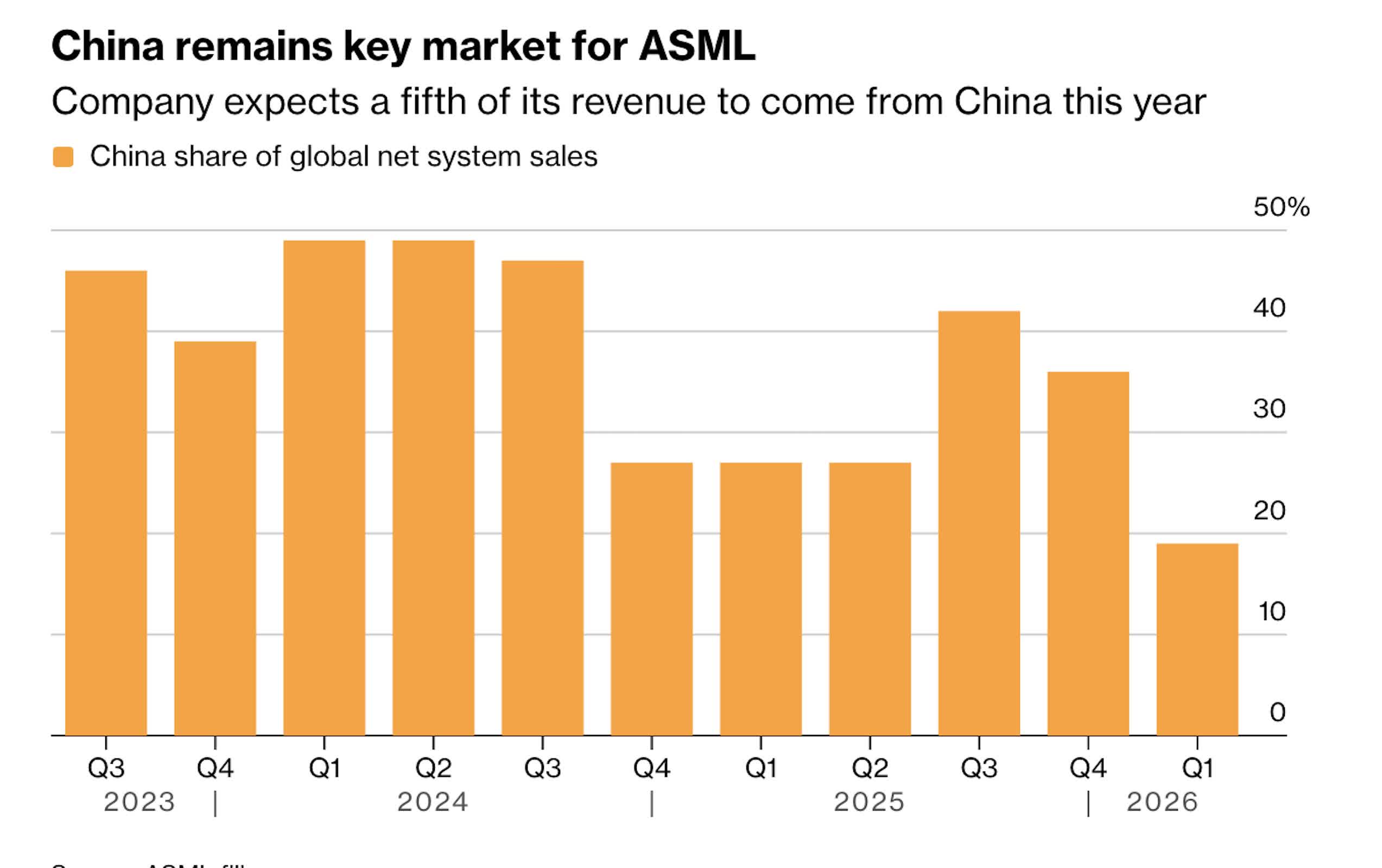
That shift would hit a business ASML expects to generate about one-fifth of its 2026 revenue. The Trump administration has not taken a formal position on the legislation, and US diplomats have suggested that a broader US-EU trade deal could reduce momentum behind the bill, which several European governments oppose.

Permalink to story:

 
I think a much more reasonable explanation is that the lack of access to cutting edge nodes has made China drop tremendous amounts of resources into developing their own EUV machines. The china of today isn't the china of the 80s and 90s that just produced cheap crap. There is still plenty of crap that comes out of China, but the "made in China" symbol is nolonger the mark of the beast.

We might have cut then off from modern hardware for a little while, but all we did was twist their arm into controlling the means of production for their own chips. From the manufacturing of EUV machines to chip packaging.

Mark my words, our US obsession with AI means that in a few years consumers will be buying Chinese DDR5 and SSDs. A few years after that, they'll be good enough for data centers. Instead of using them, we'll cite "national security concerns" and ban them to protect US companies margins
 
Lutnick, who was deeply involved with Epstein and directly lied about it, throwing out accusations with no proof or evidence whatsoever.

This is either just blatant stupidity or an attempt to create a buying opportunity for himself and his pals. I miss the days when we had competent leaders, right or left.


Alternative title to this article "Known-Pedophile States Blatantly Unfounded Accusations About ASML".
 
I have no idea whether ASML would willingly be involved in something like that, although my guess would be no.

Either way, if the question is "could China get a single machine moved", including altering its tracking functionality, my assumption is yes. If it was a high enough priority for their intelligence services, they'd have enough money and other compulsion techniques at their disposal to make it happen. Doesn't have to mean everyone involved was willing or happy about it.
 
Not sure how a US company thinks it can 'ban' a European company from selling to whoever it likes. With the way the US has been behaving of late, think they may well be the better option going forward.
 
I have no idea whether ASML would willingly be involved in something like that, although my guess would be no.

Either way, if the question is "could China get a single machine moved", including altering its tracking functionality, my assumption is yes. If it was a high enough priority for their intelligence services, they'd have enough money and other compulsion techniques at their disposal to make it happen. Doesn't have to mean everyone involved was willing or happy about it.
Not sure how a US company thinks it can 'ban' a European company from selling to whoever it likes. With the way the US has been behaving of late, think they may well be the better option going forward.

Because of the Foreign Direct Product Rule.

"The provision called the foreign direct product rule, or FDPR, was first introduced in 1959 to control trading of U.S. technologies. It essentially says that if a product was made using American technology, the U.S. government has the power to stop it from being sold - including products made in a foreign country."

https://www.reuters.com/technology/...ing-it-cripple-chinas-tech-sector-2022-10-07/


The supply chain to produce these machines involves dozen of nations. If the Netherlands decided to secretly sell one to China, there would be directly violating US laws that they agreed to when they started doing business with us, and they would be a supply chain's worth of evidence that would span the globe. Not only is the Netherlands an extremely democratic place with incredibly strong alliances with the US, the idea that they would take such a brazen risk to sell US technology to China and lie to us about it is insane.

There is no way that anyone in the Trump administration who understands how any of this works actually believes this could have happened, and this is just about geopolitical pressure coming from one of the dumbest leadership groups in all of modern history; so there is a very real chance that they really don't understand it at all.
 
Last edited:
There’s a really interesting document on yt about this euv machine. It truly is impossible to copy or even operate without ASML and their supply chain. Even if the chinese had the blueprints, and they certainly might, they still couldn’t build it. It might as well be alien technology. Facinating stuff
 
There’s a really interesting document on yt about this euv machine. It truly is impossible to copy or even operate without ASML and their supply chain. Even if the chinese had the blueprints, and they certainly might, they still couldn’t build it. It might as well be alien technology. Facinating stuff
 
I assume China could move an ASML machine if they wanted to, but I doubt they would know how to set it up, or get it to produce wafers without ASML.
 
With faith, everything is possible.
CCP has faith in bright tomorrow, and bright tomorrow
requires ASML machines.
 
No way in hell could they move one without ASML to oversee it.

If you mean "while keeping it in orderly operating condition", then sure, probably.

Otherwise that's ridiculous. Large countries have stolen airplanes, submarines, and other complicated military tech. Yes of course it probably arrives broken with no manuals, no support, and no repair parts. Reverse engineering all that is the difficult job of the large, high-powered teams assigned to do that work and of course degree of success can vary.

I'm going to go ahead and give China the credit that given enough priority (equals budget and risk tolerance), there is no physical man-made object they could not move. I'd say the same thing about the US for sure.
 
I think a much more reasonable explanation is that the lack of access to cutting edge nodes has made China drop tremendous amounts of resources into developing their own EUV machines. The china of today isn't the china of the 80s and 90s that just produced cheap crap. There is still plenty of crap that comes out of China, but the "made in China" symbol is nolonger the mark of the beast.

It was the same in the 60's when "made in Japan" was JUNK. Not so much now. China has done the
same thing. Yeah, still a lot of "Temu" garbage out there, but they have stepped up.
 
I think a much more reasonable explanation is that the lack of access to cutting edge nodes has made China drop tremendous amounts of resources into developing their own EUV machines. The china of today isn't the china of the 80s and 90s that just produced cheap crap. There is still plenty of crap that comes out of China, but the "made in China" symbol is nolonger the mark of the beast.

We might have cut then off from modern hardware for a little while, but all we did was twist their arm into controlling the means of production for their own chips. From the manufacturing of EUV machines to chip packaging.

Mark my words, our US obsession with AI means that in a few years consumers will be buying Chinese DDR5 and SSDs. A few years after that, they'll be good enough for data centers. Instead of using them, we'll cite "national security concerns" and ban them to protect US companies margins
Too simple. This narrative makes it sound like Western technology is just going to stand still while we watch China steal our lunch. I just don’t see that happening. I’m not saying China isn’t capable of producing; I am saying it is not that straight forward.

There is a huge difference between China pouring money into a "Manhattan Project" for chips and actually commercializing an advanced EUV ecosystem. Even with their recent EUV prototype, they’ve only generated the EUV light source—not a working wafer. It could easily take until well into the 2030s for them to solve the compounding issues of vibration, contamination, and optics degradation (at scale). And building an advanced EUV machine isn't just about funding—it requires a global ecosystem of thousands of hyper-specialized suppliers that, currently, no single country can replicate alone as far as I’m aware. And while China continues to play catchup on even a single EUV wafer, Western corps are already moving past 2nm to High-NA EUV and next-generation architectures. From that angle, China remains, chronically, generations behind for the foreseeable future.

The global landscape is dynamic. Existing powers and corps are already making active countermoves through friend-shoring and unified allied export controls. The market of the not-distant future will look very different than a simple Chinese monopoly.
 
If you mean "while keeping it in orderly operating condition", then sure, probably.

Otherwise that's ridiculous. Large countries have stolen airplanes, submarines, and other complicated military tech. Yes of course it probably arrives broken with no manuals, no support, and no repair parts. Reverse engineering all that is the difficult job of the large, high-powered teams assigned to do that work and of course degree of success can vary.

I'm going to go ahead and give China the credit that given enough priority (equals budget and risk tolerance), there is no physical man-made object they could not move. I'd say the same thing about the US for sure.
Yes of course they could physically move it, is that even an argument? Like, duh. That's not the question. Could they move one without ASML knowing about it? No, not unless it was an older one that was being sold to China second hand but by then it wouldn't serve the purpose of advancing China's tech in anyway.

These are so much more rare and complicated than military tech, which is usually designed to be mobile in the first place. ASML is heavily involved in the transportation process of every single one of these because they are so complicated and fragile that they need dedicated staff just to move them. If one were stolen, ASML would know because they would be there when it happened.
 
Too simple. This narrative makes it sound like Western technology is just going to stand still while we watch China steal our lunch. I just don’t see that happening. I’m not saying China isn’t capable of producing; I am saying it is not that straight forward.

There is a huge difference between China pouring money into a "Manhattan Project" for chips and actually commercializing an advanced EUV ecosystem. Even with their recent EUV prototype, they’ve only generated the EUV light source—not a working wafer. It could easily take until well into the 2030s for them to solve the compounding issues of vibration, contamination, and optics degradation (at scale). And building an advanced EUV machine isn't just about funding—it requires a global ecosystem of thousands of hyper-specialized suppliers that, currently, no single country can replicate alone as far as I’m aware. And while China continues to play catchup on even a single EUV wafer, Western corps are already moving past 2nm to High-NA EUV and next-generation architectures. From that angle, China remains, chronically, generations behind for the foreseeable future.

The global landscape is dynamic. Existing powers and corps are already making active countermoves through friend-shoring and unified allied export controls. The market of the not-distant future will look very different than a simple Chinese
It has been US policy since basically the early 80s to give our lunch away to other countries. You might be right about it taking into the 2030s if we hadn't already been giving them our tech for the last 50 years. Whatever minor gap the current administration created can quickly be filled
 
There’s a really interesting document on yt about this euv machine. It truly is impossible to copy or even operate without ASML and their supply chain. Even if the chinese had the blueprints, and they certainly might, they still couldn’t build it. It might as well be alien technology. Facinating stuff
Everyone said the same thing about single digit process node production. Now CXMT is competing with the big boys.

When the state wants something, and is willing to put immense resources into it, nothing is impossible. That "alien technology" wont be alien for very long.
No way in hell could they move one without ASML to oversee it.
China already had an older one last year, its no stretch to think they could manage to snag one.

https://www.techspot.com/news/10996...dly-broke-asml-chipmaking-machine-failed.html
Too simple. This narrative makes it sound like Western technology is just going to stand still while we watch China steal our lunch. I just don’t see that happening. I’m not saying China isn’t capable of producing; I am saying it is not that straight forward.

There is a huge difference between China pouring money into a "Manhattan Project" for chips and actually commercializing an advanced EUV ecosystem. Even with their recent EUV prototype, they’ve only generated the EUV light source—not a working wafer. It could easily take until well into the 2030s for them to solve the compounding issues of vibration, contamination, and optics degradation (at scale). And building an advanced EUV machine isn't just about funding—it requires a global ecosystem of thousands of hyper-specialized suppliers that, currently, no single country can replicate alone as far as I’m aware. And while China continues to play catchup on even a single EUV wafer, Western corps are already moving past 2nm to High-NA EUV and next-generation architectures. From that angle, China remains, chronically, generations behind for the foreseeable future.

The global landscape is dynamic. Existing powers and corps are already making active countermoves through friend-shoring and unified allied export controls. The market of the not-distant future will look very different than a simple Chinese monopoly.
The West wont stand around, they will have very intense heated debates about setting up committees to study the grass to make sure building a foundry wont disturb some random insect nobody has heard about.

Meanwhile, the Chinese will keep trying to replicate the tech, eventually get it, and build enough production to flood the market. We've seen this time and time again. Remember how they were a decade away from making their own RAM or processors, how their cars and industrial equipment were generations behind, how they were still building coal power plants? Now look at them.

Everyone assuming china cant catch up or surpass the west technologically is stuck in a delusional cope state. Being able to make the EUV light source at the right frequency is a huge step forward and one of the biggest hurdles to making EUV machinery.
 
Not sure how a US company thinks it can 'ban' a European company from selling to whoever it likes.
Where you been the last 50 years? Sanctions on China -- just like sanctions on Iran, Russia, or any other country -- apply equally across the world. Even and especially Europe.
 
Given the source ... it's almost certainly just a pack of lies.
- "I never discussed my son's overseas business deals with him..."
- "The incriminating evidence on Hunter's laptop is a Russian hoax..."
- "I'll never pardon my son, or any other family member..."
- "The border is secure..."
- "We need $1T in new funding to secure the border...."
- "This inflation is just transitory..."
- "I cut the federal deficit by more than $1 trillion..."
- "Joe's as sharp as a tack, fully ready to go another four years..."
- "My uncle was eaten by cannibals ... no lie, man!"
- "I was a star quarterback in college...."
- "I grew up in a Puerto Rican household..."
- "I grew up in a poor coal-mining household..."
- "I grew up attending historic black churches..."
- "I helped Golda Meir win the Six-Day War when I was still a college student...."
 
It has been US policy since basically the early 80s to give our lunch away to other countries. You might be right about it taking into the 2030s if we hadn't already been giving them our tech for the last 50 years. Whatever minor gap the current administration created can quickly be filled

I think that’s a misconception that is confusing global specialization with passive loss of technology.

The last 40 years of American economic and technological dominance has been directly fueled by this strategy.

If the U.S. had tried to hoard low-margin manufacturing rather than capturing the highest-value parts of the chain, we would not have experienced the massive internet, software, and now AI booms that have defined our national prosperity over that period.

Economics of this are not a zero-sum game of physical production. The U.S. has grown into a multi-trillion-dollar tech superpower precisely because it has traded the low-margin factory floor for the high-margin design studio. I don’t see modern export controls having created a “minor gap" at all—they’ve locked China out of a global collaborative ecosystem that took the Western world 50 years of combined, multi-nation effort to build.

China has indeed risen economically and technologically as a result, but the chain required to fill the gap you suggest is much larger and more difficult than suggested here, imho, and tech and market realities are highly complex and by no means certain.

I think the biggest threat to the U.S. today is political nationalism. We are too reliant on the chain we’ve built… but that’s another complicated topic for another time.
 
I think a much more reasonable explanation is that the lack of access to cutting edge nodes has made China drop tremendous amounts of resources into developing their own EUV machines.
Except that the evidence is that ASML shipped EUV-specific components to Chinese customers, which if China had developed a fully home-grown solution, wouldn't be necessary.
 
Lutnick, who was deeply involved with Epstein and directly lied about it, throwing out accusations with no proof or evidence whatsoever.

This is either just blatant stupidity or an attempt to create a buying opportunity for himself and his pals. I miss the days when we had competent leaders, right or left.


Alternative title to this article "Known-Pedophile States Blatantly Unfounded Accusations About ASML".
Par for the course for any of the golfer-president's sycophants.
 
Par for the course for any of the golfer-president's sycophants.
Fun fact: by the end of his third year, President Biden had spent more time on vacation than any President in US history, even though who served eight and even 12 years.
 
Back