Toyota targets 2027 launch for first EV with all-solid-state battery technology

Skye Jacobs

Posts: 2,182   +62
Staff
The big picture: Toyota's expertise in material science and engineering could help it evolve from a technology follower to a supplier of critical EV battery components. As BMW, Honda, Mercedes, and Stellantis advance their own programs, Toyota's technical gains and supply chain strategy position it to shape the next phase of electric vehicle innovation.
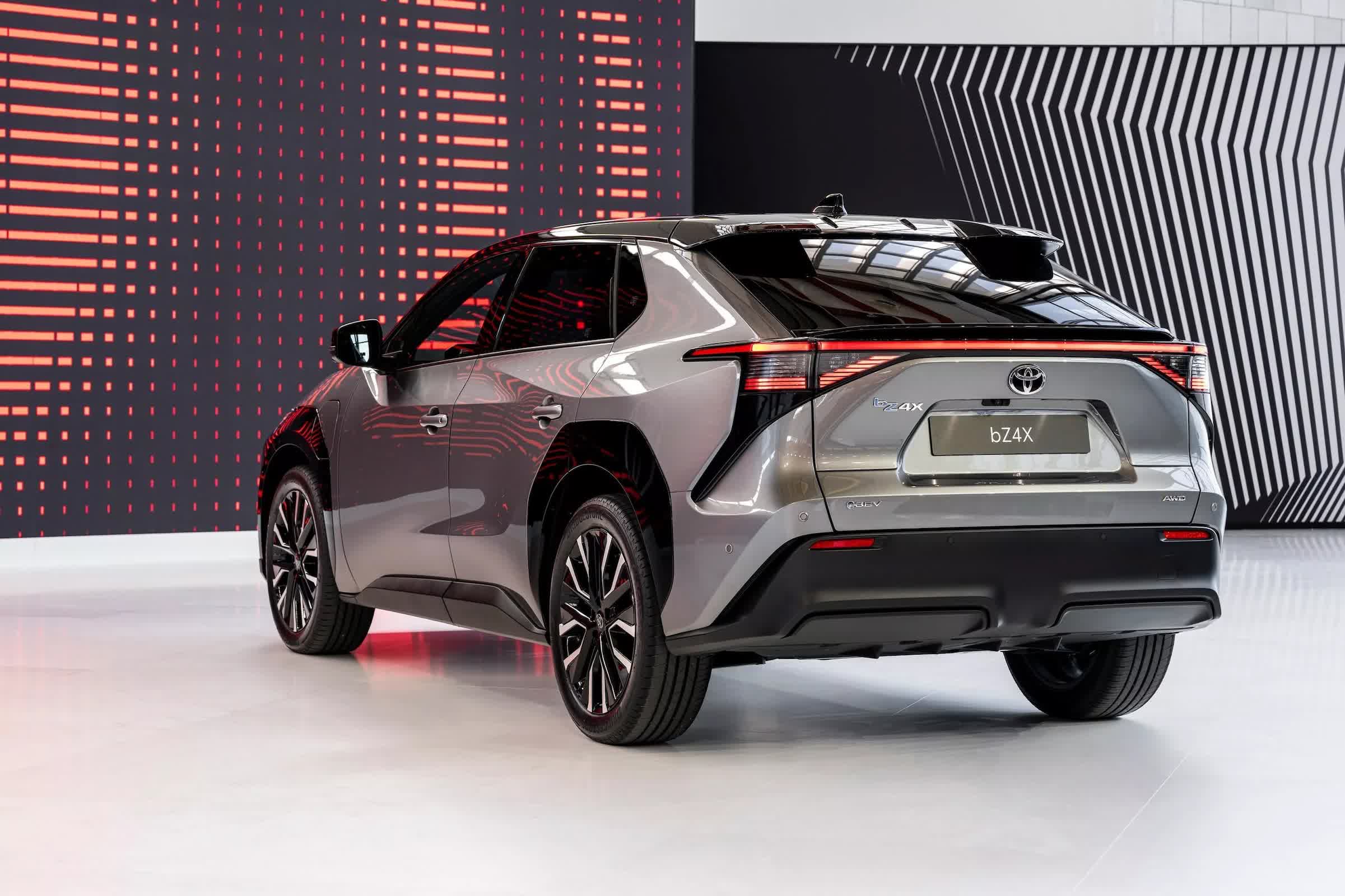
Toyota is taking a decisive step toward what many view as the pinnacle of EV technology: mass-producing all-solid-state batteries. The company plans to launch its first vehicle with this next-generation power source as early as 2027, targeting new benchmarks in range, charging speed, and performance.

Toyota's ambitions gained momentum with a new development agreement with Sumitomo Metal Mining, aimed at scaling production of cathode materials essential to all-solid-state batteries. Since 2021, the two companies have worked to refine material chemistry and durability, tackling issues such as cathode degradation that have long stalled commercial deployment. Sumitomo has applied proprietary powder synthesis techniques to create cathode materials with greater longevity and stability, engineered to endure frequent charging cycles without significant efficiency loss.
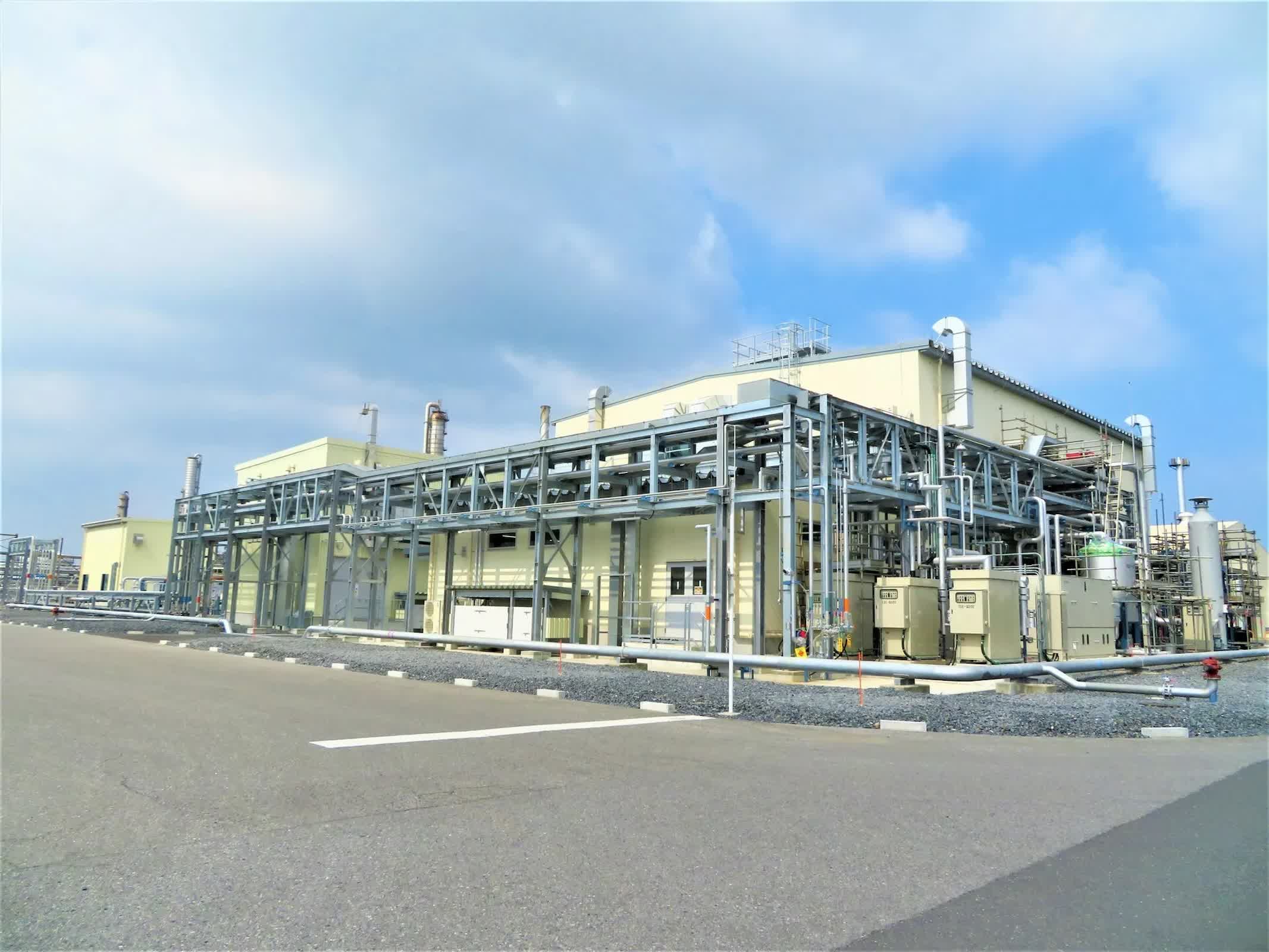
Toyota has also partnered with oil company Idemitsu Kosan, which is building a facility capable of producing 1,000 metric tons of lithium sulfide annually. A crucial solid electrolyte material for all-solid-state batteries, lithium sulfide will enter large-scale production in 2027 when the plant comes online.

These joint efforts are part of Japan's broader initiative to establish a self-sustaining supply chain for advanced battery materials and lessen dependence on China and South Korea. In total, Japanese companies have committed more than $7 billion to advancing solid-state and semi-solid-state battery research and production.

Traditional lithium-ion batteries have powered electric vehicles since General Motors introduced the EV1 in 1996. They use liquid electrolytes that are vulnerable to overheating, leading to potential safety risks like thermal runaway.
By contrast, Toyota's all-solid-state batteries use solid electrolytes, which are more stable, compact, and resistant to overheating. Combined with optimized cathode and anode materials, these batteries deliver higher energy density, greater output, and extended lifespan, while lowering fire risk and enabling faster charging. Their design also allows automakers to create light, compact battery packs, giving designers more flexibility with vehicle interiors and drivetrain layouts.

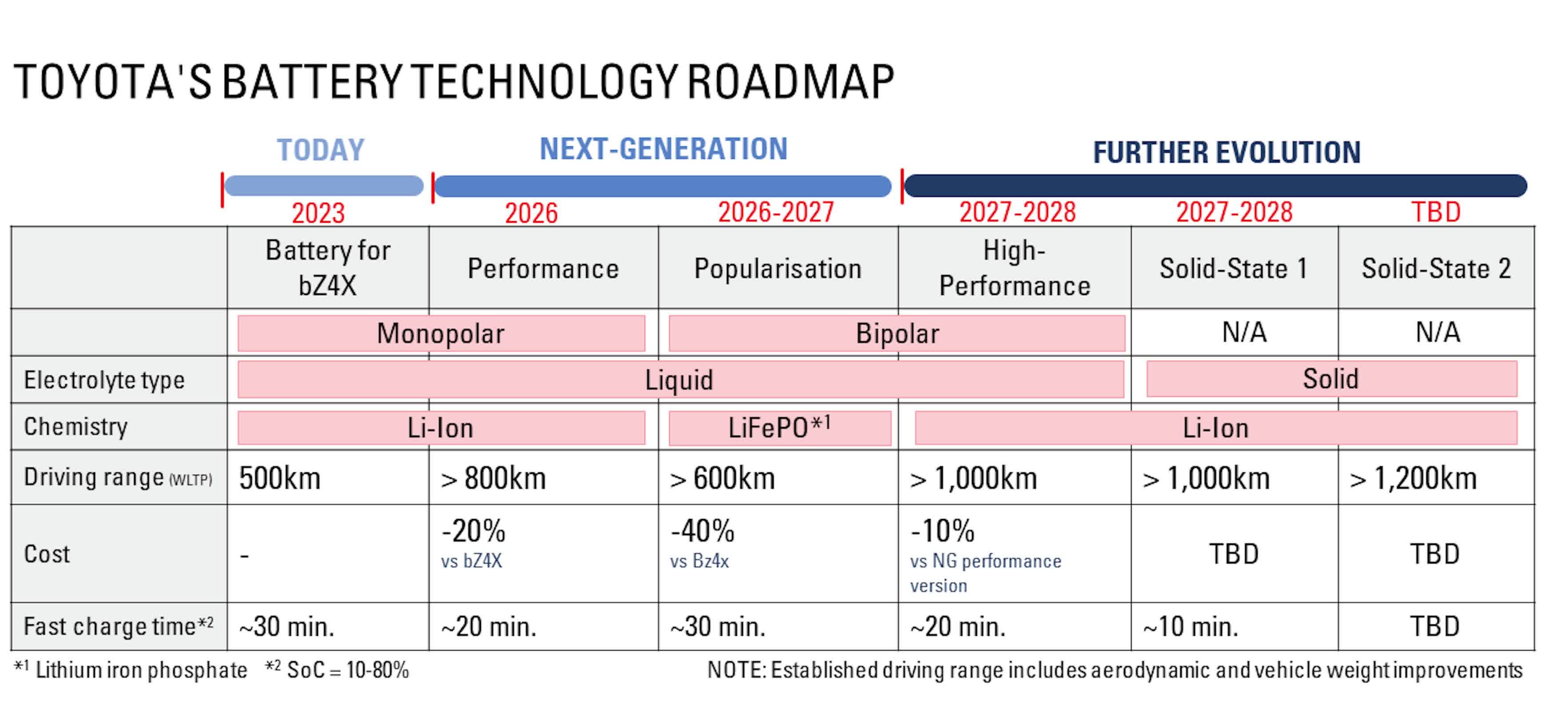
Toyota plans to keep refining its solid-state battery platform, tackling cost and manufacturability challenges before full-scale production. If progress continues at the current pace, a vehicle powered by solid-state batteries could debut in 2027 or 2028.

Global demand for advanced electric vehicles continues to grow, with many automakers exploring semi-solid-state solutions that partially replace liquid electrolytes for incremental gains. Recent launches, such as MG's second-generation MG4 with semi-solid-state batteries, demonstrate progress, but most manufacturers still rely on conventional lithium-ion packs. Toyota's focus on all-solid-state batteries could overcome critical limitations in charging speed, range, and safety, helping remove key barriers to widespread EV adoption.

As the world's largest automaker, Toyota has faced criticism for its cautious approach to electric vehicle development. If successful, its advancements could drive an industry-wide transition, establishing new standards for performance, reliability, and energy efficiency. The coming years will determine whether solid-state technology can finally deliver on its promise at scale.

Permalink to story:

 
The batteries are now commercially viable, the next step is to scale up to reduce price. Of course it's going to be expensive at first
No offense, but lots of people seem to forget that EVs also require expensive charging stations. I live in a block of flats and personal station is no option, and commercial stations are few and more expensive per kilometer (or mile, if You prefer) than petrol.
This green revolution is a scam. We would be better off if We invested in synthetic and alcohol fuels - minimum change to cars and infrastructure. How World decided to go with batteries is beyond Me.
 
No offense, but lots of people seem to forget that EVs also require expensive charging stations. I live in a block of flats and personal station is no option, and commercial stations are few and more expensive per kilometer (or mile, if You prefer) than petrol.
This green revolution is a scam. We would be better off if We invested in synthetic and alcohol fuels - minimum change to cars and infrastructure. How World decided to go with batteries is beyond Me.


Making synthetic fuels takes a lot of energy, usually from electricity, to pull carbon dioxide from the air and combine it with hydrogen. By the time you’ve made the fuel, transported it, and burned it in an engine, most of that original energy is lost as heat.

Even if the electricity came from renewables, using that same clean power directly in electric vehicles would move people much farther per kilowatt-hour. In other words, synthetic fuels are an expensive and inefficient detour compared to electrification.
 
Making synthetic fuels takes a lot of energy, usually from electricity, to pull carbon dioxide from the air and combine it with hydrogen. By the time you’ve made the fuel, transported it, and burned it in an engine, most of that original energy is lost as heat.

Even if the electricity came from renewables, using that same clean power directly in electric vehicles would move people much farther per kilowatt-hour. In other words, synthetic fuels are an expensive and inefficient detour compared to electrification.
In testing, 100% Buthanol/Ethanol fuels, made from agricultural/garbage were driving combustion engines in the end of 20th century. Add 15% of this expensive synthetic fuel (made at night, when energy, preferably nuclear, reaches negative prices) and You end up with E85 that already powers sportcars. like Koenigsegg. I believe would still save lots of expenses and environment.
Plug in alcohol-electric hybrids should be the future. Probably were the future in 2000. But oil was relatively cheap. And then Tesla came with those butique electric cars and people lost their mind.
Greta Thunberg, Elon Musk, George Soros and whoever else was on this scheme is getting a special place in Hell, with extra hot tar.
Change My mind harder.
 
In testing, 100% Buthanol/Ethanol fuels, made from agricultural/garbage were driving combustion engines in the end of 20th century. Add 15% of this expensive synthetic fuel (made at night, when energy, preferably nuclear, reaches negative prices) and You end up with E85 that already powers sportcars. like Koenigsegg. I believe would still save lots of expenses and environment.
Plug in alcohol-electric hybrids should be the future. Probably were the future in 2000. But oil was relatively cheap. And then Tesla came with those butique electric cars and people lost their mind.
Greta Thunberg, Elon Musk, George Soros and whoever else was on this scheme is getting a special place in Hell, with extra hot tar.
Change My mind harder.
Hybrid systems combining alcohol engines and electric drives could definitely help in the short term, but they’re still a transitional solution, not a long-term fix for global warming. The real challenge is cutting total emissions and the most efficient way to do that is to move toward clean electricity and reduce combustion overall.
 
No offense, but lots of people seem to forget that EVs also require expensive charging stations. I live in a block of flats and personal station is no option, and commercial stations are few and more expensive per kilometer (or mile, if You prefer) than petrol.
This green revolution is a scam. We would be better off if We invested in synthetic and alcohol fuels - minimum change to cars and infrastructure. How World decided to go with batteries is beyond Me.

Green revolution is definitely a grift for many. It doesn't mean EVs are entirely stupid, but I agree there's tons of wasteful spending on poor implementations. Electric vehicles make sense if you have an abundance of cheap electricity. When grids are already pushed to their limits, adding in tons of new demand is just ridiculous. The same people whining about AI data centers are still pushing EVs and it's telling.

If Toyota can truly build >600 mile range vehicles at reasonable cost, I would consider buying one because they're nice to drive, not for any alleged environmental benefits. Today's EVs are still unusable to me because I need a minimum of >400 miles of range when it's freezing temperatures outside which only Lucid does today but at a cost of >$100k.
 
Hybrid systems combining alcohol engines and electric drives could definitely help in the short term, but they’re still a transitional solution, not a long-term fix for global warming. The real challenge is cutting total emissions and the most efficient way to do that is to move toward clean electricity and reduce combustion overall.
And that's how progess worked for hundreds of years before Tesla came in - little, economical improvements, evolution, rather than devastating revolution.

Lithium and rare earth mining, whatever batteries manufacterers will spin It, destroy environment and use slave labour. Creating economy of scale on buthanol production would eliminate CO2 emissions, as today bio waste is just put into composting to turn into CO2 and methane, also during the production production of synthetic hydrocarbons, probably few percent would be turner into tar, mixed with sand to create asphalt, effectively becoming a rock, taking CO2 from atmosphere for good. Few thousand years and rather than slow down global warming, We would revert It. Cost? Would be substantial, but still probably lower than the Green Deal and CO2 trading that few now makes money on.
Today, in China, new IC VW Golf costs less than proper home 400V EV charger. The same Golf, after importing from China is assembled in Europe and after Euro7 and CAFE taxes applied, sold for some 4X the price. All It would take to make It green is to change It fuel system and create economy of scale on fermenting our agricultural waste and garbage. Anyway, developed countries are already very energy efficient by design. And developing countries sh*t on ecology. But solve this with Your batteries - planes and cargo trains use and will use diesel (jet fuel). EV cars are just a butique, first world problem. Western World will collapse under It's own retardness.
 
Toyota have been promising tech breakthroughs for years, mostly because they are far behind the curve on making EVs.
 
EVs aren’t a silver bullet — they’re a stopgap.

I was a very early Tesla investor and got a nice return because I saw a disruptive technology that would make any combustion super car look silly with enough juice. That’s what people wanted. But aside from a super fast 0-60 toy, I wouldn’t buy an everyday-driver EV, and most people I know won’t either. Too many downsides. They’re simply not ready to replace mass-market combustion vehicles outside of wealthy metro bubbles.

Most people don’t have access to private chargers. Public infrastructure is uneven and often overpriced. Cold weather crushes range, batteries rely on environmentally and ethically questionable mining, and scaling up production only multiplies those problems.

There is widespread denial among EV evangelists who claim these cars will save us from global warming. The truth? Industrial pollution and systemic energy production are the real culprits. Swapping millions of gas cars for EVs won’t magically fix the broader environmental crisis — especially when mining and manufacturing create massive footprints of their own.

EVs make the most sense as high-performance toys or short-range city cars — not as a universal solution.

Synthetic fuels, hybrids, and incremental combustion tech improvements may be “boring,” but they work today with the infrastructure we already have.

We should be aiming for practicality, not ideological purity.
 
There are quite a few misconceptions about Toyota. First and foremost, not following group think and building EV's at a loss is NOT the same as being "behind the curve" or having a "lack of technology. Toyota's hybrid tech in very good, they are full hybrids, not partial (electric motor drives the wheels), has been improving, and has advanced their batteries and battery cooling systems. They have always had everything they needed to enter the EV bandwagon at any time. They just felt that hybrids were the best bang for the buck. Ford licensed their system to modify and use with Ford/Lincoln vehicles since 2005.
They didn't start throwing money out the window until the full EV division leads the industry in being totally unprofitable. GM stuck to low dollar entry EV's and then got smart realizing that the Lyriq selling for north of $100k made it profitable.

As for ethanol fuels, right now they're made from corn, take more energy to make the fuel than the fuel produces, E85 gets lower miles per gallon that gas, and anything over 10% ethanol can damage non flex fuel engines/fuel systems.

I still maintain it would be nice to see some of thees articles have a bit of reality, rather than all rainbows and unicorns.


EVs aren’t a silver bullet — they’re a stopgap.

...

Swapping millions of gas cars for EVs won’t magically fix the broader environmental crisis

Ah my favorite argument against EVs.

Anyone using the excuse EVs can't "fix" the environment or aren't a "silver bullet" are here simply to argue against EVs using irrelevant strawman arguments. Nothing is going to "fix the broader environmental crisis" on it's own, nobody's claiming that and you know it.

First of all, EVs are here to make money for the corpos like ICE powered cars. EVs are also one part of a large suite of changes attempting to make the world more livable and EVs pay off even the environmental cost of mining minerals for their batteries in a few years vs ICE cars. But keep up the hyperbole, it sure fits in here.
 
EVs aren’t a silver bullet — they’re a stopgap.

I was a very early Tesla investor and got a nice return because I saw a disruptive technology that would make any combustion super car look silly with enough juice. That’s what people wanted. But aside from a super fast 0-60 toy, I wouldn’t buy an everyday-driver EV, and most people I know won’t either. Too many downsides. They’re simply not ready to replace mass-market combustion vehicles outside of wealthy metro bubbles.

Most people don’t have access to private chargers. Public infrastructure is uneven and often overpriced. Cold weather crushes range, batteries rely on environmentally and ethically questionable mining, and scaling up production only multiplies those problems.

There is widespread denial among EV evangelists who claim these cars will save us from global warming. The truth? Industrial pollution and systemic energy production are the real culprits. Swapping millions of gas cars for EVs won’t magically fix the broader environmental crisis — especially when mining and manufacturing create massive footprints of their own.

EVs make the most sense as high-performance toys or short-range city cars — not as a universal solution.

Synthetic fuels, hybrids, and incremental combustion tech improvements may be “boring,” but they work today with the infrastructure we already have.

We should be aiming for practicality, not ideological purity.
Fair points, but calling EVs just “toys” feels a bit dated. Sure, infrastructure’s messy, but that’s like saying the internet was pointless in 1995 because dial-up sucked. The tech’s evolving fast, and every automaker on the planet is betting on it not because it’s trendy, but because it’s the only direction that scales long-term.
 
No offense, but lots of people seem to forget that EVs also require expensive charging stations. I live in a block of flats and personal station is no option, and commercial stations are few and more expensive per kilometer (or mile, if You prefer) than petrol.
This green revolution is a scam. We would be better off if We invested in synthetic and alcohol fuels - minimum change to cars and infrastructure. How World decided to go with batteries is beyond Me.

Chatgtp tells me the cost of building a gas station is $2 million – $4 million. Also, all gas storage tanks leak making the soil around the gas station is a toxic wasteland.

Charger Type Typical Cost of Unit + Installation
Residential / Home Level 1 (simple 120V outlet) ~$300–$600 just for the unit; installation may be minimal.
Home Advisor

Residential / Home Level 2 (~240V) ~$750–$2,600 total (charger + installation); depends on electrical upgrades needed.

Commercial Level 2 (public/business) ~$2,000–$10,000+ per port (hardware + installation, permits, wiring, etc.).

DC Fast Charger (public high-speed) $50,000–$200,000+ per station depending on power (kW rating), electrical infrastructure, site work.

Most DC Fast Chargers are built on existing parking lots. I paid $2000 for my Level 2 installation plus $450 for my charger. I can charge 44mph overnight. I need roughly 6hrs to fill up from 0 to 100%.

https://www.tesla.com/support/charging/wall-connector#vehicle-charging-speeds
 
I have 3 vehicles and my next one is going to be an EV. My 2021 F350, 2008 S550 and a 2015 Honda Odyssey. For those of us who CAN charge at home, EV's are great. What people need to understand about the EV movement is that it's national security propaganda packaged as being environmentally friendly. Depending on oil makes the US and EU vulnerable. If manufacturers would stop the greedflation on EV's and actually charge what they should, then an EV would beat an ICE vehicle in nearly every-way. Take the DRM out of cars, stop making it look like a space ship and I would put money on the fact that people would rather own an EV than an ICE car. If you were able to get in an EV and had no idea that it was electric, you would prefer the EV over an ICE vehicle. If you look at the east(Asia), not only are EVs cheaper than ICE vehicles, they are preferred. Asia has a market penetration of over 50% for EV ownership. In the US people complain about the high cost of buying an EV and the cost of charging. The thing is, it doesn't have to be that way. We allowed these companies to take advantage of us and now it costs 10X to buy an EV in the US or EU than it does anywhere else in the world.
 
Green revolution is definitely a grift for many. It doesn't mean EVs are entirely stupid, but I agree there's tons of wasteful spending on poor implementations. Electric vehicles make sense if you have an abundance of cheap electricity. When grids are already pushed to their limits, adding in tons of new demand is just ridiculous. The same people whining about AI data centers are still pushing EVs and it's telling.

If Toyota can truly build >600 mile range vehicles at reasonable cost, I would consider buying one because they're nice to drive, not for any alleged environmental benefits. Today's EVs are still unusable to me because I need a minimum of >400 miles of range when it's freezing temperatures outside which only Lucid does today but at a cost of >$100k.

Do you do 400 miles daily or just on occasion? There are superchargers everywhere now unless you take 400 miles of country roads. Check out the supercharger locations. EVs can do 300 miles so you really only need to stop for enough juice to get you another 100 miles. At 250kw, that's about 12 minutes. I used to drive long distances too and it's tough to do 400 miles without stopping for a break.

 
And that's how progess worked for hundreds of years before Tesla came in - little, economical improvements, evolution, rather than devastating revolution.

Lithium and rare earth mining, whatever batteries manufacterers will spin It, destroy environment and use slave labour. Creating economy of scale on buthanol production would eliminate CO2 emissions, as today bio waste is just put into composting to turn into CO2 and methane, also during the production production of synthetic hydrocarbons, probably few percent would be turner into tar, mixed with sand to create asphalt, effectively becoming a rock, taking CO2 from atmosphere for good. Few thousand years and rather than slow down global warming, We would revert It. Cost? Would be substantial, but still probably lower than the Green Deal and CO2 trading that few now makes money on.
Today, in China, new IC VW Golf costs less than proper home 400V EV charger. The same Golf, after importing from China is assembled in Europe and after Euro7 and CAFE taxes applied, sold for some 4X the price. All It would take to make It green is to change It fuel system and create economy of scale on fermenting our agricultural waste and garbage. Anyway, developed countries are already very energy efficient by design. And developing countries sh*t on ecology. But solve this with Your batteries - planes and cargo trains use and will use diesel (jet fuel). EV cars are just a butique, first world problem. Western World will collapse under It's own retardness.

Saudis have been using slave labor to get you your oil since the beginning of time. I'm sure you can do your own searching on that and also the environmental damage extracting, refining, shipping, and storing of oil and gasoline do.
 
EVs aren’t a silver bullet — they’re a stopgap.

I was a very early Tesla investor and got a nice return because I saw a disruptive technology that would make any combustion super car look silly with enough juice. That’s what people wanted. But aside from a super fast 0-60 toy, I wouldn’t buy an everyday-driver EV, and most people I know won’t either. Too many downsides. They’re simply not ready to replace mass-market combustion vehicles outside of wealthy metro bubbles.

Most people don’t have access to private chargers. Public infrastructure is uneven and often overpriced. Cold weather crushes range, batteries rely on environmentally and ethically questionable mining, and scaling up production only multiplies those problems.

There is widespread denial among EV evangelists who claim these cars will save us from global warming. The truth? Industrial pollution and systemic energy production are the real culprits. Swapping millions of gas cars for EVs won’t magically fix the broader environmental crisis — especially when mining and manufacturing create massive footprints of their own.

EVs make the most sense as high-performance toys or short-range city cars — not as a universal solution.

Synthetic fuels, hybrids, and incremental combustion tech improvements may be “boring,” but they work today with the infrastructure we already have.

We should be aiming for practicality, not ideological purity.
EVs are not a stop gap. Hybrids are. I daily drive an EV for over 2y now. I don't see a single downside. I didn't do any maintenance on it. I would have had to replace so many fluids by now. Brake pads are very bad for the environment too. EVs use regen to stop.

There are laws that require every new building to have charger connected parking spots. Of course, we're at early stages and we need to keep building charging stations. A lot of people rent and it's up to the landlords to put in chargers in the spots. If you own your residence, there is nothing stopping you from putting in a charger. I put my own in.

There are people who have charging at home, but I don't know a single person who has a gas station at their home.

EVs can do 500 miles already. Regular affordable ones can do 300 miles. That's on par with most gas cars. You're stopping for gas or charging either way. I don't claim EVs will save us from anything but they are definitely cleaner and will help.
 
The EV1 used lead–acid batteries initially and NiMH batteries in the end. No lithium whatsoever.
Yeah, and the Escape hybrid used 330 NiMh D-cell batteries. Neither one were useful, long term battery solutions and had quite a few drawbacks.

Current batteries and considerably better, and still way short from ideal, much less ready to replace ICE in many, if not most, situations.
 
Last edited:
EVs are not a stop gap. Hybrids are. I daily drive an EV for over 2y now. I don't see a single downside. I didn't do any maintenance on it. I would have had to replace so many fluids by now. Brake pads are very bad for the environment too. EVs use regen to stop.

There are laws that require every new building to have charger connected parking spots. Of course, we're at early stages and we need to keep building charging stations. A lot of people rent and it's up to the landlords to put in chargers in the spots. If you own your residence, there is nothing stopping you from putting in a charger. I put my own in.

There are people who have charging at home, but I don't know a single person who has a gas station at their home.

EVs can do 500 miles already. Regular affordable ones can do 300 miles. That's on par with most gas cars. You're stopping for gas or charging either way. I don't claim EVs will save us from anything but they are definitely cleaner and will help.

These range estimates are pie in the sky MAXIMUMS. Drive with a heavy foot, live in a city where everyone hard stops for everything and floors the throttle? Drive in extremely cold weather? Drive entirely on the highway at 75 MPH? Load your vehicle with luggage or cargo, or tow for a trip? Watch those estimates go up in smoke.

Why does every EV owner that has the ideal use pattern always insist that the drawbacks just aren't there and EV's suited for everybody? Nothing built by man is a perfect fit for every need. EV's are no exception.
 
Do you do 400 miles daily or just on occasion? There are superchargers everywhere now unless you take 400 miles of country roads. Check out the supercharger locations. EVs can do 300 miles so you really only need to stop for enough juice to get you another 100 miles. At 250kw, that's about 12 minutes. I used to drive long distances too and it's tough to do 400 miles without stopping for a break.

I drive far several times a month. Huge downside to super charging is that it costs more than gas along my route. ~$40 to charge in the summer and closer to $50 in the winter vs. $32-35 for a full tank of gas. It doesn't make sense to both pay more and be inconvenienced by having to stop in some random place you don't want to be in the middle of winter.

While I understand it's "possible" to do, I don't want a worse experience for something I am paying money for. If someone gave me an EV for free, then sure I could tolerate the annoying wait times. If I am paying, I'm not making extra stops that are unneeded.
 
Saudis have been using slave labor to get you your oil since the beginning of time. I'm sure you can do your own searching on that and also the environmental damage extracting, refining, shipping, and storing of oil and gasoline do.
I think You got confused. Saudis don't produce ethanol and synthetic fuels.
 
Chatgtp tells me the cost of building a gas station is $2 million – $4 million. Also, all gas storage tanks leak making the soil around the gas station is a toxic wasteland.

Charger Type Typical Cost of Unit + Installation
Residential / Home Level 1 (simple 120V outlet) ~$300–$600 just for the unit; installation may be minimal.
Home Advisor

Residential / Home Level 2 (~240V) ~$750–$2,600 total (charger + installation); depends on electrical upgrades needed.

Commercial Level 2 (public/business) ~$2,000–$10,000+ per port (hardware + installation, permits, wiring, etc.).

DC Fast Charger (public high-speed) $50,000–$200,000+ per station depending on power (kW rating), electrical infrastructure, site work.

Most DC Fast Chargers are built on existing parking lots. I paid $2000 for my Level 2 installation plus $450 for my charger. I can charge 44mph overnight. I need roughly 6hrs to fill up from 0 to 100%.

https://www.tesla.com/support/charging/wall-connector#vehicle-charging-speeds
Great for You. Majority of city dwellers around the World don't have access to a private parking spot when They could setup Their own charger. Which means, charging EV cheaper will probably never be viable for most. Also You confused $2miilion petrol station that serves thousand of cars a day, every day, with personal charging station at Your home, thats serves only You during whole night. You seems to come here to rage-bait people.
 
Back