Trump wants to bring Japan's tiny kei cars to US roadways

Skye Jacobs

Posts: 1,913   +58
Staff
TL;DR: Sitting in the Oval Office this month, President Donald Trump praised the miniature Japanese vehicles known as kei cars, which are popular across Asia but largely absent from US showrooms. "They have a very small car. It's sort of like the Beetle used to be with the Volkswagen," he said. "They're very small. They're really cute."
The president went further, claiming that "you're not allowed to build them" in the US but that he had authorized the Secretary of Transportation to approve production immediately. The remark came unexpectedly during a press conference largely focused on his administration's rollback of federal fuel economy rules – a policy shift expected to favor large, less-efficient vehicles already popular among US consumers.

The announcement caught America's small but devoted kei car community off guard. Enthusiasts were pleased to hear national attention on their niche, but also puzzled: it is not illegal to build such vehicles for the domestic market. The real obstacle is regulatory. Kei cars produced in Japan and other foreign markets do not meet the crash protection, lighting, and emissions standards required by US law, and therefore cannot be imported unless they qualify as antiques – that is, vehicles at least 25 years old.

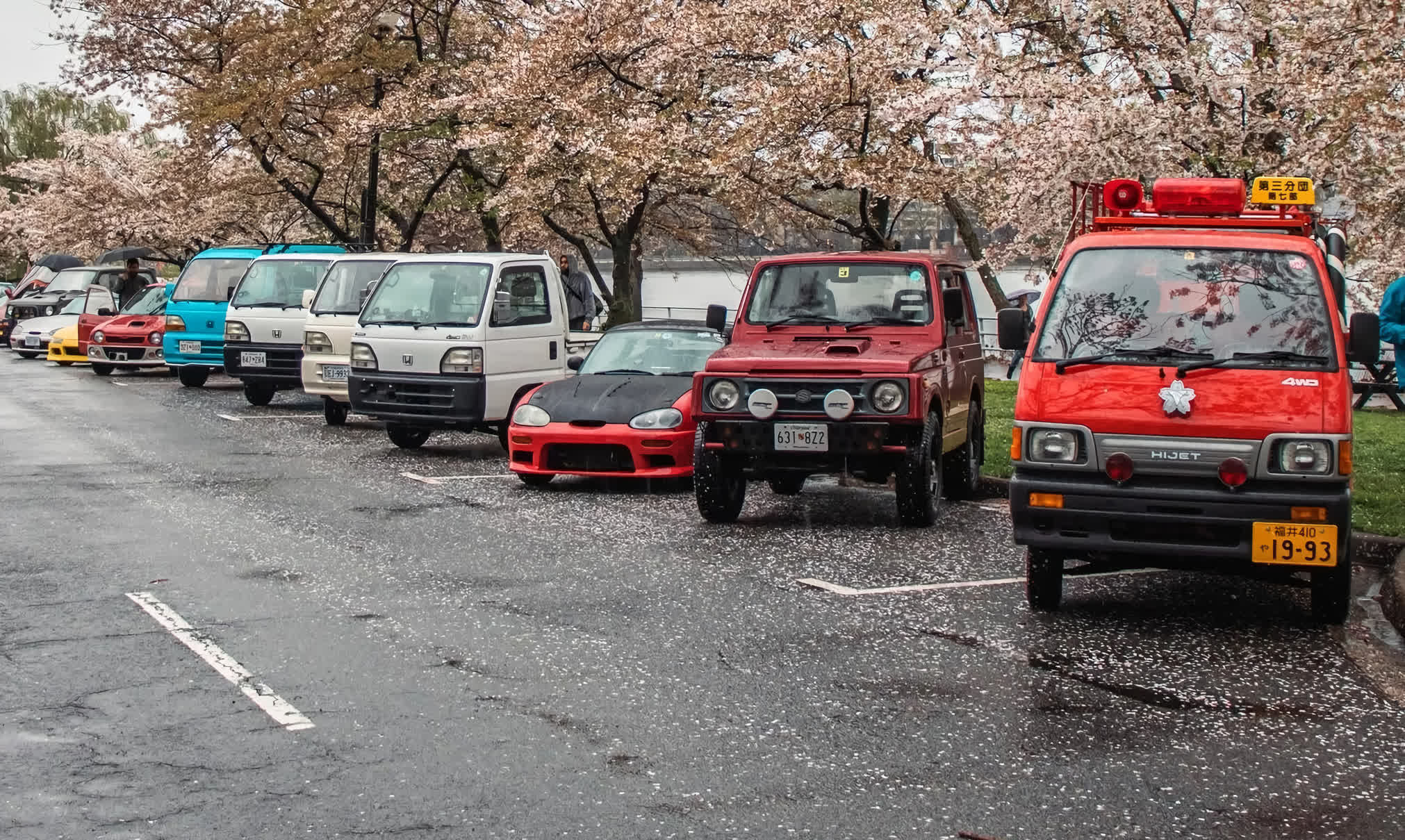
Members of the Capital Kei Car Club in Northern Virginia are well acquainted with these restrictions. At a recent meetup, every kei vehicle was at least 25 years old. Imported under the federal antique exemption, the cars, trucks, and vans are small, slow, and adored by their owners for their personality and practicality alike.

Andrew Maxon, the club's founder and owner of one such vehicle, said the president's comments could have a positive impact. "If this is going to be a kick in the right direction to maybe get the domestic auto industry to reconsider cars like this, I'm all for it," he told NPR. "I'll take what we can get."

Drivers say part of the appeal is the efficiency of space. Ryan Douglass, who replaced his midsize American pickup with a Japanese kei truck, noted that his vehicle is shorter than a modern Mini Cooper but manages a 6-foot bed – longer than many full-size trucks on the market.

These vehicles also cost far less than domestic models. In Japan, a new kei car or truck typically sells for under $15,000. Douglass paid $8,000 for his imported antique – a price he said was on the higher side, largely because he outsourced the import process.
By comparison, the average used pickup in the US now tops $34,000, according to listings on Carfax.com. "I think I could get five or six of these and customize them to my heart's desire and still be cheaper than a brand-new truck I can buy out of a dealership today," Douglass said.

Kei vehicles, defined by strict Japanese rules on dimensions and engine displacement, are optimized for narrow streets and urban congestion. Their diminutive design brings both charm and vulnerability. Short front ends and lightweight frames make them nimble but less protective in collisions. Douglass's own license plate reads "VRYSLW," an apt warning for a truck that's diminutive in both speed and scale.

"I accept the terms and conditions," said Sergey Hall, who drives a 1992 Suzuki Cappuccino. He described the car as lacking modern protections: "I know that there are no safety features on it. No airbags, ABS, no throttle position sensors or anything like that."

That trade-off – delight versus danger – defines much of the kei experience in the US. Though federal rules permit antique imports, some states impose additional restrictions citing safety concerns. The inconsistency frustrates owners, who note that motorcycles, with even less protection, face no such bans.

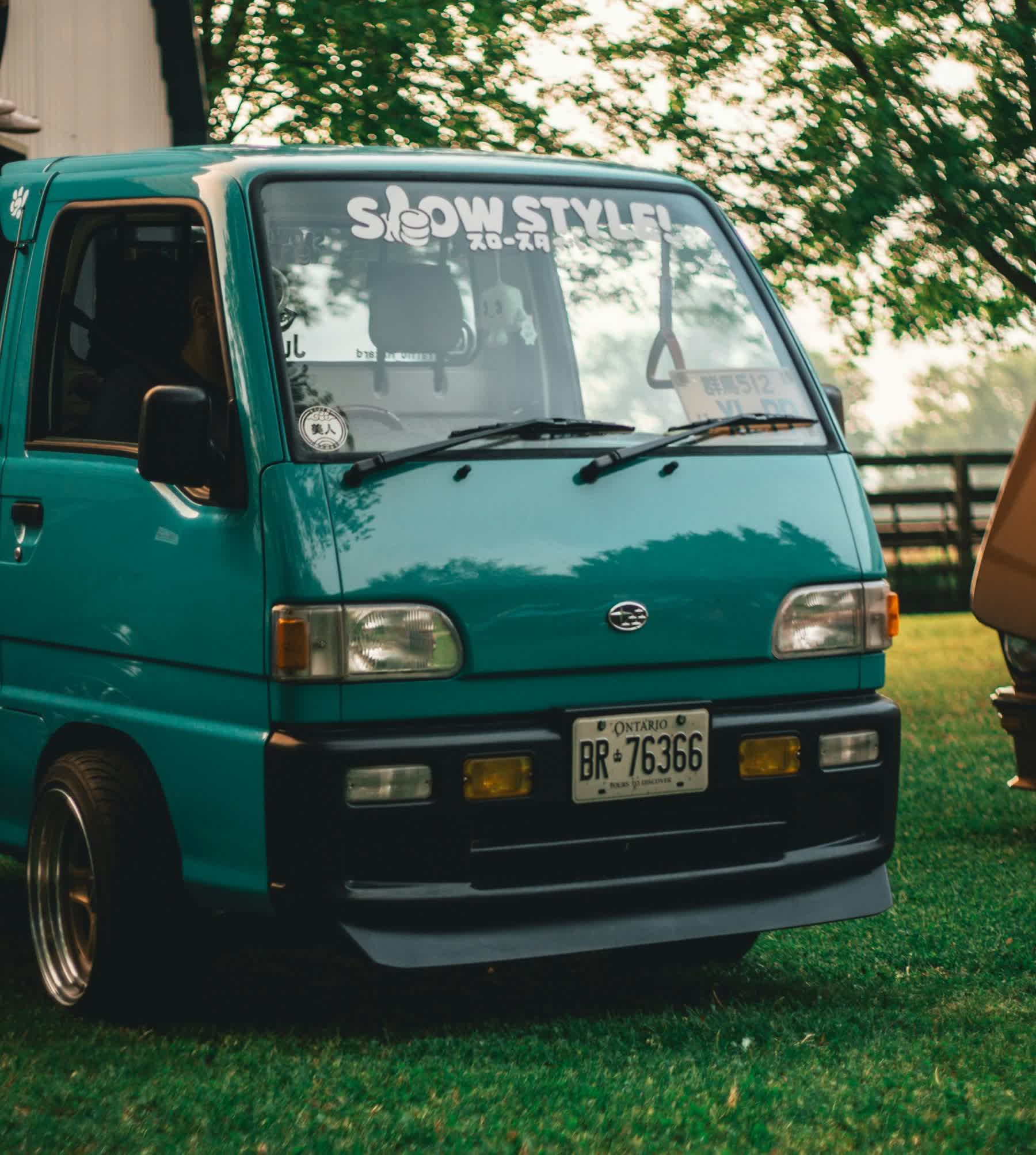
Dan Kobayashi, who drives a Honda Acty kei truck, challenged conventional ideas of vehicle safety. He pointed out that smaller, slower vehicles tend to cause less harm to pedestrians, and that kei cars' upright cabins provide excellent visibility compared to modern SUVs. "I don't have to worry about hitting kids in front of me," he said, referring to the well-documented front blind zones of large SUVs.
Yet kei car owners remain acutely aware of their exposure on highways filled with oversized trucks and SUVs. Even as they praise maneuverability and personality, there is an understanding that visibility cuts both ways: drivers in larger vehicles may simply not see them.

Trump's declaration that companies "can't build" small cars in the US does not align with current law. A Transportation Department spokesperson confirmed that safety standards are not being waived for tiny cars. The real challenge lies in consumer behavior.

Jessica Caldwell, head of insights at Edmunds, explained that market demand – not regulation – shapes automakers' choices. Subcompacts already make up less than one percent of the market, she said, and the figure continues to shrink. Economics also play a role: automakers earn higher margins on larger vehicles, and federal fuel-economy rules have long been criticized for indirectly encouraging bigger models.

The fate of Daimler's Smart fortwo illustrates these pressures. Marketed as an affordable ultra-compact city car, it was withdrawn from the US in 2019 after a decade of poor sales. Tiny cars, however cute, have repeatedly failed to attract American buyers accustomed to larger, faster vehicles.

At the Virginia meetup, even seasoned devotees acknowledged this reality. "If I had to bet, I would bet against it, unfortunately," said Andy Creedon, reflecting the consensus among participants. Kobayashi, however, remained optimistic. His Acty is both utilitarian and fun, and he sees no reason similar vehicles couldn't succeed in the US. With a touch of admiration, he summed up the international contrast: "Everybody else in the world has it."

Permalink to story:

 
Before this turns into a pissing contest because the word "Trump" is in there, I personally think most Americans would agree that while regulations and guidelines are critical to the proper functioning of society, we've enacted SO MANY regs that we've made perfect the enemy of good.

Now the take in this article is pretty standard Trump ****-braining, but easing up on the amount of regulation to allow simpler, cheaper stuff to come to market to take the pressure off of skying "entry level" price points for many things is not an inherently bad idea.
 
Sky is wrong about consumer tastes. These very affordable mini trucks and cars would sell well here. Young buyers, city dwellers, and people that occassionally need another car would snap these up.

Government regulations won't allow it due to a) our ever-increasing safety standards, b) our ever-increasing emission standards, and c) preventing competition for domestic manufacturers.

Meeting these government standards are why cars are more expensive and more difficult to work on.
 
That would be rather unpresedented for the US to make a step in the opposite direction for once and try to go smaller with all cost, fuel economy and safety benefits that come along with it (safety for everyone not in the car).
That huge SUVs are relative bargains is purely due to regulations. I imagine the average American would happily drive a smaller car if it meant a lower price with lower costs. Trump is in the right position to make regulatory changes but it would be highly unusual to take a step in that direction.

Im guessing it was just a random statement without much thought behind it but if like to be wrong
 
I think they’re fine as long as they’re kept off highways. They should be allowed only on roadways with speed limits of up to 45 mph. That’s the only place where people want to use them anyways. They should be safe there as long as they’re not involved in a head-on collision.

As for me, I think I’d only ever get a personal mobility vehicle, not a tiny car or motorcycle.
 
Americans will only drive it if it is equipped with a machine gun on the top :)
ZDKy3kK.jpeg
 
Government regulations won't allow it due to
a) our ever-increasing safety standards,
b) our ever-increasing emission standards, and
c) preventing competition for domestic manufacturers.

That huge SUVs are relative bargains is purely due to regulations. I imagine the average American would happily drive a smaller car if it meant a lower price with lower costs.

In US those SUV are listed as trucks.
That mean less strict emission limits.
That means lower additional costs to reach those limits.
And its easier (and cheaper) to reach the safety standards on bigger V-hicles

All together it makes the price difference between cute small city car and big SUV insignificant.
For close distances transporting we will see more BEVs than small ICVs.
 
I quite like this one by Trump. You have 3 times as many people dying from pollution related illnesses than car accidents so having smaller engined vehicles has to be an improvement. You'd get more parking as well if these were encouraged in cities.
 
This is one of those “it’s not illegal, it’s just incompatible with how the US built its entire system” things.

Kei cars aren’t banned—they just don’t fit US safety, emissions, and, more importantly, the liability frameworks that were designed around bigger, faster vehicles. If you wanted to sell a modern kei car here, by the time you’re done adding all the safety requirements, it’s no longer, small, lightweight, cheap, or “kei.”

Then there’s the insurance + healthcare angle. The US assumes high-speed crashes are normal, so it builds regulation, liability law, and medical billing around that. Our whole car culture from the outset has been fast and powerful. So, we’ve built bigger and bigger cars to protect occupants (and externalize risk). Insurers price that risk accordingly, and hospitals make money hand over fist treating severe injuries. Our system is optimized for “everyone drives a 5,000-lb SUV at 80 mph,” which doesn’t play nice with slow, light urban vehicles.

Japan flipped the incentives: size caps, tax breaks, low-speed roads, strict inspections. The US is flipped the opposite way: cheap gas, zoning sprawl, CAFE loopholes, and profit margins that reward bloat. Consumers didn’t just “choose” big vehicles—the ecosystem and culture nudged them there repeatedly, for decades.

So Trump saying “you’re not allowed to build them” is wrong; but the spirit is accidentally right. Sure, we can build them, you just can’t make them make sense in our current regulatory, insurance, healthcare, and general market reality.

Kei cars aren’t a single rule change away from a mainstream US reality—they’re a different philosophy of risk, space, and cost.

And yes, motorcycles being fine while kei trucks get side-eyed is an odd inconsistency I’m not sure I have an answer to. My speculation is that motorcycles are simply grandfathered in culturally (and legally) as recreation-first machines, not mass transportation. Regulators treat motorcycle risk as an individual choice, while cars are treated as system-level infrastructure—once something has four wheels and doors, the state feels responsible for protecting occupants and everyone else. Kei cars fall into a gray zone that simply triggers regulation while motorcycles slip through because rewriting that exception would collapse an old, politically protected category.
 
This is one of those “it’s not illegal, it’s just incompatible with how the US built its entire system” things.

Kei cars aren’t banned—they just don’t fit US safety, emissions, and, more importantly, the liability frameworks that were designed around bigger, faster vehicles. If you wanted to sell a modern kei car here, by the time you’re done adding all the safety requirements, it’s no longer, small, lightweight, cheap, or “kei.”

Then there’s the insurance + healthcare angle. The US assumes high-speed crashes are normal, so it builds regulation, liability law, and medical billing around that. Our whole car culture from the outset has been fast and powerful. So, we’ve built bigger and bigger cars to protect occupants (and externalize risk). Insurers price that risk accordingly, and hospitals make money hand over fist treating severe injuries. Our system is optimized for “everyone drives a 5,000-lb SUV at 80 mph,” which doesn’t play nice with slow, light urban vehicles.

Japan flipped the incentives: size caps, tax breaks, low-speed roads, strict inspections. The US is flipped the opposite way: cheap gas, zoning sprawl, CAFE loopholes, and profit margins that reward bloat. Consumers didn’t just “choose” big vehicles—the ecosystem and culture nudged them there repeatedly, for decades.

So Trump saying “you’re not allowed to build them” is wrong; but the spirit is accidentally right. Sure, we can build them, you just can’t make them make sense in our current regulatory, insurance, healthcare, and general market reality.

Kei cars aren’t a single rule change away from a mainstream US reality—they’re a different philosophy of risk, space, and cost.

And yes, motorcycles being fine while kei trucks get side-eyed is an odd inconsistency I’m not sure I have an answer to. My speculation is that motorcycles are simply grandfathered in culturally (and legally) as recreation-first machines, not mass transportation. Regulators treat motorcycle risk as an individual choice, while cars are treated as system-level infrastructure—once something has four wheels and doors, the state feels responsible for protecting occupants and everyone else. Kei cars fall into a gray zone that simply triggers regulation while motorcycles slip through because rewriting that exception would collapse an old, politically protected category.
If you physically cannot build a kei car due to safety and emission regulations, then Trump is right - you physically cannot build one here.

Also KEI cars are banned in 7 states and face hefty regulations in over a dozen others.

https://www.jalopnik.com/1831031/kei-trucks-public-roads-legal-states/
 
This is the convicted civil case sex-abuser and 34x felon trying to make peace with all the poors he has alienated in the last 10 months who cant afford rent, medical, a car ..etc.

I am so glad I retired in cash at 53 years old.. I get to sit back and watch this all burn
 
This is the convicted civil case sex-abuser and 34x felon trying to make peace with all the poors he has alienated in the last 10 months who cant afford rent, medical, a car ..etc.

I am so glad I retired in cash at 53 years old.. I get to sit back and watch this all burn

We're just gonna keep pretending the prior administration didn't give us the worst inflation in decades and let in tens of millions of illegals (where blue cities proceeded to give many of them thousands of dollars per month in benefits on our dime, keeping wages low, rents inflated, and ratcheting up societal unrest). Gotcha.


Back to the topic at hand, more kei-sized cars in the US would be epic. As someone who frequently drives through a major city for work, I am baffled as to why people think they need a freaking Escalade for their daily commute or 2-mile grocery run. These monstrosities are nothing more than glorified person-pulpifiers, offering no real benefit besides the ability to turn your typical pedestrian into a finer paste than last years model, so I for one would be happy to see these increasingly menacingly-sized vehicles penalized more proportionally at the insurance level and/or even just being flat-out restricted to operation by drivers of a new, higher licence level, between Class C and CDL.
 
This is the convicted civil case sex-abuser and 34x felon trying to make peace with all the poors he has alienated in the last 10 months who cant afford rent, medical, a car ..etc.

I am so glad I retired in cash at 53 years old.. I get to sit back and watch this all burn

All the winning hurts huh? 4 years of the worst president in history and record inflation created by the dumbocrats has nothing to do with those issues?
 
All the winning hurts huh? 4 years of the worst president in history and record inflation created by the dumbocrats has nothing to do with those issues?
What winning? What all was promised on day one, that actually affects people, was actually accomplished? Lower prices? Nope. Stop the war in Ukraine? Nope.

How did a political party create inflation? Do you know what caused the inflation?

"Record inflation"? Here are the averages for inflation during the Biden administration:
2021 4.7%
2022 8.0%
2023 4.1%
2024 2.9%

Here are examples of high inflation:

1947: 14.4%
1974: 11.0%
1979: 11.3%
1980: 13.3%
1981: 10.3%

"dumbocrats" seriously grow up.

I don't understand how anyone thinks any politician especially one that has been rich their whole live cares about anyone who can't benefit them. Do you remember how foreign the word "groceries" was for Trump? Food in his kitchen just appears he has no idea how much any individual item costs. When was the last time he put fuel into a vehicle he was driving?

How can you champion someone who can't possibly know the problems that most Americans have? How can you champion someone who made impossible promises during their campaign and who accomplished little if any of it. Politicians shouldn't be allowed to lie to get elected and they shouldn't be allowed to profit from their position. This administration has been showered with "donations" and "gifts" from anyone who can afford to do so specifically to get favorable treatment. We are told people who represent us, work for us, but clearly that just isn't true, they work for themselves, big industry, and anyone who will shower them with praise, they haven't earned, and money.

If anything is made better for the average American, it's going to be despite the administration and not because of it.
 
Politicians shouldn't be allowed to lie to get elected and they shouldn't be allowed to profit from their position.
Hate to break it to ya, but that’s been the case for a while now.

In the UK at least, my entire working career so far, every government says they’ll sort out major issues like housing, public transport, voting systems or energy prices.

Not a single thing done on any of them, nothing, but there’s no punishment for lying, but there is profit to be made for looking the other way…
 
As a european watching just rolled in stuff and what americans put on roads it's just insane to me to read about american 'safety standards' - over here - and japan as well - you need to get your car to the TÜV every 2 years for certification of road safety. You can't jerry rig **** or drive a rusted through truck for 20 years. But I understand that what they are talking about is that in the US the regulation is about getting hit by an SUV would squish a kei car - kei cars aren't unsafe, they are just not gonna survive a 4t murrican truck.
Let's put partisan crap to the side and agree that smaller cars help everybody in terms of price/congestion/parking/risk to pedestrians/emissions and rejoice.
 
Its fun to watch Americans defend their love of "bigger is better". If they can't be bothered to stay off their phone while driving and have to take their eyes off the road ahead to fiddle with their "infotainment" display there will never be any escape from bigger, heavier, more polluting tanks. Everyone will have to drive them because survival in anything less will become impossible.
 
Back