In brief: Uber is one of the Silicon Valley companies that has invested the most heavily in AI. However, its top executives are now sounding the alarm that the expected productivity and efficiency gains have not yet materialized.

Uber has increasingly positioned AI as a core part of its technology stack, and AI models now represent a significant portion of its corporate spending. Costs are rising, but the company has yet to see meaningful returns in terms of ROI. According to President and Chief Operating Officer Andrew Macdonald, the ride-sharing company may soon begin to question its extensive use of "vibe coding" and other AI-driven development tools.
Macdonald was recently interviewed on the Rapid Response podcast, where he said Uber's internal engineering teams are increasingly using Anthropic's Claude Code to generate software. However, the impact of this AI-assisted coding on overall productivity is difficult to measure.
He noted that Uber cannot clearly connect usage metrics for tools like Claude Code with the delivery of "useful" features to customers.
Macdonald's comments come just weeks after the company revealed the financial impact of its AI spending, with its entire 2026 AI budget reportedly exhausted in the first four months of the year.
According to Uber CEO Dara Khosrowshahi, 10% of the changes made to the company's code now come from AI agents. Human employees still review the agents' outputs across areas such as marketing, legal, and software development – at least for now. However, Macdonald said that the lack of tangible results from vibe coding and AI agents is making the AI budget harder to justify.
Uber's AI over-commitment comes in light of a heated debate about costs and ROI across the technology industry. Many top executives are easily impressed by the apparent "magic" of vibe coding, but underlying organizations are struggling with the lack of a clear strategic approach to AI adoption. Even worse, end users are signaling growing concern over the widespread, unregulated adoption of LLMs and chatbot-like designs.
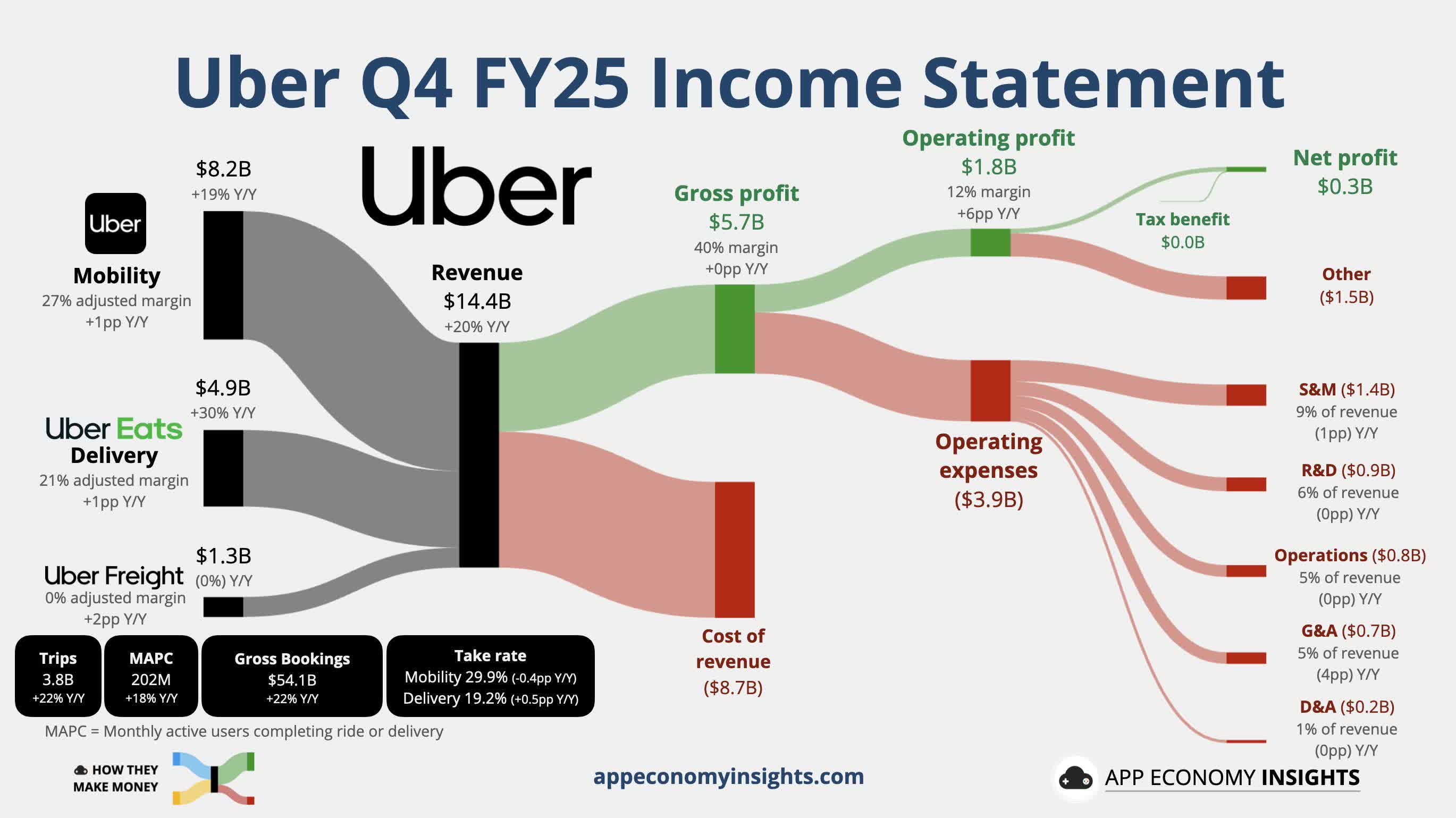
Credit: App Economy Insights
If an "AI-first" company like Uber cannot justify the cost of AI technology, many other Silicon Valley companies are likely facing even worse financial conditions. Earlier this month, Microsoft was allegedly forced to cancel its Claude Code licenses and migrate developers to its own GitHub Copilot CLI platform.
A recent Gartner study highlighted how AI model costs might decrease over the next few years, potentially falling to around 90% of their 2025 levels by 2030. However, agentic AI will require many more tokens to perform its tasks, which means enterprises are not likely to see meaningful savings on their AI expenditures anytime soon.
Uber burned through its entire 2026 AI budget in four months and has little to show for it


