University of Arizona scientists unveil breakthrough petahertz-speed transistor

Skye Jacobs

Posts: 2,011   +58
Staff
Editor's take: The University of Arizona could become the birthplace of the world's first petahertz-speed transistor. If successful, this research work could mark the dawn of a new era in computing, where the speed of light, rather than electricity, sets the pace for innovation.
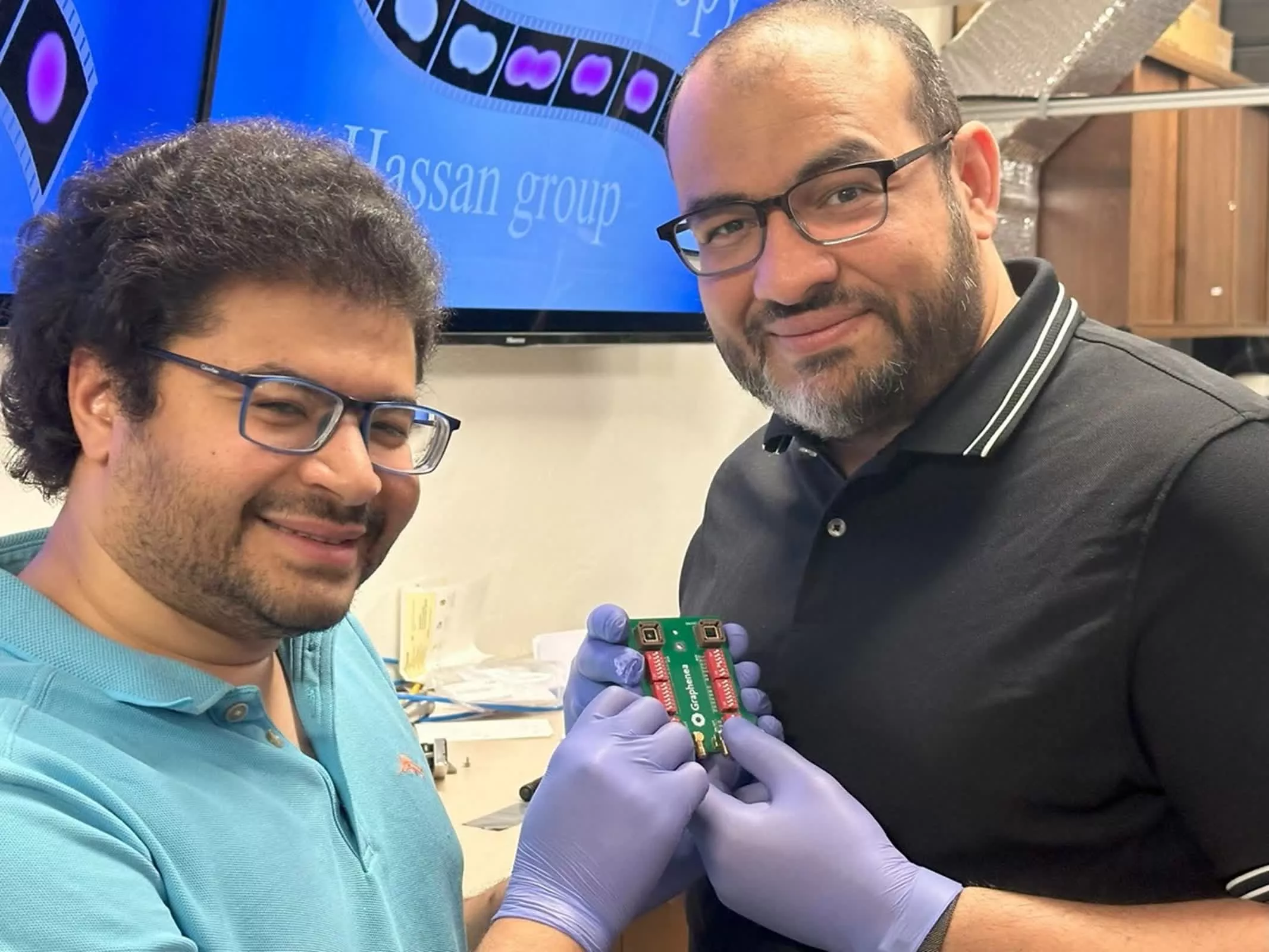
A team of scientists has unveiled a breakthrough that could one day propel computers to operate at speeds millions of times faster than today's most advanced processors.

The discovery, led by researchers at the University of Arizona and their international collaborators, centers on harnessing ultrafast pulses of light to control the movement of electrons in graphene – a material just one atom thick.

The research, recently published in Nature Communications, demonstrates that electrons can be made to bypass barriers almost instantaneously by firing laser pulses lasting less than a trillionth of a second at graphene. This phenomenon, known as quantum tunneling, has long intrigued physicists, but the team's ability to observe and manipulate it in real time marks a significant milestone.

Mohammed Hassan, an associate professor of physics and optical sciences at the University of Arizona, explained that this advance could usher in processing speeds in the petahertz range – over a thousand times faster than the chips powering today's computers. Such a leap, he said, would transform the landscape of computing, enabling dramatic progress in fields ranging from artificial intelligence and space research to chemistry and health care.

Hassan, who previously led the development of the world's fastest electron microscope, worked alongside colleagues from the University of Arizona, the California Institute of Technology's Jet Propulsion Laboratory, and Ludwig Maximilian University of Munich. Their initial focus was studying how graphene conducts electricity when exposed to laser light. Typically, the symmetrical structure of graphene causes the currents generated on either side to cancel each other out, resulting in no net current.

However, the team made a surprising discovery after modifying the graphene samples. They observed that a single electron could "tunnel" through the material – and that this fleeting event could be captured in real time. This unexpected result prompted further investigation and ultimately led to the creation of what Hassan calls "the world's fastest petahertz quantum transistor."

To achieve this, the scientists used a commercially available graphene phototransistor, enhanced with a special silicon layer. They exposed it to a laser switching on and off at an astonishing rate of 638 attoseconds – each attosecond being one quintillionth of a second. The result was a transistor capable of operating at petahertz speeds, a feat previously considered far beyond reach.

Unlike many scientific breakthroughs that require highly controlled laboratory environments, this new transistor functioned in everyday, ambient conditions. This opens the door for the technology to be adapted for commercial use and integrated into future generations of electronic devices.

Hassan and his team are now working with Tech Launch Arizona to patent and commercialize their invention. Their next goal is to develop a version of the transistor that operates using standard, commercially available lasers, making the technology more accessible to industry partners.

Permalink to story:

 
"To achieve this, the scientists used a commercially available graphene phototransistor, enhanced with a special silicon layer. They exposed it to a laser switching on and off at an astonishing rate of 638 attoseconds – each attosecond being one quintillionth of a second. The result was a transistor capable of operating at petahertz speeds, a feat previously considered far beyond reach."

This is obviously AI hallucinating once again as nobody's thumb and index finger can work that fast.
 
Since quantum tunneling is when an electrons waveform allows it to use the waveform, instead of partical, capability to jump onserved barriers, that don't exist to the waveform, this is really cool
 
Ok, so a single one of these transistors can pass an electron between the emitter and collector by exciting the base with a laser. How small are the lasers that trigger them? How do they switch at that speed? What's the largest practical current they can carry? Very promising for electronics, but is there a path to use these in billion transistor IC's?
 
"To achieve this, the scientists used a commercially available graphene phototransistor, enhanced with a special silicon layer. They exposed it to a laser switching on and off at an astonishing rate of 638 attoseconds – each attosecond being one quintillionth of a second. The result was a transistor capable of operating at petahertz speeds, a feat previously considered far beyond reach."

This is obviously AI hallucinating once again as nobody's thumb and index finger can work that fast.
I have heard light is the next wave of computing. The laser is probably the highest peak of light within a smallest diameter that can travel distances.
Something off Google.
 

Attachments

  • Screenshot_20250525_212143_Google.jpg
    Screenshot_20250525_212143_Google.jpg
    452.5 KB · Views: 3
Last edited:
"To achieve this, the scientists used a commercially available graphene phototransistor, enhanced with a special silicon layer. They exposed it to a laser switching on and off at an astonishing rate of 638 attoseconds – each attosecond being one quintillionth of a second. The result was a transistor capable of operating at petahertz speeds, a feat previously considered far beyond reach."

This is obviously AI hallucinating once again as nobody's thumb and index finger can work that fast.

Not sure if you're joking, or not, but:
"They exposed it to a laser switching on and off at an astonishing rate of 638 attoseconds" clearly states "people exposed a graphene phototransistor to a laser that switches on and off at an astonishing rate of..."
The gerund following "laser" implies the laser does the work, otherwise it would have been: "they exposed the transistor to a laser by switching it (the laser) on and off". Even then, it could still mean they made the laser do the work.
 
How close is this tech? Are we talking about 1 transistor only, where a modern core has 0.5 billion transistors? Or are we at least talking about a primitive core with a few million transistors?
 
Hmm, it seemeth to me, that to have a laser switching on & off at a certain rate, you need an electric current also switching on and off at that same rate. :D If you already have the current switching at that rate, why do you need the laser?
 
Hmm, it seemeth to me, that to have a laser switching on & off at a certain rate, you need an electric current also switching on and off at that same rate. :D If you already have the current switching at that rate, why do you need the laser?
Any type of traditional materials will have inductive and capacitive properties that are too high to switch at these speeds. Lasers can be pulsed quickly using circuitry that doesn't need to be anywhere near as high speed as the actual switching rate.
 
Any type of traditional materials will have inductive and capacitive properties that are too high to switch at these speeds. Lasers can be pulsed quickly using circuitry that doesn't need to be anywhere near as high speed as the actual switching rate.
Oops! Learn something new everyday.
 
Not sure if you're joking, or not, but:
"They exposed it to a laser switching on and off at an astonishing rate of 638 attoseconds" clearly states "people exposed a graphene phototransistor to a laser that switches on and off at an astonishing rate of..."
The gerund following "laser" implies the laser does the work, otherwise it would have been: "they exposed the transistor to a laser by switching it (the laser) on and off". Even then, it could still mean they made the laser do the work.
Yes. I was joking about one's thumb and index finger having to toggle the switch on and off at a rate of 638 attoseconds.
 
Back