Used electric vehicle prices now lower than comparable gas cars

Skye Jacobs

Posts: 2,011   +58
Staff
Bottom line: Used electric vehicles still account for only a small portion of the market, but their prices are increasingly undercutting those of gasoline models. Rapid improvements in battery range are pushing down values of older EVs, opening the door for more cost-conscious buyers to make the switch.
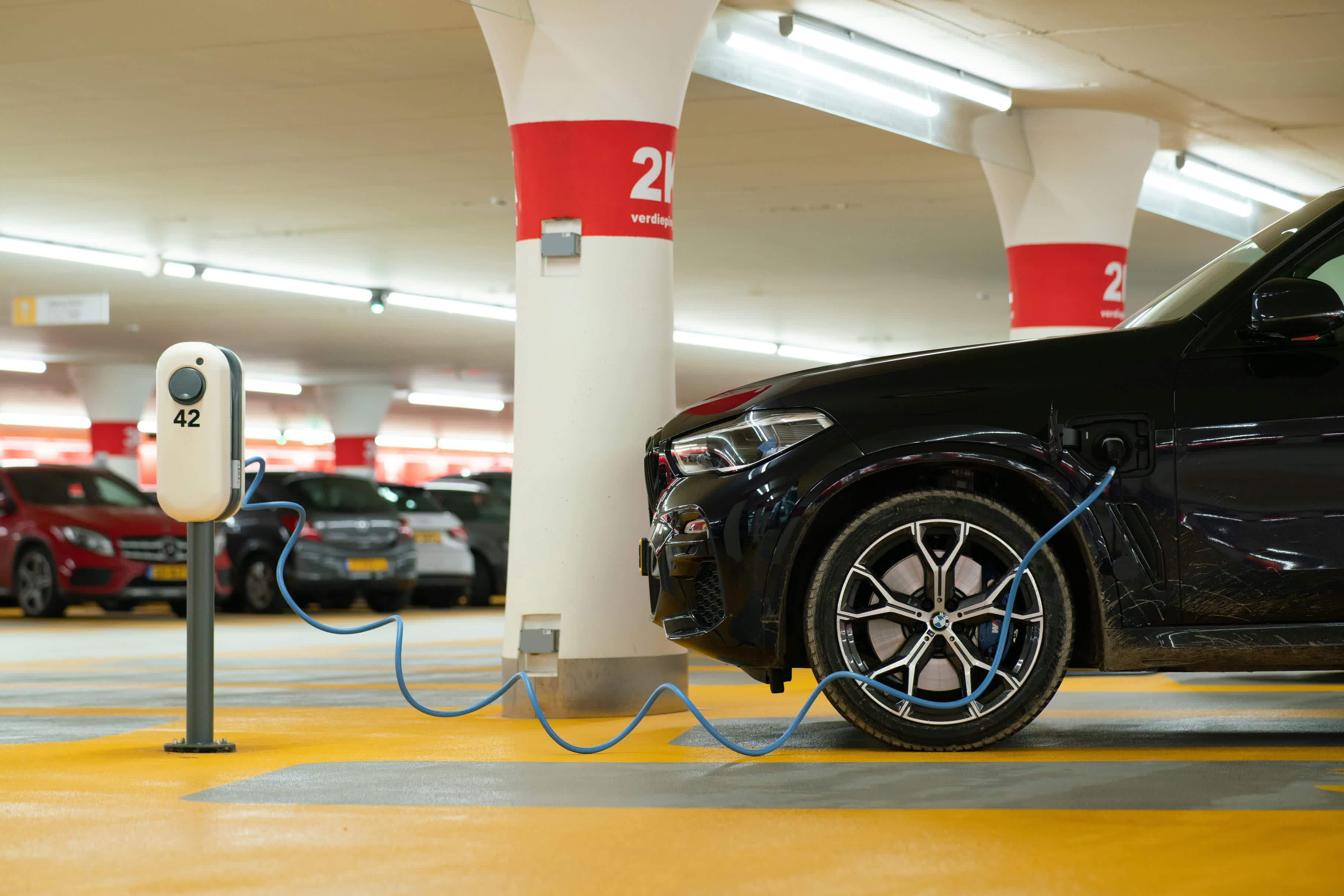
The market for used electric vehicles is showing signs of rapid growth, creating new affordability for consumers who previously viewed battery-powered cars as out of reach. Many pre-owned electric models are now selling for less than comparable gasoline vehicles, reversing the price dynamics that exist in the new-car market.

Cox Automotive reported that sales of used electric vehicles in July rose 40 percent from the same month last year. The firm noted that while used battery-powered models still make up only about 2 percent of overall used-car sales, more electric cars reach the end of leases or get traded in for newer models, steadily increasing their numbers.

New electric vehicles have historically carried premiums of several thousand dollars above equivalent gasoline counterparts. For used cars, declining values have become a defining trend. Resale prices have been weighed down by the rapid pace of technological improvements, particularly in battery performance.
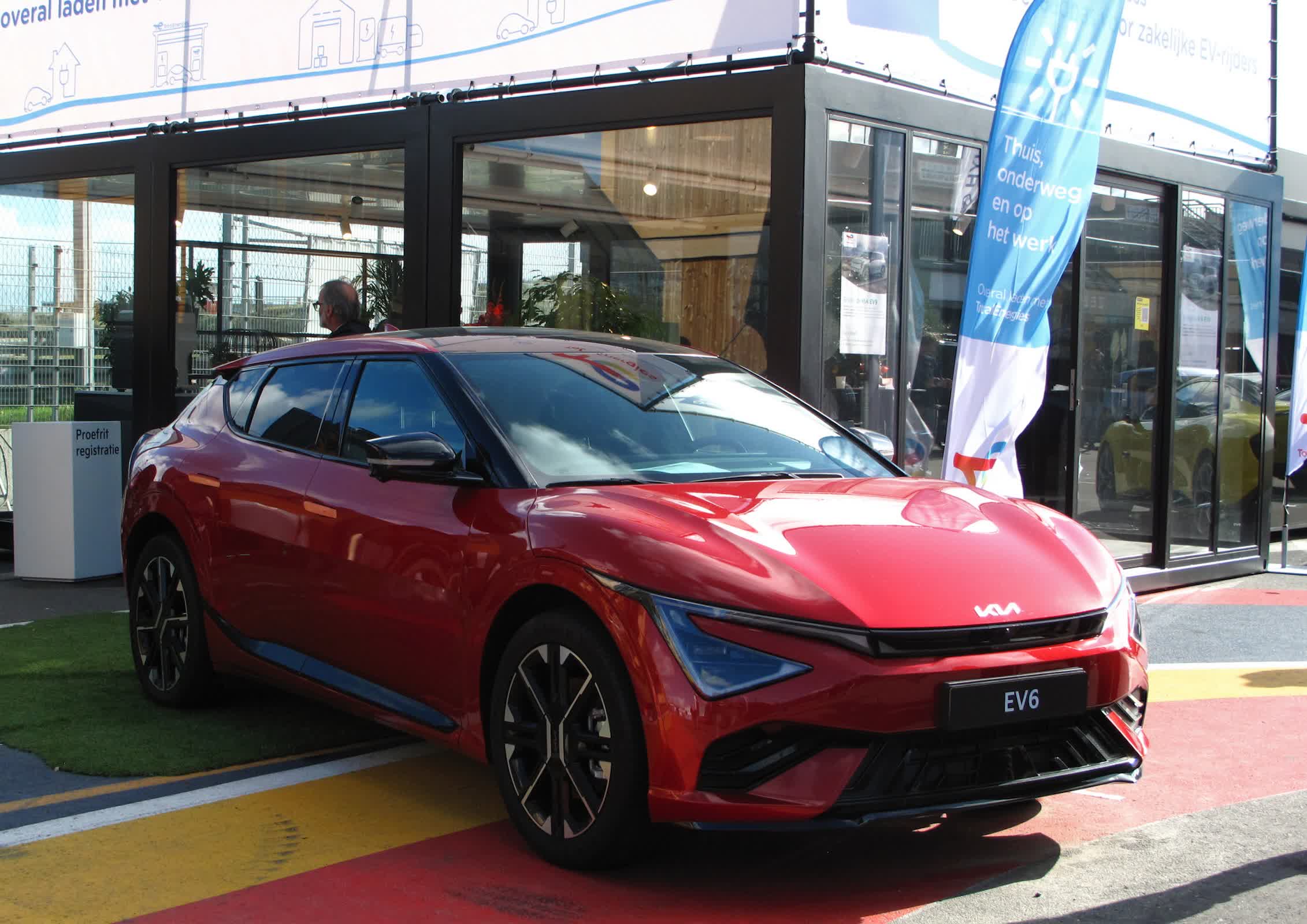
Just a few years ago, many electric cars offered ranges of less than 200 miles on a single charge. Now, models capable of driving 300 miles are standard, and expectations of 400 miles in the near future are reshaping consumer demand.

The arrival of cheaper new models has also put pressure on the used-vehicle market. Many automakers now sell EVs for under $40,000, driving down the resale value of earlier models. Teslas, which make up a significant share of the used market given the brand's relatively long presence in the US, have seen particularly steep declines as competition intensifies.

Federal incentives are helping make used electric vehicles more affordable. Buyers can claim a tax credit of up to $4,000 for qualifying EVs priced at $25,000 or less. The program, originally established under the Biden administration, is set to expire at the end of September after efforts to extend it through legislation failed. The impending deadline has added urgency to the resale market.
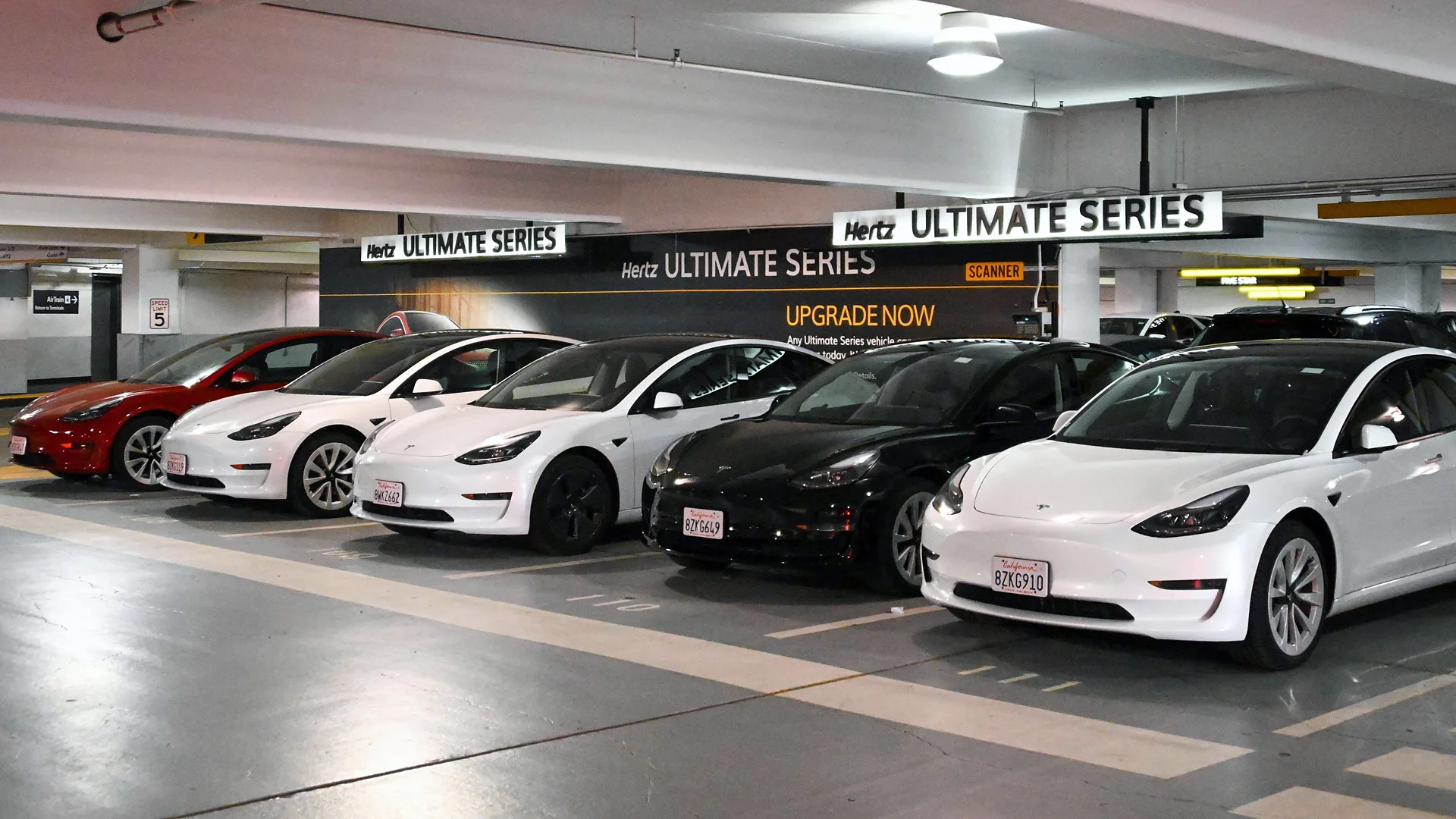
Adding to that appeal is the fact that many of these used EVs are relatively new and still come with warranty coverage, lessening concerns over expensive battery replacements. As a result, shoppers who once hesitated over durability are now finding reasons to make a purchase.

The growing appeal of used EVs may also be affecting demand for new models. Tom Narayan, an auto industry analyst with RBC Capital Markets, told The New York Times that his team's data suggests buyers are being diverted away from showrooms by attractive prices in the pre-owned market.

"The No. 1 thing we see time and time again is that the biggest factor is price," Narayan said. "It's not range anxiety or culture wars, it's price."

Tesla illustrates this trend most clearly. As leases expire, many owners are offloading older models and turning to alternatives, such as those offered by General Motors, Ford, or Hyundai. Some drivers have also been motivated by discomfort with Tesla chief executive Elon Musk's outspoken political stances, choosing to switch brands when upgrading.

Permalink to story:

 
It will get worse as people learn about the process of EV batteries aging. Lot's of cars to recycle...
At least, this could create a cheap market of used parts besides the batteries.
They really need to work on slowing down batteries aging. In a long run, this might be even more important than fast charging or recharging reliability.

But I do not see this as a completely negative thing. It just shows where battery makers should increase efforts. A lot of people cannot afford to throw away a car when it is 10 years old. And even more shop for cars at this age. They won't be shopping for EVs if the batteries age at this rate. Which is why this should become the main goal to solve within the next 5-10 years.
 
Could their prices be going down because people DON’T want them?

Supply and demand… the used market tends to have cars people don’t want…
I want to be optimistic and will say this is because plenty of people already know that EVs do not age as gas cars. Every per past certain age is a day where EV gets closer to becoming a brick due to battery prices.
It is even illogical from a psychological standpoint: to dump a huge amount on a new battery or invest the same amount into a downpayment for a new car? Batteries need to be much more reliable, fixable, and upgradeable at affordable prices.
 
This is great news for anyone like me who couldn’t justify dropping $50k on a new EV. If I can grab a used one under $25k AND get a tax credit, it’s a no-brainer… assuming the battery doesn’t die before my cat does.
 
EV swallow mileage in a way regular cars don't. They have fewer parts and fewer moving parts.

What you are witnessing is the proliferation of Electric Vehicles. New and Used - gas cars are going away.

I was at a party earlier for the Lamborghini Temerario. The Revuelto and Temerario are hybrids. Start them and they are actually quieter than my Cadillac EV. You have to turn a knob to actually activate the V12 gas engine. Turn that in residential areas and you get a fat ticket for noise ordinance.

This is essentially the future. The noise and "fun" is going away. Cars will be more luxurious but they'll be more efficient and less wasteful.

The future of cars will either be boring or hopelessly unaffordable.
 
And these people of lessor wealth who buy based on price, particularly 3rd or 4th hand, will be stung with a barely functional vehicle and a massive cost to replace the battery. And depending on where you live, possibly a cost to dump your vehicle “environmentally” when costs are too much to repair.

This just reeks of inter-generational wealth gap reinforcement.

But probably anyone on this site doesn’t have wealth issues like this, so won’t understand.

Long live Electric motor, death to expensive lithium batteries.
 
Its those damn unreliable batteries.

They degrade very fast and this pull down the value of cars along with them.

Even our non-user replaceable battery in our phones already showing the effects. After 2 or 3 years, you seem to be charging more often and the juice runs out faster.
Same thing is happening with cars.

The sudden explosion of EVs has more to do with trend and latest fad, rather than "saving the environment" or "clean energy". Can't believe where all the battery trash gonna end up. In fact, you still need to dig the earth for the rare minerals for the battery which in turn are not safe.
 
This is totally out of touch and wrong on every single level.
Not really, and you don't have to replace ALL of the battery. Also, it's not like EVs have more that can go wrong with them than a normal ICE car. You can replace the battery, or even just a few modules and you basically have a brand new car. Most of the time what totals ICE cars is the transmission. EVs don't have a transmission.
 
Aging isn't a concern for those buying on the cheap. They just want a town-runabout on the cheap. 50% loss of range is fine.

You obviously haven't worked on one. The system monitors individual cell packs in the battery. If one of those south in the wrong way, that cell has to be replaced. That is, if available Rebuilt batteries are available, but I doubt they replace all of the cells, so you may get only a half new battery.

The cheapest batteries are for the non plug in hybrids, and last time I checked it was about $5,000 (for a car with a book value of about $7-8,000. Give or take a bit. An EV can be $20,000 or more to replace depending on the capacity.

I wouldn't touch one without at least half of the factory warranty left on the battery (8/100,000mi or 12/150,000 mi in CA).

Otherwise, you might as well head to Vegas and spend your money,
 
Not really, and you don't have to replace ALL of the battery. Also, it's not like EVs have more that can go wrong with them than a normal ICE car. You can replace the battery, or even just a few modules and you basically have a brand new car. Most of the time what totals ICE cars is the transmission. EVs don't have a transmission.

Tell that to anyone who got in on the ground floor. There was a story about 5 years ago about someone who bought a 2011 Focus EV. The range on this gem was only 76 mi to begin with. They were quoted $10k to replace the battery after the warning lights lit up and it quit running.. The family couldn't afford it, so it sat at the local Ford dealer for a while. A grandparent agreed to foot the bill and told them to go ahead. A few days later, they got the call that the battery was obsolete and there was no way to fix it.

Keep in mind, unlike a phone, cars and trucks go through stringent crash and safety tests, so the chances of a third party battery maker that would go through the testing and safety qualifications will be nil. You can't just put the latest cells in and call it good, if the battery specifications don't match, the powertrain controller can't properly monitor and charge the battery.
 
You can't just put the latest cells in and call it good, if the battery specifications don't match, the powertrain controller can't properly monitor and charge the battery.
actually, you can. so long as the voltage and chemistry match with the car's internal charging system, you can put whatever battery you want in there. If you feel like swapping out the charging module for, say, a different one, you can put what ever damn battery you want in there so long as it fits. Also, you can put in modules that don't fit with things like spacers that can be 3d printed at home.

Unless the manufacture does something stupid to lock out repairs, which does happen, there is absolutely no reason you can't put whatever battery you want in whatever EV you want.
 
All of that is exactly why buying cheap is happening. If it works for the test drive before purchase you're probably onto a winner. When the battery finally dies you sell the whole car to the scrap yard and get another cheap one. No different to any other car. That's the secondhand market.
 
Used electric vehicles now more expensive to maintain than comparable gas cars, because their electronics aren't cheap and neither are their bateries .
 
Where I am EV's lose 90% of their value after the first year and become unsalable the second. No second hand dealer accepts EV's as it takes 6-12 months to sell them, by which time the batteries have continued to degrade and batteries are equal to the cost of a new car. Extremely wasteful technology.
 
actually, you can. so long as the voltage and chemistry match with the car's internal charging system, you can put whatever battery you want in there.
Not only that, but if you can somehow reprogram the charging curve and other pertinent parameters, you can change the chemistry, too.
If you feel like swapping out the charging module for, say, a different one, you can put what ever damn battery you want in there so long as it fits. Also, you can put in modules that don't fit with things like spacers that can be 3d printed at home.
There's plenty of you tube videos that show how to do it.
Tell that to anyone who got in on the ground floor. There was a story about 5 years ago about someone who bought a 2011 Focus EV. The range on this gem was only 76 mi to begin with. They were quoted $10k to replace the battery after the warning lights lit up and it quit running.. The family couldn't afford it, so it sat at the local Ford dealer for a while. A grandparent agreed to foot the bill and told them to go ahead. A few days later, they got the call that the battery was obsolete and there was no way to fix it.
There comes a point where you can no longer get parts for literally any car regardless of whether its ICE or EV, Hybrid, PHEV, etc.
Keep in mind, unlike a phone, cars and trucks go through stringent crash and safety tests, so the chances of a third party battery maker that would go through the testing and safety qualifications will be nil. You can't just put the latest cells in and call it good, if the battery specifications don't match, the powertrain controller can't properly monitor and charge the battery.
You pretty much said that above. Its a case of not being able to get parts. Honestly, I highly doubt that batteries, once they are in the manufacturing channel, are tested for safety. Don't get me wrong, there is probably quality tests to make sure the battery/cells are not dead from some cause (open, internal short, won't charge, etc.) but beyond that, I doubt that any manufacturer does safety tests on a proven battery chemistry and design.
Used electric vehicles now more expensive to maintain than comparable gas cars, because their electronics aren't cheap and neither are their bateries .
BOC. The electronics are the least likely to need maintenance.
And, as others have noted, it may be that buying a new battery is less of a cost than buying a new car. Thus, replacing the battery may be attractive to some.

And as I have said elsewhere, as a former 2006 Prius owner, there are reports of people who have in excess of 200,000 miles on the original battery for that generation of the car. Beyond that, depending on where you live, Rust is more likely to kill the car before the battery goes. I got rid of mine with 118K miles on it, no problems with the battery, but rust was becoming a problem. Plus, Toyota PHEVs finally hit the mileage on a charge that I thought was good enough for me.

I wouldn't touch one without at least half of the factory warranty left on the battery (8/100,000mi or 12/150,000 mi in CA).

Otherwise, you might as well head to Vegas and spend your money,
Certainly, that's your preference, however, I truly think that battery lifetime is a BOS anti-marketing campaign by entities that do not support the electrification movement in the transportation industry.

For my 06', the battery warranty never came into play even though I owned the vehicle for almost 18-years.
 
It will get worse as people learn about the process of EV batteries aging. Lot's of cars to recycle...
At least, this could create a cheap market of used parts besides the batteries.
They really need to work on slowing down batteries aging. In a long run, this might be even more important than fast charging or recharging reliability.
Anti-EV marketing wants you to believe that. My, First-hand, experience is that there are other factors that are more likely to kill a vehicle than battery lifetime.
 
NEW EVs are currently being sold cheap too.

Dealerships are scrambling to move EVs off the lot before the credit expires at the end of this month. (Losing some money now is better than more money later.)

If you are potentially in the market, this is a good month to buy.
 
EV swallow mileage in a way regular cars don't. They have fewer parts and fewer moving parts.

What you are witnessing is the proliferation of Electric Vehicles. New and Used - gas cars are going away.

I was at a party earlier for the Lamborghini Temerario. The Revuelto and Temerario are hybrids. Start them and they are actually quieter than my Cadillac EV. You have to turn a knob to actually activate the V12 gas engine. Turn that in residential areas and you get a fat ticket for noise ordinance.

This is essentially the future. The noise and "fun" is going away. Cars will be more luxurious but they'll be more efficient and less wasteful.

The future of cars will either be boring or hopelessly unaffordable.
I agree with everything you say except for the last part. That said, I'll never own a supercar of any type. Personally, I don't see the point in having one except for show or to take to a track where you can actually use its abilities - assuming one sticks to legality, and those who don't can be ignorant enough to get themselves caught.

As a 24' Prius Prime owner, its fun to drive, with a 0-60 time of 6.6s, and it handles exceptionally well, IMO. The only thing I don't appreciate is its "Safety Sense" is too aggressive making it something of a "Nanny Car." And it fit my "pocket book."
 
BOC. The electronics are the least likely to need maintenance.
And, as others have noted, it may be that buying a new battery is less of a cost than buying a new car. Thus, replacing the battery may be attractive to some.

And as I have said elsewhere, as a former 2006 Prius owner, there are reports of people who have in excess of 200,000 miles on the original battery for that generation of the car. Beyond that, depending on where you live, Rust is more likely to kill the car before the battery goes. I got rid of mine with 118K miles on it, no problems with the battery, but rust was becoming a problem. Plus, Toyota PHEVs finally hit the mileage on a charge that I thought was good enough for me.


Certainly, that's your preference, however, I truly think that battery lifetime is a BOS anti-marketing campaign by entities that do not support the electrification movement in the transportation industry.

For my 06', the battery warranty never came into play even though I owned the vehicle for almost 1818-years.

Well, technically, the Prius is not an electric vehicle, it's a hybrid, so the battery doesn't see that kind of wear. Also, replacing that battery is way cheaper than replacing the battery for a BEV.

Having said that, you're right that, these cars should be more reliable, but when you need to replace that kind of stuff, your wallet ends up bleeding, or you end up buying another car.
 
Back