Why some video games improve brain function - and others don't

Skye Jacobs

Posts: 1,983   +58
Staff
Connecting the dots: Far from being a mindless escape, video games help the brain process information more efficiently and adapt more readily to complex tasks, according to a growing body of research. The emerging evidence suggests that the type of game and how it taxes the brain's systems are key to whether playing strengthens cognition – or simply consumes time.
Aaron Seitz, professor of psychology and director of the Brain Game Center for Mental Fitness and Well-being at Northeastern University, told The Washington Post that when people play video games, they are practicing complex skills in simulated environments, in contrast to conventional brain games, which he described as designed to be as simple as possible.

Psychologists C. Shawn Green of the University of Wisconsin – Madison and Carlos Coronel of Trinity College Dublin argue that both the structure and pace of mainstream games matter in determining their cognitive payoff. Research led by these individuals and other scientists points to distinctive benefits from different genres, particularly real-time strategy and fast-paced action titles.

Also read: Playing Call of Duty Can Improve Your Driving Skills

In a 2024 study published in NeuroImage, Coronel and colleagues used brain scans to compare 31 experienced StarCraft II players with 31 non-players. The popular real-time strategy game forces players to allocate resources and coordinate armies under constant time constraints. The researchers found that the gamers' brains appeared "more efficient in processing information," showing greater connectivity in regions crucial for visual attention and executive function.

A subsequent 2025 study in Nature Communications extended those findings, showing that experienced gamers' brains appeared up to four years younger than their chronological age. Coronel said the results suggest the cognitive complexity of gaming – like other creative pursuits such as art or music – may preserve neural connections vulnerable to aging and improve the brain's capacity for information processing.
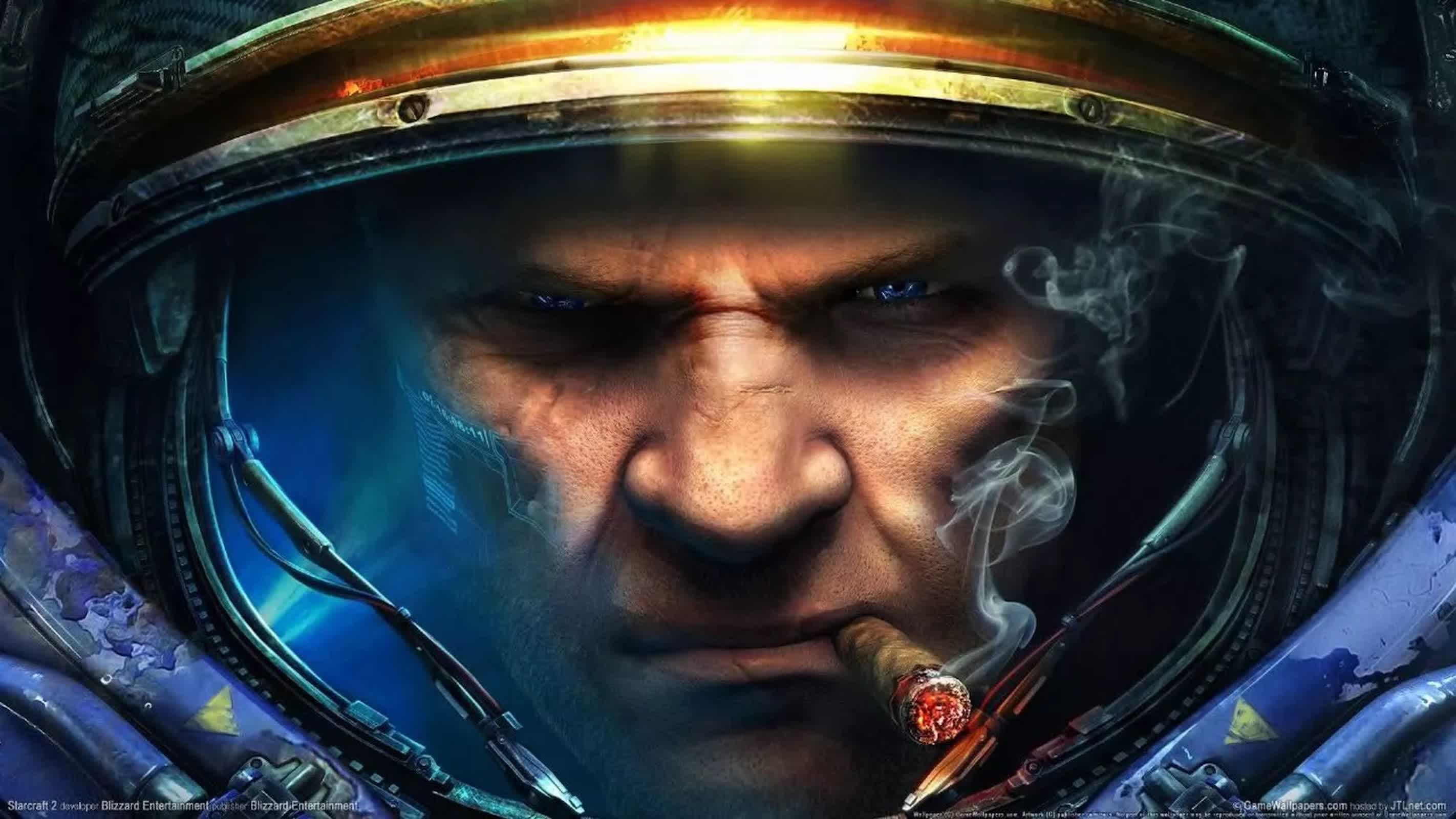
Even modest exposure led to measurable changes. When non-gamers spent about 30 hours over several weeks learning StarCraft II, their brain aging slowed relative to those who studied the more rules-based card game Hearthstone. Coronel said that while "the more you practice, the more you will benefit," improvements emerged even before participants reached expert levels.

Green's research has focused on why action games, such as first- or third-person shooters, appear to deliver a broader range of cognitive benefits. Played under rapid, visually dense conditions that require continuous decision-making, these games may strengthen attention systems that generalize beyond the screen.

Studies have linked action gameplay to better visual acuity, improved spatial reasoning, and stronger attentional control. In one experiment published in Communications Biology, 52 non-gaming adults played either an action or a slower simulation game for 45 hours over three months. Participants who played the action title improved more quickly on cognitive tests of visual perception and working memory – skills unrelated to either game.
"Because you're attending in the right place at the right time, you're suppressing the right information, you're pulling more information out on every trial," Green said. "And so you're learning that much faster."

Seitz and other researchers note that many of the tasks used to measure these effects rely on rapid visual cues that may not apply equally to slower or more complex real-world decisions. Seitz said the field lacks "appropriate data to make strong conclusions" about which game interventions best suit different people or cognitive goals.

Experts emphasize that healthy gaming habits mirror other aspects of brain fitness: diversity and moderation matter more than any single activity. "I cannot say that playing video games for hours and hours and hours is going to be good for your brain health," Coronel cautioned. Balancing play, physical activity, social engagement, and sleep remains essential.

Seitz recommends playing in measured sessions – typically 30 to 60 minutes in most research – and experimenting with different games to see what genuinely enhances focus or learning. Green added that variety itself keeps cognition sharp; he encourages older adults to try unfamiliar titles, even when frustration sets in. "Once you start getting good, it's not useful anymore," he said. "You got to do the annoying and difficult."

Ultimately, researchers agree that no single habit guarantees heightened cognition or slower brain aging. As Coronel put it, maintaining a healthy brain requires "multiple layers in your life" – creative pursuits, exercise, rest, and social connection alongside mental challenges like gaming.

Permalink to story:

 
My brain enjoys problems that are exactly the right difficulty. A lot of my social, organizational, and leaderships skills were developed through MMORPGs and collaborative problem-solving hobbies in general.

Button mashing to make health bars go down doesn't really bring anything to the table for your brain, but planning, allocating, collaborating, and exploring are vital methods for personal development across any medium.
 
I have thousands of hours in Age of Empires 2. When playing it competitively, it's an intense situation where you cannot afford to lose even a few seconds of not performing the correct actions, especially at the beginning. It's not casual gameplay; every detail matters. This includes the topology of the buildings, the number of each unit type, the utilization of every resource, knowledge of the map and civilizations, etc. Usually, if the flow of commands is not optimal, you lose, regardless of your strategy or understanding. Logistics efficiency is paramount in this type of game (RTS).

In a competitive match, you can lose simply because you used the 'X' key five times individually instead of using the shortcut 'Shift+X' to add five units to the production queue at once. It's not exactly "fun."

If you see an opponent's group of units and don't remember their strengths and weaknesses, you will likely lose. If you don't correctly predict whether you will be attacked early or not, you will probably lose. If the map has a sea and your civilization is not naval while the opponent's is, you will likely lose, and vice versa.

RTS games are completely different from FPS games. In games like Quake, you simply move around to collect ammo and shields and aim with the mouse; it's a game centered on motor reflexes. In RTS games, you must quickly and efficiently "fine-tune" your brain to the specific parameters of the current game instance, often with minimal information, while maintaining an optimal flow of commands throughout.
 
In a 2024 study published in NeuroImage, Coronel and colleagues used brain scans to compare 31 experienced StarCraft II players with 31 non-players.
I don't think that's a very fair study. If people already do something because they're good at thinking then they are likely to be better at thinking than an average selection of people. If instead they picked 62 random people, got half to play this game, and then after a while saw if their thinking had improved then that would be a more scientific result.
 
Challenge and completing difficult tasks in any format builds skill and character also physical attributes including brain development. However too much challenge can hurt or kill a person not ready for it or just not able to survive it. Video games in a way help dangerous tasks to be completed by allowing a person to do them in a safe format successfully such as a flight simulator to become a pilot. I gained driving skill by N64 MRC game and others before I ever got my license.
 
For some reason, I thought reading books developed the brain, but the professor certainly knows better.
However, some games explain what's happening, for example Enderal: The Shards of Order
 
I have thousands of hours in Age of Empires 2. When playing it competitively, it's an intense situation where you cannot afford to lose even a few seconds of not performing the correct actions, especially at the beginning. It's not casual gameplay; every detail matters. This includes the topology of the buildings, the number of each unit type, the utilization of every resource, knowledge of the map and civilizations, etc. Usually, if the flow of commands is not optimal, you lose, regardless of your strategy or understanding. Logistics efficiency is paramount in this type of game (RTS).

In a competitive match, you can lose simply because you used the 'X' key five times individually instead of using the shortcut 'Shift+X' to add five units to the production queue at once. It's not exactly "fun."

If you see an opponent's group of units and don't remember their strengths and weaknesses, you will likely lose. If you don't correctly predict whether you will be attacked early or not, you will probably lose. If the map has a sea and your civilization is not naval while the opponent's is, you will likely lose, and vice versa.

RTS games are completely different from FPS games. In games like Quake, you simply move around to collect ammo and shields and aim with the mouse; it's a game centered on motor reflexes. In RTS games, you must quickly and efficiently "fine-tune" your brain to the specific parameters of the current game instance, often with minimal information, while maintaining an optimal flow of commands throughout.

you sir are absolutely right.
But I would like to mention what some may not know, and some certainly remember:
Corrupted Blood bug in WoW
What scientists thing about it? Any article that I have missed?
The behavior of the players was like crazy af.

Edit: forgot to mention that quests are awesome genre, just need revamp and polish.
2 days ago just finished Amerzone (after Syberia 2&3)
No way thats not a good and veeeery good for the brain :)
 
Last edited:
Finally, good news for gamers.

I would like to also suggest puzzle and logic games to keep the brain active.

What I always advocated to myself:

You don't stop playing when you grow old. You grow old when you stop playing.
 
Finally, good news for gamers.

I would like to also suggest puzzle and logic games to keep the brain active.

What I always advocated to myself:

You don't stop playing when you grow old. You grow old when you stop playing.

And that's the thing IMHO. There are benefits to doing anything compared to sitting around navel gazing. The main thing is to keep active both physically and mentally, and more importantly find the fun in life.
 
Challenge and completing difficult tasks in any format builds skill and character also physical attributes including brain development. However too much challenge can hurt or kill a person not ready for it or just not able to survive it. Video games in a way help dangerous tasks to be completed by allowing a person to do them in a safe format successfully such as a flight simulator to become a pilot. I gained driving skill by N64 MRC game and others before I ever got my license.

Is that why the DOD and CIA cooperate with companies making war games and FPSs?
 
My brain enjoys problems that are exactly the right difficulty. A lot of my social, organizational, and leaderships skills were developed through MMORPGs and collaborative problem-solving hobbies in general.

Button mashing to make health bars go down doesn't really bring anything to the table for your brain, but planning, allocating, collaborating, and exploring are vital methods for personal development across any medium.
So, all in all, playing the right games is the best way to get ahead in life. Including personal development.

I never realized that games were quite this fantastic. Always loved gaming of course, but thanks to your passion for game, I shall improve my life too by playing more games.
 
My brain enjoys problems that are exactly the right difficulty. A lot of my social, organizational, and leaderships skills were developed through MMORPGs and collaborative problem-solving hobbies in general.

Button mashing to make health bars go down doesn't really bring anything to the table for your brain, but planning, allocating, collaborating, and exploring are vital methods for personal development across any medium.

That's actually the biggest problem, reaching a level of mastery that isn't challenging. Cognitive and health benefits associated with solving novel puzzles only work for as long as the puzzle remains novel. Once a mastery is achieved, the cognitive benefits diminish.
 
Back