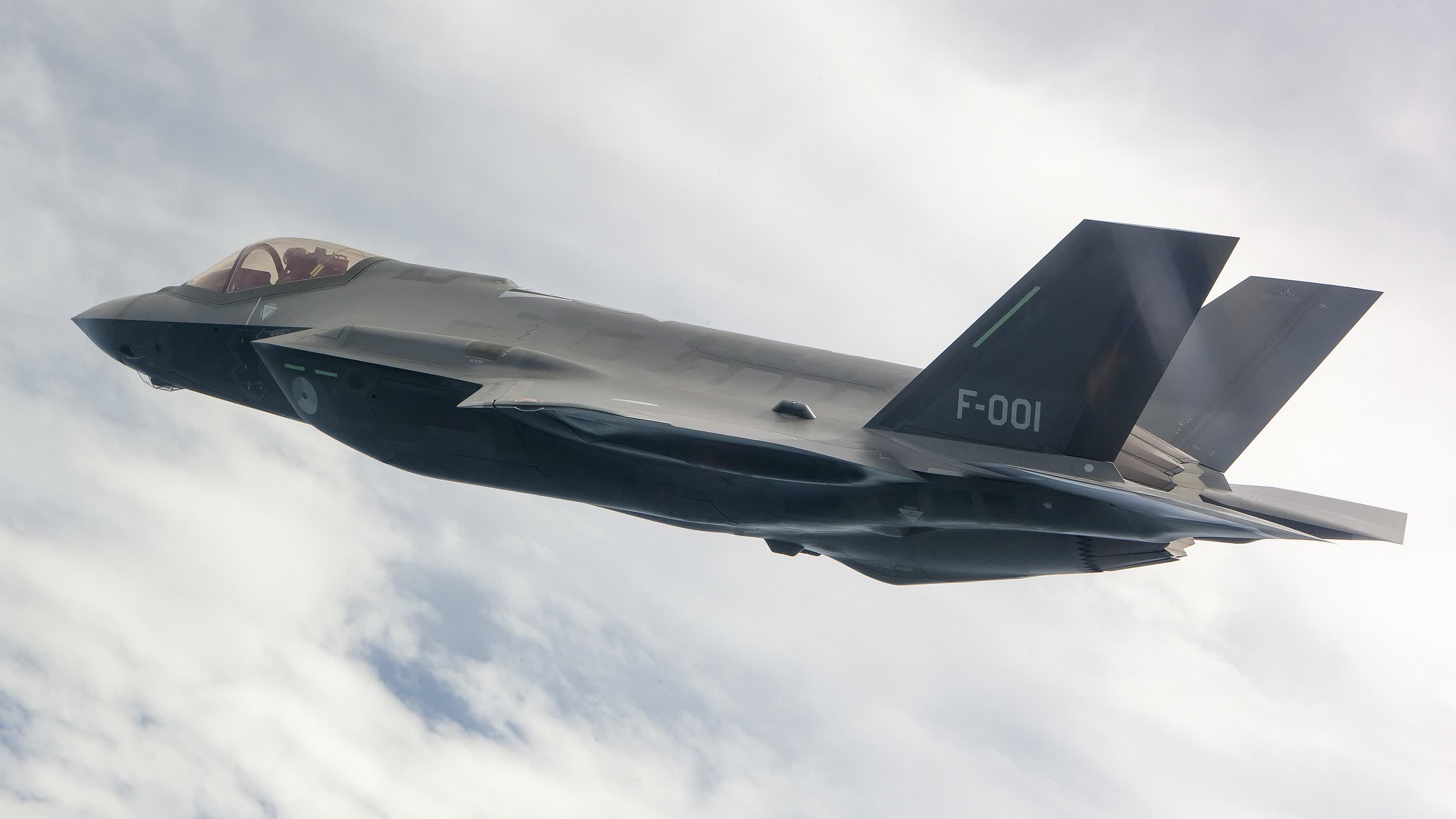
Facepalm: Most people are familiar with the frustration of sitting through a lengthy conference call only to reach a disappointing outcome. A US Air Force F-35 pilot must have been particularly upset after his 50-minute airborne call with Lockheed Martin engineers did little to prevent the plane plunging to the ground soon afterward. Thankfully for the airman, he ejected safely before being incinerated in a fireball.
On January 28, a pilot flying the F-35 experienced an in-flight malfunction during a training mission at Eielson Air Force Base in Fairbanks. As you can see in the video, it caused the $200 million fighter jet to tumble to the ground and explode. The pilot ejected and suffered only minor injuries.
According to the report, the pilot tried to retract the plane's landing gear after it had taken off but it wasn't retracting completely. He then tried to lower the gear, at which point it got stuck at an angle.
After running through a system checklist that failed to fix the problem, the pilot decided he needed expert help, so he started a conference call with five engineers from the plane's manufacturer, Lockheed Martin.
CNN reports that the pilot was speaking to a senior software engineer, a flight safety engineer, and three specialists in landing gear systems for almost an hour, but it seems even they weren't able to help.
The pilot then tried two "touch and go" landings, which involved the plane briefly landing to try and straighten out the jammed nose gear.
But the two touch and go landings made things even worse. Not only was the nose wheel still off center, but the left and right main landing gears had now frozen and were unable to extend fully for a standard landing.
This caused the plane's sensors to believe it was on the ground, moving the systems into "automated ground-operation mode" and causing the plane to become uncontrollable. The pilot then made the decision to eject.
An investigation found that the problem was due to ice in the hydraulic lines in the nose and main landing gears of the F-35, preventing them from properly deploying. It appears that the hydraulic system was mistakenly partly filled with water.
About one-third of the fluid in the hydraulic systems in both the nose and right main landing gear was water. There should have been none due to the extremely low temperatures planes are exposed to at altitudes. CNN writes that it was -1 degree Fahrenheit on the day of the crash.
Nine days later, another F-35 flown at the same base also experienced a hydraulic issue caused by icing, but it was able to land safely.
The Air Force's Accident Investigation Board blamed those on the conference call, lack of oversight when it came to storage and distribution of the hydraulic fluid, and not properly following aircraft hydraulics servicing procedures for the crash.
The report notes that if the engineers had followed guidance set out in a 2024 maintenance update, which was discussed during the conference call, "they likely would have advised a planned full stop landing or a controlled ejection instead of a second touch-and-go."