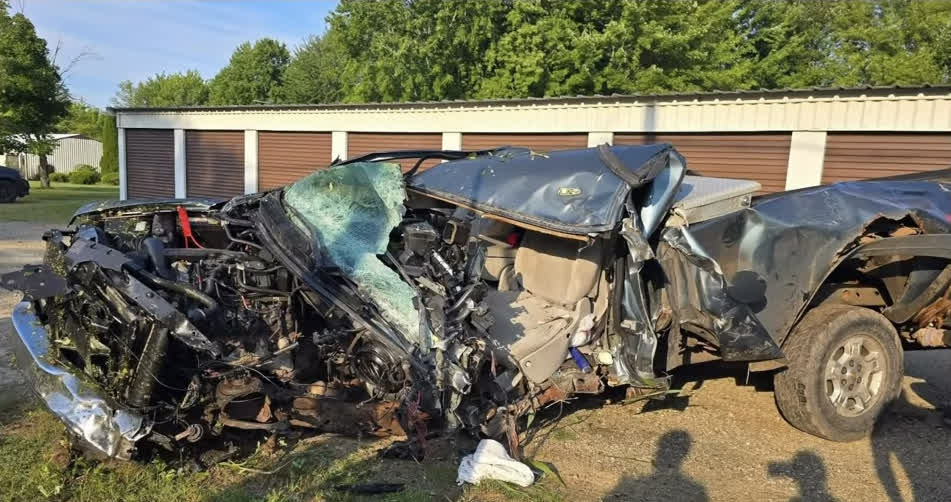
In brief: While we hear lots of stories about devices' safety features being set off accidentally, there are plenty of incidents where they work as intended, potentially saving lives. Sixteen-year-old Lindsay Leskovac, for example, fell asleep behind the wheel of her truck, crashing the vehicle and breaking multiple bones and her spine. Her mother says that if it weren't for her iPhone's Crash Detection system, she would not have survived.
The teenager was driving her pickup truck back home after dropping off a friend in the early hours of August 2, reports WFMJ. Despite efforts to fight the tiredness, she fell asleep behind the wheel. The out-of-control vehicle collided with two poles and some trees before coming to a stop.
The truck was mangled and Lindsay suffered major injuries, including fractures to both her legs and cervical spine. The impact left her unconscious and trapped inside the truck.
Thankfully, the iPhone's Crash Detection feature did its job. Recognizing that there had been a severe impact, the phone dialed 911, sending an emergency rescue team to the scene of the accident.
Lindsay's mother, Laura Leskovac, said her daughter regained consciousness after hearing a dispatcher on the phone. "[Lindsay] must have heard the [dispatcher's] voice calling out to her, so she was actually on [the phone] for 22 minutes. This technology enabled the rescue workers to be able to find her," Leskovac said.
Leskovac stated that the only reason her daughter is alive today is because of the iPhone feature.
Apple introduced Crash Detection in the iPhone 14 and the Apple Watch Series 8. It uses data from multiple sensors, including the accelerometer to detect sudden changes in speed or impact forces up to 256 Gs, gyroscope for rapid changes in orientation, microphones for picking up sounds associated with crashes, barometer to detect pressure changes inside the car when airbags inflate, and GPS and CarPlay/Driving status to determine vehicle speed and whether you're likely in a moving car.
If a severe car crash is detected, the iPhone shows an alert on screen and plays a loud alarm. If you don't respond within about 20 seconds, the iPhone will automatically call emergency services. It also shares your location and notifies emergency contacts if you've set them up in the Health app.
Crash Detection isn't perfect, of course. There was a period when it repeatedly identified false positives from roller coaster riders at theme parks in the Midwest. It was also making three to five emergency calls per day because the feature thought that people skiing were involved in vehicle crashes.