Bottom line: Microsoft's gamble on gaming subscriptions has reached a turning point. Xbox Game Pass, once an ambitious bet on a Netflix-for-games model, is now officially in the black, pulling in billions. But as it proves sustainable, Microsoft is also restructuring the service and making its priciest tier far more expensive. The shift signals more than just a new billing structure... it's a test of whether players will accept higher costs in exchange for bigger libraries and premium perks.
The combination of steady revenue growth, expanding developer participation, and new device partnerships points to Xbox Game Pass playing an even more prominent role in Microsoft's gaming strategy.
Speaking in an interview at the Tokyo Game Show, Xbox president Sarah Bond told Game Watch that Game Pass is not just viable but lucrative. The service generated nearly $5 billion over the last fiscal year, with payouts to developers climbing alongside revenue. "It's a profitable business, and more creators are participating," Bond said.
| Before | After | Old Price | New Price | Platforms (Before) | Platforms (Now) | Key Changes / Notes |
|---|---|---|---|---|---|---|
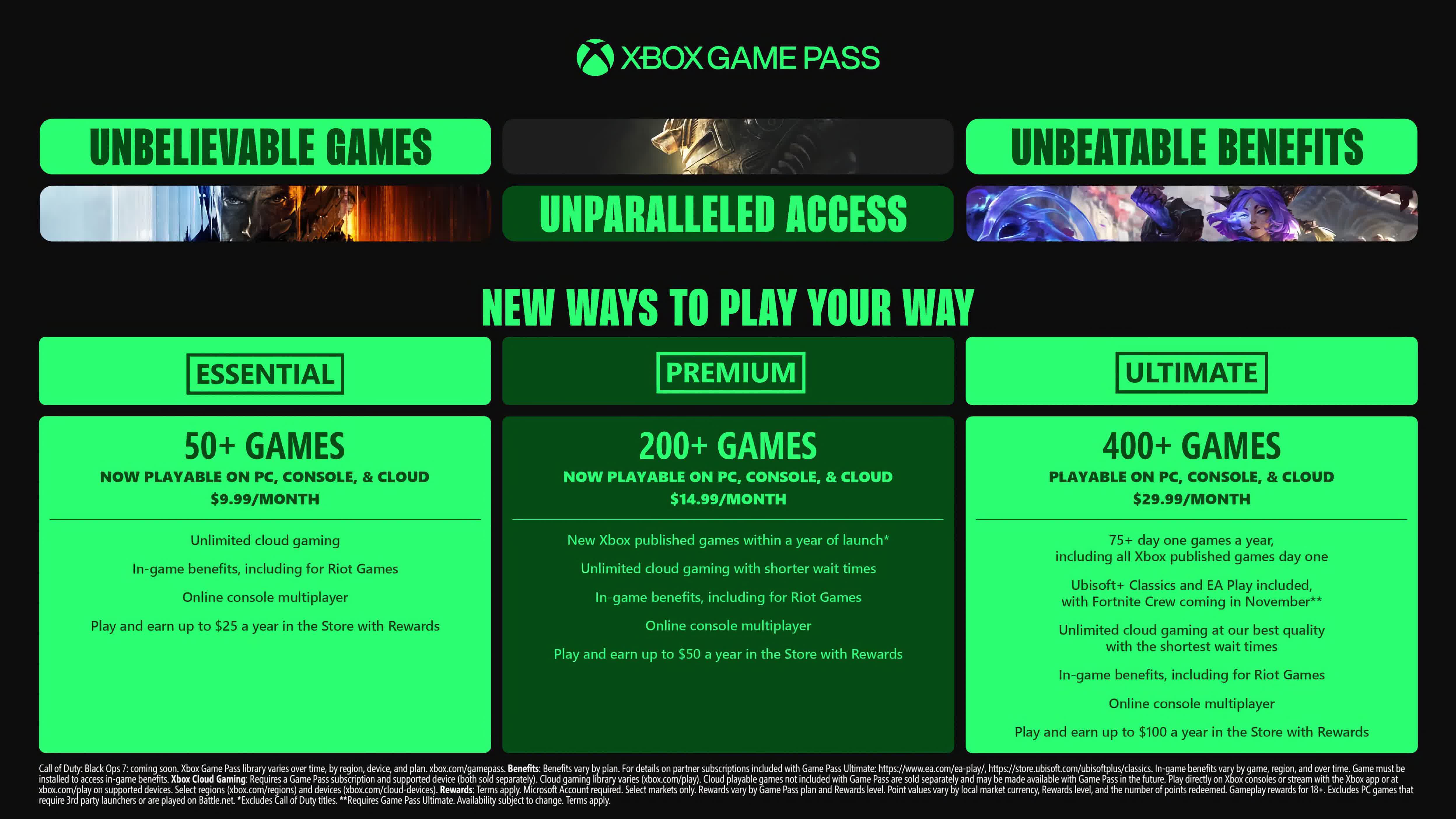
| Xbox Game Pass Core | Xbox Game Pass Essential | $9.99 | $9.99 | – | Console, PC, Cloud | Rebrand only; now part of the three tiers playable across console, PC, and cloud. |
| Xbox Game Pass Standard | Xbox Game Pass Premium | $14.99 | $14.99 | – | Console, PC, Cloud | Expanded library; now includes access to PC games. 200+ games on Xbox & PC; Diablo IV and Hogwarts Legacy available today. |
| Xbox Game Pass Ultimate | Xbox Game Pass Ultimate | $19.99 | $29.99 | Console, PC, Cloud | Console, PC, Cloud | 50% price increase. More than 75 day-one releases/year (incl. CoD: Black Ops 7, High on Life 2, Keeper, Ninja Gaiden 4, The Outer Worlds 2). Adds Fortnite Crew ($12/mo) and Ubisoft+ Classics (~$16/mo) at no extra cost. Xbox Cloud Gaming exits Beta. |
| PC Game Pass | PC Game Pass (existing subs only) | $11.99 | $16.49 | PC | PC | ~40% price increase. No Ubisoft+ Classics; will get ~50 additional Ubisoft titles. Continues to include day-one releases. |
That declaration answers years of speculation over whether the subscription model could ever carry the weight of blockbuster game development. Former PlayStation executive Shuhei Yoshida has been one of the skeptics, warning that players might grow accustomed to cheap access, pushing studios to take fewer creative risks. Bond countered by framing Game Pass as an engine for diversity, not homogeneity, within Microsoft's broader gaming strategy.
Game Pass now sits alongside initiatives like Xbox Cloud Gaming and experimental hardware projects such as the Asus ROG Xbox Ally, a Windows 11-powered handheld. The vision, according to Bond, is ubiquity: access on console, PC, handheld, or streaming.
The investment has been immense. Chris Charla, head of the ID@Xbox indie program, recently told Eurogamer that Microsoft has inked deals with more than 150 developers – the biggest expansion push in Game Pass's history.
Financial filings support that momentum: Xbox content and services revenue jumped 13 percent year over year last quarter, while Microsoft's overall revenue climbed 18 percent and net income rose 24 percent. CEO Satya Nadella said Game Pass alone brought in "nearly $5 billion" across the year.
Subscriber numbers are murkier, as Microsoft stopped reporting them. But filings revealed 34 million subs as of February 2024, and an employee profile hinted the number has since edged above 35 million. Nadella also noted Microsoft's combined gaming platforms now reach 500 million active users.
New Game Pass tiers and a price jump
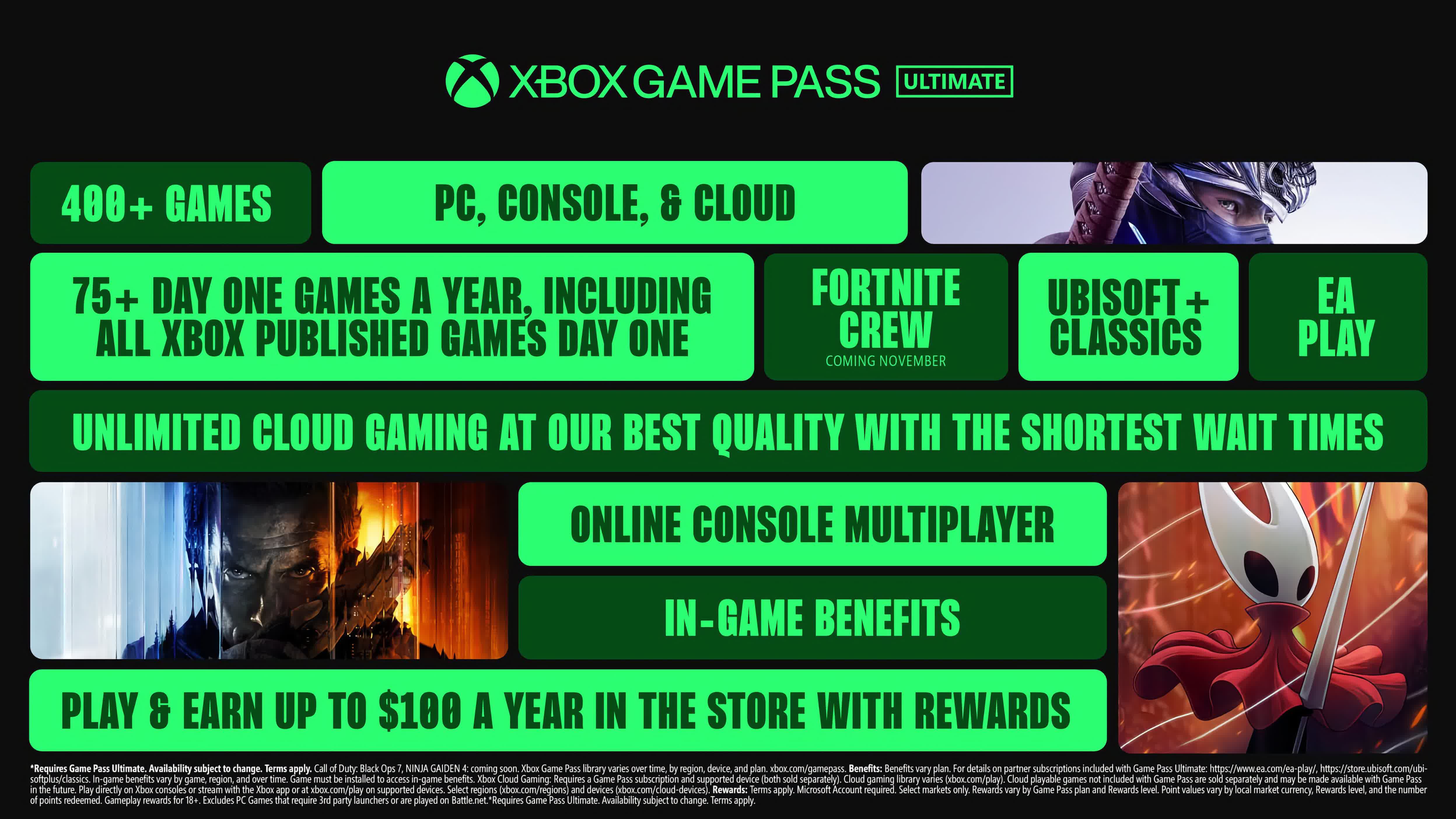
The service's success is arriving just as Microsoft overhauls its subscription tiers. Starting today, the top plan – Xbox Game Pass Ultimate – jumps from $19.99 to $29.99 a month, a steep 50% increase. Microsoft is trying to cushion that shock with a bundle of new perks.
The branding is changing, too: Game Pass Core is now Xbox Game Pass Essential, Standard becomes Xbox Game Pass Premium, and Ultimate stays Ultimate, albeit much pricier.
Essential will still be $9.99 per month, Premium remains at $14.99, and Ultimate climbs to $29.99. All three tiers will span console, PC, and cloud, while the legacy PC-only Game Pass is being discontinued for new subscribers (existing ones can stay grandfathered in, but their price is rising from $11.99 to $16.49).
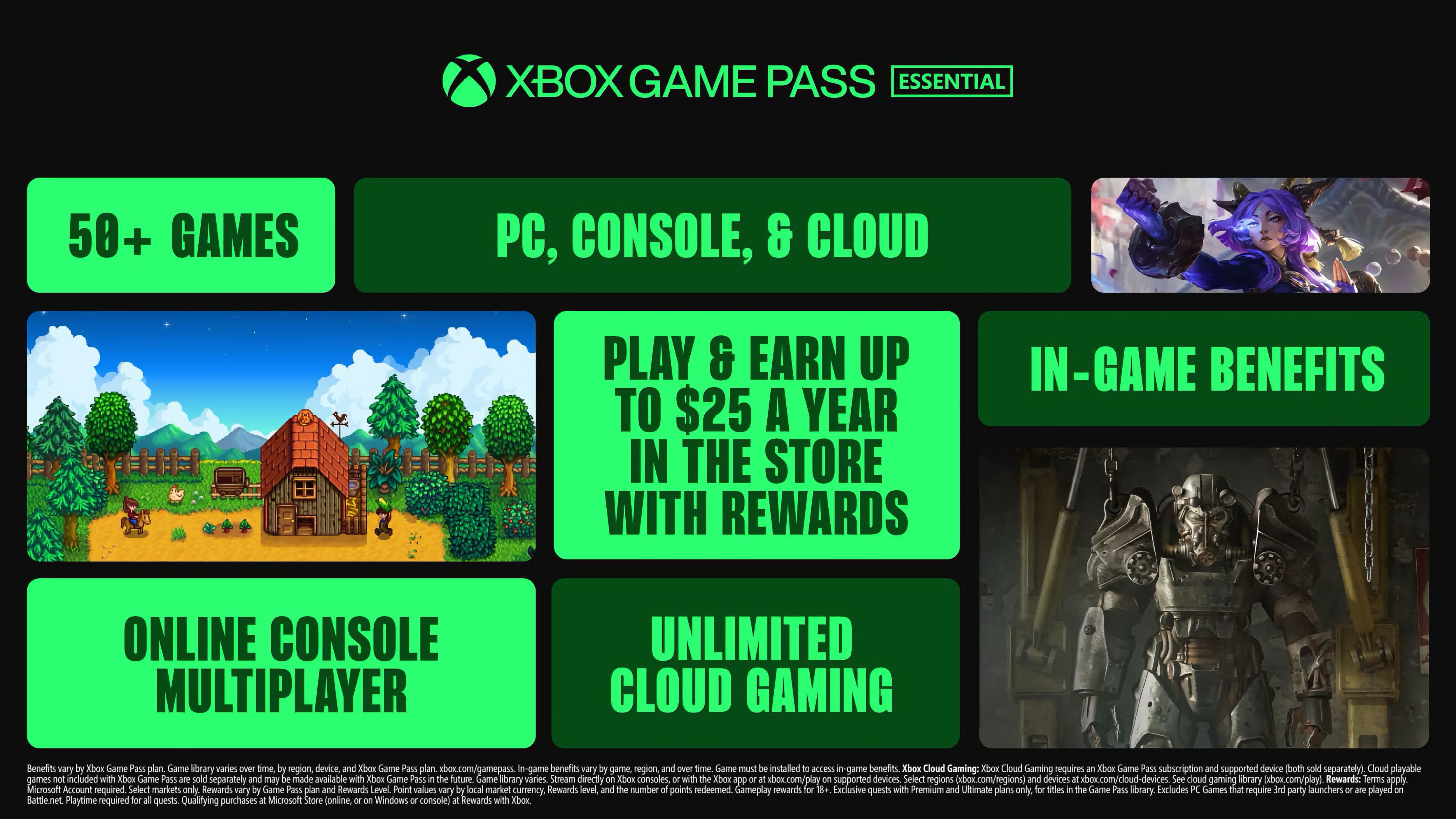
Under the new structure, Core subscribers automatically shift to Essential, Standard users move to Premium, and Ultimate players remain in place.
Microsoft is padding the change with content. Starting Wednesday, 45 new games land on the service, including Hogwarts Legacy and Diablo IV for Premium and Ultimate members. Premium subscribers will also gain PC access for the first time, unlocking a library of more than 200 games.
For those paying the extra $10 at the Ultimate tier, Microsoft is dangling bigger carrots: more than 75 day-one releases annually, including Call of Duty: Black Ops 7, High on Life 2, Keeper, Ninja Gaiden 4, and The Outer Worlds 2. This represents a 50% increase over the previous year in terms of day-one titles.
Subscribers also get bundled memberships to Fortnite Crew (normally $11.99 per month) and Ubisoft+ Classics (around $16 monthly), plus improved streaming with shorter queue times now that Xbox Cloud Gaming is moving out of beta.
By contrast, PC Game Pass players see their price rise almost 40 percent to $16.49 a month without the same extras. Xbox executive Jerret West clarified that PC subscribers won't get Ubisoft+ Classics, but will instead gain access to around 50 additional Ubisoft titles while continuing to receive day-one releases.
The subscription pivot underscores how Microsoft is rethinking its role in gaming. First-party titles like Indiana Jones and the Great Circle, Doom: The Dark Ages, and Elder Scrolls IV: Oblivion Remastered are launching into Game Pass from day one, while Xbox is simultaneously putting games like Forza Horizon 5 and Age of Empires II on PlayStation 5.

Bond highlighted Ninja Gaiden 4 from Koei Tecmo as a symbol of Microsoft's intent to deepen ties with Japanese studios, part of a long-term strategy to broaden Xbox's cultural reach. She also pointed to ongoing collaborations with AMD and other chipmakers aimed at shaping the next generation of Xbox hardware.
With these latest changes, Game Pass has officially gone from experiment to profitable business in under a decade. Now Microsoft is testing whether players will stomach higher prices in exchange for bigger libraries, premium bundles, and more flexible access across devices. The model has proven it can make money. The harder question is whether it can grow even as the buy-in climbs.