
Connecting the dots: The wide adoption of ChatGPT and other generative artificial intelligence tools has not yet led to large-scale disruption in the US labor market, according to new research from the Yale University Budget Lab and the Brookings Institution. Despite months of warnings from technology executives that AI would upend employment, the study finds little evidence that the technology has displaced workers more severely than earlier innovations such as computers or the internet.
The research, which draws on federal labor market data and industry figures on AI exposure, suggests that fears of an immediate jobs crisis are overstated. "Despite how quickly AI technology has progressed, the labor market over the past three years has been a story of continuity over change," Molly Kinder, a senior fellow at Brookings and co-author of the paper, told The Financial Times. "We are not in an economy-wide jobs apocalypse right now; it's mostly stable. That should be a reassuring message to an anxious public."
Her co-author, Martha Gimbel, who leads the Yale Budget Lab, emphasized that while many workers believe artificial intelligence is responsible for job losses, the team's analysis repeatedly failed to uncover evidence supporting that view.
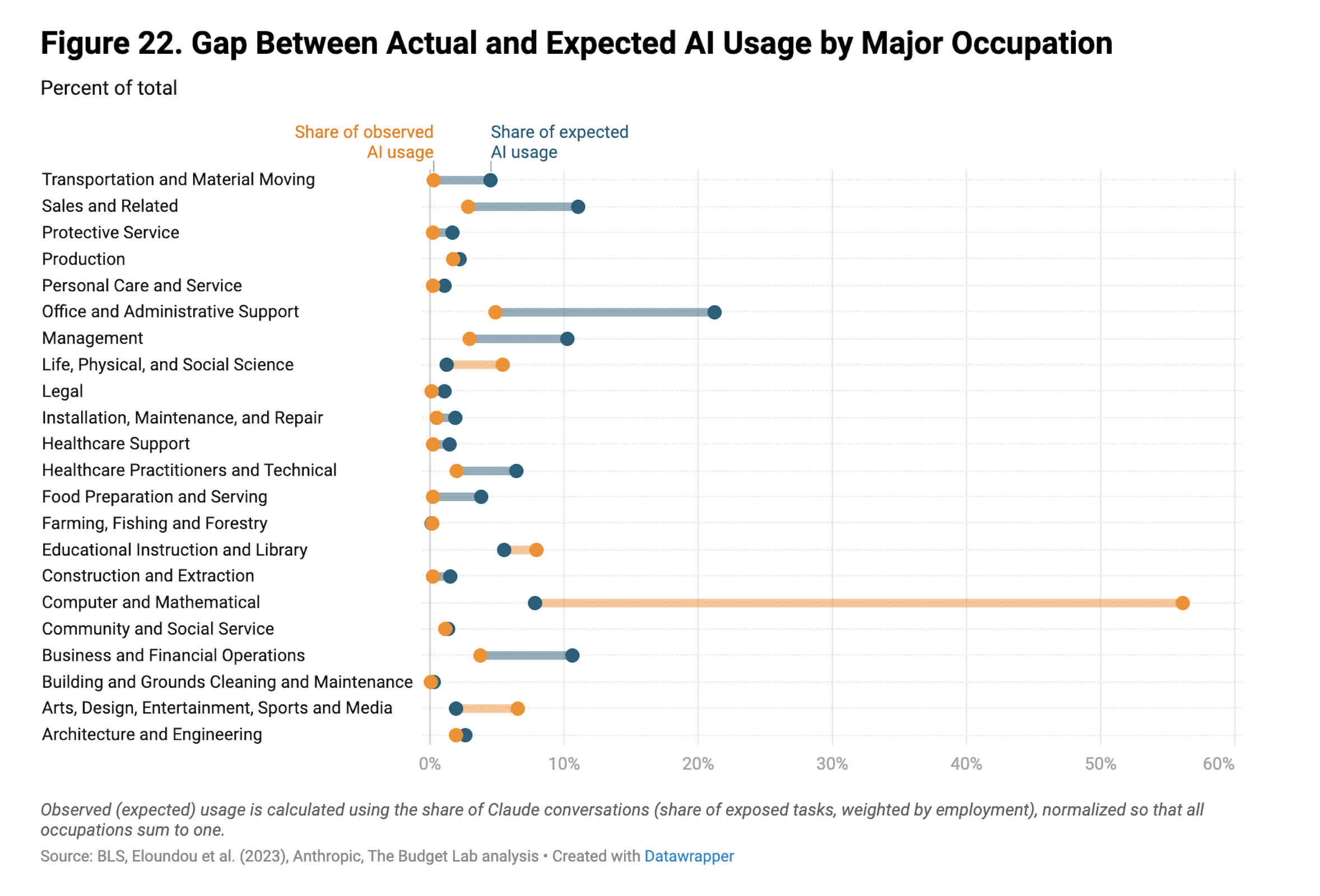
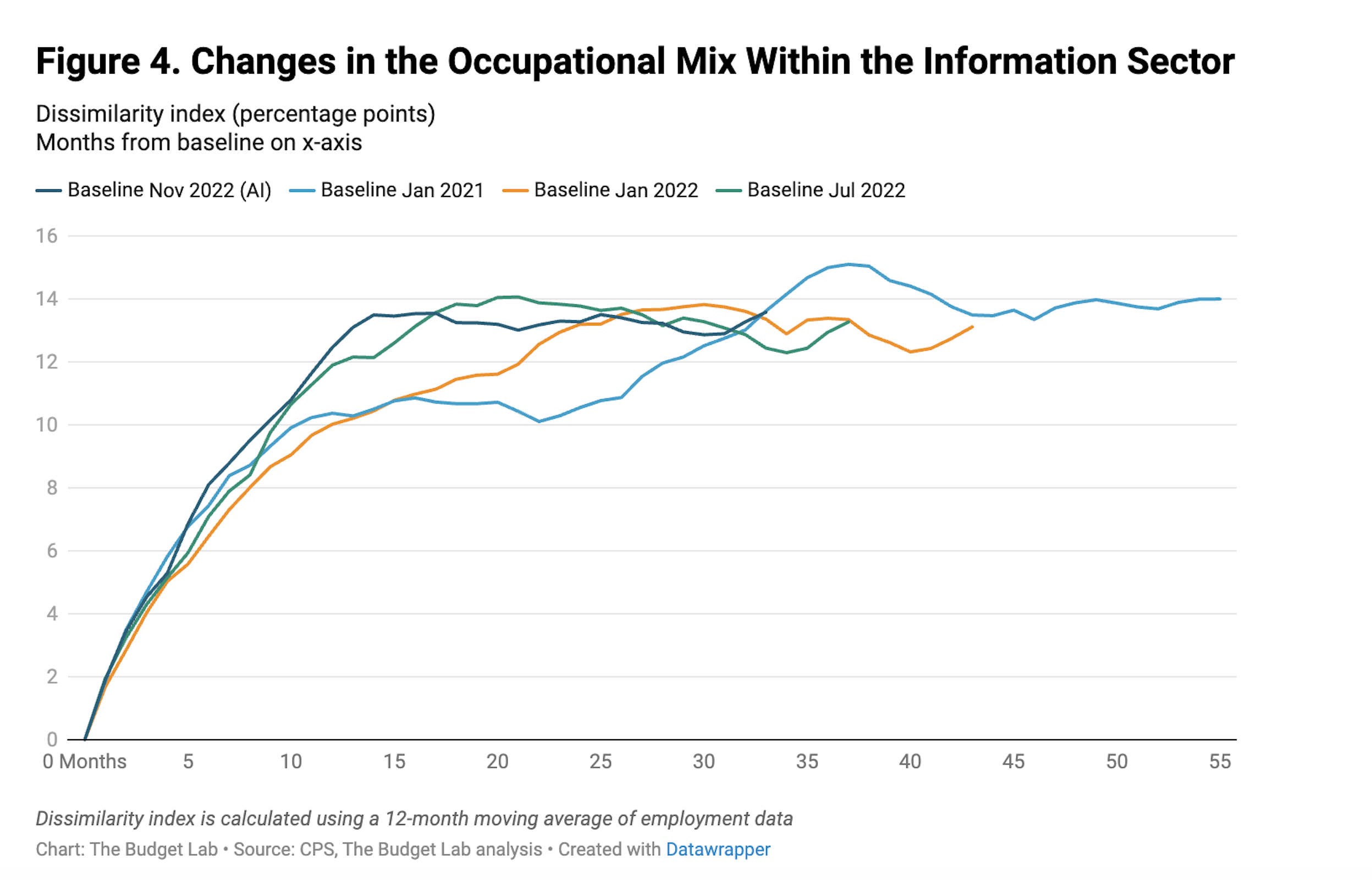
While ChatGPT is altering the types of roles available to workers in the technology industry, the researchers found it has not yet shifted the employment mix across the broader US economy at an unusually fast pace.
The paper, co-authored with Yale researchers Joshua Kendall and Maddie Lee, also examined the position of recent college graduates. Although the unemployment rate among 20- to 24-year-olds with a bachelor's degree rose to 9.3 percent in August from 4.4 percent in April, the team found little evidence to suggest generative AI was responsible. Young graduates are struggling to find work, the researchers said, but the pattern is not materially different from that of older degree-holders between the ages of 25 and 29.
The study stands in contrast to warnings from some of the industry's most prominent figures. A survey released by the British Standards Institution of more than 850 business executives found that 39 percent reported AI had already led to cuts in entry-level roles, while 43 percent said they planned further reductions within a year.
Executives including Anthropic chief executive Dario Amodei have issued more dramatic projections. In May, Amodei warned that AI adoption could lead to widespread elimination of positions in law, finance and consulting, and predicted that unemployment in the US could rise to between 10 and 20 percent within five years, compared to the current rate of 4.3 percent. At the same time, OpenAI's Sam Altman has argued that customer service is among the job categories most at risk of elimination.
Some economists say the gulf between evidence and executive warnings underscores the role of hype in discussions of AI's impact. "There is a lot of pressure on managers to do something with AI . . . and there is the hype that is contributing to it," Daron Acemoglu, professor of economics at the Massachusetts Institute of Technology, said. "But not many people are doing anything super creative with it yet."
Acemoglu added that AI developers have strong incentives to market their technologies as transformative in order to spur broader corporate investment in computing infrastructure required for advanced models.
Goldman Sachs Research has estimated that AI could ultimately displace 6 to 7 percent of the US workforce, though it concluded the effect would likely be temporary. Gimbel of Yale said her team will continue updating its dataset on a monthly basis to track any shifts as adoption continues. "It is an open question [whether or not AI will change the labor market] and we should be monitoring this," she said. "But let's not put the cart before the horse here."