A hot potato: It's taken a while, but many companies are now blaming artificial intelligence as the reason for their job cuts, whether directly or indirectly. But is the technology really always to blame? Some critics argue that AI has become a convenient scapegoat for firms laying off workers – much like return-to-office mandates, which some say amount to quiet firing in disguise.
When ChatGPT first started to spread across the world, companies using generative AI tools were very cautious when discussing the potential for job losses. Some firms avoided the topic altogether, while others insisted that the technology wasn't a factor in their announced cuts.
Things have changed recently, with companies freely admitting that their layoffs are the result of AI adoption. Several large organizations, including Accenture, Salesforce, Klarna, Microsoft, and Duolingo, have said they are reducing staff numbers as AI helps streamline operations, reduce costs, and increase efficiency.
But Fabian Stephany, Assistant Professor of AI & Work at the Oxford Internet Institute, told CNBC that companies are "scapegoating" the technology.

"I'm really skeptical whether the layoffs that we see currently are really due to true efficiency gains. It's rather really a projection into AI in the sense of 'We can use AI to make good excuses,'" Stephany told the publication.
Many firms are still looking to reduce worker numbers after they overhired during the pandemic. Critics say a popular method of culling staff has been to introduce return-to-office mandates. With many people unable or unwilling to go back to the office for three or more days per week, they simply quit, doing their employers' dirty work for them without costing the companies any severance pay.
Blaming AI for layoffs also has its advantages. Multibillion- and trillion-dollar companies can not only push the narrative that the changes must be made in order to stay competitive, but doing so also makes them appear more cutting-edge, tech-savvy, and efficient in the eyes of potential investors.
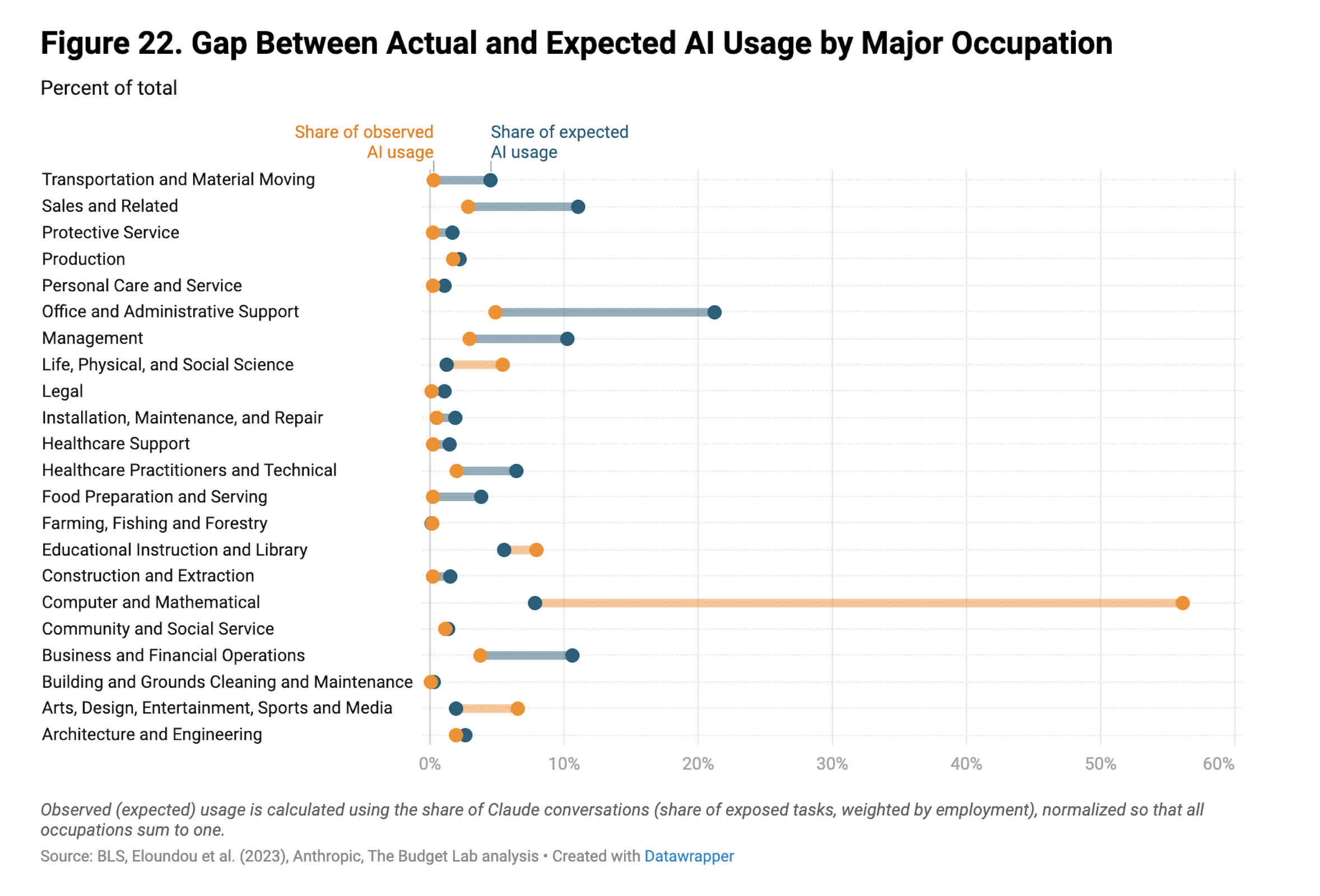
Interestingly, a study by the Yale Budget Lab a few weeks ago showed there is little evidence that AI has displaced workers more severely than earlier innovations such as computers or the internet. Meanwhile, Goldman Sachs Research has estimated that AI could ultimately displace 6 to 7 percent of the US workforce, though it concluded the effect would likely be temporary.