
More human than human: Transhumanism is a philosophical movement that promotes using advanced technologies to improve human abilities, extend life, boost mental capacity, and enhance overall well-being. We've seen it play out in fiction – the Deus Ex video game series is a good example. We are also gradually seeing it emerge in real life.
A year after Neuralink secured FDA approval to test brain implants designed to restore sight, one of its earliest patients has found another use for the technology – reclaiming his sense of movement. Brad Smith is not blind, but has advanced ALS, which severely limits his head movement. So, instead of restoring his sight, he uses his Neuralink to control a webcam and gimbal, giving him what he describes as "a second pair of eyes."
Smith was diagnosed with ALS seven years ago and has since lost nearly all motor control. He communicated through an eye-tracking interface known as Eyegaze, which allowed him to select letters on a screen. However, the system required tightly controlled lighting, limiting when and where he could use it. In November 2024, Smith became the third person – and the first ALS patient – to receive Neuralink's brain-computer interface.
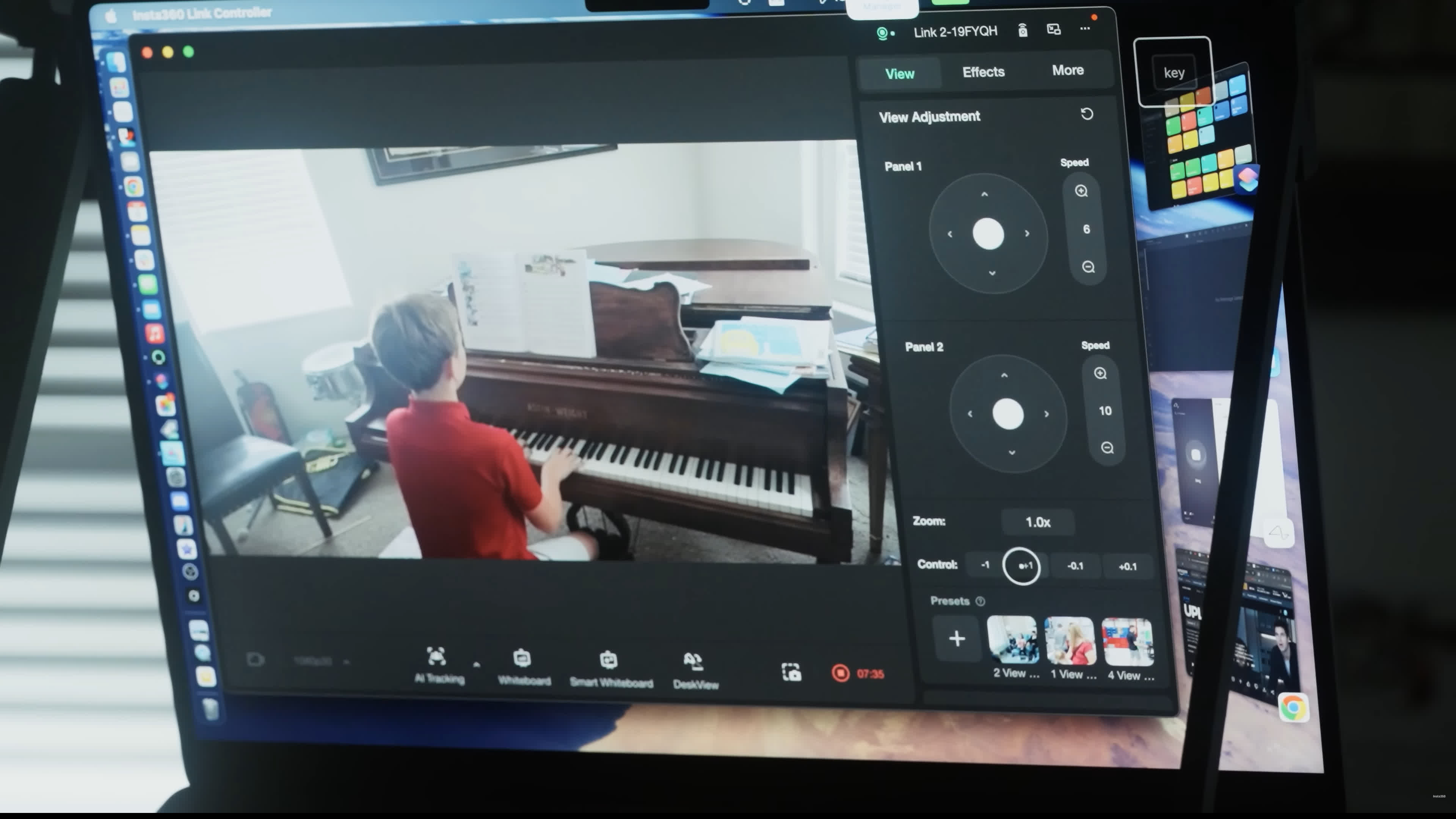
After a period of training, Smith learned to use the implant to move a computer cursor. He then connected the Neuralink interface to an Insta360 Link 2 – a 4K webcam with a motorized gimbal – allowing him to pan, tilt, and zoom the camera with brain impulses. These movements simulate turning his head and following conversations around a room.
In May, Tesla Owners Silicon Valley, a major tech account on X, shared a post showing how Smith was using the Link 2, tagging both Neuralink and Insta360. The company then reached out to Smith and his family, offering to optimize the camera for his needs. The off-the-shelf Link 2 is too slow to match his eye movements accurately.
"When we designed Link 2, it was intended for professionals in meetings and classrooms," said Max Richter, co-founder and vice president of marketing at Insta360. "But seeing it used as a tool that helps someone rediscover connection, that reminds us why we build technology in the first place."
So, Insta360 engineers worked with Smith to tweak the Neuralink control signals, making each command more efficient and letting him move the camera more naturally.
The modified setup allows Smith to follow his children's activity around the house, record video messages, and join in family events outdoors – activities that had long been out of reach. His story is featured in an eight-minute short film produced by Insta360, highlighting how accessible camera technology can complement Neuralink's brain implant (above).
Smith continues to refine how he uses the Neuralink-Link 2 setup, experimenting with different angles and interactions throughout his home. The combination of a brain-computer interface and a motorized webcam has restored a degree of independence, letting him engage with his surroundings in real time. While the technology remains in its early stages, Smith's experience demonstrates how emerging tools can extend the possibilities of daily life for those living with severe mobility limitations.
Image credit: Steve Jurvetson