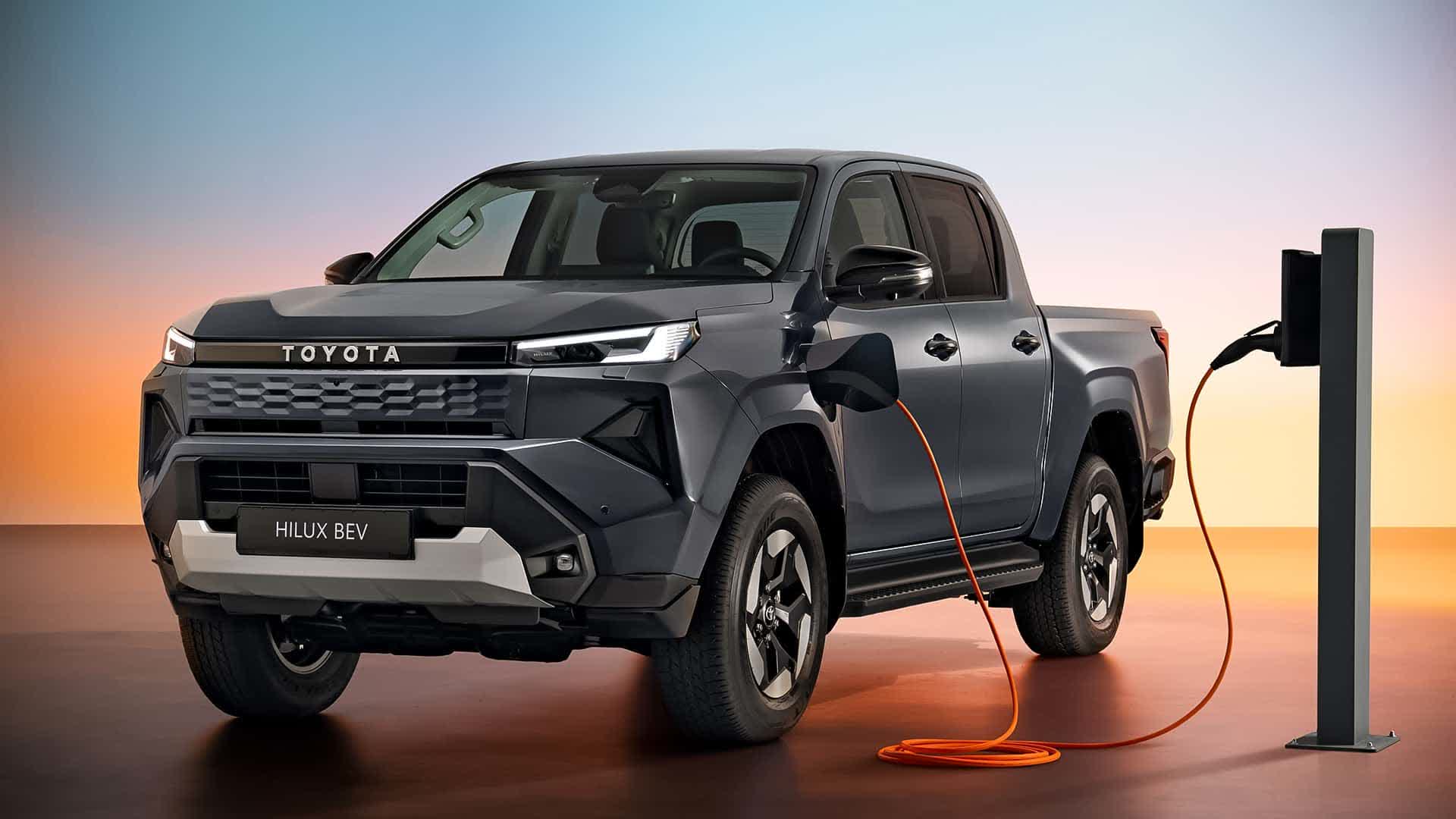
The takeaway: Toyota has unveiled an all-electric version of the Hilux, marking the company's first fully electric pickup and a major shift for one of the world's most recognizable utility trucks. The ninth-generation Hilux debuted in Thailand, arriving 10 years after its predecessor. The lineup includes a battery-electric variant alongside traditional diesel and gasoline models, with a hydrogen fuel-cell version planned for later this decade.
For Toyota, the move represents an incremental yet deliberate step toward electrification. Unlike the all-new platforms developed by dedicated EV brands, the Hilux retains its ladder-frame architecture, with batteries integrated beneath the chassis. Engineers positioned the 59.2-kilowatt-hour lithium-ion pack between the frame rails to preserve interior and bed space while maintaining a low center of gravity – an essential factor for fleet and off-road use.
The electric Hilux features a dual-motor setup – one motor per axle – providing all-wheel drive. Together, the motors produce 193 horsepower and just under 350 pound-feet of torque, with 151 pound-feet at the front and 198 pound-feet at the rear.
Toyota rates payload capacity at 1,576 pounds and towing capacity at 3,527 pounds. While these figures fall short of heavy-duty diesel models, they align with other recently launched compact EV pickups. Range, however, remains modest at around 150 miles on the WLTP cycle – adequate for short-haul commercial or agricultural operations where daily routes are limited and predictable.
Charging performance is partly limited by Toyota's typically conservative engineering philosophy. While AC charging figures haven't been disclosed, the truck supports up to 150-kilowatt DC fast charging, which should replenish the 59.2-kWh pack from 10 to 80 percent in roughly 30 minutes under optimal conditions. The choice to rely on established battery and thermal-management systems underscores Toyota's preference for reliability and manufacturing scalability over outright performance.
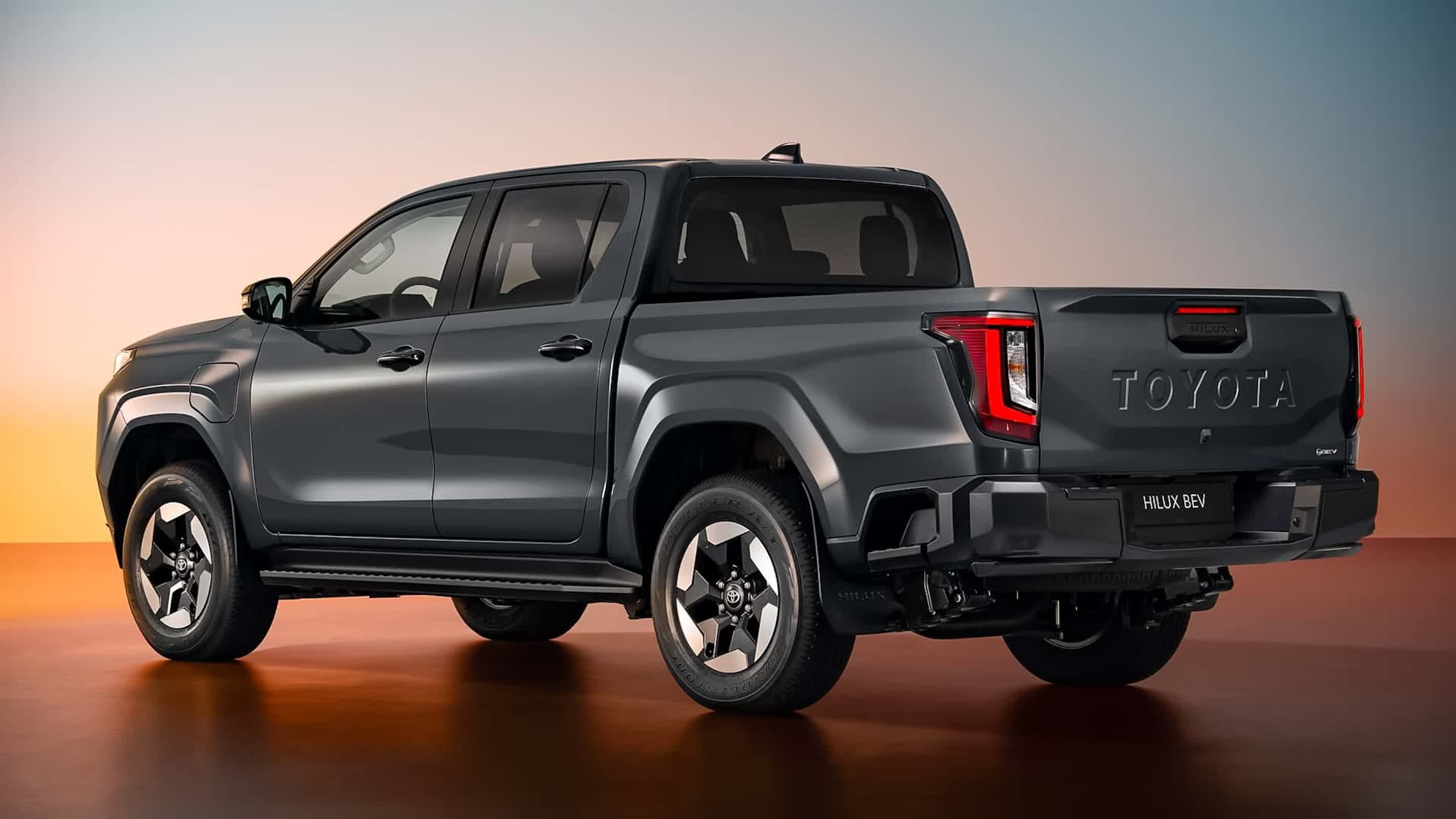
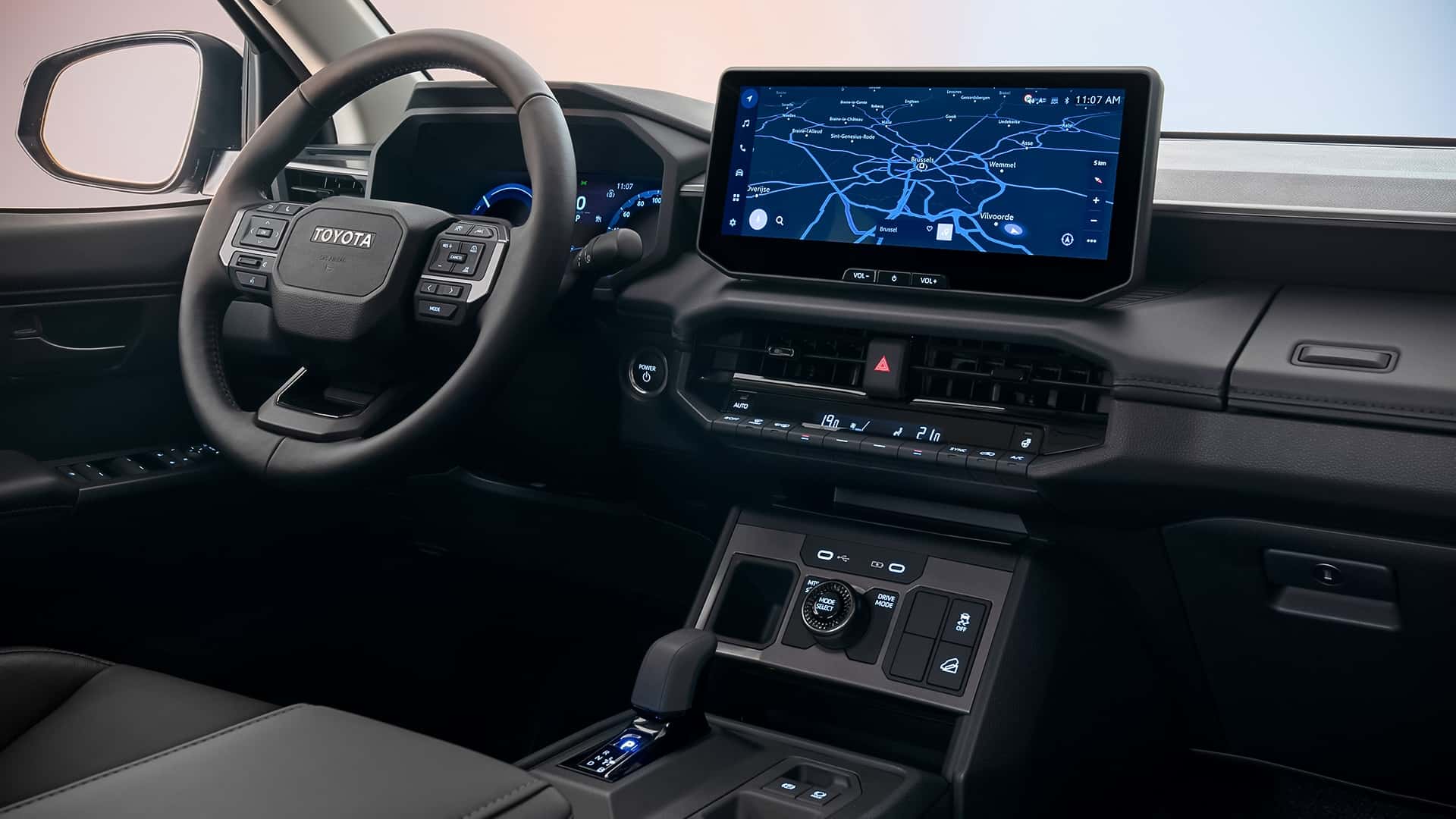
Design-wise, the new Hilux aligns closely with Toyota's global pickup language. Its exterior borrows cues from the latest Land Cruiser and Tacoma, resulting in a more muscular stance with redesigned lighting and grille elements. Inside, Toyota stays true to form, retaining physical controls while integrating dual 12.3-inch displays for instrumentation and infotainment.
Electric power steering replaces the previous hydraulic setup, reducing parasitic energy losses and allowing finer tuning for both on- and off-road handling. The infotainment system now supports over-the-air updates, a first for the Hilux and a sign of Toyota's growing focus on connected-vehicle platforms.
Beyond the electric variant, Toyota continues to offer a full range of propulsion options. Depending on the market, buyers can choose a 2.8-liter turbodiesel (with or without a mild-hybrid assist) or a 2.7-liter gasoline engine. By 2028, Toyota also plans to introduce a hydrogen fuel-cell Hilux, extending its investment in non-battery electrification as part of its multi-pathway carbon-reduction strategy.
The electric Hilux will launch in Europe this December, with other variants – including the mild-hybrid diesel – arriving in early 2026. The model is not expected to reach US showrooms, where the Tacoma continues to serve as Toyota's midsize pickup offering.