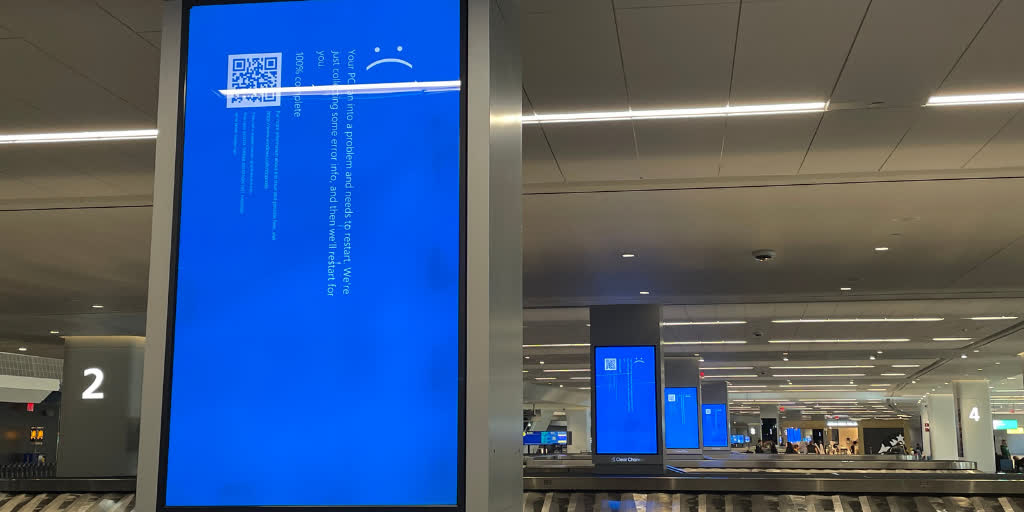
What just happened? The satisfying sight of a blue screen of death being displayed on a public screen will soon become an even rarer occurrence. Microsoft has announced a new "Digital Signage" mode, which ensures a BSOD will only be visible for 15 seconds.
Announced at the Ignite 2025 event, the new mode is designed for non-interactive displays used in public. When enabled by an administrator, it will ensure the public can laugh and take photos of public displays showing BSODs for just 15 seconds before the screens turn off.
Microsoft writes that the displays will remain blank until an administrator uses the affected devices' mouse or keyboard. The feature can be activated through the Windows Settings app or a registry key.
Most BSODs lead to PCs restarting themselves almost immediately anyway, so the feature is aimed at those cases where this doesn't happen and the alerts hang around. It also ensures any pop-up dialog boxes reporting errors – something else we occasionally see in public places – also vanish after 15 seconds.
The new mode is not related to Kiosk mode, which locks a PC into running only a specific app or a limited set of functions. Kiosk mode is used on the likes of airport check-in machines and self-checkouts, while Microsoft's new addition is for non-interactive signage.
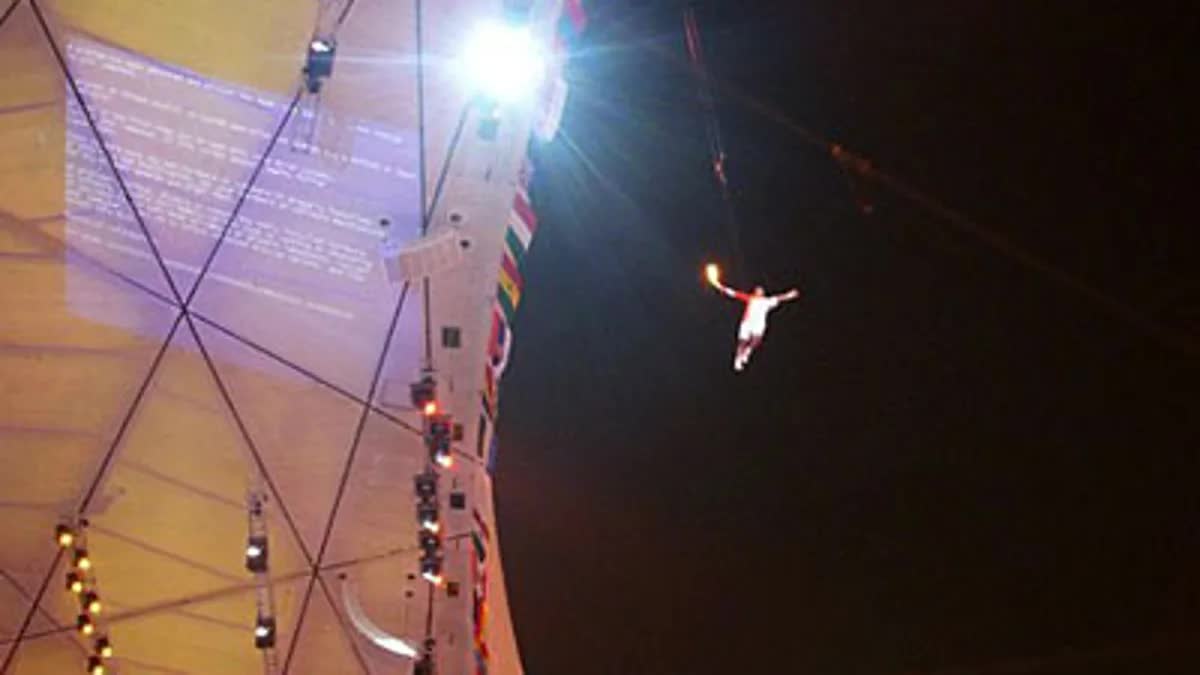
We've seen plenty of documented examples of BSODs appearing on public digital screens over the years. There was one memorable instance where the warning popped up on a projector screen during the 2008 Olympic opening ceremony in Beijing.
There were a lot of BSODs on public display in 2024 when the faulty CrowdStrike update caused a large-scale outage of Windows systems across the globe. Many machines experienced BSODs simultaneously, impacting banks, airlines, TV broadcasters, airports, and more.
In April, Microsoft revealed Quick Machine Recovery, which is designed to help IT teams restore unbootable Windows 11 devices remotely – rather than relying solely on local recovery tools. Microsoft cited the CrowdStrike incident as a reason for building the feature, when many PCs needed physical access or manual intervention to fix the issue.