US prosecutors charge Atlanta man after GrapheneOS phone wipes itself during airport search

Skye Jacobs

Posts: 2,168   +62
Staff
A hot potato: A federal case in Atlanta is raising questions about a privacy-focused mobile operating system, with prosecutors arguing that its features were used to erase evidence. The US Department of Justice is attempting to prosecute Atlanta resident Sam Tunick under a federal statute that makes it a crime to destroy property in an effort to prevent it from being seized.
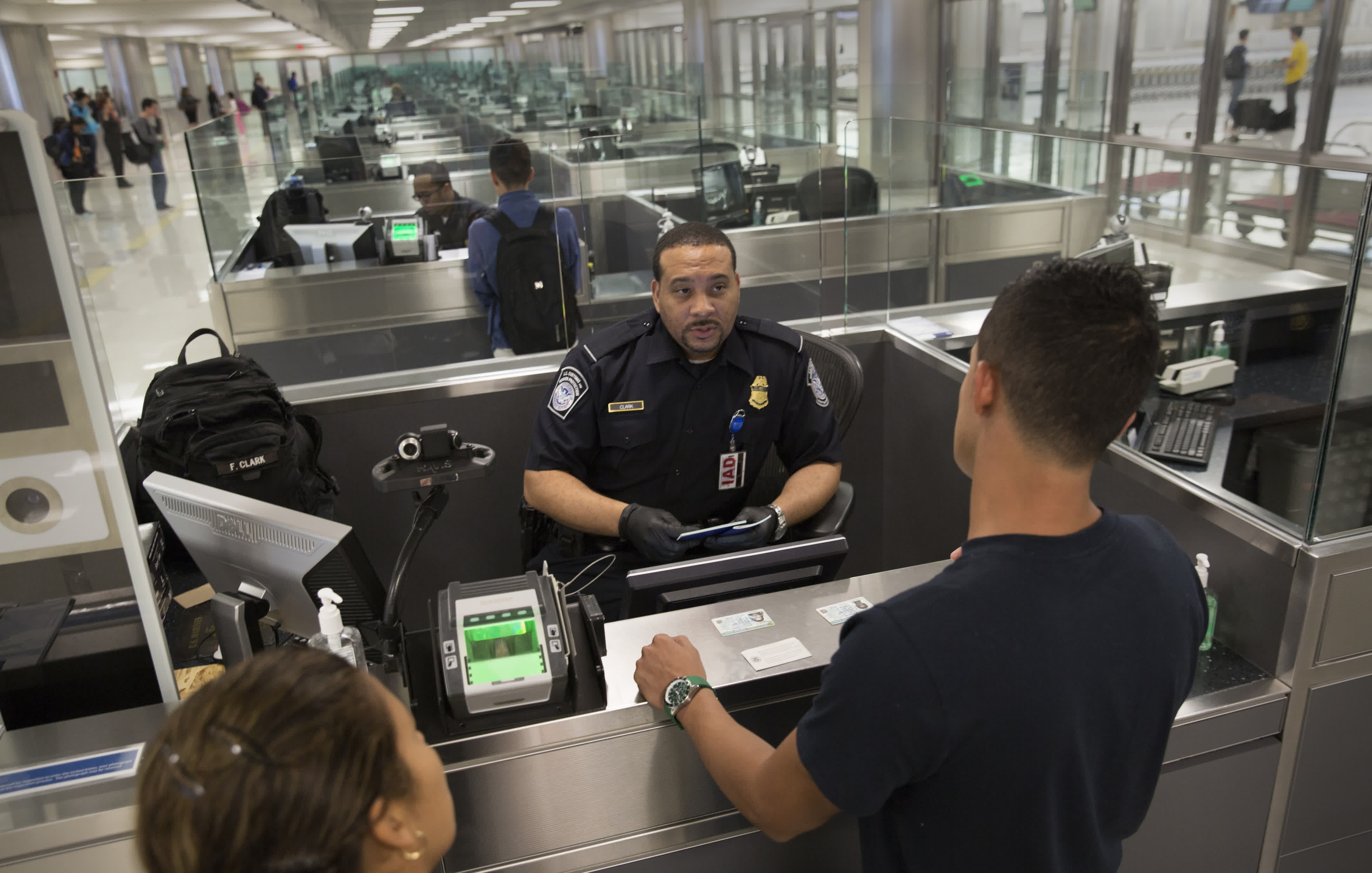
The case centers on Tunick's use of GrapheneOS, an open-source operating system that works on Google Pixel phones and lets users enter a passcode to wipe a device clean.

Experts said the legal approach is unusual and may be the first time the law has been aimed at an operating system. "It's concerning – and sends the message that [GrapheneOS] is criminal by default," said Christophe Boutry, a cybersecurity and surveillance expert. Boutry and Bill Buddington, senior staff technologist at the Electronic Frontier Foundation, both said they had not seen a similar case.

The incident began at Hartsfield-Jackson Atlanta International Airport on January 24 of last year. Tunick had just returned from a trip to the Dominican Republic when he was stopped for questioning. According to court testimony, federal agents had already circulated his name and photo internally, saying he was under investigation for "suspected terrorism activities" because of his alleged association with the movement against Cop City.
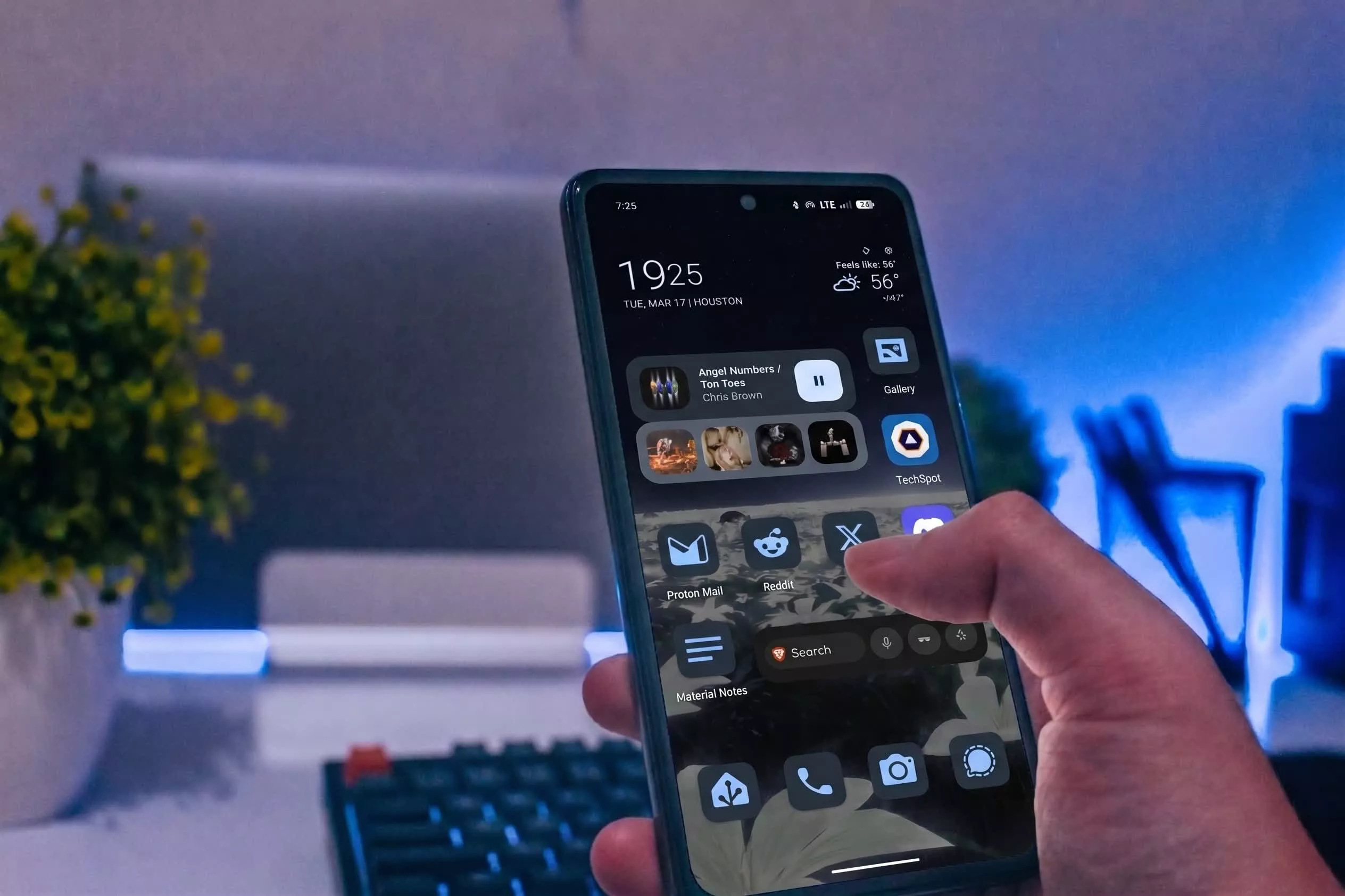
Tunick was taken to a secondary screening room, where multiple agents questioned him. A motion filed by his defense argues the interrogation focused on child sexual abuse material as a pretext for investigating his connections to the protest movement. The motion also states that Tunick asked four times to speak with a lawyer and was denied each time. According to the same filing, agents did not present a warrant or read him his rights.

Government attorneys and agents pushed back during Monday's hearing. They described the encounter as a routine airport inspection. Larry Findley, a Customs and Border Protection officer, said agents were "looking for anything that's prohibited."

During the questioning, agents repeatedly asked Tunick to unlock his phone and warned they would seize it if he refused. When he finally provided a passcode, the phone appeared to restart. The defense motion states that "the screen went blank, flashed several times, and the phone appeared to restart," resulting in the loss of data.

The wipe is now central to the case. Prosecutors are treating it as an intentional act to destroy evidence, while the defense argues that the search violated Tunick's constitutional rights and that the evidence should be suppressed.

The case raises questions about which constitutional rights apply at US borders, including international airports, where authorities have broader search powers. A judge is not expected to rule on the defense motion until at least late October.

GrapheneOS is designed to improve privacy and security on Pixel phones. Supporters say those tools are legitimate security protections, not evidence of criminal intent. Boutry pointed to France and Spain, where authorities have struggled to gain access to secured devices. He said authorities have treated the use of GrapheneOS itself as suspicious. In Catalonia, Spain, police have been profiling people carrying Pixel phones, assuming they have GrapheneOS installed and are drug dealers or gang members.

"The main goal [of the operating system] is protection of privacy," Boutry said. "They're our phones and the state can't tell us how to use them."

The case is tied to ongoing opposition to Cop City, a $109 million police training facility that opened last spring. The project has drawn opposition from activists concerned about police militarization and environmental impacts. Law enforcement officials have defended it as necessary for training and recruitment.

Previous attempts to prosecute protesters at the state level have foundered, while federal authorities have more recently stepped in, including a separate indictment announced last month.

Permalink to story:

 
How do they know there was evidence on it? That sounds like an assumption without proof.
Paraphrazing video games - if buying software is not owning it, erasing it is not a crime (of "destroying property to prevent from being seized")

Providing a self-destruct code disguised as an unlock passcode to federal agents is an overt act of sabotage, not a passive assertion of privacy. This deceptive action transitions a suspect from non-cooperation into criminal obstruction of justice by intentionally destroying property. A flat refusal to cooperate is legally defensible; active deception is not.

Title 18, United States Code, Section 2232 explicitly criminalizes the destruction or removal of property to prevent its seizure by federal authorities. The law focuses entirely on the intent to prevent seizure, meaning the act of causing the destruction during a lawful stop is the crime itself, regardless of what data was on the phone.

Treating this as anything less than intentional destruction would allow suspects to neutralize evidence mid-search without consequence, which completely undermines a lawful society. Nobody’s rights were trampled here; this suspect made his own bed.
 
Last edited:
Paraphrazing video games - if buying software is not owning it, erasing it is not a crime (of "destroying property to prevent from being seized")
Very poor logic. The crime wasn't "destruction of property" but destruction of evidence.

if he had something there, why do they expect to willingly provide compromising stuff...?
Because the mere fact of either his compliance or refusal itself tells them a great deal.

Sounds like authoritarian over reach to me. Why not just get a warrant to acquire his phone?
Because, if you've been following legal developments here over the last several decades as I have, you'd know that no warrant is required to search property crossing the border. Personally, I don't agree with that position, but it is established case law.
 
Providing a self-destruct code disguised as an unlock passcode to federal agents is an overt act of sabotage, not a passive assertion of privacy. This deceptive action transitions a suspect from non-cooperation into criminal obstruction of justice by intentionally destroying property. A flat refusal to cooperate is legally defensible; active deception is not.

Title 18, United States Code, Section 2232 explicitly criminalizes the destruction or removal of property to prevent its seizure by federal authorities. The law focuses entirely on the intent to prevent seizure, meaning the act of causing the destruction during a lawful stop is the crime itself, regardless of what data was on the phone.

Treating this as anything less than intentional destruction would allow suspects to neutralize evidence mid-search without consequence, which completely undermines a lawful society. Nobody’s rights were trampled here; this suspect made his own bed.
You are assuming this person was a suspect, which he was not. This was a routine border search as was stated, and I'm not seeing any signs of reasonable suspicion that would lead to anything beyond that. Civil authorities need a warrant to seize property, and anything less is unlawful overreach. The idea of policing borders is a recent one, and a significant change from the customs inspections established by Congress in 1789. It is most certainly an infringement on the freedom of movement and privacy rights of American citizens.
 
Last edited:
Sounds similar to flushing drugs down the toilet before cops can get to them.

And I could totally see radical tech nerds defending this guy simply because of GrapheneOS being involved. 😏
 
You are assuming this person was a suspect, which he was not. This was a routine border search
You are assuming that a person must "be a suspect" in order to undergo a border search. By your logic, a person transporting drugs could destroy them during a border inspection, and face no penalty whatsoever.

"The U.S. Supreme Court allows routine warrantless and suspicionless searches at physical borders, international airports, and functional equivalents to protect national security and control imports...."
 
Everyone is the missing bigger picture here: GrapheneOS is merely the scapegoat here. The real culprit is the association of protesting this "Cop City" with criminal activity. It sounds to me like we're moving closer and closer to totalitarianism. Police basically took land from people in Atlanta and now trying to make it seem being against the matter makes you a criminal―independent of the "why". This is going to incentivize more people to use GrapheneOS, not less. I mean, what are the police going to? Start associating everyone who is not part of the police force with criminal activity and act like they're besieged on all signs by "scum and villainy"? You do that indiscriminately and you're gonna find out real quickly why we have decorum and rules of engagement. Is this a city or an open-air prison?

As for the article at hand, all I get from this case study is that "snitches get stitches" and GrapheneOS (unlike Android and iOS) ain't no snitch.
 
You are assuming this person was a suspect, which he was not. This was a routine border search as was stated, and I'm not seeing any signs of reasonable suspicion that would lead to anything beyond that. Civil authorities need a warrant to seize property, and anything less is unlawful overreach. The idea of policing borders is a recent one, and a significant change from the customs inspections established by Congress in 1789. It is most certainly an infringement on the freedom of movement and privacy rights of American citizens.

Incorrect, sir. You are conflating the right to remain silent (or refuse a passcode) with the right to actively deceive. Providing a false passcode that triggers data destruction is an overt, deceptive act

Although your historical observation regarding 1789 customs inspections is accurate, your constitutional conclusion is, in fact, legally incorrect.

The First Congress that drafted the Fourth Amendment also passed the Act of July 31, 1789, which authorized warrantless border searches of vessels. This is proof that our founders, in fact, always intended our border to be exempt from standard warrant requirements. As they should be.

Under the modern "border search exception" affirmed by the U.S. Supreme Court in United States v. Flores-Montano (2004), the government’s paramount interest in national security absolutely overrides individual privacy at the border, and allows routine searches without a warrant, probable cause, or any individualized suspicion whatsoever.

The traveler’s status as a non-suspect is legally irrelevant to the lawfulness of the stop.

While a traveler does have a right to passive non-cooperation, providing a deceptive passcode to trigger a self-destruct mechanism transitions the encounter from routine inspection to an active, criminal obstruction of justice under 18 U.S.C. § 2232.

You are conflating a right to privacy with a non-existent right to actively destroy evidence during a lawful federal inspection.
 
Wow, some legal jujitsu going on in here.

Laws are made up bullshit. They have no grounding in nature. They can be just, they can be unjust, they can be whatever.

Either this guy should be denied entry on the basis of what he has done, or he should be allowed through. Going on a fishing expedition to find cause is bullshit regardless of its legality.

 
Providing a self-destruct code disguised as an unlock passcode to federal agents is an overt act of sabotage, not a passive assertion of privacy. This deceptive action transitions a suspect from non-cooperation into criminal obstruction of justice by intentionally destroying property. A flat refusal to cooperate is legally defensible; active deception is not.

Title 18, United States Code, Section 2232 explicitly criminalizes the destruction or removal of property to prevent its seizure by federal authorities. The law focuses entirely on the intent to prevent seizure, meaning the act of causing the destruction during a lawful stop is the crime itself, regardless of what data was on the phone.

Treating this as anything less than intentional destruction would allow suspects to neutralize evidence mid-search without consequence, which completely undermines a lawful society. Nobody’s rights were trampled here; this suspect made his own bed.
Nope, for destruction of evidence to be charged there needs to be proof that there was evidence to destroy. I have nothing to hide but I'd wipe my phone before I let these jackboots search it without a warrant signed by a judge, as the constitution demands.
 
I like being kept safe. And if there was a bona fide reason to suspect terrorism, or child abuse smuggling, then by all means take possession of legitimate evidence using a warrant and search it carefully using qualified personnel and documented procedures as part of preparing a real criminal case you intend to prosecute.

But what we have here sounds closer to letting near random, not particularly trustworthy nor qualified rent-a-cops amuse themselves by rummaging through phones for nudes under flimsy pretexts, and possibly far from the ideals our country was founded on.

A crime I am getting increasingly more interested in investigating and prosecuting is a repeated pattern of falsified investigation pretext at either the individual or larger organizational level.
 
Back