Something to look forward to: LG Display and Samsung Display are using CES to assure people that the old complaint of OLED TVs being too dim won't be a problem with their latest panels. Both tech giants have unveiled all-new OLED panels able to reach a peak brightness of 4,500 nits, though there are caveats.
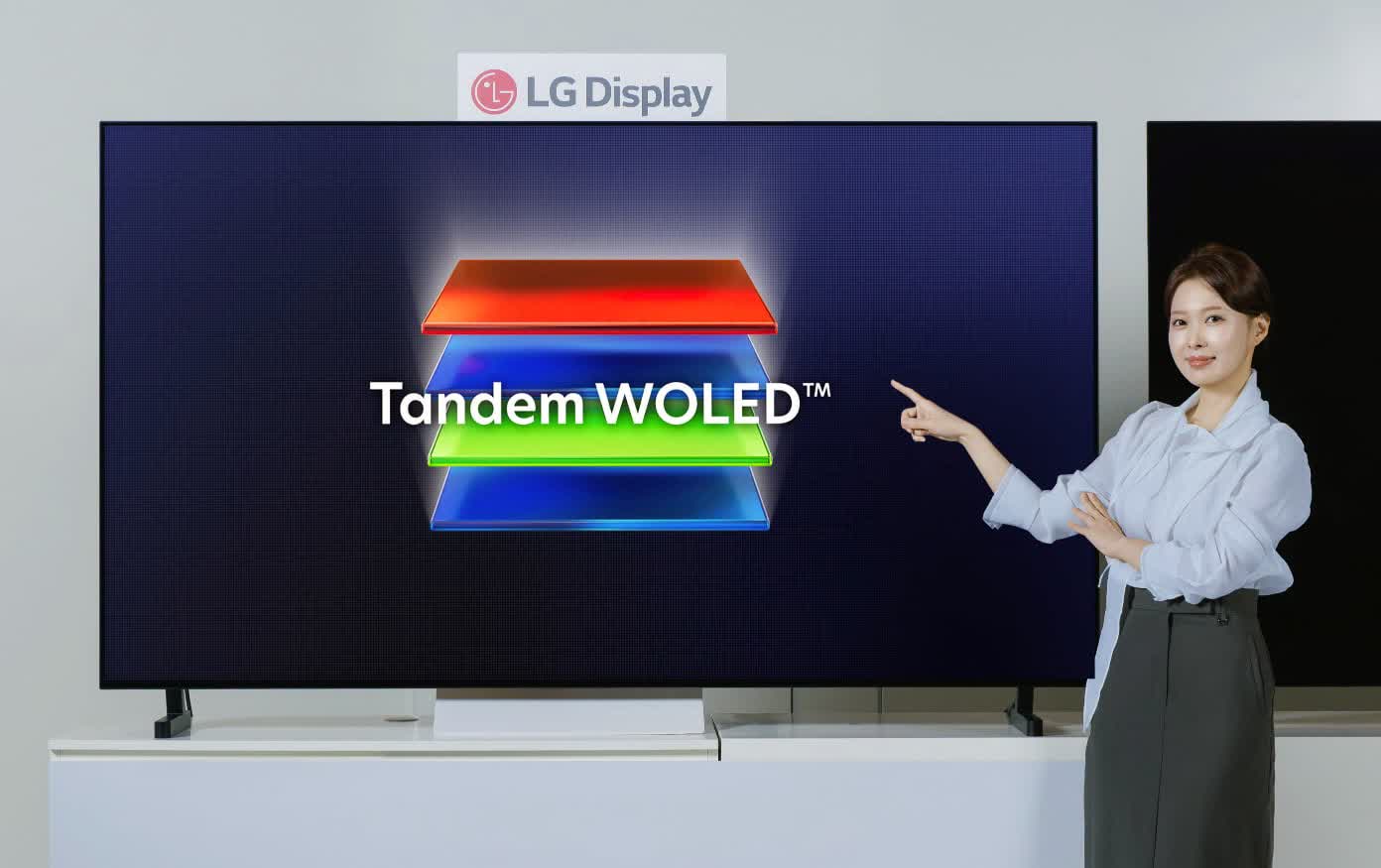
LG Display has just unveiled its new Tandem WOLED panel at CES. Not only can it reach a peak brightness of 4,500 nits, but it also has fewer reflections through the use of light-absorption and diffusion technology, according to the Korean firm. LG Display said the panels deliver the lowest reflection rate among existing displays of just 0.3 percent.
The panel features LG's Primary RGB Tandem 2.0. This is an advanced version of LG Display's proprietary Primary RGB Tandem technology, which generates light by stacking the three primary red, green, and blue color elements in independent layers. LG said it has utilized an even more refined pixel structure and advanced algorithms to maximize light efficiency in this latest version.
The original Primary RGB Tandem WOLED panels are used in monitors such as the Asus 720Hz ROG Swift PG27AQWP-W and LG's upcoming 5K Ultragear evo OLED and Mini LED displays.
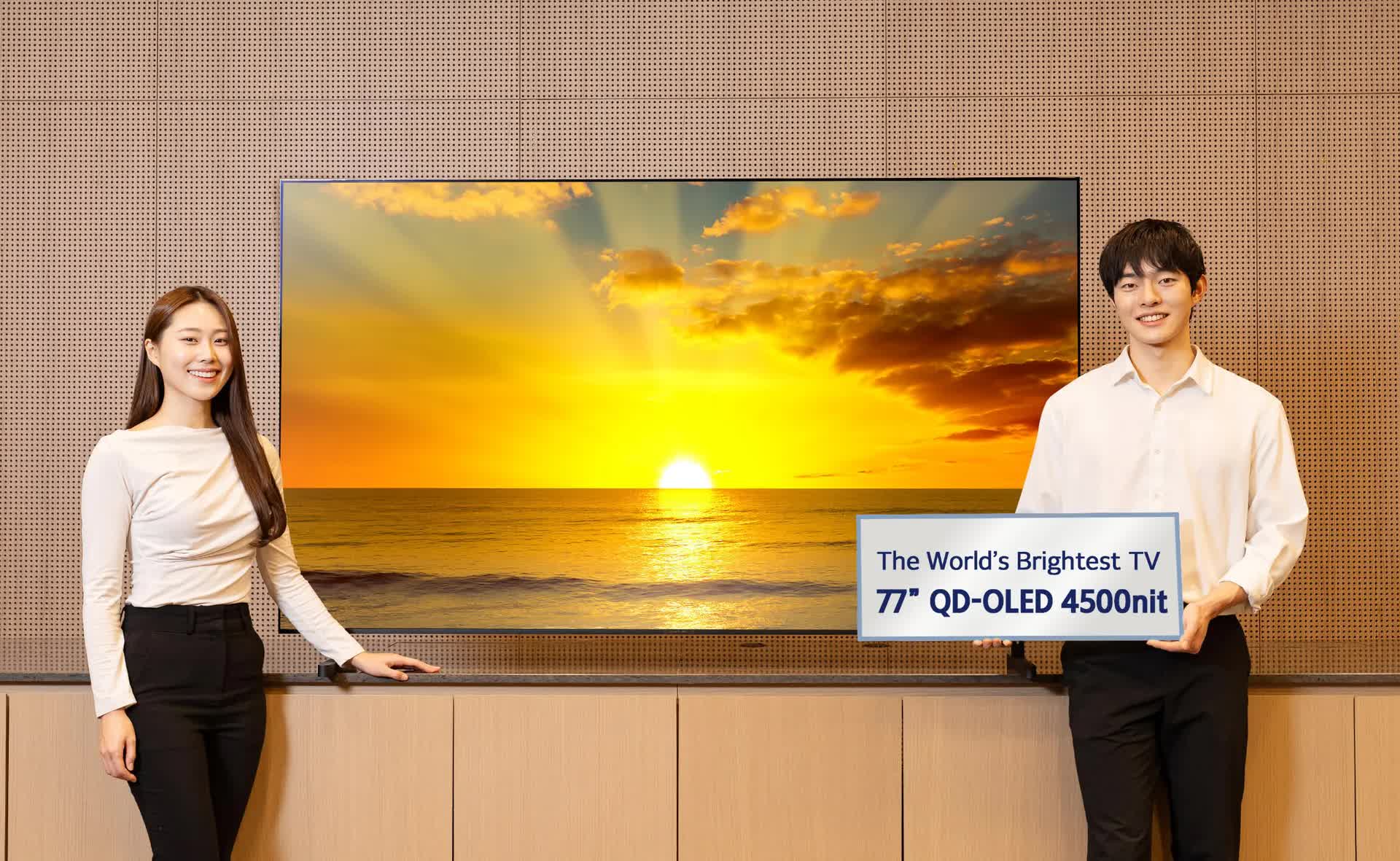
LG Display's announcement came a few days after Samsung Display talked about its 2026 QD-OLED panels that feature newly optimized organic materials and support a peak brightness of 4,500 nits.
Samsung Display said the QD-OLED achieves its peak luminance by combining the maximum brightness of each RGB component.
Those are certainly impressive peak brightness levels, but you might want to temper your expectations a bit if you buy a 2026 OLED television that uses them.
As pointed out by FlatPanelsHD, Samsung Display boasted about its 2025 QD-OLED at CES last year, claiming it could hit 4,000 nits. But the publication found that the Samsung S95F and Sony Bravia 8 II models that use the panels measured 2,069 and 1,689 nits peak brightness (1% window), respectively.
LG Display, meanwhile, said its 2025 Tandem WOLED panel could also hit 4,000 nits peak brightness, but FlatPanelsHD measured 2,213 nits peak brightness on the LG G5.
Based on the last-gen OLED panels' testing, the companies' 4,500-nit claims might result in TVs that could approach 2,500 nits, which is still very bright, especially for an OLED. As for the sizes, it's rumored that Samsung's new panels will reach a maximum of 77 inches, while LG's largest will be 83 inches.