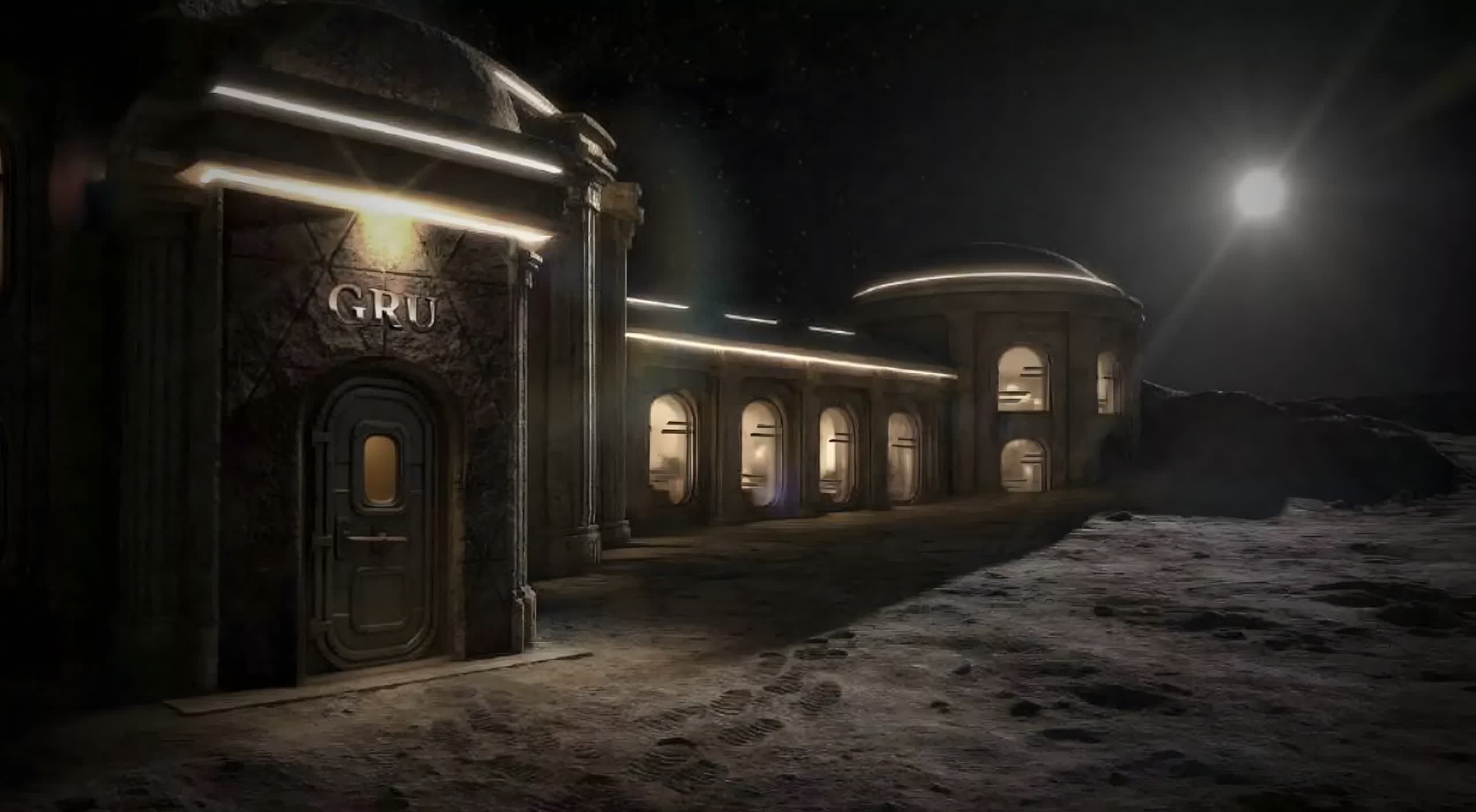
Looking ahead: In a move that blends early-stage startup ambition with deep-space engineering, GRU Space has outlined a plan to construct a series of lunar habitats – ending with a hotel modeled on San Francisco's Palace of Fine Arts. The company, founded by University of California, Berkeley, graduate Skyler Chan, opened reservations this week for would-be lunar tourists, asking for refundable deposits ranging from $250,000 to $1 million.
While the six-year timeline for its first missions may sound improbable, GRU Space has already secured seed funding from Y Combinator and is slated to enter the accelerator's three-month program this year. The company's name – short for Galactic Resource Utilization – reflects its broader goal: to harness local materials on the Moon, Mars, and asteroids to support human expansion beyond Earth.
GRU Space's near-term focus is on proving that vision with small-scale technical demonstrations. Its first mission, targeted for 2029, involves flying a 10-kilogram payload aboard a commercial lunar lander. The payload will test a lightweight inflatable structure and a process that turns lunar regolith into construction material, or "Moon bricks," through geopolymer chemistry.
This low-temperature method relies on mineral-based binders, allowing dust and rock from the Moon's surface to be transformed into usable building elements without water or high-energy input.
A follow-up mission will expand that concept by deploying a larger inflatable structure into a natural lunar pit – potentially a skylight formed by ancient lava tubes – to evaluate scaled resource development and structural systems under real lunar conditions.
GRU Space's first full-scale habitat is planned for 2032. Designed to host up to four visitors at a time, this early version will also be inflatable, while subsequent models will incorporate regolith-derived masonry to provide greater radiation protection and visual permanence.

Chan's background includes both practical engineering and aspirational design. Before launching GRU Space, he interned at Tesla and helped develop a NASA-funded 3D printer that operated in orbit. Those experiences, he says, led to a key insight: nearly all current lunar activity depends on governments or billionaire-funded missions. GRU Space aims to create a third pillar – commercial demand driven by tourism.
The company's business model assumes that transportation will be handled by larger aerospace firms such as SpaceX, whose Starship could eventually ferry visitors to lunar orbit or the surface. GRU Space's focus is the destination itself. "SpaceX is building the FedEx to get us there," Chan told Ars Technica. "But there has to be somewhere worth staying."
If successful, GRU Space's habitats would mark a shift in focus for commercial space efforts – from transportation and exploration toward habitation and experience. The scale of the challenge, however, is immense. At present, the company employs just one full-time engineer aside from its founder, and its roadmap depends heavily on advances in robotic assembly, closed-loop life support, and long-duration materials engineering.
Still, for a generation of space entrepreneurs raised on reusable rockets and private orbital missions, the idea of a hotel on the Moon no longer feels completely out of reach. GRU Space's plans might read like science fiction today, but its early missions will test whether the first true off-world buildings can move from renders to regolith.