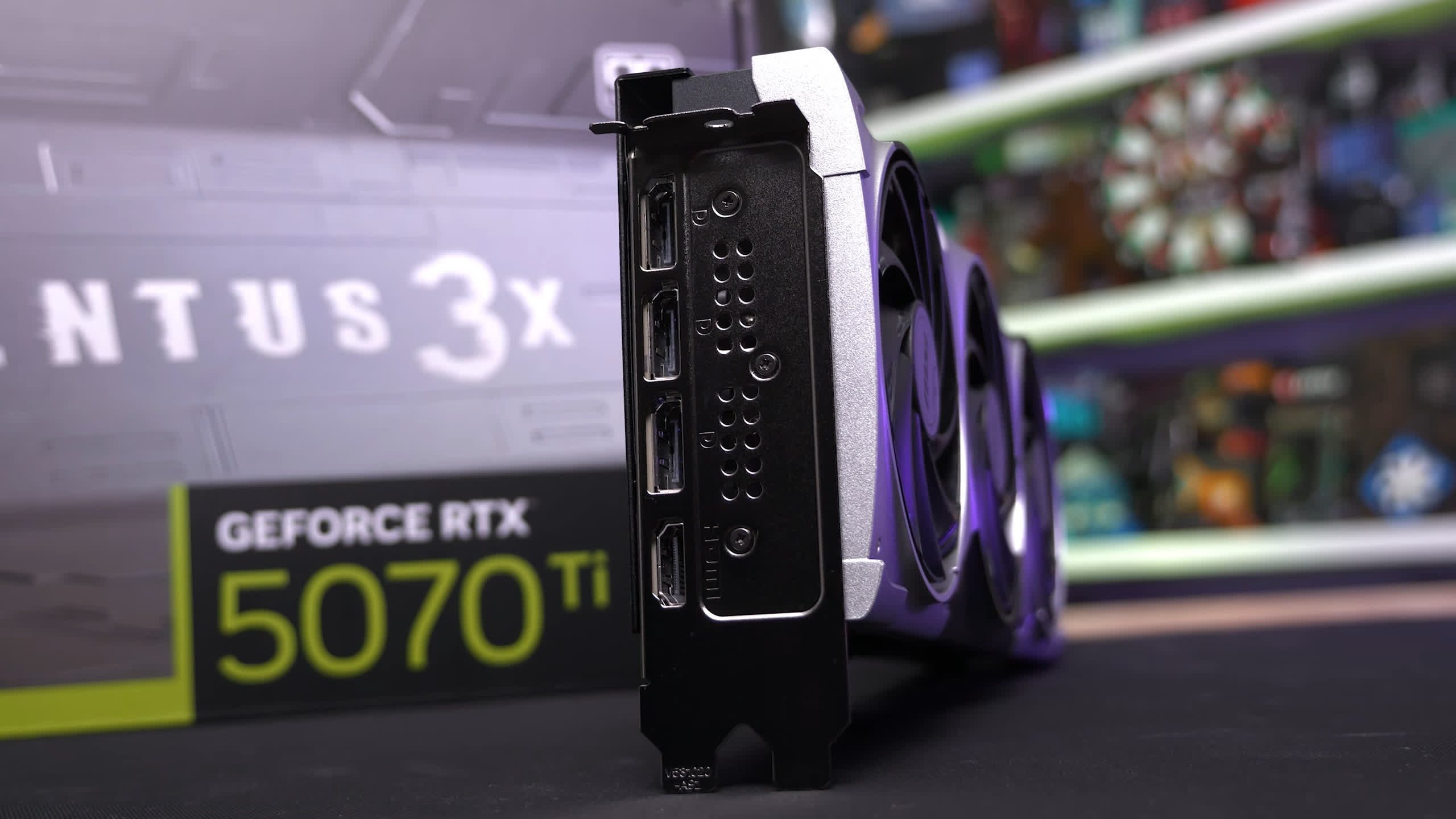
A hot potato: The RTX 5070 Ti is end of life, the RTX 5060 Ti 16GB is almost done as well, and things are looking pretty bleak across the graphics card market. Since returning from CES, we've had a few chats with board manufacturers and retailers to gauge the GPU situation, and here's what we've found out.
The headline story is that Nvidia has essentially killed off the GeForce RTX 5070 Ti from the market. Asus, the largest Nvidia AIB partner, explicitly told us this model is currently facing a supply shortage and, as a result, has been placed into end of life status. This means Asus has no plans to produce any more 5070 Ti models from this point forward. What is currently on store shelves is it from them – there will be no further production of this card. Their GPU division is shifting focus toward other models they expect will continue to receive supply.
Update (Jan 16), Schrödinger's GPU: Since posting this story, we've received two clarifying statements from Asus, explaining in their own words that they will continue to support the GeForce RTX 5070 Ti and RTX 5060 Ti 16 GB and are working closely with partners to "stabilize supply" as conditions improve. In our opinion, the facts have not really changed. The RTX 5070 Ti is heavily supply constrained to the point of being effectively killed, but we'll see whether that's truly the case across the next few months. Ultimately, the proof will be in the supply. See the full update details at the bottom of this post.
This also aligns with what we've heard from local retailers in Australia. Based on our discussions, we've learned that it is effectively no longer possible to purchase 5070 Ti stock from partners and distributors. While retailers haven't been explicitly told that this card is end of life, there is simply no supply anymore, and they expect this situation to continue throughout the first quarter of the year at the very least.
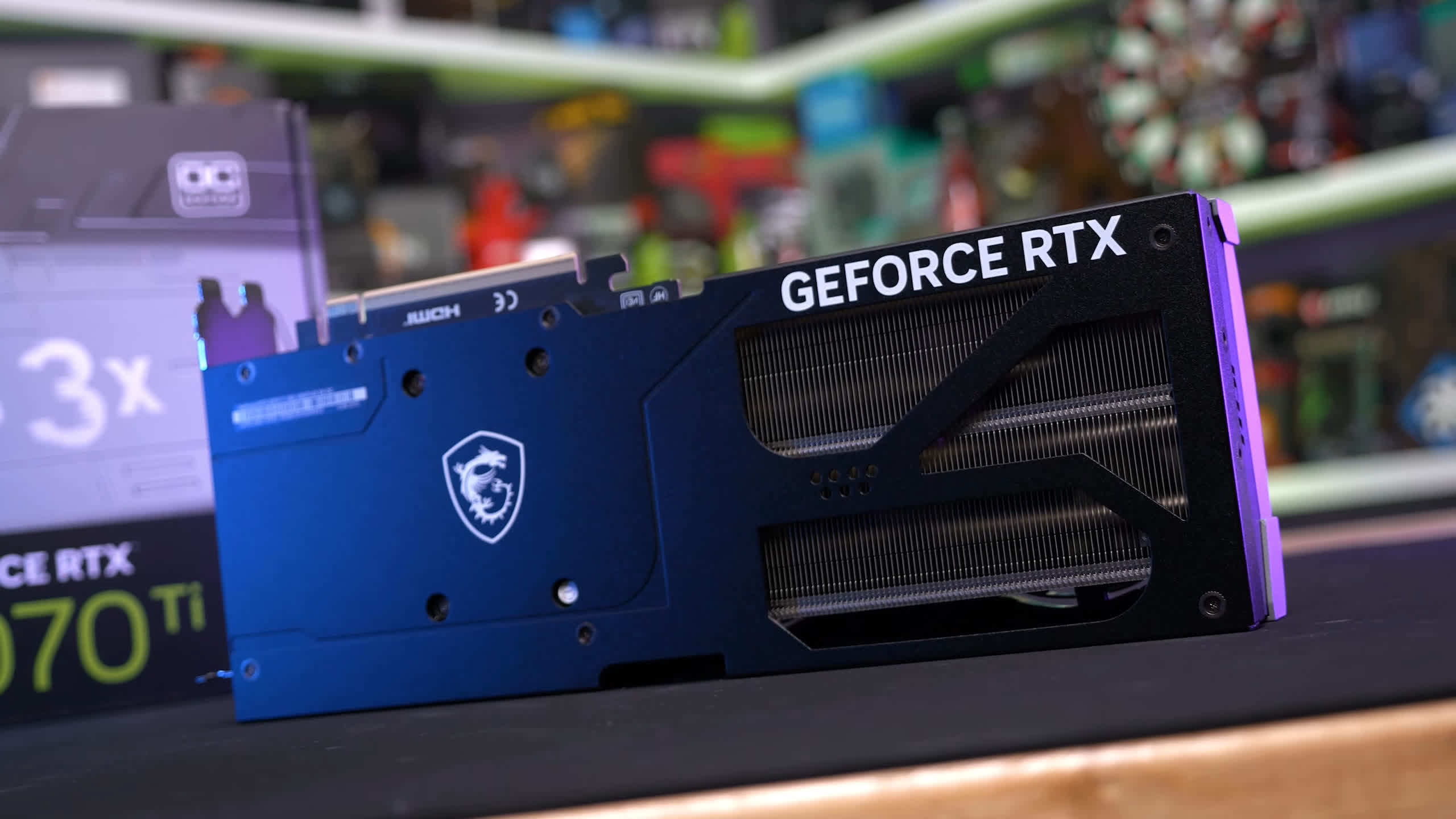
We've been hearing rumors of this for a while and have seen various reports from places like Board Channels suggesting this would happen, but this is the first time it has been confirmed to us directly by an AIB.
The original reason we reached out to every OEM was to gather supply for an RTX 5070 Ti round-up that we were planning. Since the RTX 50 Super series has been delayed, or potentially even cancelled, we felt it would be a good idea to update you on which 5070 Ti was the best option in the meantime. However, none of the board makers had supply to participate in the round-up, and Asus specified the reason for this: the card's end of life status. This has a number of ramifications, and we're hearing it's not just the 5070 Ti that's affected, so let's explore that.
The RTX 5060 Ti 16GB is also gone
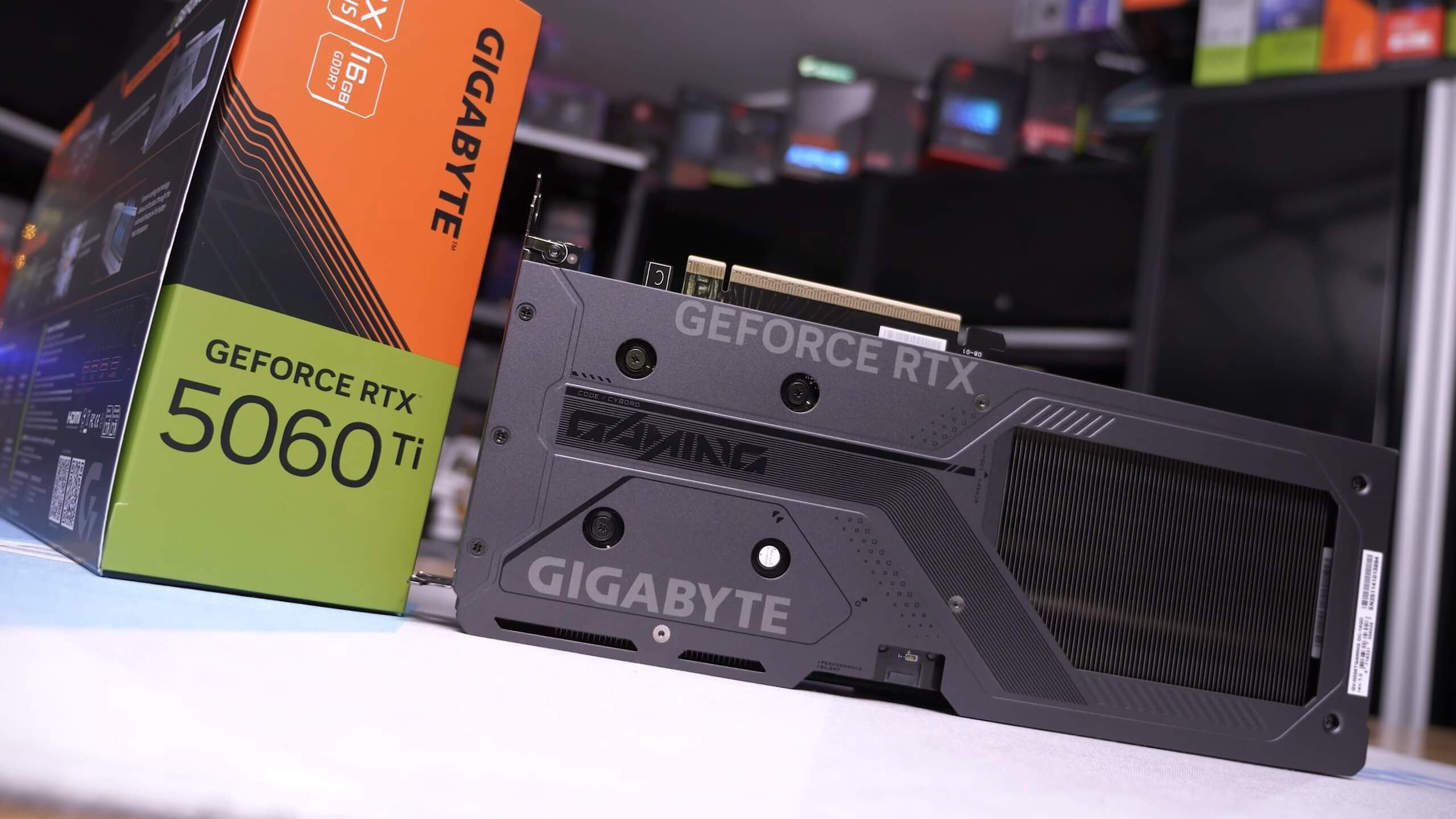
We've also confirmed that RTX 5060 Ti 16GB supply has been significantly reduced to the point of being effectively discontinued. Asus told us this model is also end of life and will not be produced moving forward. Retailers can no longer easily purchase this GPU in the 16GB configuration, either from Asus or other brands. As with the 5070 Ti, this is expected to remain the case for at least the rest of Q1, if not longer – in fact, based on what Asus is saying, it's more likely these models will not return at all.
The only Nvidia models currently available for retailers to purchase in reasonable quantities are the 8GB cards, particularly the RTX 5060 and RTX 5060 Ti 8GB. These models are not end of life and will persist in the market for a while, as they appear to be the only versions still receiving GPU supply. Based on what we've heard, we can confirm that a recent report from Board Channels is accurate.
The RTX 5070 is being caught in the crossfire to some degree, with reduced supply according to retailers, but it hasn't yet reached the same status as the RTX 5070 Ti or RTX 5060 Ti 16GB, which are essentially non-existent. With 12GB of VRAM compared to 16GB on those other cards, the 5070 is slightly more resilient and may retain limited availability, but it is not being prioritized in the same way as the RTX 5060.
Pricing implications
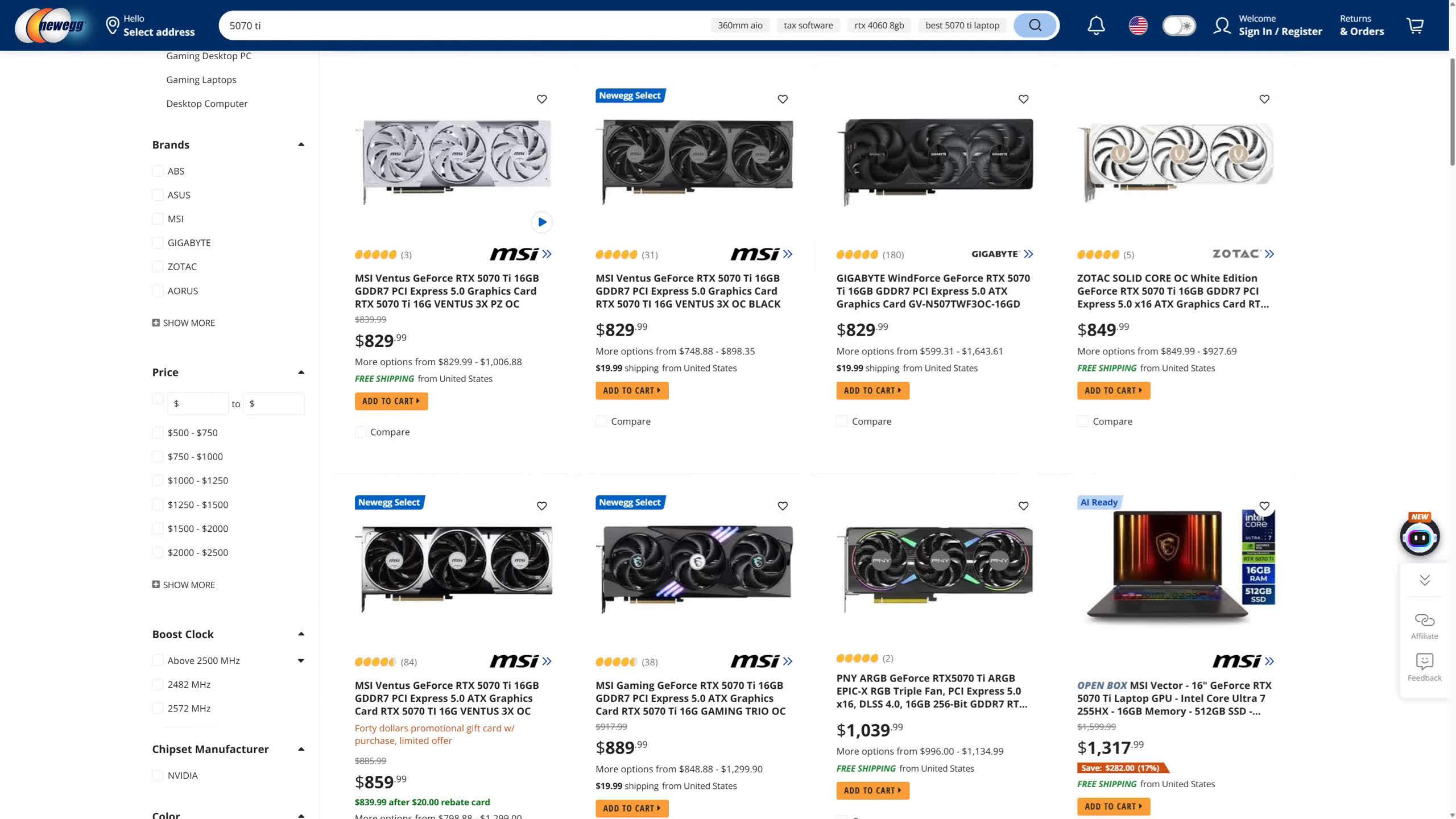
These supply changes and end of life decisions are already impacting GPU prices. The RTX 5070 Ti has risen from $730 in November for the cheapest models to $830 today, with only a couple of models available from MSI and Gigabyte at that price. Asus models are not listed on Newegg at all, at least for cards sold directly by Newegg.
In Australia, RTX 5070 Ti pricing has climbed from $1,200 AUD in November to around $1,400 AUD today, and this is expected to increase further in the coming months. One retailer told us that for cards they can actually purchase, the cost increase is looking "seriously gross," which doesn't bode well for buyers.
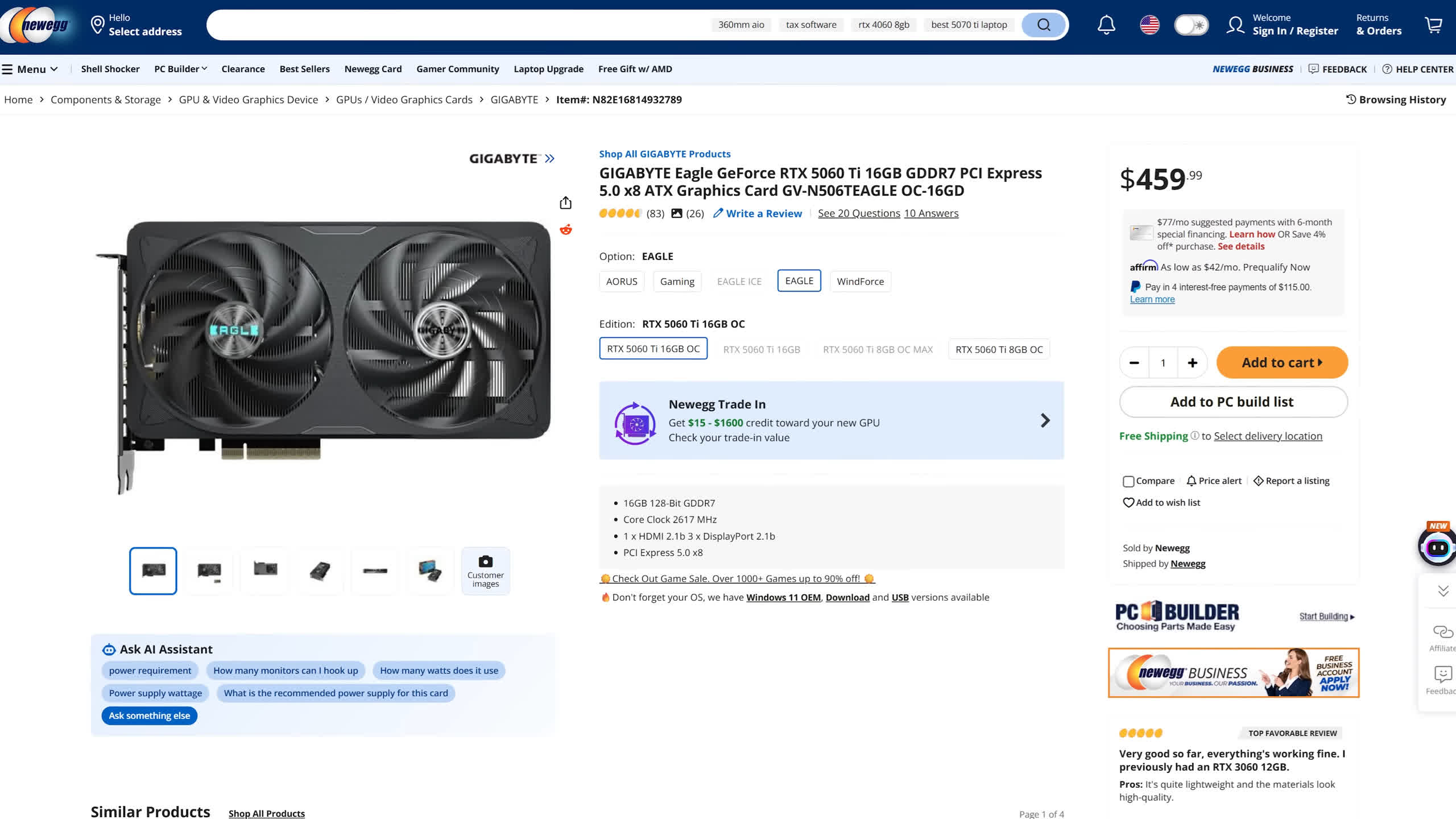
The RTX 5060 Ti 16GB has risen from $400 in November to around $460 today, which is only $30 above its MSRP. However, prices are expected to rise further, with several base models already listed at $530 or more, including the Asus Prime. In Australia, this model has increased in price slightly, but the cheapest units are starting to go out of stock, and we're being told they will not be restocked at current prices.
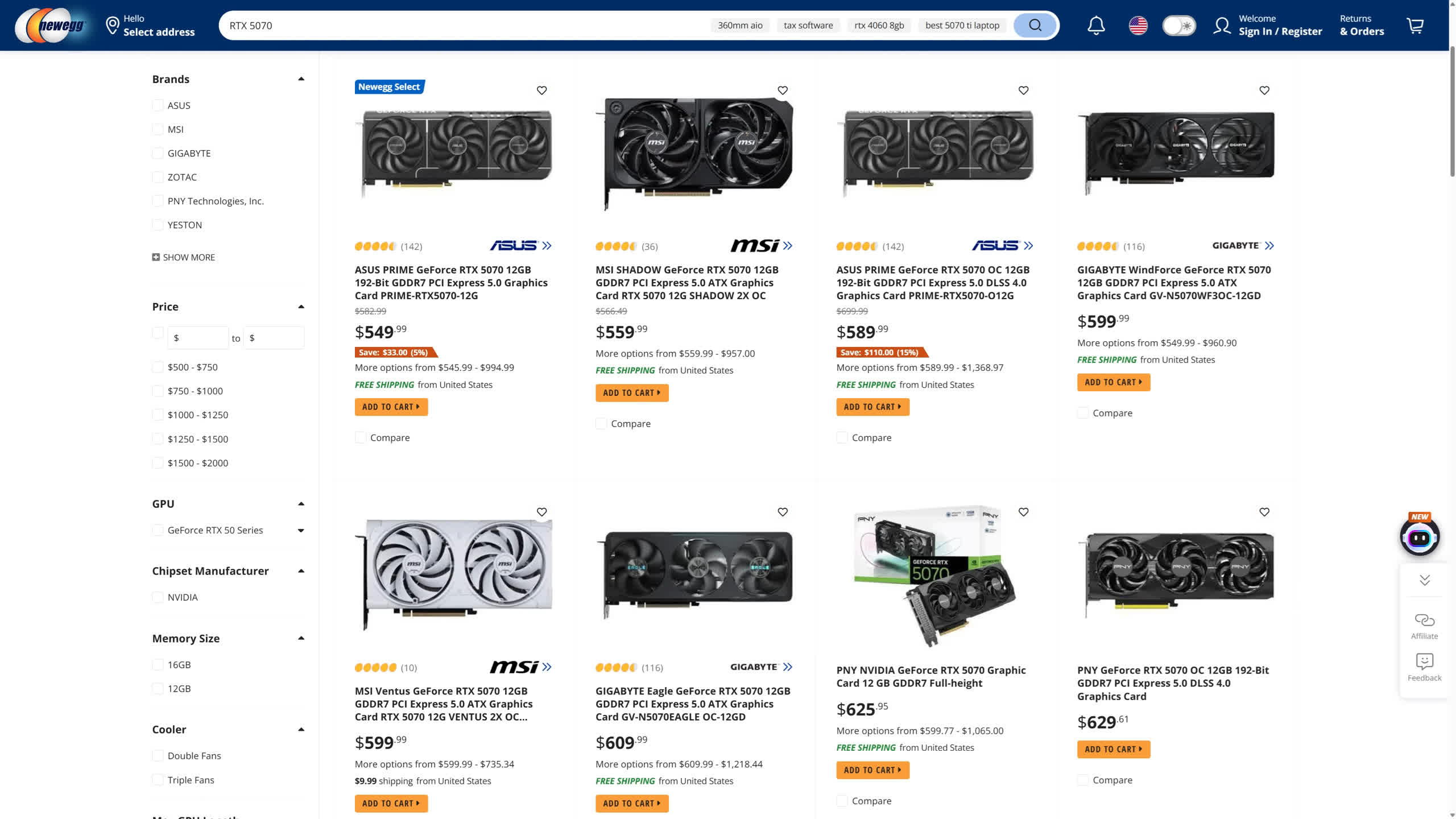
The RTX 5070 is still available for now at $550, but the number of MSRP-priced cards has dropped significantly.
The RTX 5070 is still available for now at $550, but the number of MSRP-priced cards has dropped significantly. Only two models are available close to $550, with most coming in at $600 or higher. You can forget about getting a 5070 for $500 or less like we saw during Black Friday last year, those days are over. In Australia, we've been told current resupplies for this model are around 20% more expensive than they were in the fourth quarter of 2025, and this will be reflected in retail pricing once existing stock sells through.
Meanwhile, based on our conversations with people in the GPU industry, the 8GB cards are less affected for now. The RTX 5060 is readily available for $300, unchanged from November 2025. In Australia, these cards are as cheap as $510 AUD, which is roughly in line with last year. The RTX 5060 Ti 8GB has started to climb and is currently available for $370, up from its $350 MSRP, but that's nowhere near as bad as the current 5070 Ti situation. We expect this card to remain available, though not necessarily at today's prices.
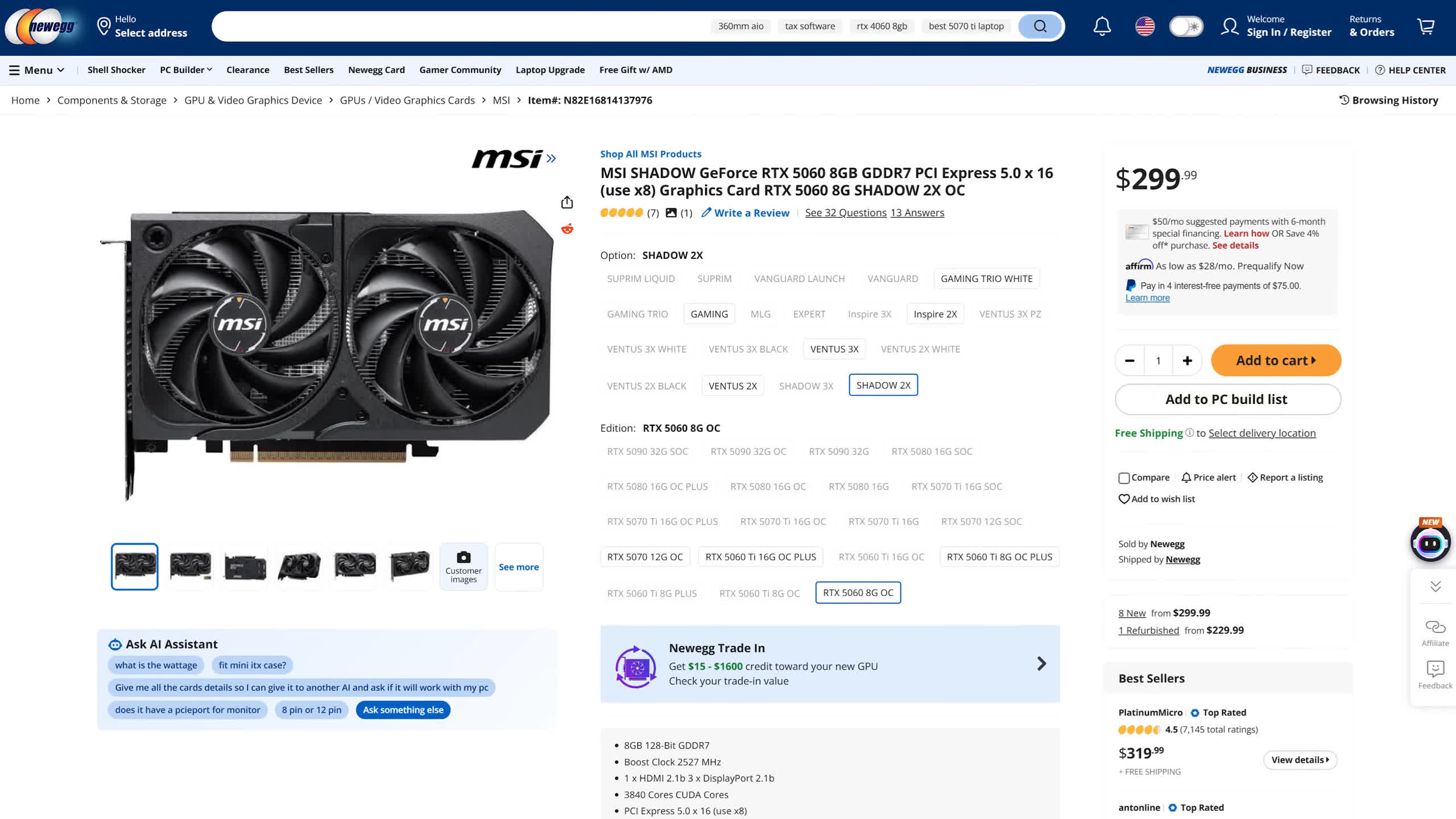
That said, this is partly due to existing supply that was purchased before GPU price increases took effect. Retailers are also expecting around a 20% price increase for RTX 5060 models in the near future, which is a similar percentage increase to higher-tier models, but a smaller overall dollar increase due to their lower MSRP and reduced VRAM.
Let's not even talk about pricing for the RTX 5080 and 5090, which is disgusting at the moment. This isn't simply a case of the RTX 5070 Ti being discontinued to make way for more RTX 5080s – after all, both cards have 16GB of GDDR7 and use the same GB203 GPU die. Instead, the RTX 5080 is also extremely expensive, and resupplies are looking even worse from a pricing perspective.
What about Radeon?
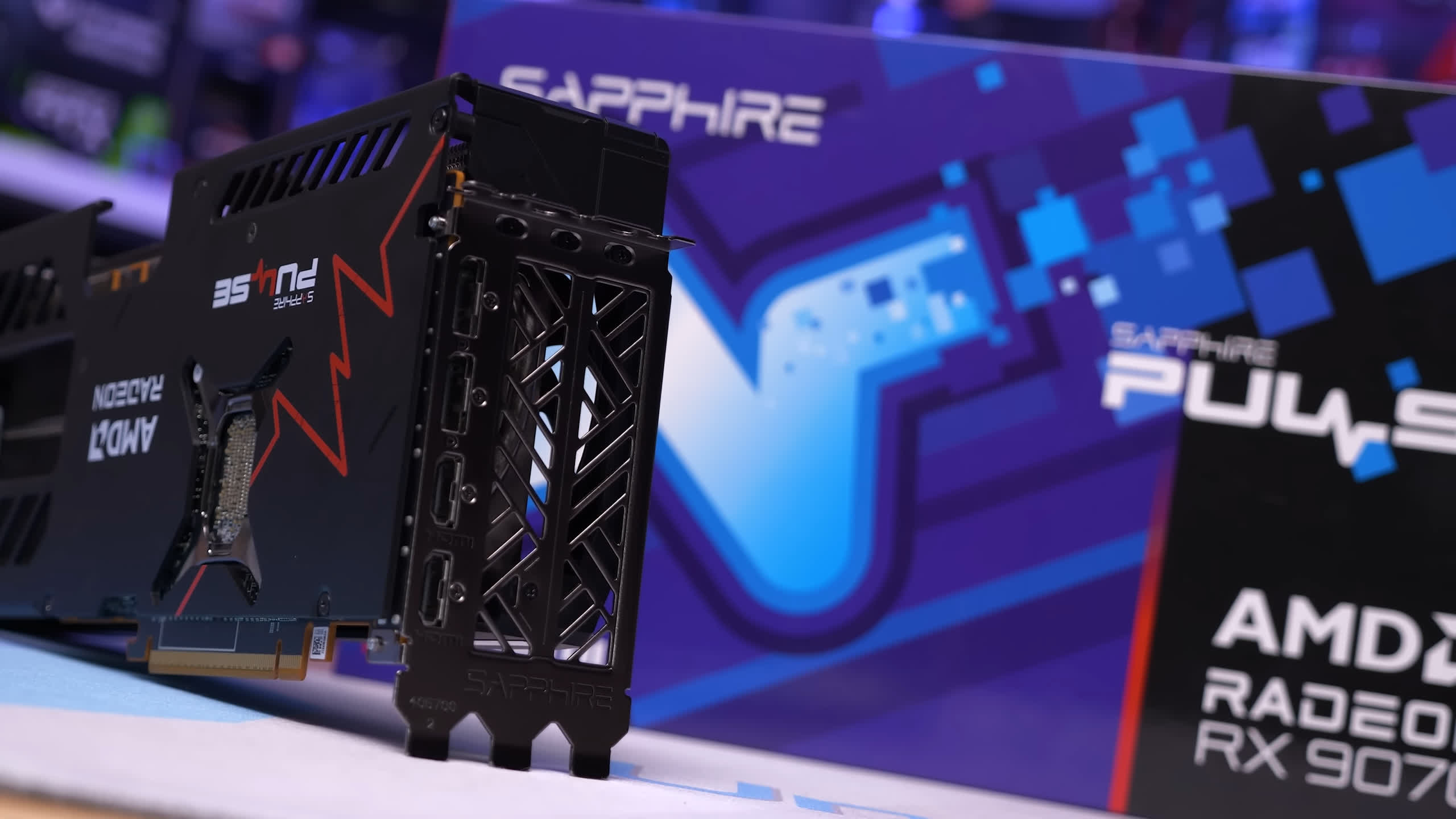
While we've mainly been talking about GeForce cards, Radeon models are also being affected, though not in quite the same way. As far as we're aware, no AMD RDNA 4 models are currently discontinued or hitting end of life status, so there's a strong chance the Radeon 9070 XT could end up with an effective monopoly against a non-existent or discontinued RTX 5070 Ti.
However, prices for that model are already rising and will continue to do so due to VRAM cost increases. The RX 9070 XT was selling for around $600 in November on Newegg, and is now up to a minimum of $700 today, if not closer to $730 or $740.
Back in November, the RX 9070 XT was about 18% cheaper than the RTX 5070 Ti at retail. Today, it's roughly 16% cheaper, with both models having risen substantially in price. This gap could change if the RTX 5070 Ti disappears entirely, which would likely cause its price to skyrocket as supply evaporates, but the RX 9070 XT simply won't be $600 again. That price was very short-lived, and anyone who bought one at that level got lucky.
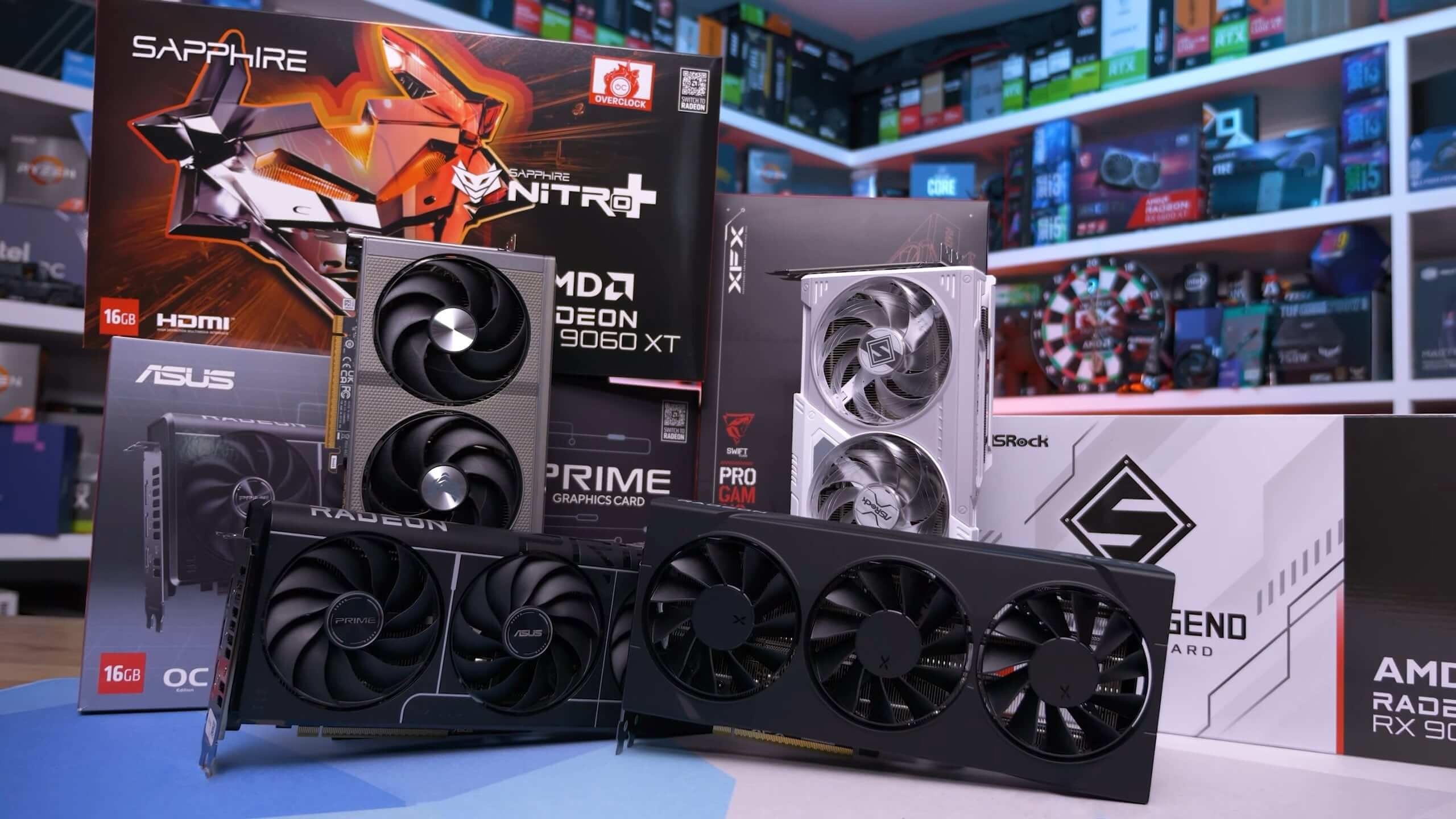
Across the rest of AMD's lineup, we're seeing the RX 9070 priced between $580 and $600, up roughly $50 from late 2025 pricing. This model hasn't been hit as hard by VRAM price increases yet, but over time we expect a similar trend to the RX 9070 XT. The RX 9060 XT 16GB is also up $50 from November, now sitting at $400. Interestingly, the 8GB version has also increased by $50 despite having half the memory, making these models worth tracking over the coming months.
If the RTX 5070 Ti and RTX 5060 Ti 16GB truly exit the market and hit end of life status across a wide range of AIBs due to supply issues, this represents a huge opportunity for AMD.
If the RTX 5070 Ti and RTX 5060 Ti 16GB truly exit the market and hit end of life status across a wide range of AIBs due to supply issues, this represents a huge opportunity for AMD. Yes, competing Radeon cards will be more expensive than last year, but if they're actually available, they could become the default choices in those price brackets.
AMD should be doing everything possible to supply these GPUs, even if that means sacrificing some margin, with the goal of improving market share. Since RDNA 4 GPUs use GDDR6 memory while Nvidia is tied to GDDR7, AMD may also be better positioned to maintain supply without the same level of price pressure.
That said, we're not holding our breath. AMD has a track record of tripping over when opportunities arise, and we wouldn't be surprised to see them follow Nvidia's lead and put the RX 9070 XT into end of life status as well. After all, AMD's latest Radeon driver initiative is an AI bundle, which of course is a high priority for gamers and not something the vast majority have absolutely no interest in whatsoever.
This means more 8GB GPUs
The other problem here is that with 16GB cards becoming harder to come by – either through absurd pricing or the cards going end of life – this means inadequate 8GB models will become the focus.
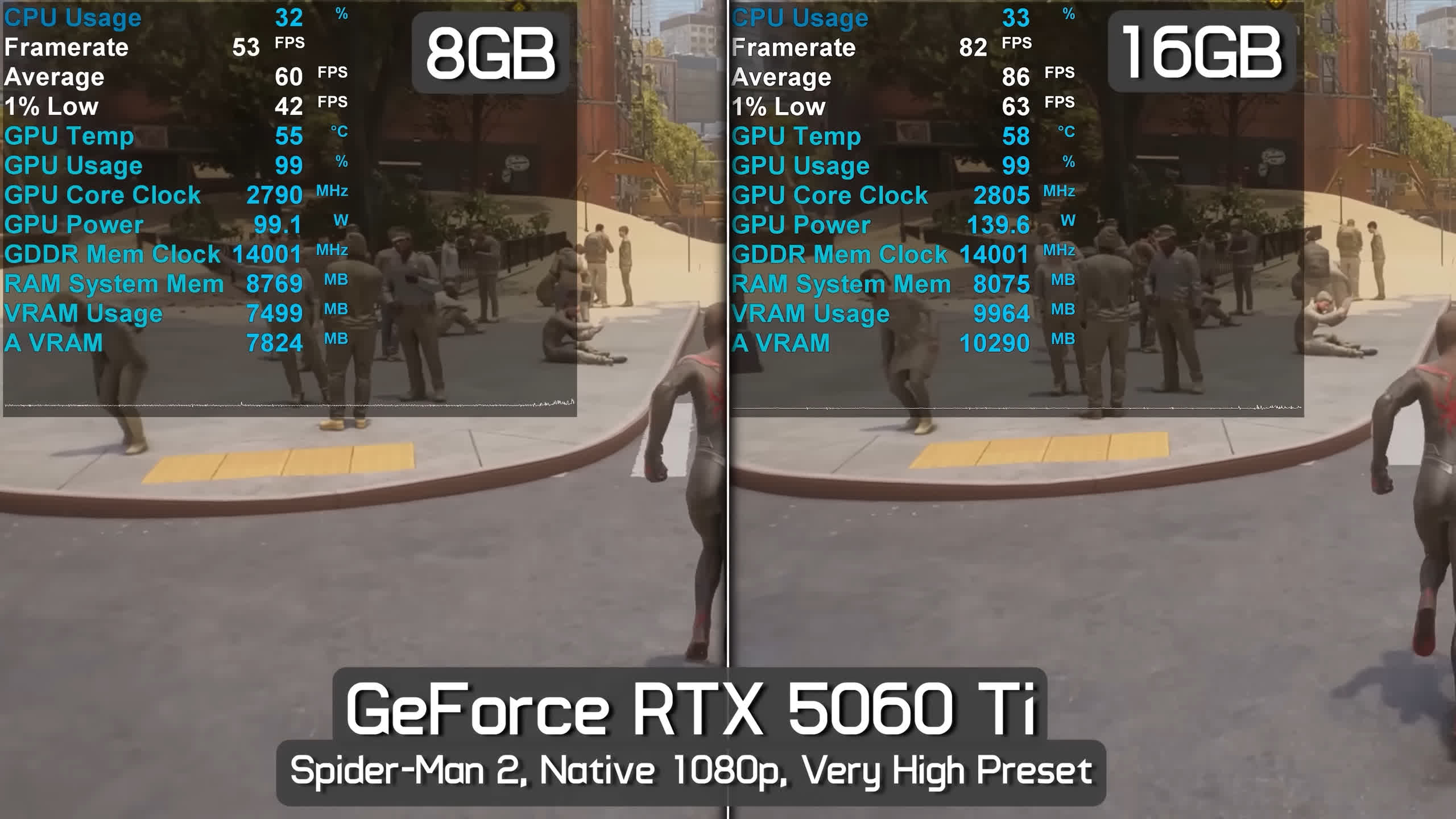
By all accounts, Nvidia is going to push 8GB cards on gamers whether they like it or not. As we've covered countless times on TechSpot, these cards are already obsolete. The RTX 5060 becoming the only model in decent supply is bad news for anyone looking to upgrade, as those upgrades will lack longevity. At this point, all we can do is hope the rumors about Nvidia bringing back the RTX 3060 with 12GB of VRAM are true, but we're not holding our breath there either.
To wrap things up, what's the current status of the RTX 50 Super series?
Based on discussions with various partners and industry sources at CES 2026, AIBs were originally expecting the Super series to debut at the show when they began planning their CES presence. Nvidia's decision not to launch these GPUs was a source of frustration for some partners, many of whom had planned major CES showcases around these cards and were left scrambling to fill the gaps with other products.

As things stand now, our understanding is that there are no imminent plans to launch the RTX 50 Super series. The main feature of these cards was meant to be increased VRAM capacity, and the economics of those models no longer make sense with memory prices as high as they are. Everyone is waiting to see whether memory pricing stabilizes. If it does, we might see the Super series in the second half of 2025. If not, Nvidia will likely cancel the lineup entirely, as they won't want to launch these GPUs too close to next-generation models expected in 2027.
In short, the GPU market is f*ck/d, and it's not likely to improve anytime soon.
Full update: End of life or not end of life?
We've received some further updates to the RTX 5070 Ti situation after Asus provided us with an additional statement, which reads: "To clarify, our internal communication was related to streamlining some models based on these chipsets due to the current GPU supply constraints. There is currently no plan from NVIDIA to EOL these chipsets."
Asus is reiterating what Nvidia said earlier today, which is that Nvidia "continue to ship all GeForce SKUs." However, there are two things at play. One is the official status of GeForce SKUs according to Nvidia. The other (and the focus of our article) is the supply and production status of GeForce graphics cards at Asus and other partners.
A GPU SKU may not be officially discontinued, but if the supply is reduced to the point AIBs can no longer manufacture them, it may as well be discontinued, ended or killed off. That is what Asus and retail sources said to us originally. Why would Nvidia reduce supply for some models? In a market with constrained VRAM supply, they want to prioritize making the most revenue from the GDDR7 chips they are able to source. Based on what we've gathered, that's what we believe is happening to the point where the cheaper 16GB SKUs have effectively been killed off.
A few hours later, Asus provided us with a second clarifying statement. This one completely walks back their original statement to us... "The GeForce RTX 5070 Ti and GeForce RTX 5060 Ti 16 GB have not been discontinued or designated as end-of-life (EOL). Asus has no plans to stop selling these models."
So the current timeline is as follows:
- We request RTX 5070 Ti samples from Asus (and other partners)
- An Asus PR rep looks into it, comes back and says they cannot provide 5070 Tis due to supply constraints, saying their models are "end of life"
- We ask Asus to clarify whether the RTX 5070 Ti is end of life. They confirm it's end of life.
- We reach out to retailers to see whether they can purchase RTX 5070 Ti stock for their stores, to fact check Asus' claims. They say there is no supply.
- Given we have received an on the record statement from Asus and confirmed the supply constraints with retailers, we publish a story with this information
- Nvidia says all GeForce SKUs are being shipped
- Asus reaches out to clarify that Nvidia told Asus that the RTX 5070 Ti is not end of life, but that Asus are "streamlining some models"
- We publish that statement
- Asus reaches out again to provide another statement (the third statement we've received from Asus), now saying the 5070 Ti is not discontinued or end of life. This directly contradicts the original statement.
- We immediately request RTX 5070 Ti samples now that the cards are not discontinued or end of life. We haven't heard back yet.
And that's where we are currently at.
In our opinion, the facts have not really changed and the real proof will be in the supply. The RTX 5070 Ti is heavily supply constrained to the point of being effectively killed, but we'll see whether that's truly the case across the next few months.