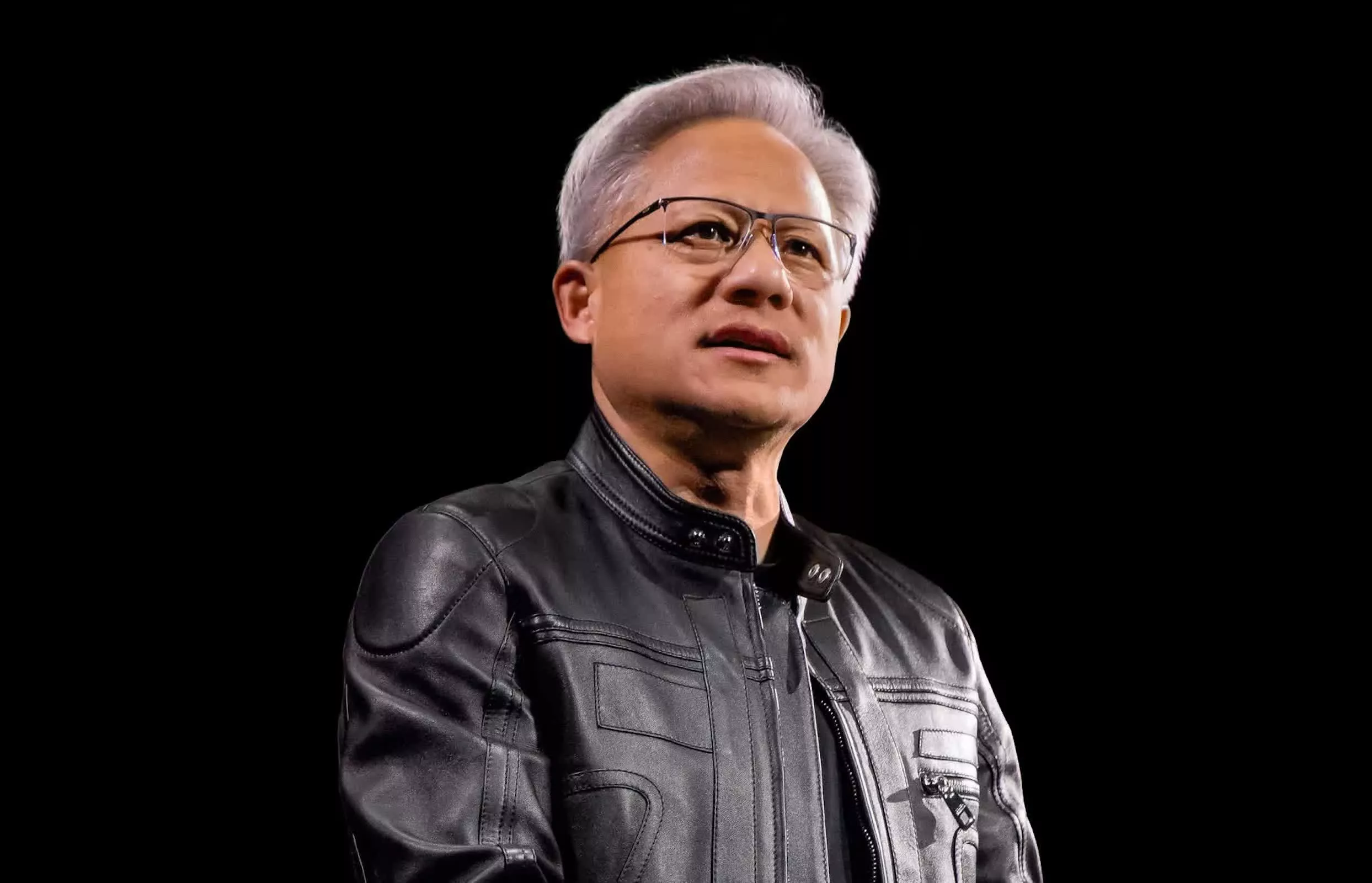
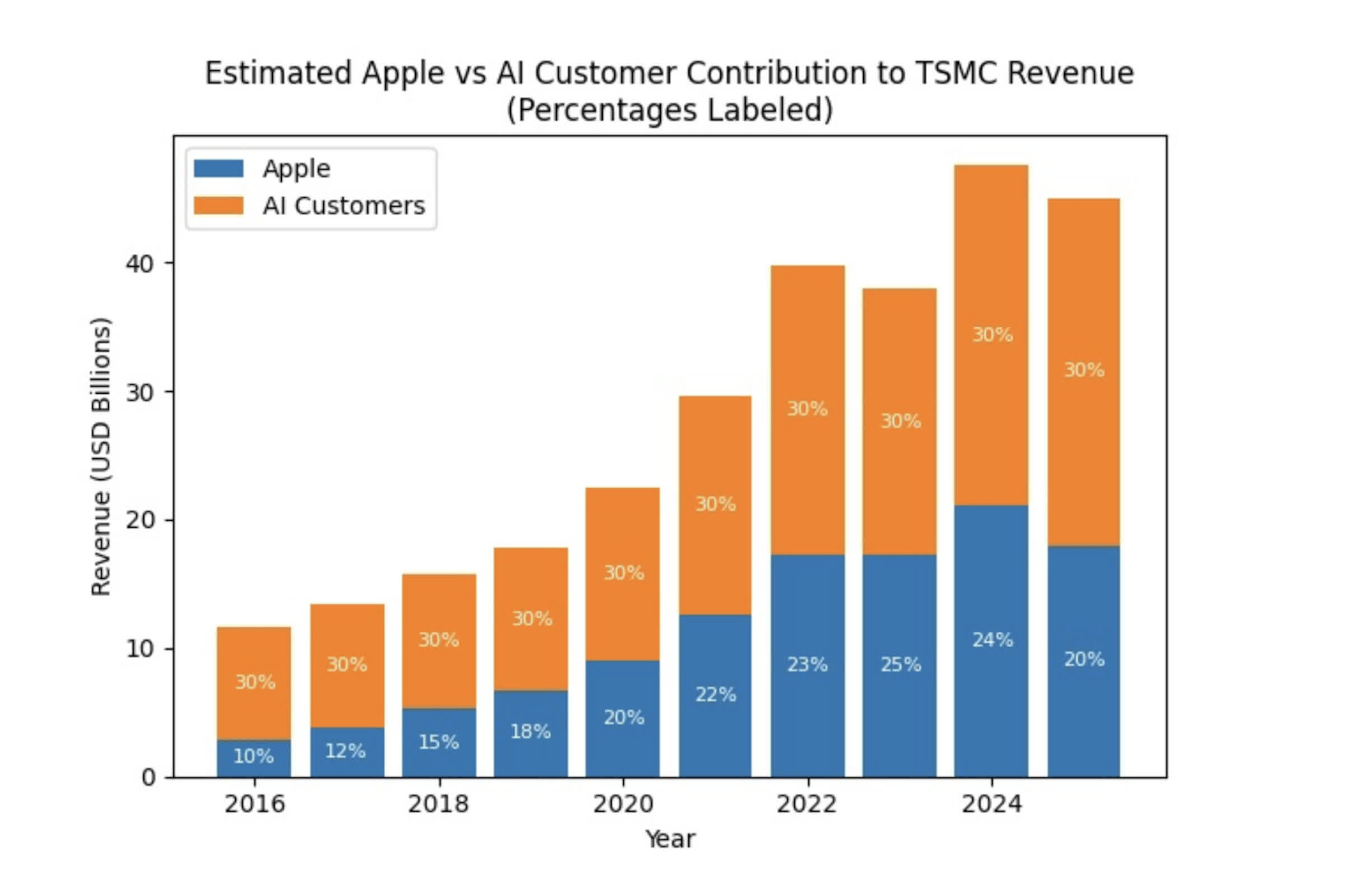
What just happened? The world's most valuable semiconductor relationship just shifted: Nvidia has overtaken Apple as the largest customer of TSMC, according to CEO Jensen Huang. The disclosure, paired with his separate call for "trillions" of dollars in new AI infrastructure investment, illustrates how the center of gravity in tech hardware is moving rapidly from mobile devices to artificial intelligence systems.
Huang made the remark about TSMC during an interview on the A Bit Personal with Jodi Shelton podcast. When the host referred to TSMC founder Morris Chang's recollection that a young Huang once promised to become one of the foundry's biggest clients, Huang laughed and said, "Morris will be happy to know Nvidia is TSMC's largest customer now."
It's a symbolic turn: Apple seized that spot more than a decade ago, after TSMC became the exclusive manufacturer of its iPhone and iPad processors. Nvidia had been a leading partner in the early 2000s, before mobile silicon and Apple's custom chips vaulted Cupertino to the top.
The reversal reflects the explosive economics of AI. Every major cloud provider and enterprise is racing to secure Nvidia GPUs – fueling record revenue for Nvidia and forcing chip foundries to reallocate capacity toward AI processors. A tipster says TSMC may even be raising prices for Apple's production runs and will no longer give Apple priority in shipments, though neither company has confirmed any such changes.
A few days after his podcast appearance, Huang took a broader view at the World Economic Forum, where he joined BlackRock CEO Larry Fink in a fireside discussion about AI's economic footprint. There, he characterized the global AI system as a "five-layer cake," starting with energy at the base, followed by semiconductors, cloud infrastructure, AI models, and finally the application layer that generates revenue across industries.
He described the current moment as the early stage of "the largest infrastructure buildout in human history" – a transformation already involving hundreds of billions of dollars and ultimately requiring trillions more.
That scaffold, he explained, extends from electricity generation and chip production to data centers and specialized applications in sectors such as healthcare, manufacturing, and finance. TSMC plans roughly 20 new fabrication plants worldwide, while manufacturers like Foxconn, Quanta, and Inventec are developing dozens of new "AI factories" to assemble GPU-based systems. Semiconductor heavyweights, including Micron, SK Hynix, and Samsung, are also investing tens to hundreds of billions of dollars to meet soaring memory demand.
Huang said venture capital spending now reflects this shift. 2025 was one of the biggest years on record for AI-focused startups, with funding flowing into so-called "AI-native" companies across key industrial categories. That momentum, he suggested, validates the confidence fueling Nvidia's rise from a graphics-card designer to a supplier critical to the entire digital economy.
Both developments – the confirmation that Nvidia now leads TSMC's revenue chart and Huang's trillion-dollar forecast for AI buildout – capture a single trend: computing's gravitational pull has moved away from consumer electronics and toward industrial-scale intelligence. As long as that momentum continues, Nvidia's grip on both chip manufacturing demand and AI infrastructure design seems likely to deepen even further.