What just happened? A federal jury in San Francisco has convicted former Google software engineer Linwei "Leon" Ding on 14 federal charges, including seven counts of economic espionage and seven counts of theft of trade secrets, after a trial over the theft of confidential AI technology and supercomputing trade secrets.
From May 2022 through April 2023, Ding exploited his privileged access as a Google engineer to move more than 2,000 pages of confidential internal documents from Google's secure networks into his personal Google Cloud account.
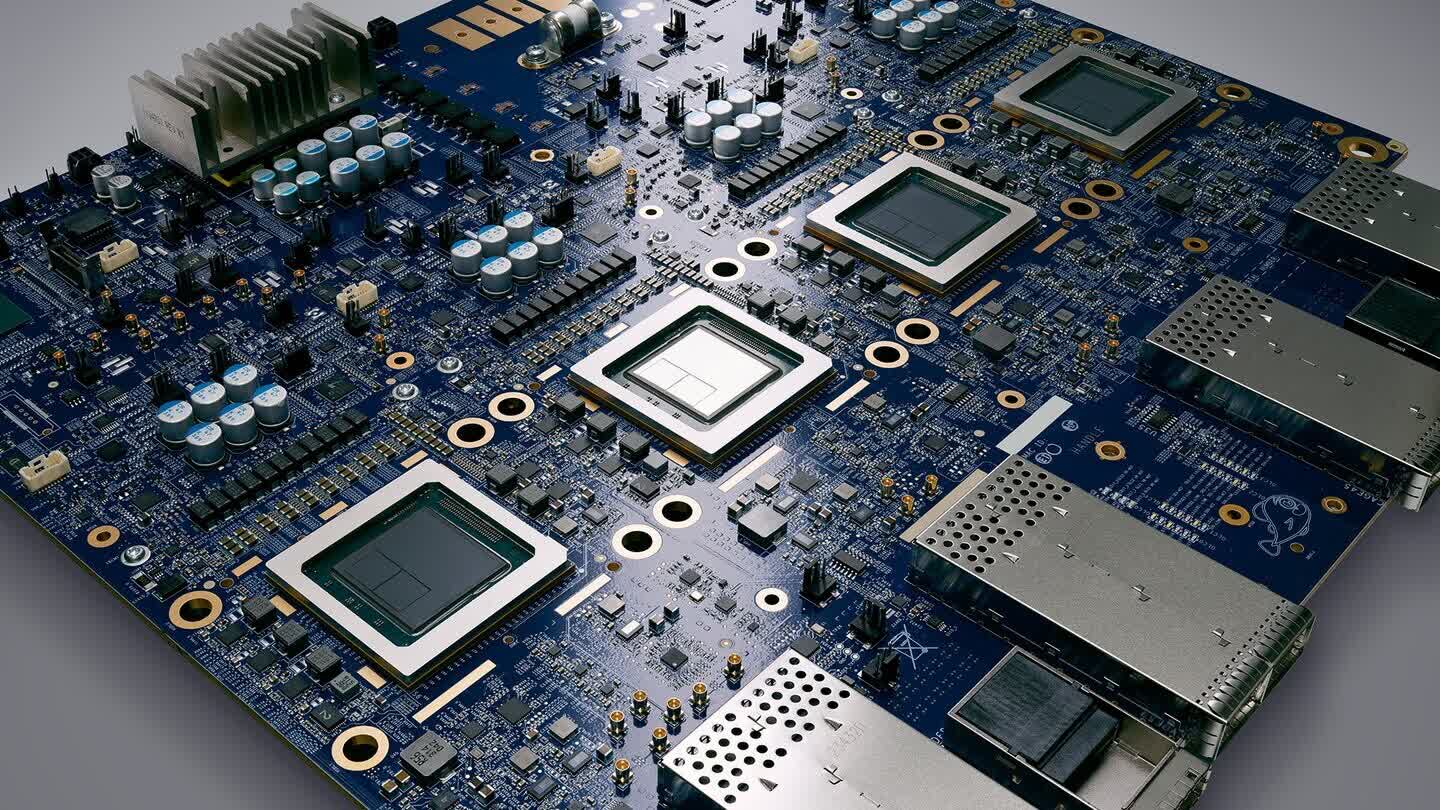
Prosecutors showed that these materials included sensitive details of Google's custom Tensor Processing Unit (TPU) and GPU systems, as well as the low-level software that orchestrates how these chips communicate and work at scale – core intellectual property that powers large AI model training and inference.
According to court filings, the stolen materials spanned seven categories of trade secrets that described how Google designs, builds, and operates AI data centers, including TPU instruction sets, performance characteristics, HBM memory access details, inter-chip connectivity, and other dimensions of Google's supercomputing hardware and software stack.
Prosecutors also presented evidence that Ding was secretly involved with two China-based tech companies while still employed by Google, holding discussions to become a chief technology officer for one and founding his own AI startup focused on building an AI supercomputer using the stolen trade secrets.
In presentations to potential investors, Ding allegedly claimed he could replicate Google's advanced infrastructure – all built on the foundation of stolen internal designs.
The conviction is significant not just for the volume of intellectual property involved, but also because it reflects the stakes of the global AI race and the lengths to which individuals may go to try to transfer cutting-edge technology to foreign entities.
US officials, including Assistant Attorney General for National Security John A. Eisenberg and the FBI's San Francisco Counterintelligence Division, framed the case as a major threat to American competitiveness and national security in artificial intelligence.
Ding, a Chinese national who joined Google in 2019, is scheduled for sentencing later this year. Each count of economic espionage carries up to 15 years in prison, while each count of trade secret theft carries up to 10 years and substantial fines.