
The big picture: Executives across tech and neighboring industries are increasingly framing layoffs as the first step toward an artificial intelligence future, even when the automation they cite is still experimental, unfinished, and nowhere near operating at scale. The result is a growing disconnect between what companies pitch to investors about AI-driven restructuring and what's actually happening inside their products, infrastructure, and day-to-day operations.
In 2025, employers said artificial intelligence played a role in more than 50,000 planned job cuts, according to Challenger, Gray & Christmas. That puts AI among the most commonly cited reasons for workforce reductions, alongside familiar corporate standbys like cost-cutting, restructuring, and shifting demand.
And yet, many of the same companies acknowledge their AI efforts remain early-stage – limited pilots, narrow use cases, or small experiments rather than sweeping replacements for large portions of the knowledge workforce.
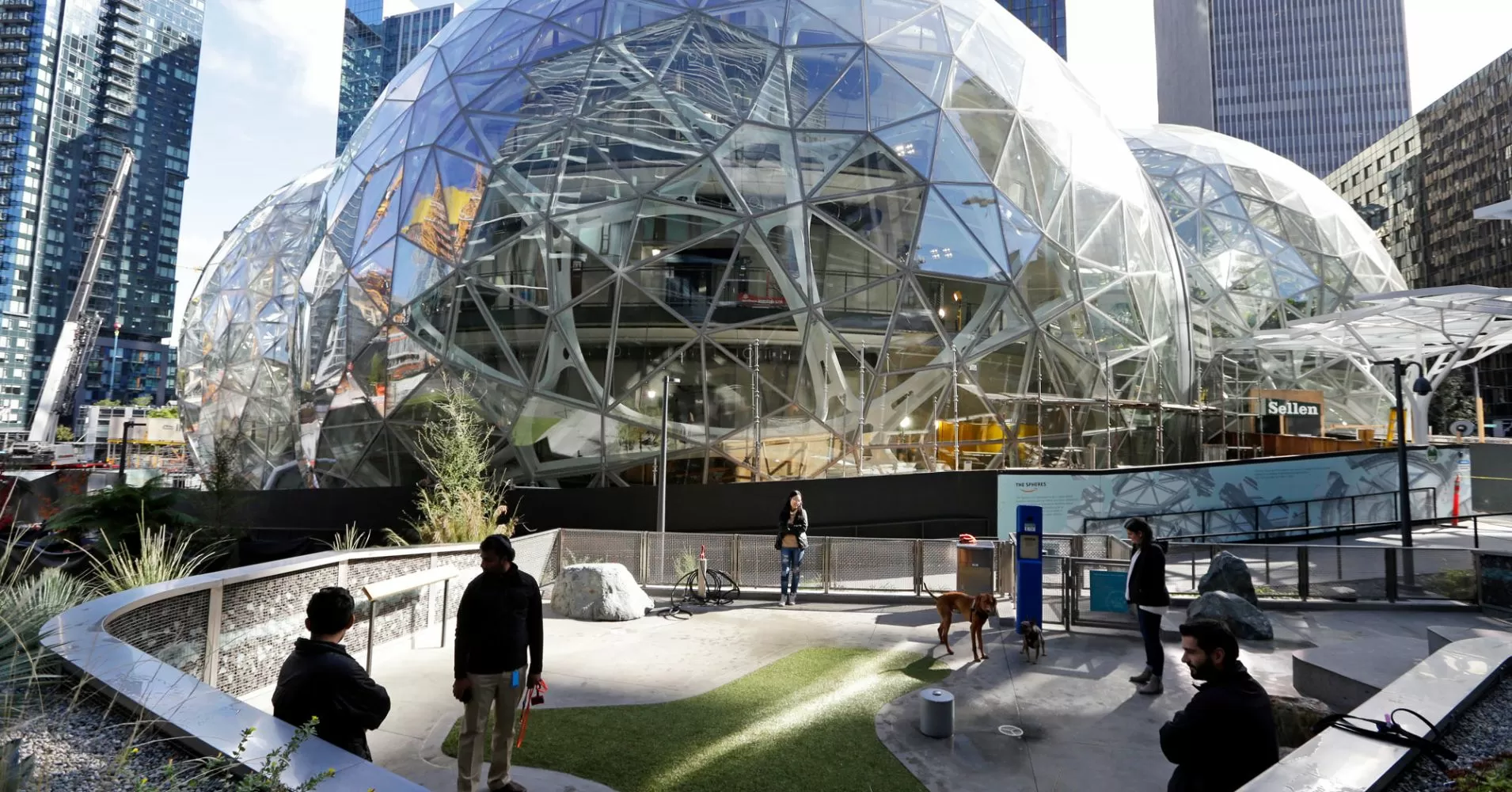
At the biggest platforms, the numbers are hard to ignore. Amazon has announced 30,000 corporate job cuts since the fall – 14,000 roles last year and another 16,000 this January – while simultaneously signaling to markets that generative AI and software agents are poised to reshape white-collar work.
Other consumer-facing platforms are using layoffs to spotlight a pivot toward AI-centric product development. Pinterest said in January that it would cut about 15 percent of its workforce, framing the decision as a reallocation of resources toward AI-focused roles.
Hardware companies are adopting similar messaging. Hewlett-Packard has been talking about embedding AI across the organization as it plans thousands of job cuts over several years. CEO Enrique Lores told investors that HP sees a "significant opportunity to embed AI into HP," tying that ambition to as many as 6,000 reductions.
Against this backdrop, analysts and researchers argue that "AI" has become a convenient label for decisions that are primarily financial.
Against this backdrop, analysts and researchers argue that "AI" has become a convenient label for decisions that are primarily financial. A January forecast from market research firm Forrester notes that "many companies announcing AI-related layoffs do not have mature, vetted AI applications ready to fill those roles," warning that investors and the public may be "confusing financially driven layoffs with A.I.-driven layoffs."
The firm describes this as a form of AI-washing: attributing job cuts to future AI implementation when the immediate drivers are cost control, profitability targets, or corrections after overhiring.
It also points out that overpromising on automation creates operational risk, because companies may discover that promised AI-driven productivity gains do not materialize quickly enough to justify the speed and depth of their cuts.
The phrase "AI-washing" echoes earlier critiques like "greenwashing" and "ethics washing," both used to call out companies that overstate their environmental or ethical commitments.
In its earliest use, AI-washing was aimed at vendors and products that marketed themselves as "AI-powered" without meaningful machine learning behind the scenes, drawing attention from regulators who have warned that such mislabeling can mislead investors.
More recently, the term has expanded into the realm of layoffs: when companies frame staff reductions as the direct consequence of new AI tools, even though those tools aren't yet operating at scale or taking over the specific tasks being eliminated.

Molly Kinder, a senior research fellow at the Brookings Institution who studies AI and labor, describes these anticipatory layoffs as a strategic signal to markets. By linking job cuts to AI adoption, executives can position themselves as modernizing rather than retreating – telling investors, in effect, that they've "adopted AI" and already "figured out savings."
That message lands differently than saying the business is underperforming or correcting past mistakes. It also avoids politically sensitive explanations such as tariffs or other policy shocks.
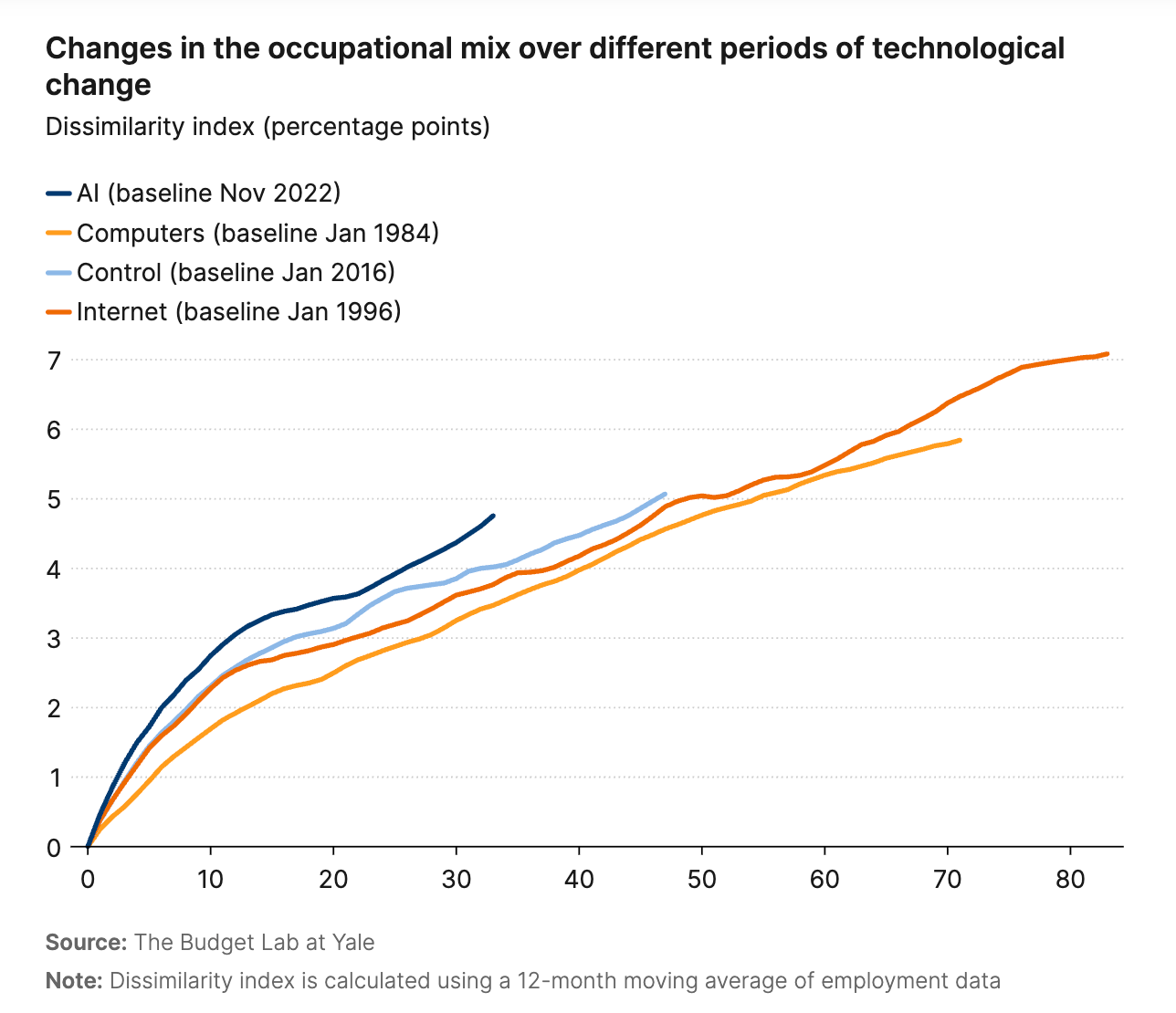
So far, the broader labor data suggests AI has not yet produced a large, measurable disruption to employment. In a recent study for the Yale Budget Lab, Kinder and co-authors examined how AI exposure correlates with employment changes across occupations and sectors. Their conclusion: artificial intelligence has not yet "meaningfully shifted" the overall job market.
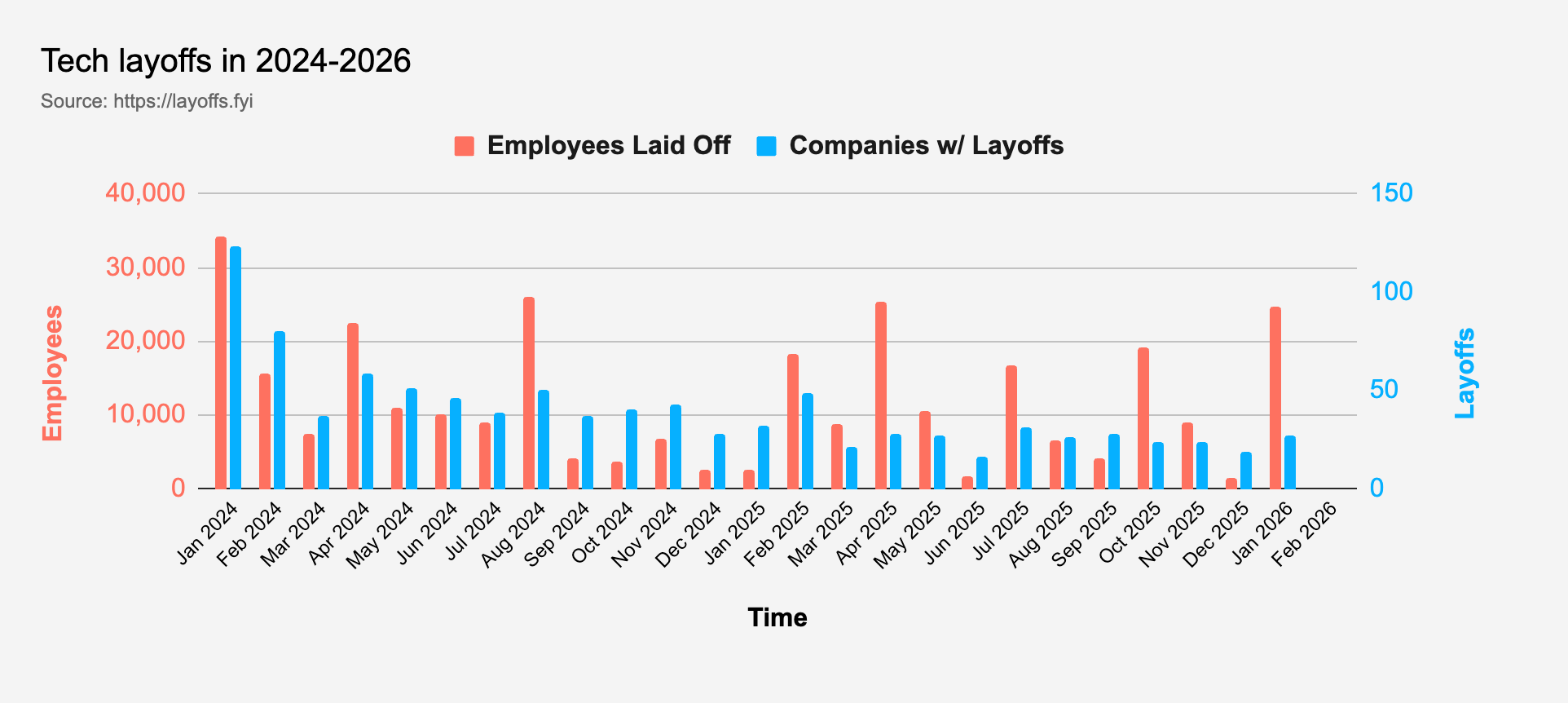
Those findings land amid a very real retrenchment in tech. Since 2022, technology firms have cut more than 700,000 employees globally, according to the Layoffs.fyi tracker, which compiles public reports of job reductions.
Many of those cuts follow a common pattern: companies expanded aggressively during the pandemic, betting on sustained demand for digital services and remote work, then reversed when growth slowed and investors pushed for profitability.

In that context, AI is entering a landscape already shaped by overhiring and conventional cost pressure, making it hard to disentangle what is driven by automation from what is driven by old-fashioned budget math.
Public attitudes add another layer. Surveys show workers are more anxious than optimistic about AI in the workplace, especially when it's tied to job loss. For employers, a narrative emphasizing AI and future competitiveness may feel more palatable than admitting misjudged demand or flawed strategy.
For now, though, the sharpest impact of AI on white-collar employment may be rhetorical.
To be sure, there is genuine technical momentum around AI, which is already handling constrained workloads in support, content drafting, coding assistance and internal knowledge search. That shift is changing the skills employers prioritize: fewer workers dedicated to routine, template-driven tasks, and more roles focused on model design, data engineering, evaluation, and governance.
For now, though, the sharpest impact of AI on white-collar employment may be rhetorical. It is shaping the language of earnings calls and layoff memos, the way executives describe the workforce of the future, and which costs get framed as temporary versus structural. Whether those narratives eventually match the underlying technology – and whether the promised gains justify today's anticipatory cuts – remains an open question.