The big picture: Nvidia DLSS has been a divisive feature since its introduction almost exactly seven years ago. While some users accuse developers of relying too heavily on upscaling to maintain high frame rates, others praise its ability to reconstruct clear images from fewer pixels. Pushing the latest implementation to its limits helps reveal how it pulls off this feat.
YouTuber 2kiliksphilip recently demonstrated how Nvidia DLSS behaves when upscaling from absurdly low resolutions to 4K. While games are not playable in this form, the experiment highlights both the technology's effectiveness and the progress it has made since the introduction of DLSS 2.0 about five years ago.
DLSS Super Resolution officially allows users to choose between four modes with preset resolution scales: Quality mode upscales from 66% of the output resolution, Balanced from 58%, Performance from 50%, and Ultra Performance from 33%. However, the popular Special K mod enables users to select any percentage, including 1% – which, at 3840 x 2160 (4K), works out to just 38 x 22 pixels.
The popular 'Special K' mod enables users to select any scaling percentage, even 1% – which for 4K works out to just 38 x 22 pixels.
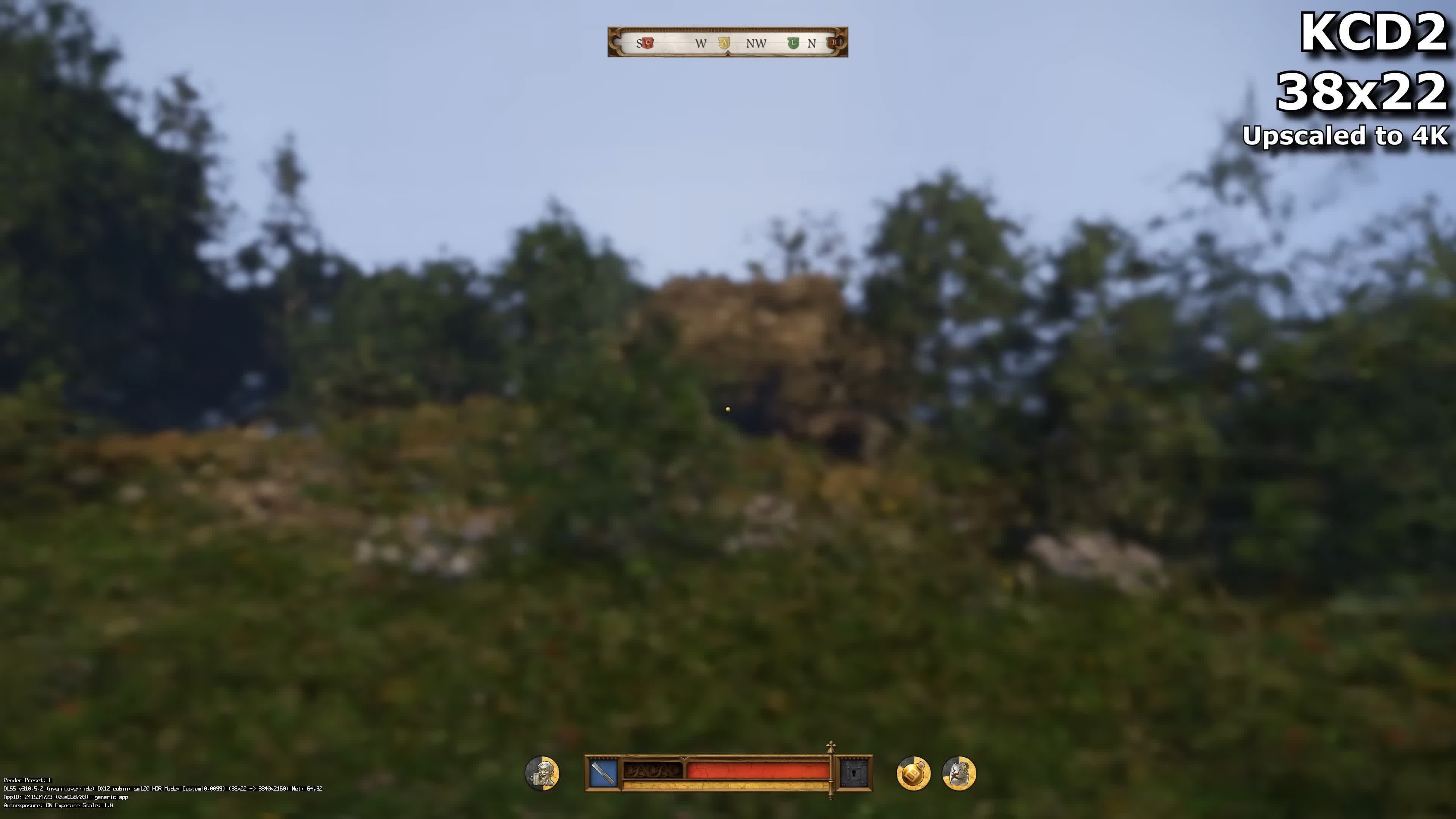
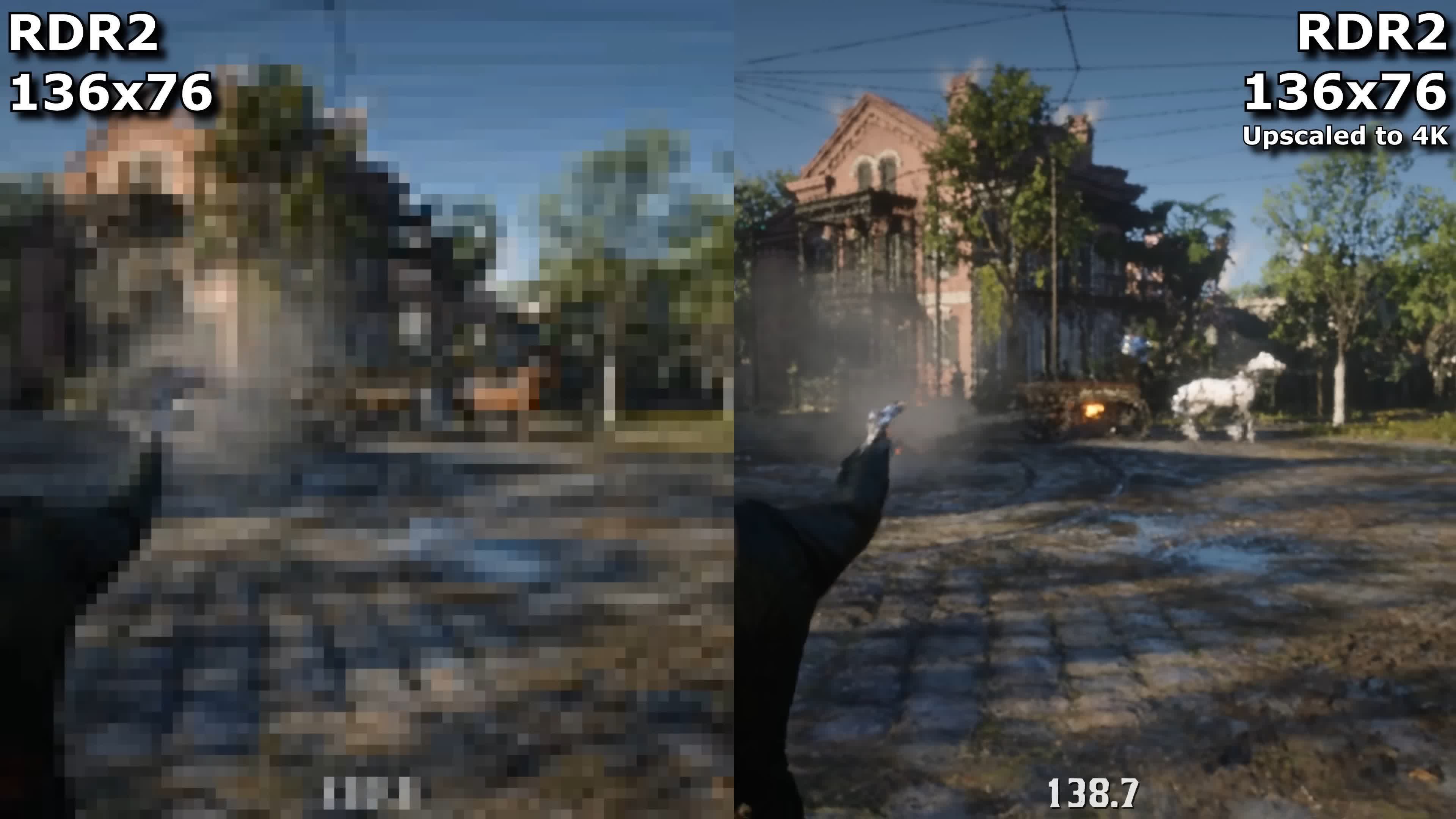
Under these conditions, which multiply the number of pixels by a factor of roughly 10,000, Red Dead Redemption 2 and Kingdom Come: Deliverance II resemble the experience of a legally blind person. However, moving the camera quickly and observing fast-moving objects reveals how DLSS combines data from previous frames with motion vectors to infer what a high-resolution image should look like.
Comparing a native 136 x 76 image to the same pixel count upscaled to 4K in the Red Dead Redemption 2 benchmark highlights the impressive amount of detail DLSS can recover. The two images are both extremely blurry, yet they are worlds apart.
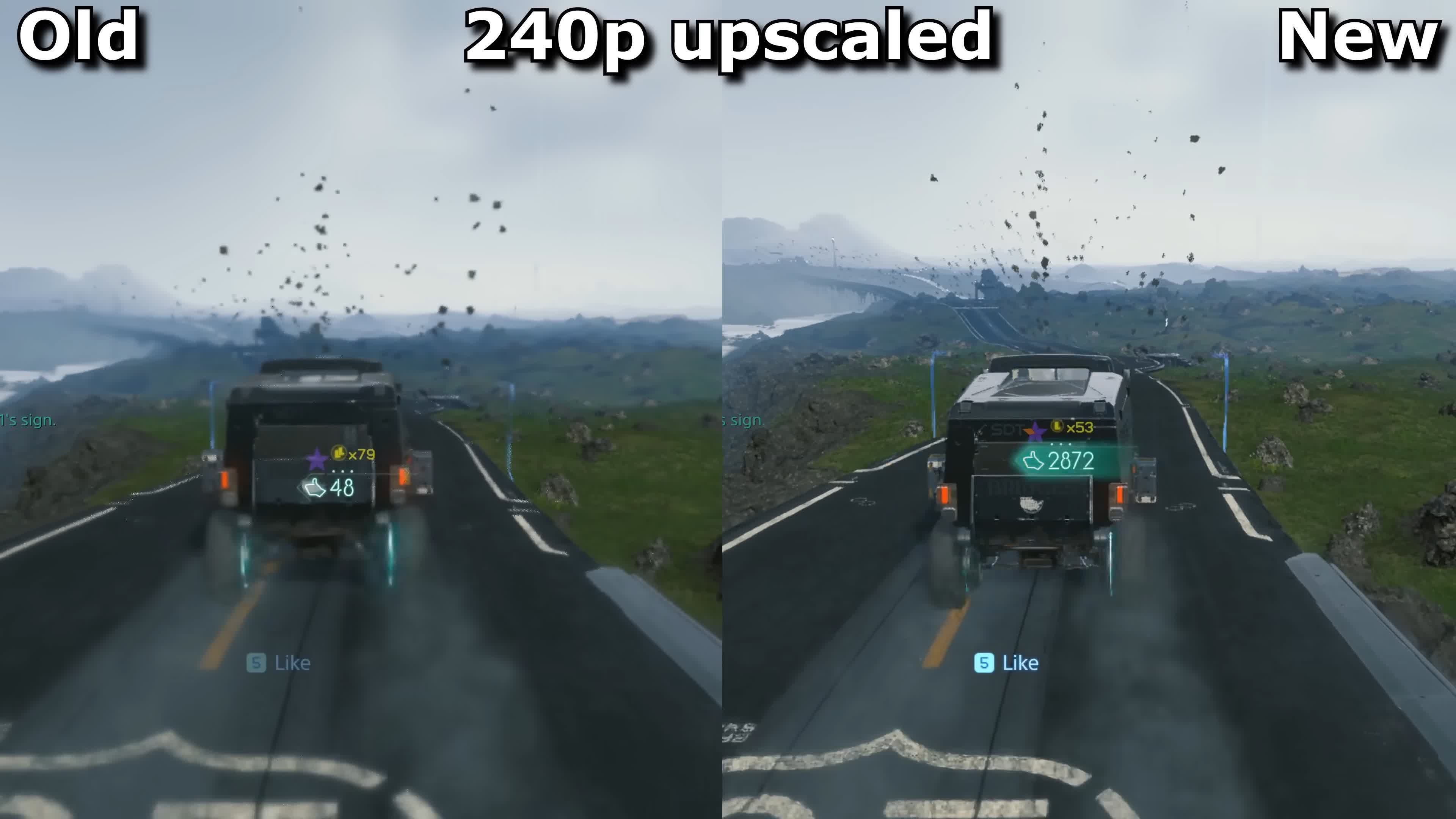
The difference between DLSS 4.5's preset L, released a few weeks ago, and DLSS 2.0, which launched in 2022, also becomes clearer at extreme upscaling ratios. The YouTuber demonstrated this by comparing Death Stranding footage upscaled from 320 x 240 to 4K in version 4.5 with a similar video he published five years ago.
Also read: Nvidia DLSS 4.5 vs DLSS 4: Good But Not Flawless
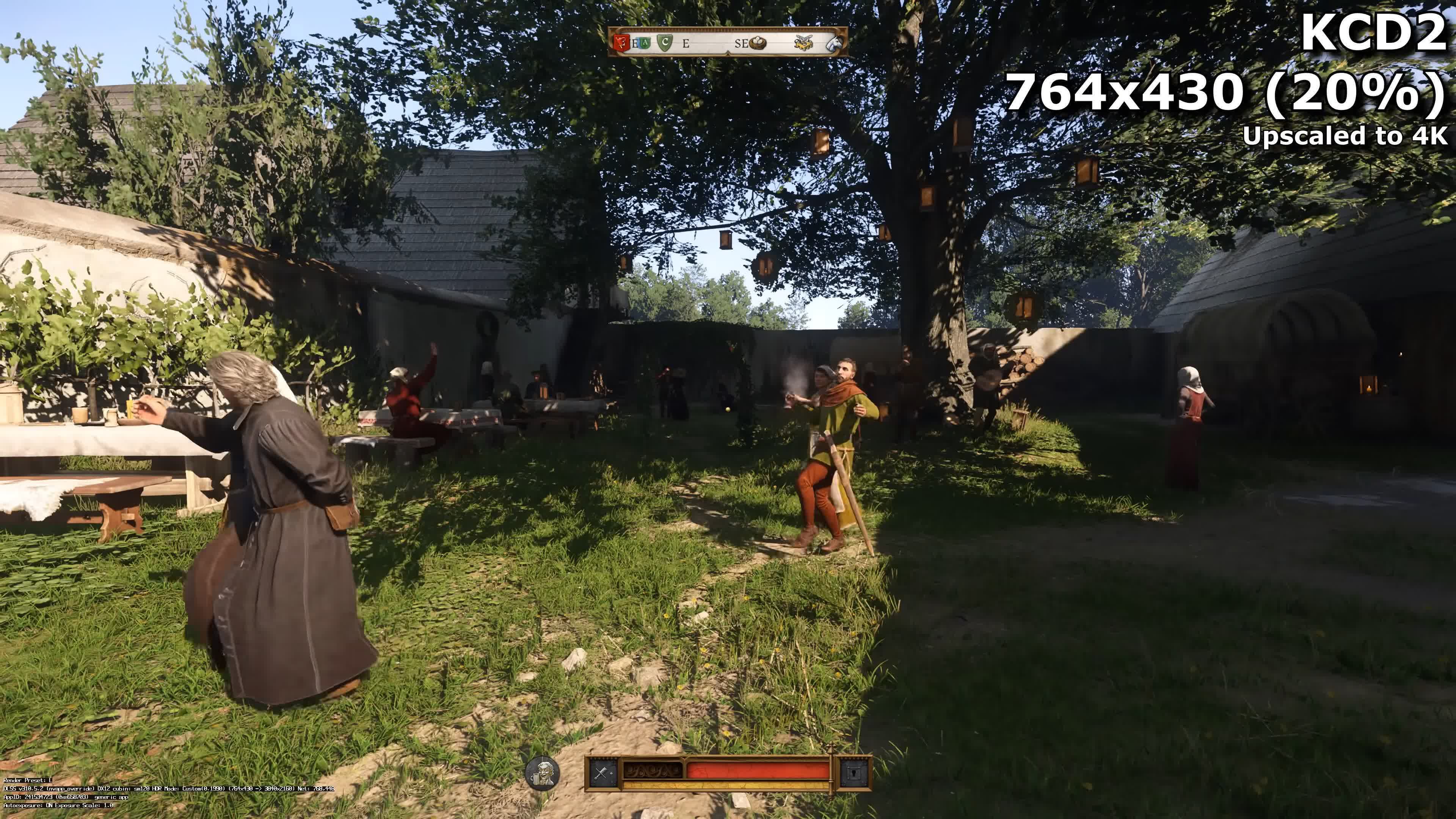
The experiment further reveals the minimum internal resolution at which Kingdom Come: Deliverance II begins to resemble a usable 4K image: 764 x 430, or 20% of 4K. Even so, this setting likely offers little performance advantage over the lowest official preset, which upscales from 720p to 4K. At such low resolutions, most games are limited by the CPU rather than the graphics card.
Although some argue that upscaling has encouraged complacency in performance optimization, the video also serves as a reminder of what the technology replaced: anti-aliasing. Upscaling is simply the latest in a long line of techniques designed to mask sub-native resolutions, a practice that stretches back decades.