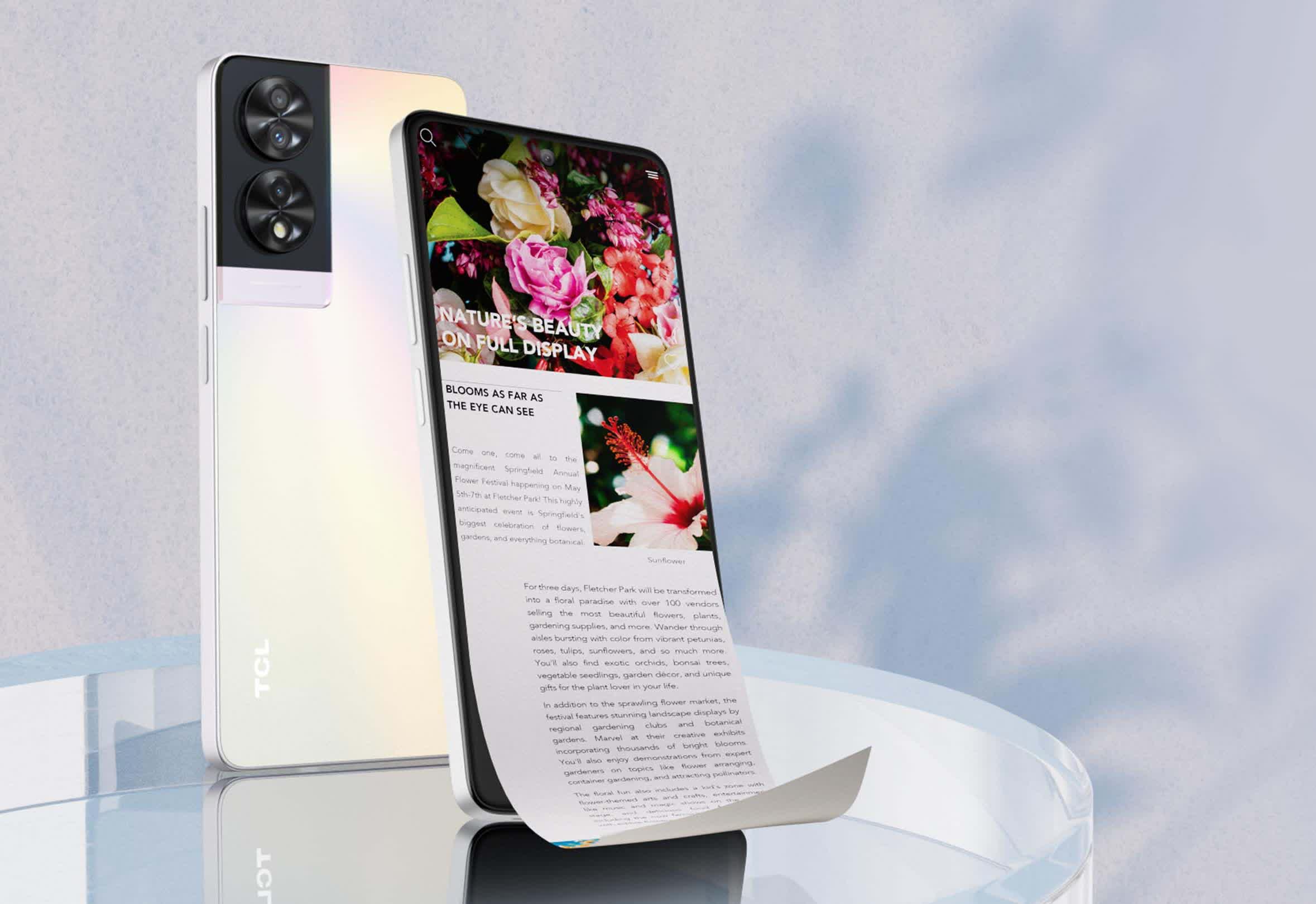
First look: In a year dominated by bright, hyper-saturated smartphone displays, TCL is taking a subtler approach. The company's latest Nxtpaper concept phone builds its reputation for eye-friendly screens around a new foundation: AMOLED.
For years, Nxtpaper devices have relied on LCD panels designed to reduce glare and mimic the look of paper. That approach delivered natural, matte visuals suited for long reading or viewing sessions, though it came with the inevitable compromise of reduced contrast and color depth. Now TCL has rebuilt that concept on AMOLED, the same self-emissive technology behind most flagship phone displays.
The difference was immediately visible to attendees at MWC 2026. When shown side-by-side with an older LCD-based Nxtpaper model, the AMOLED variant displayed richer browns and truer hues at half the brightness level. According to TCL, when both samples showed the same image, the new unit's brightness slider barely passed 50% while the LCD version had already maxed out.
The gain is not just perceptual: TCL quotes a potential peak brightness of 3,200 nits under sunlight – well within the range of high-tier smartphones.
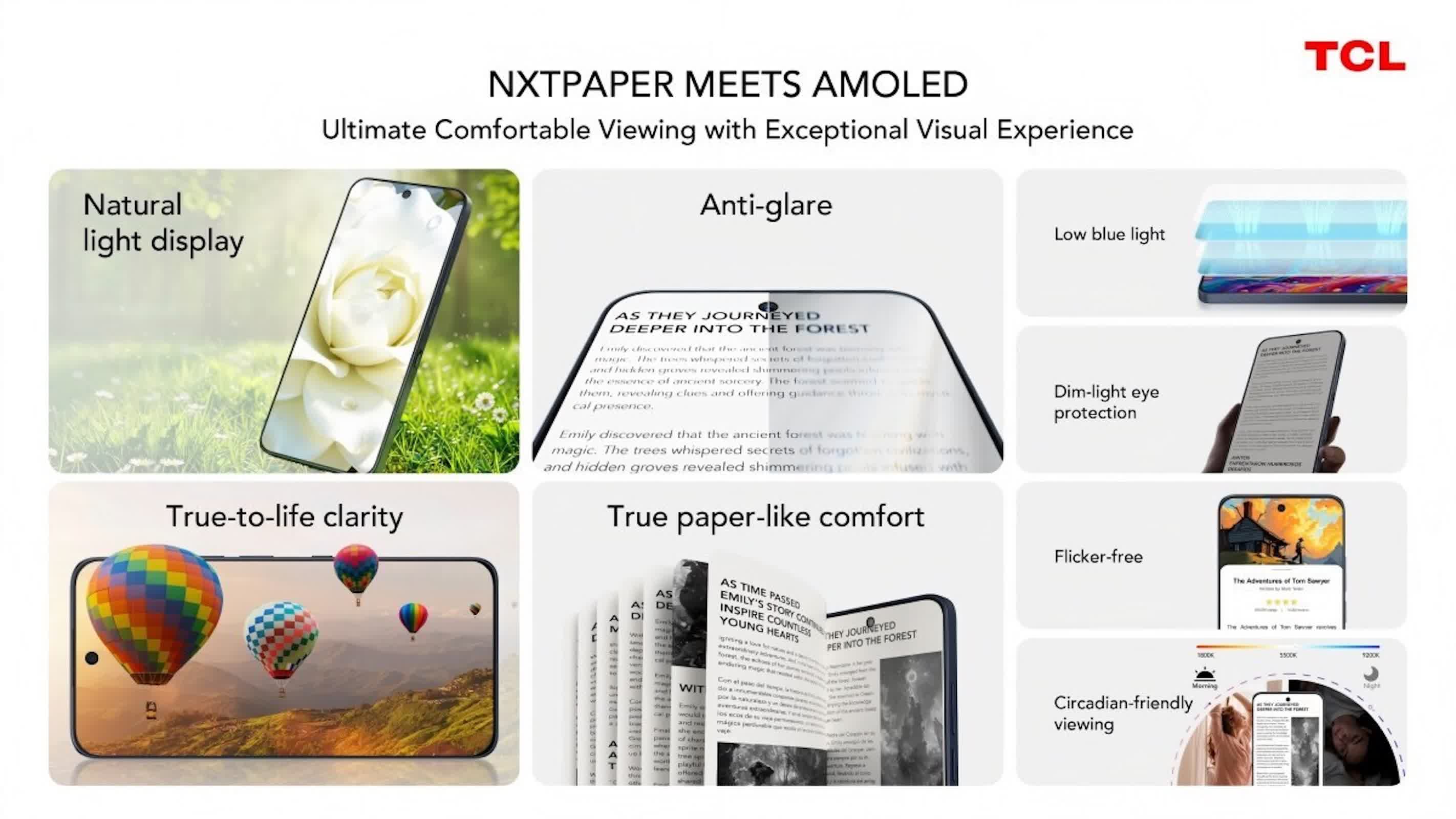
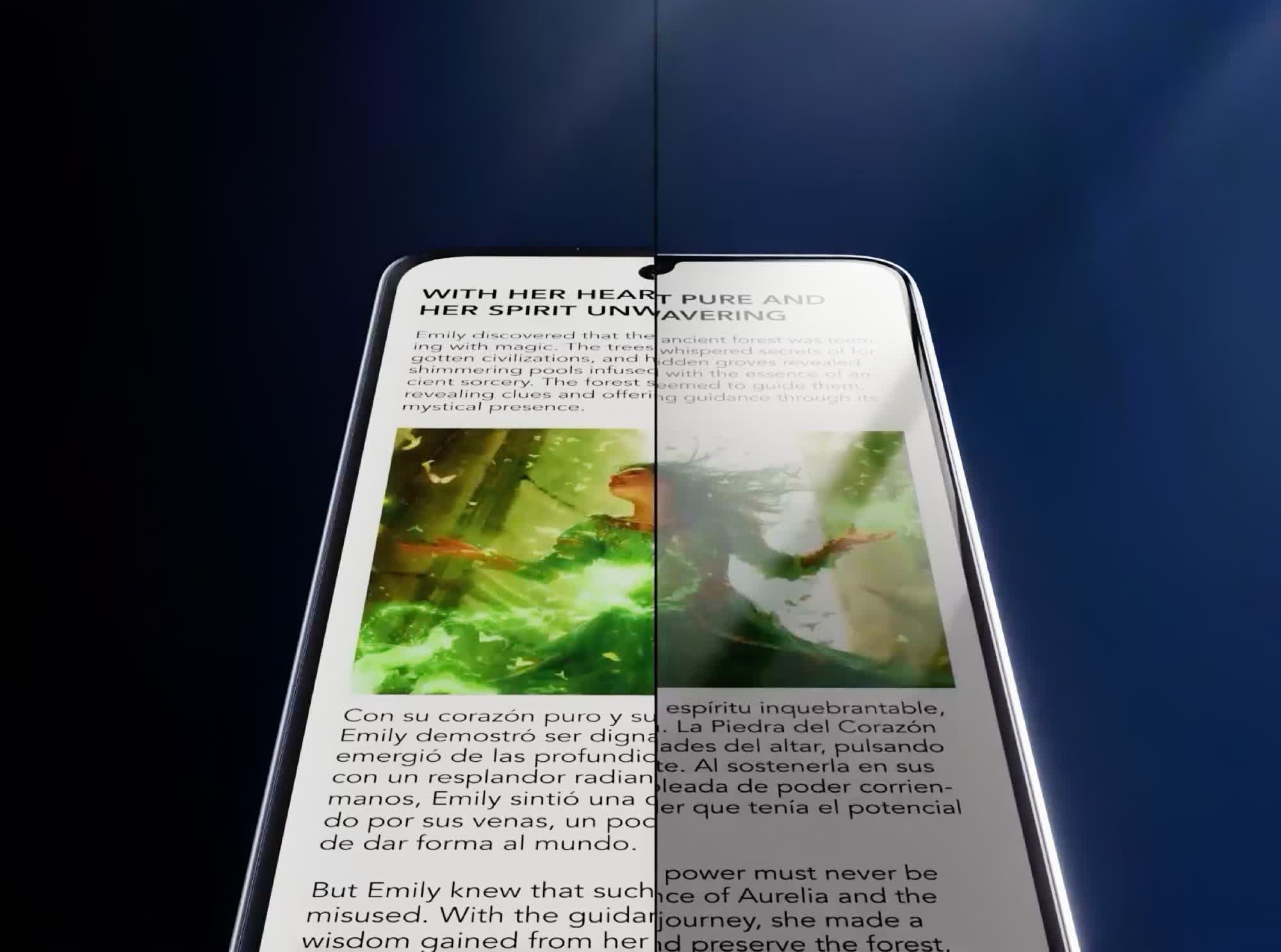
The glass retains the paper-like matte texture associated with earlier Nxtpaper products while suppressing reflections more thoroughly than traditional gloss coatings. TCL claims this makes the device the first anti-glare AMOLED phone available. The matte finish resists fingerprint smudges and oil marks that glossy skyscraper-sheen screens often attract.
At a media demonstration at the Barcelona event, the prototype panel – despite being handled repeatedly throughout the day – remained nearly spotless when viewed under natural light. Attendees said that the tactile quality of the display, combined with the AMOLED contrast, gives the impression of reading printed content illuminated from within rather than from behind.
TCL says the changes aren't just cosmetic, pointing to measurable improvements in optical performance. The company cites a 43% increase in polarization efficiency over previous Nxtpaper displays, meaning more of the panel's emitted light translates into visible brightness rather than glare or waste. Blue light emissions, a major culprit in digital eye strain, have been cut as low as 2.9%. That figure aligns with – and in some cases surpasses – the specialized "eye care" modes now standard on premium devices.
Some elements of the demo unit weren't working. TCL described the phone as a concept unit; certain features, including something labeled the "Nxtpaper Key," were inactive during the demonstration. But the company expressed confidence that production-ready models would follow.
The broader implication is that matte-screen phones, long considered niche or compromised, may soon reach mass-market standards for brightness and color. If TCL succeeds, it could inspire a new wave of "comfort panel" design philosophies across midrange and upper-tier devices – perhaps even influencing OEMs that have resisted matte finishes due to aesthetic conservatism.
Technically, TCL's move also underscores a broader industry shift toward more controllable emissive layers. AMOLED architectures provide pixel-level dimming and color rendering, allowing companies to adjust waveforms that influence both contrast and perceived blue light. When combined with advanced coatings and adaptive refresh algorithms, the result could redefine what "eye comfort mode" means in real-world use.