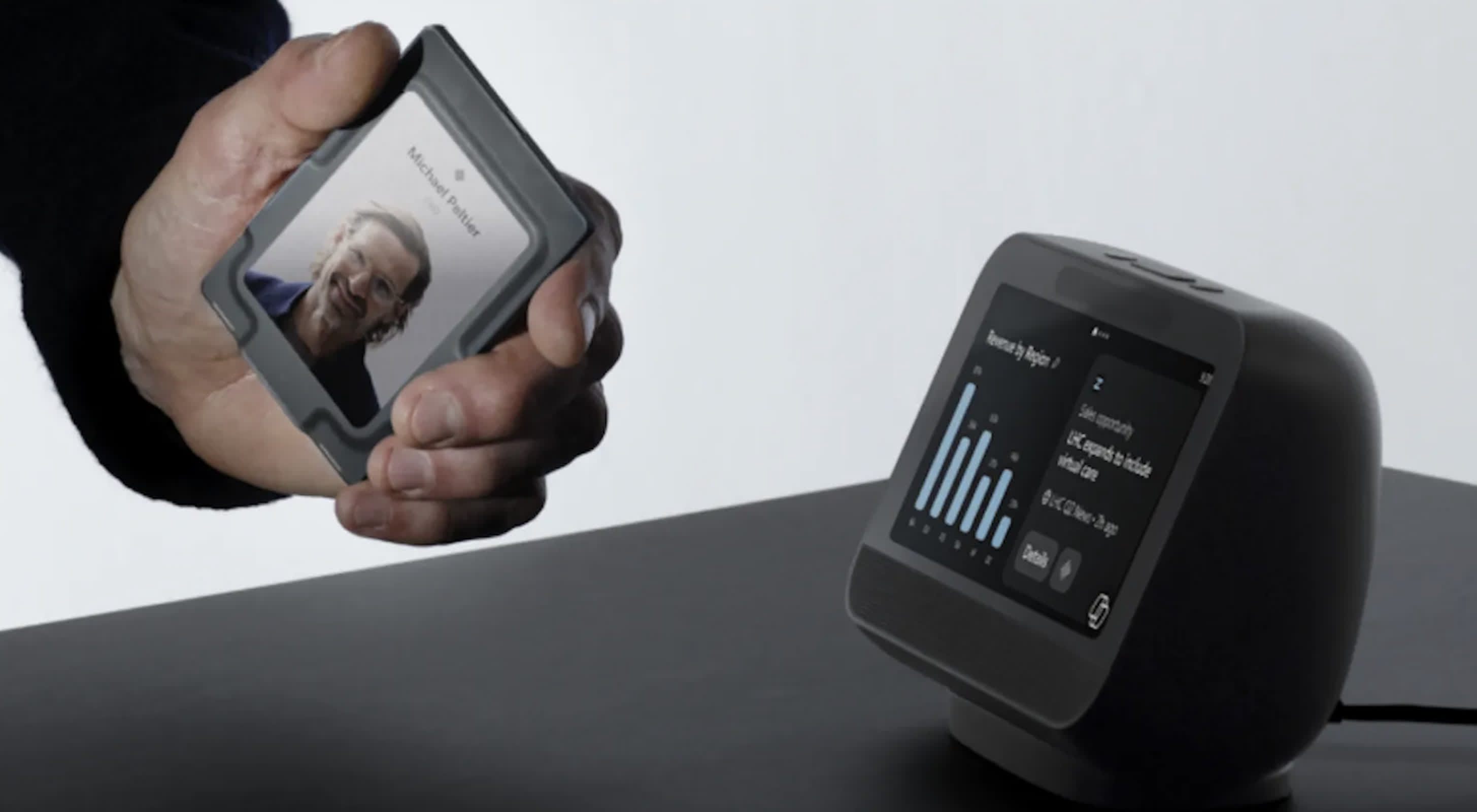
First look: Microsoft is testing new hardware that brings artificial intelligence off the laptop screen and into dedicated devices that people can wear or keep on their desks. At its annual developer conference, the company showed two early hardware "concepts" designed to make its AI tools easier to access throughout the workday.
At its annual developer conference, the company introduced two early-stage hardware concepts designed to make AI agents easier to access throughout the workday. Instead of pulling up a laptop or opening an app, the idea is to let users interact with AI more fluidly using devices that sit on a desk or move with them.
The two prototypes are relatively straightforward devices, but they point to a different way of thinking about how people might use AI. One is a small cube with a touchscreen and voice controls, designed to sit on a desk. The other is a wearable device, described by Microsoft executive Steven Bathiche as "a wearable access badge," that can be clipped onto clothing or worn around the neck.
Both are built around AI agents already widely used by developers and other technical workers, particularly for writing and refining code. In practice, the devices are meant to keep those agents close at hand rather than require access through a laptop or desktop monitor.
CEO Satya Nadella framed the effort as part of a broader rethink of computing interfaces, calling the devices a "new form factor." That language suggests Microsoft is at least exploring the idea that AI shouldn't live only on phones and PCs, but also in smaller devices people keep nearby throughout the day.
In the demo, the wearable badge drew much of the attention because of what it can do. The device can be activated with a fingerprint and includes a small built-in camera. During one demonstration, Bathiche pointed the badge at the audience and instructed it to take photos and send them to him. The system carried out the request, he said.
That camera is not just for capturing images – it is meant to give AI agents more context about the user's surroundings. Bathiche said it allows agents "to better understand and help take action on the environment around them." In practice, that means agents could respond not only to typed or spoken commands, but also to what the device sees around a user.
That capability, however, comes with familiar concerns. Devices that continuously observe their environment have already drawn scrutiny elsewhere in the industry. Meta's AI-enabled glasses, for example, have raised questions about how visual data is recorded, stored, and under what circumstances.
For now, Microsoft is keeping expectations in check. The company has not said whether either device will become a commercial product. Instead, both are being tested internally by a few hundred employees, with the results expected to inform future designs.
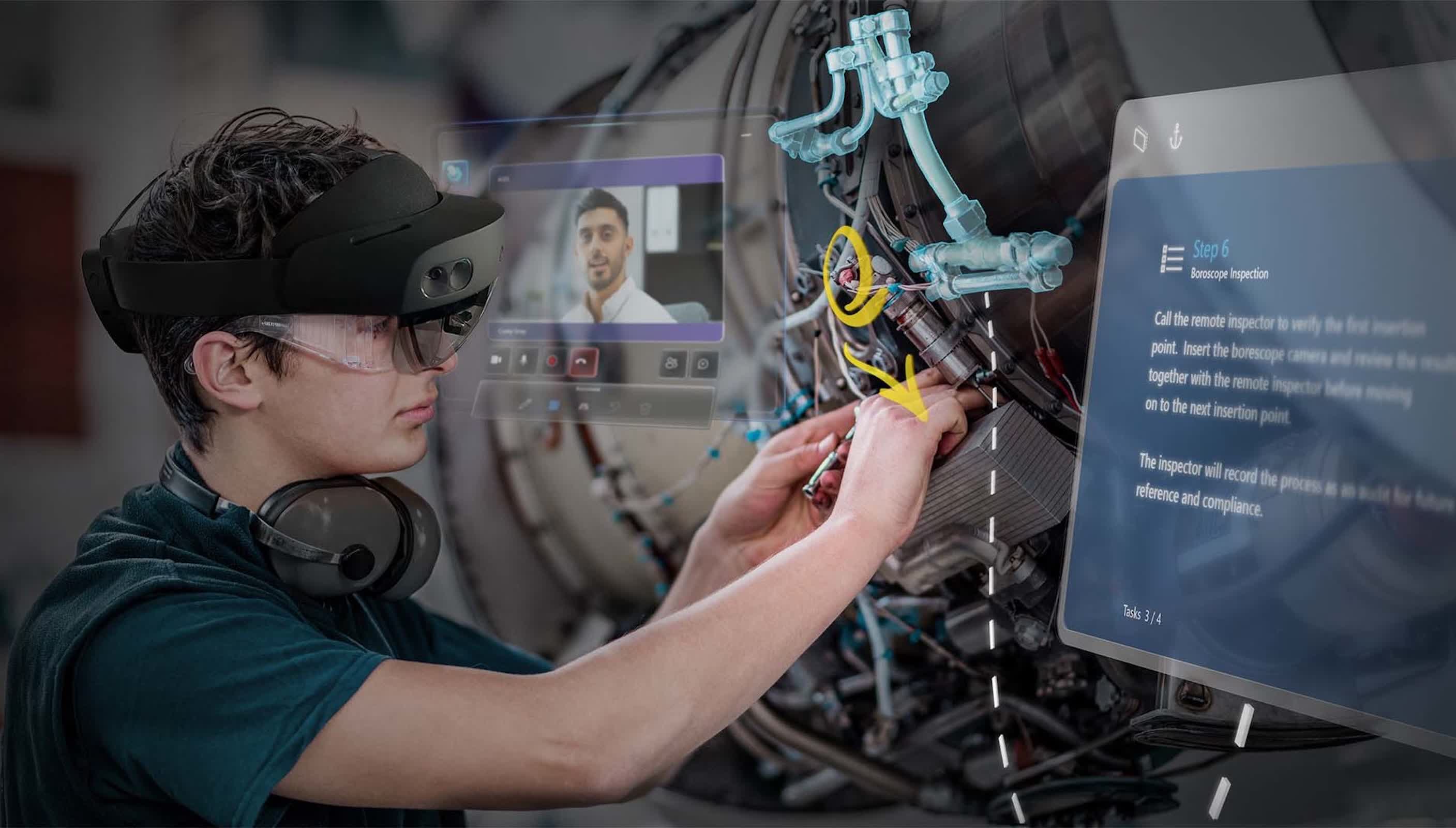
The cautious approach reflects Microsoft's uneven history with wearable hardware. Its HoloLens headset, once positioned as a major step forward in mixed reality, struggled to gain traction despite years of development and a high-profile US Army contract. Microsoft said in 2024 that it would stop producing HoloLens.
Still, the company is not alone in revisiting the category. Google has recently signaled that it is returning to smart glasses more than a decade after Google Glass failed to catch on. Both companies are betting that better AI – including agent-style systems – can make wearables more useful than the first wave of products.
Microsoft's latest prototypes suggest the company sees AI not just as software, but as something that may eventually require its own dedicated hardware layer. Whether that vision holds up outside controlled testing remains an open question.