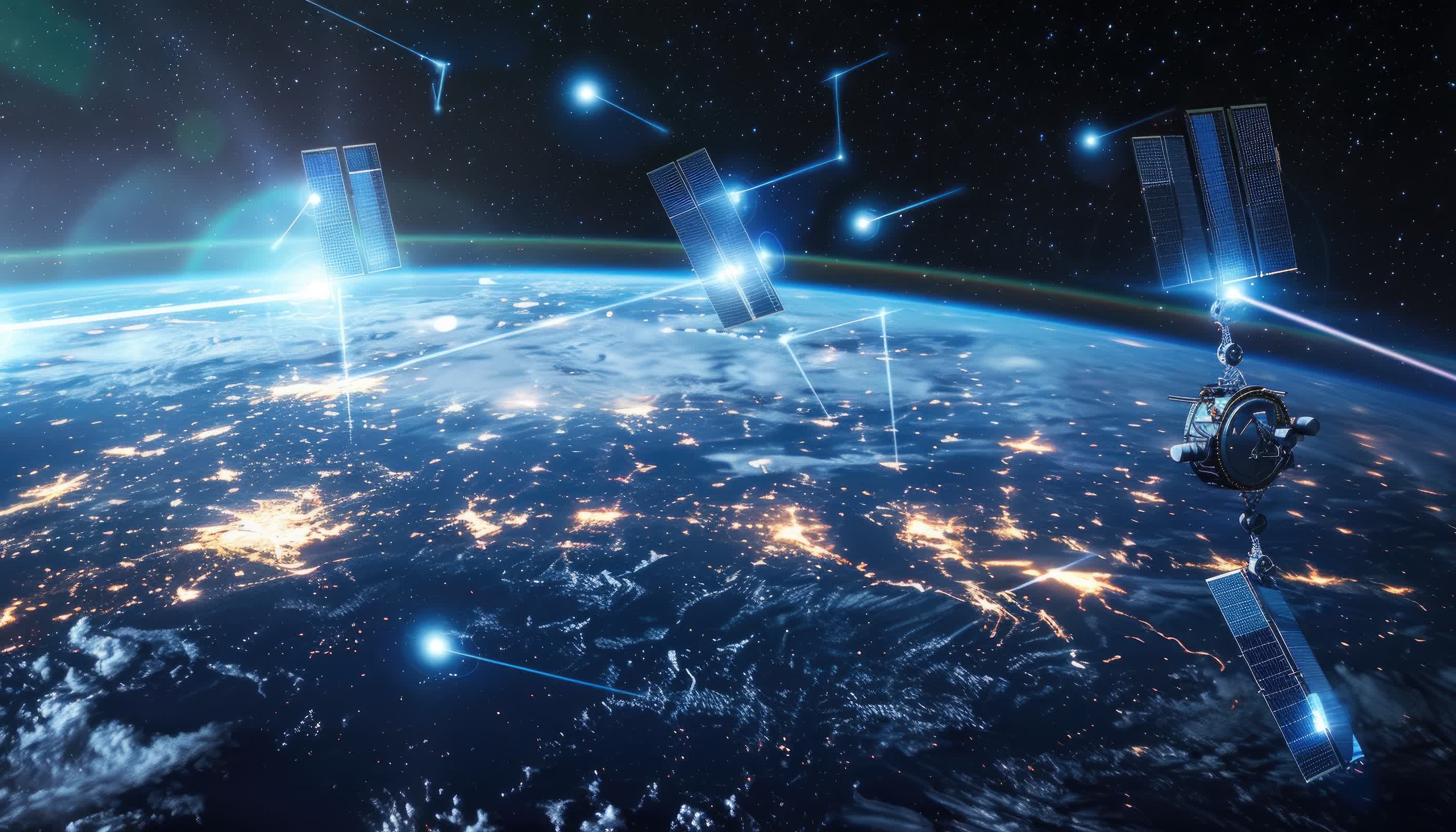
Highly anticipated: SpaceX's Starlink network is moving into its second generation of satellites, promising an enormous leap in capacity for its mobile users. The company says its V2 satellites will deliver up to 100 times the data density of the original Starlink V1 design, dramatically expanding the amount of data that can flow through each section of its orbiting network.
The shift coincides with the rebranding of Starlink's "Direct to Cell" business as Starlink Mobile, a service that enables connectivity between smartphones and the satellite network without requiring dedicated user terminals such as dishes.
Currently operating across 32 countries on six continents, the system is designed for remote coverage and emergency access where terrestrial networks don't reach, but wider adoption will hinge on the performance gains promised by the second-generation constellation.
Existing Starlink Mobile service is considered "light-data" capable – sufficient for messaging and basic connectivity but not full-speed broadband. The jump to V2 aims to change that. SpaceX says each V2 satellite will provide roughly 20 times the throughput of the first-generation models, enabling practical mobile data speeds that could approach 150 Mbps per user under optimal conditions.
Starlink Mobile's next-gen satellites will deliver 5G speeds from space with 100x the data density of the current V1 generation satellites
– Starlink (@Starlink) March 2, 2026
V2 satellites will seamlessly enable streaming, internet browsing, high-speed apps and voice calls, just like being connected to a... pic.twitter.com/ObPjtv0eEC
In engineering terms, SpaceX attributes the higher throughput to custom onboard silicon, phased-array antennas, and support for thousands of spatial beams, which allow each satellite to handle more simultaneous connections. The company has taken to describing the upgrade as a step toward delivering "5G from space" – a label more aspirational than technical, but one that captures the growing intersection of satellite and terrestrial networks.
SpaceX says the V2 system is designed to integrate with existing LTE and 5G phones on the ground, a capability made possible by tuning satellite signals to standard cellular frequencies already built into ordinary smartphones. Hundreds of current LTE devices are expected to be compatible.
This hybrid network model depends heavily on partnerships with terrestrial operators. In the US, T-Mobile plans to collaborate with Starlink to provide services that transition between ground towers and satellites without dropping the connection. If such integration succeeds, it could represent a major breakthrough in the shift from space-based backup to continuous hybrid coverage.
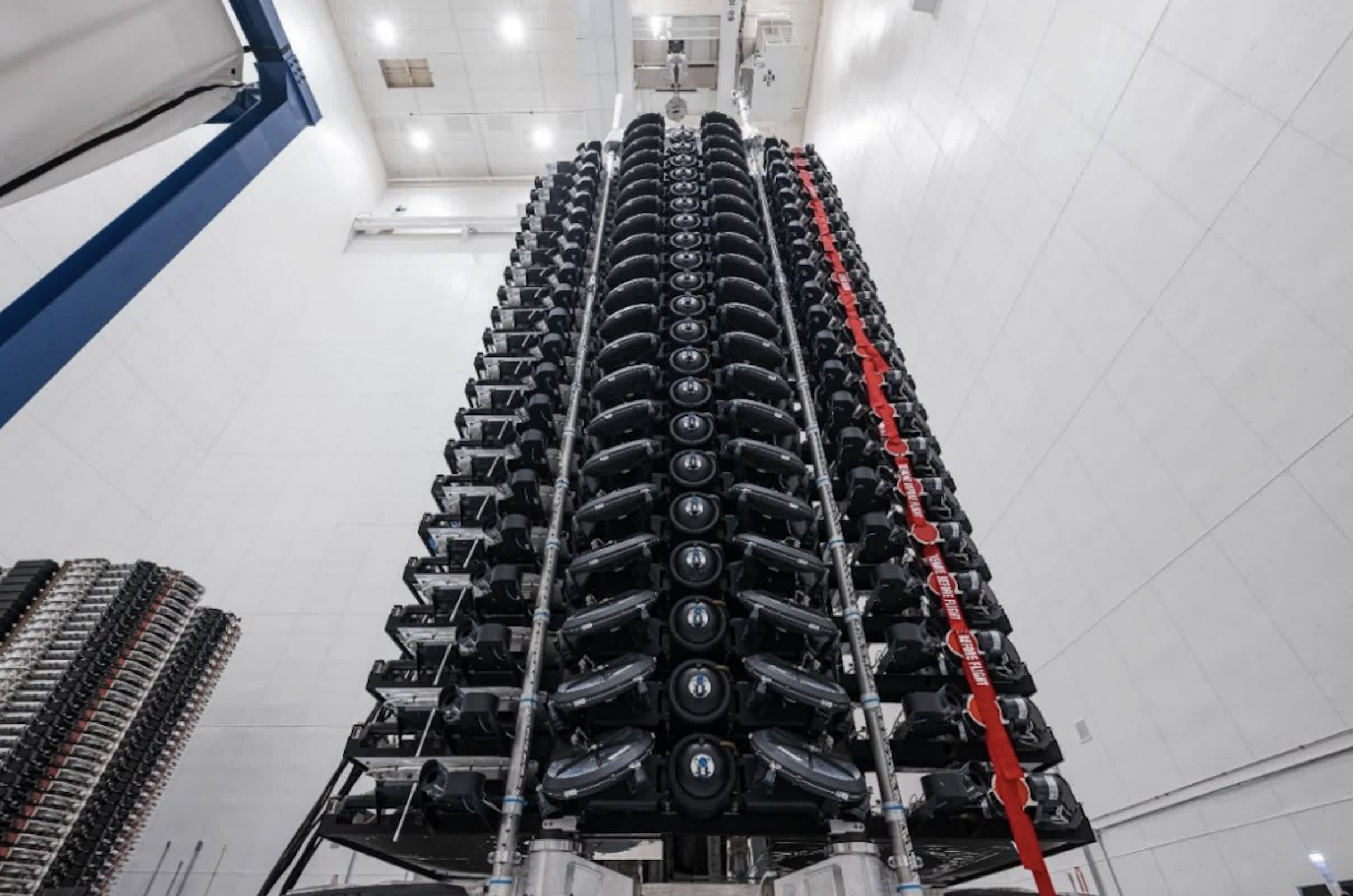
SpaceX plans to launch as many as 15,000 new V2 units to establish its full second-generation constellation, complementing the thousands of existing first-generation orbiters already in low Earth orbit.
Deployment timing depends on the company's Starship heavy-lift rocket, which is built to carry the larger V2 satellites that exceed the dimensions of the Falcon 9's payload fairing.
Until Starship reaches a consistent launch cadence, SpaceX is using scaled-down V2 Mini satellites to begin filling orbital shells and provide transitional performance gains. These minis incorporate much of the new onboard technology in a smaller package, enabling incremental upgrades while awaiting full-size deployment.
Starlink's continuous iteration reflects a broader trend in satellite communications: the merging of high-capacity constellations with conventional mobile infrastructure. With competitors such as AST SpaceMobile and Lynk working on similar concepts, the next few years will likely define how quickly direct-to-device connectivity matures into a commercial norm.
Questions remain around orbital traffic management, space debris mitigation, and regulatory limits on frequencies used by both terrestrial and satellite carriers.
If Starlink's 100-fold data density and 20-fold per-satellite throughput increases materialize, it would mark one of the largest generational jumps in modern communications infrastructure. For the first time, an orbital network may begin to rival the speed and stability of ground-based systems – not just as backup, but as a viable complement to them.