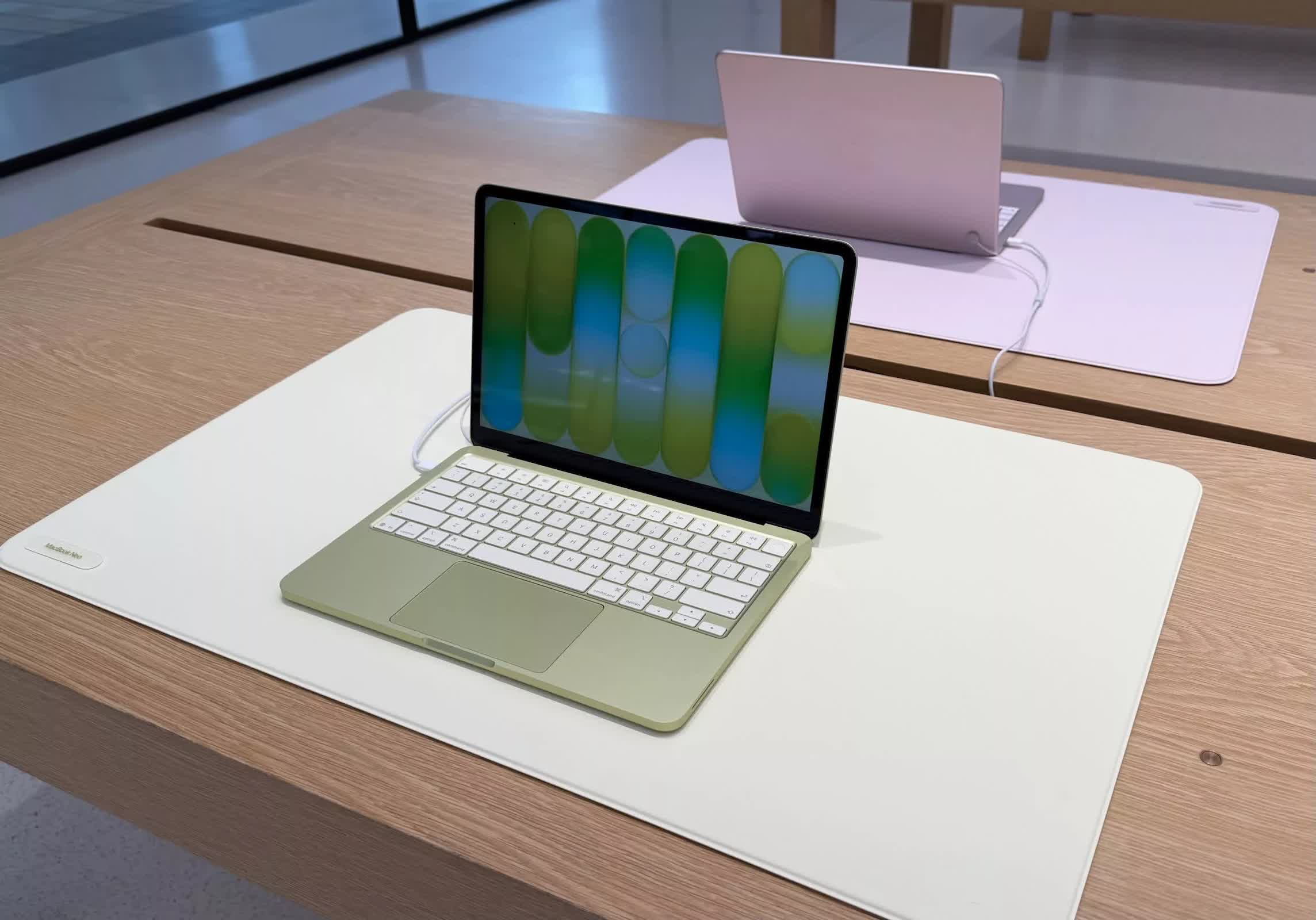
Bottom line: Apple's push into cheaper laptops is also reshaping how its hardware gets fixed. In the MacBook Neo, a stripped-down internal design, modular components, and lower service fees come together in a way that makes repairs both technically simpler and significantly less expensive than on Apple's other notebooks, a notable shift for anyone used to paying top-case prices for relatively minor damage.
Unlike recent MacBook Air and Pro models, where Apple's unibody "top case" design turns keyboard problems into major surgery, the Neo's keyboard is treated as its own part rather than being permanently bundled with the upper shell.
Apple's newly published service manual spells out separate procedures and part listings for a standalone keyboard, a keyboard with Touch ID, and the top case itself, so a failed key mechanism no longer automatically drives a full chassis swap. That is a substantial departure from past systems in which the keyboard was riveted or deeply integrated into the case and typically replaced only as part of a multi-hundred-dollar assembly; a design that helped turn the butterfly keyboard failures of the late 2010s into costly warranty events.
A teardown of the Neo by YouTuber Tech Re-Nu shows how far Apple has gone to simplify the rest of the machine. The Australian repair channel fully opens the aluminum chassis by removing eight Torx screws on the underside, exposing a compact logic board and a notably clean internal layout with no hinge covers or dense layering of parts.
In the video, the host tears down most major components in about six minutes using only T3, T5, and T8 Torx drivers, an unusually quick process for a Mac laptop.
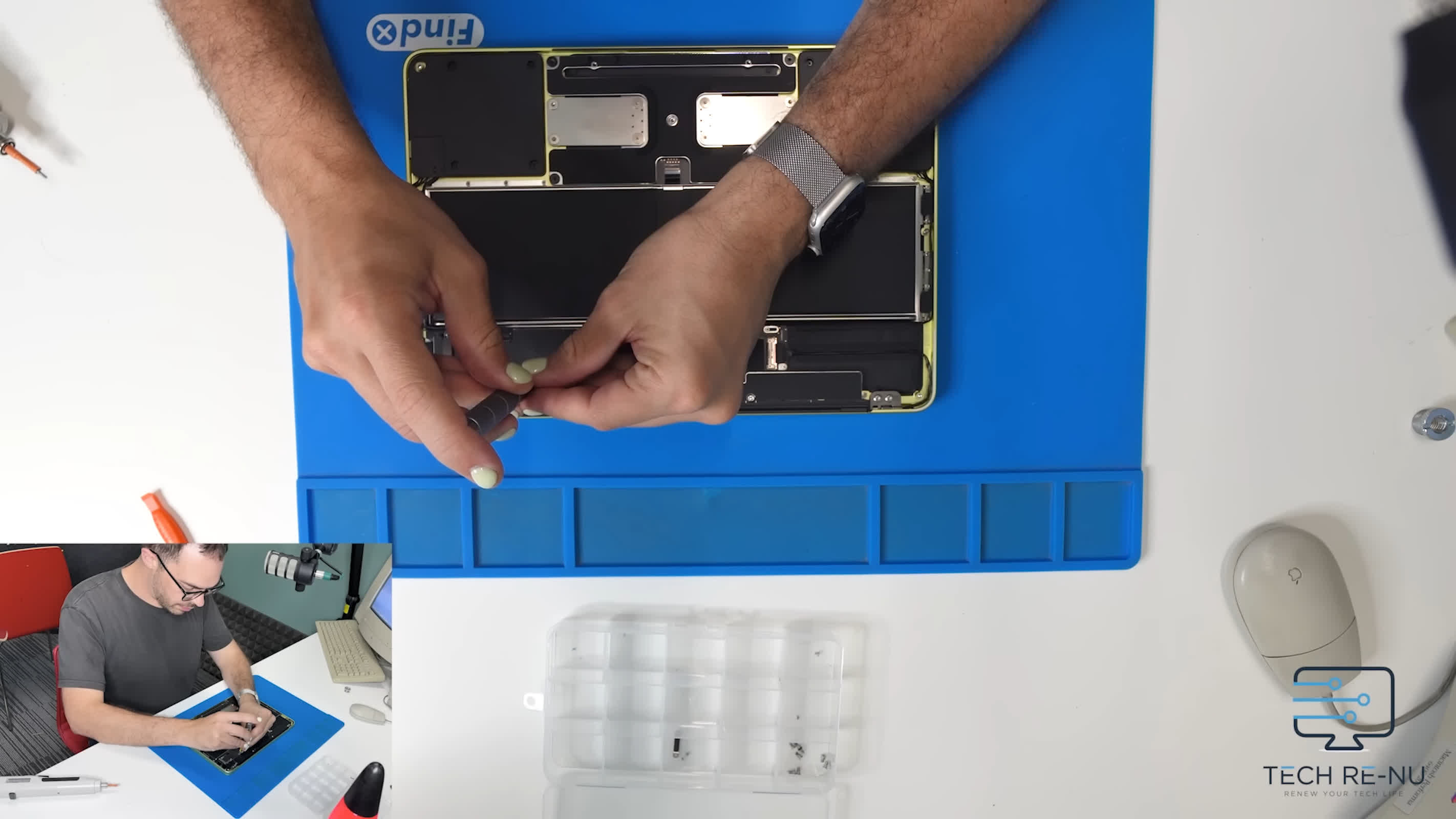
The battery assembly is where the design diverges most sharply from recent MacBooks. In the Neo, the battery is held in place by 18 screws and lifts straight out once surrounding shields and flex cables are moved aside, with no stretch-release tabs and no structural adhesive bonding it to the chassis.
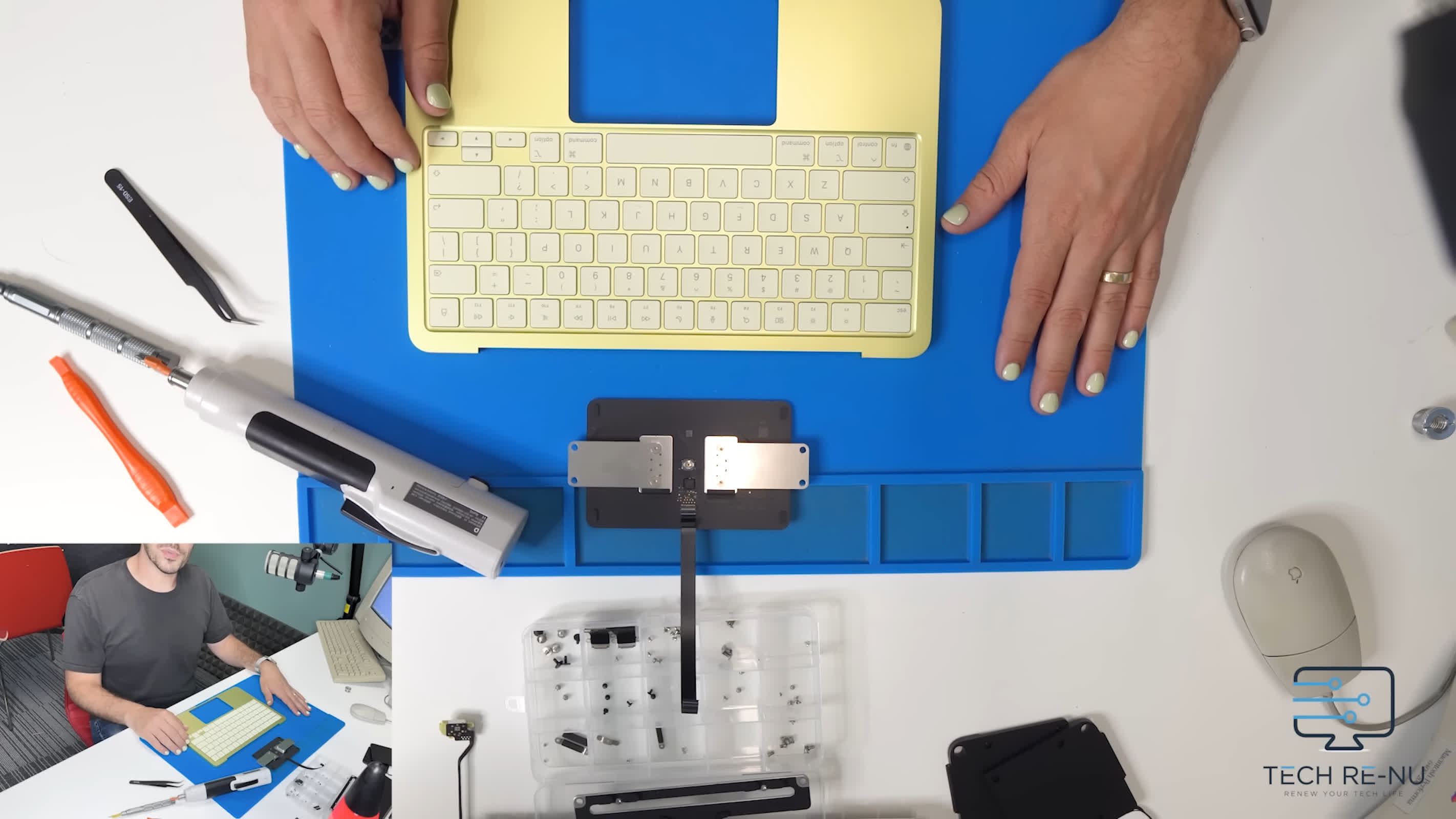
Tech Re-Nu reports encountering no tape anywhere in the disassembly and notes that the only adhesive in the machine appears under a trackpad cable, a first for a modern MacBook and a clear contrast with the multi-cell, glue-backed packs used in ultra-thin models like the MacBook Air.
Peripheral hardware inside the Neo is likewise designed to be replaced piece by piece. Both USB-C ports are modular rather than permanently fixed to the logic board, so a damaged connector does not automatically require a motherboard swap.
The speakers and the 3.5 mm headphone jack are also discrete modules that come out after removing a few screws, and again, no adhesive, making routine failures or accidental damage more manageable for independent shops and in-house IT teams.
This hardware approach aligns with a pricing structure that further distinguishes the Neo from the rest of Apple's laptop line. According to Apple's current repair pricing, an out-of-warranty battery replacement on the Neo is set at $149 in the United States, compared with $199 for the MacBook Air and $229 for MacBook Pro models, despite those machines sitting higher in the lineup.
For customers with AppleCare+, Apple says accidental screen or external enclosure damage will incur a $49 service fee on the Neo, about half the $99 charge applied to comparable incidents on current Air and Pro configurations.
The Neo sits in a broader pattern of incremental changes Apple has made to improve day-to-day repairability on its devices. Recent iPhones have moved toward easier battery and display swaps, using pull tabs and other design tweaks that reduce the need for heat and solvents when removing large components.
In laptops where Apple still prioritizes maximum battery density and minimal thickness – particularly the MacBook Air and the higher-end Pro systems – adhesive-backed cells and tightly packed internals are likely to remain, but the Neo shows how far the company is willing to go in a design that targets cost-conscious buyers.
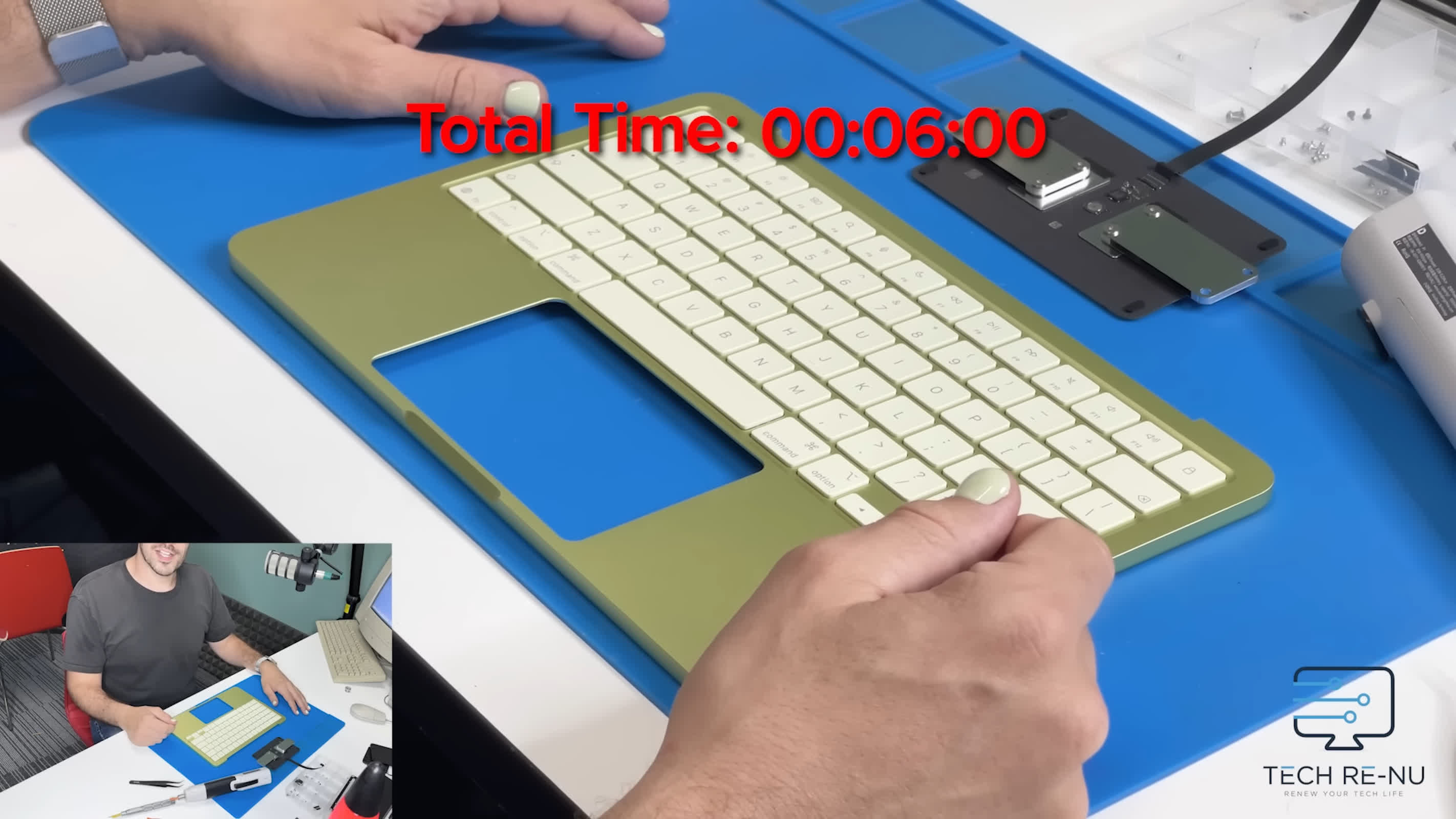
Tech Re-Nu's partial teardown does not map every step required to remove the Neo's individually replaceable keyboard, but Apple's own documentation confirms that the process, while still involving dozens of screws, avoids the full top-case replacement that has dominated Mac laptop keyboard repairs for more than a decade.
Taken together – the modular ports and audio hardware, screw-secured battery, discrete keyboard, and lower service fees – the MacBook Neo emerges as an outlier in Apple's lineup, and one of the most repair-friendly Macs the company has shipped in recent years.