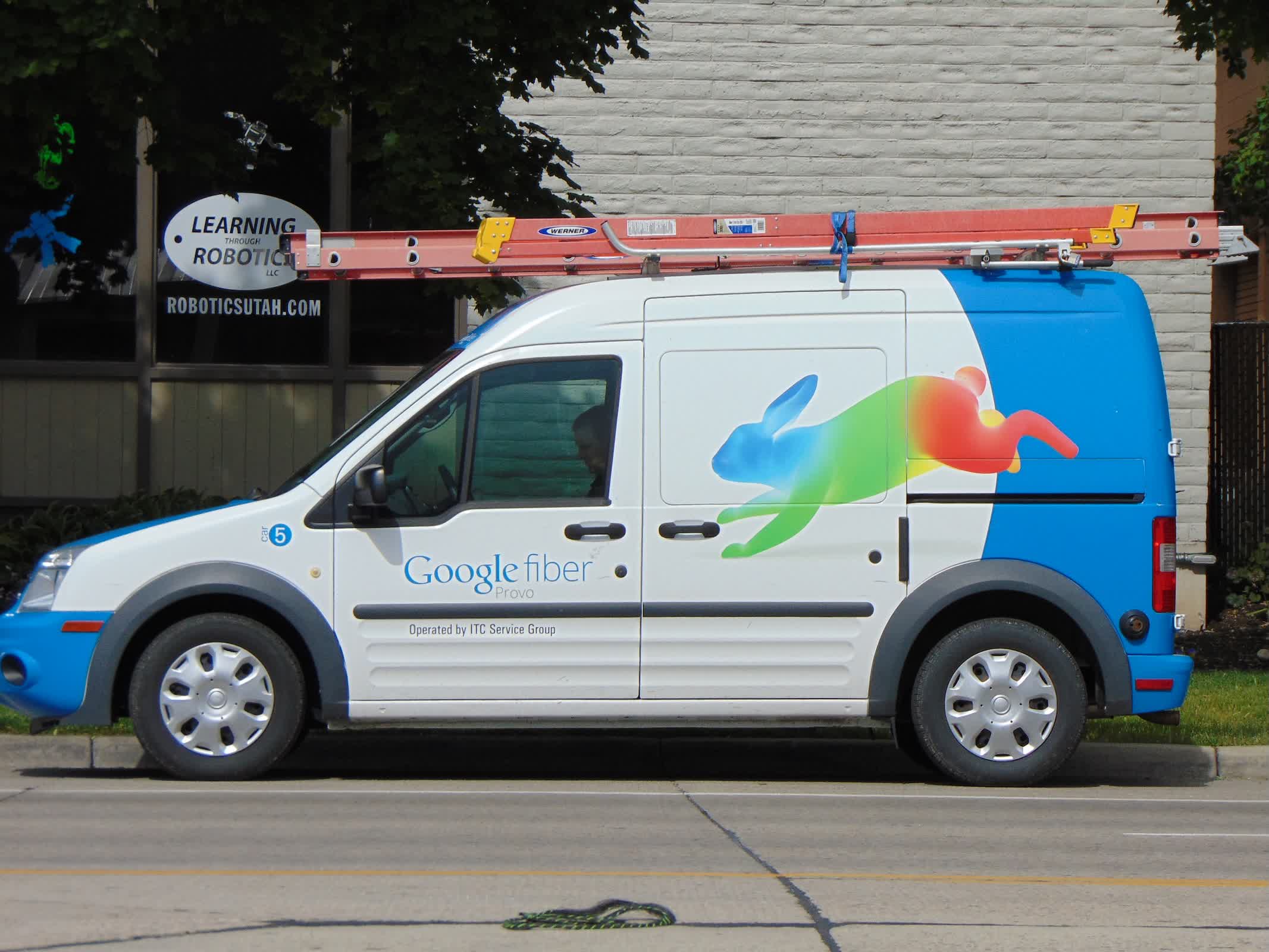
What just happened? As private investment continues to reshape the US broadband landscape, one of the industry's earliest fiber disruptors is trading independence for scale. Alphabet has agreed to sell a majority stake in its 14-year-old internet service, GFiber, to infrastructure investment firm Stonepeak, which will merge the company with its existing cable- and fiber-provider, Astound Broadband. The combination will create one of the country's largest independent broadband networks, spanning roughly seven million cable and fiber locations across 26 states.
The sale marks a turning point for GFiber, which began in 2012 as Google Fiber – a bold experiment aimed at challenging the sluggish US internet market. Its gigabit speeds, demonstrated first in Kansas City, were ahead of their time but proved difficult to expand profitably.
By 2016, Alphabet had slowed expansion, cutting staff and suspending plans in several cities. Now, by joining forces with Astound under Stonepeak's ownership, GFiber is positioned to accelerate growth once again.
Alphabet will retain a minority stake in the new company. The firms described the transaction as giving GFiber "operational and financial independence," a phrasing that underscores its shift from an experimental division to a commercial enterprise.
Ruth Porat, Alphabet's president and chief financial officer, said that maintaining a stake reflects Alphabet's confidence in GFiber's leadership and in the future of fiber broadband. Stonepeak, which focuses on infrastructure and real assets, will become the majority owner once the deal closes, pending regulatory approval expected later this year.
Together, GFiber and Astound form a network that rivals some regional incumbents, with nearly equal shares of fiber and cable infrastructure. New Street Research estimates that GFiber currently reaches 2.8 million addresses across 15 states, while Astound serves 4.45 million in 12 states and the District of Columbia. The companies overlap minimally – only in three counties in Texas – creating an extensive, complementary footprint. Texas and Illinois are expected to emerge as the anchor markets of the merged network.
Astound itself is the product of consolidation. Wave Broadband, RCN, and Grande Communications were combined under the Astound brand by previous owners, and Stonepeak later acquired the unified company to build a broad cable and hybrid fiber-cable platform. Bringing GFiber into the fold gives the new entity a stronger position in high-growth metropolitan areas where GFiber's symmetrical gigabit and multi-gigabit connections already compete with major players.
Competition in the market remains fierce. The merged company's service area overlaps significantly with AT&T (about 53% of its territory), Comcast (46%), and Charter (43%). Verizon and Lumen (CenturyLink) also remain active challengers in select regions. While the merger creates scale, strategic questions remain, including whether Stonepeak plans to upgrade Astound's cable network to fiber or expand into areas already served by major telcos.
GFiber's operations are concentrated in the South and Midwest – particularly Texas, North Carolina, Missouri, Utah, and Kansas – accounting for nearly four-fifths of its footprint. Astound's strongest markets lie in Illinois, Texas, New York, California, and Washington. If integration succeeds, the merged network would span both coasts and much of the central US, offering one of the few cross-regional competitors to entrenched national providers.