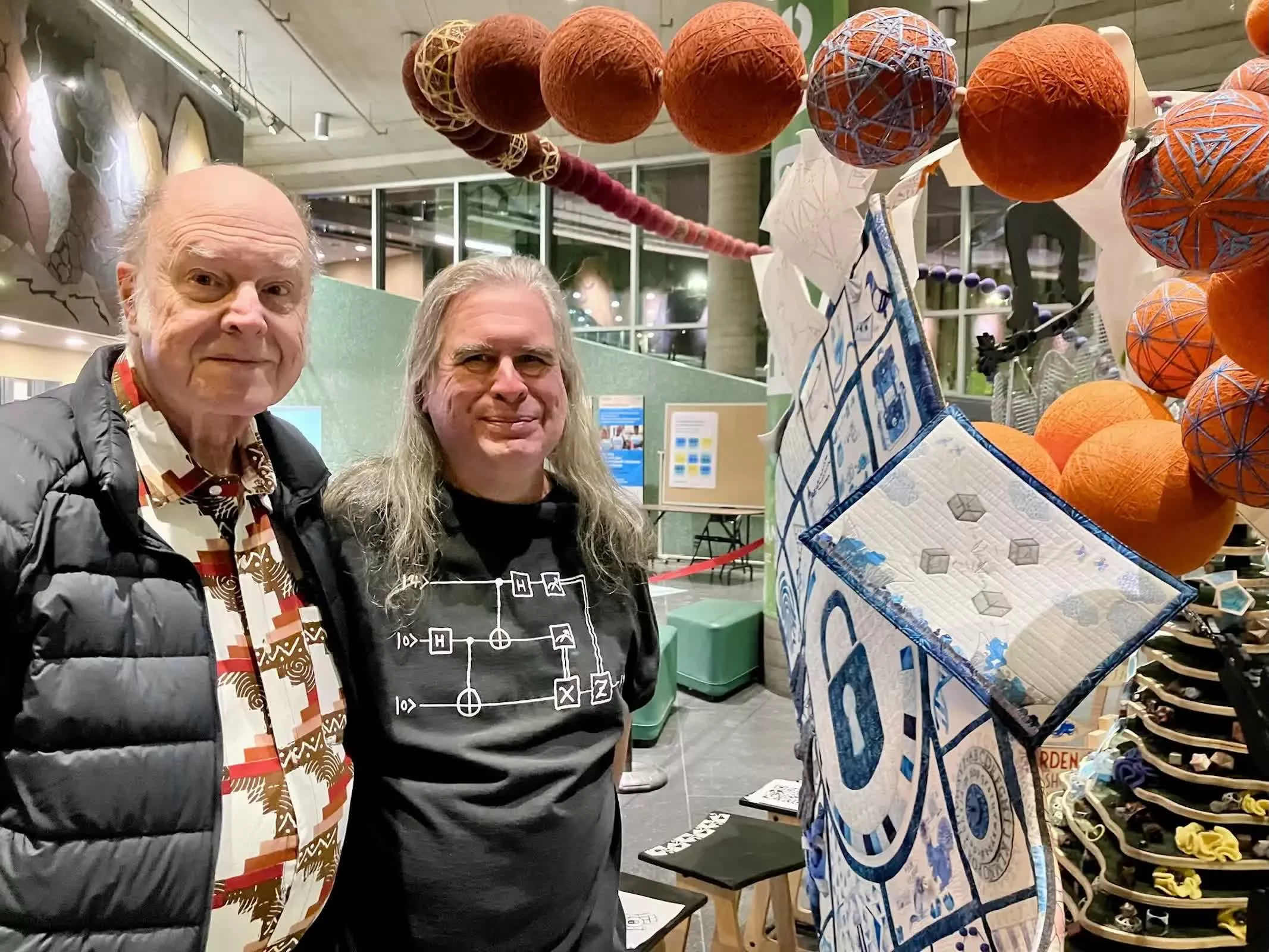
The takeaway: A concept that once sounded like science fiction is now being recognized as essential to the survival of the digital world. This week, the Association for Computing Machinery awarded the 2025 Turing Award to Charles Bennett and Gilles Brassard, whose four-decade-old work in quantum mechanics helped lay the foundation for what may become a critical method of protecting sensitive information in the age of quantum computing.
The pair will share the $1 million prize for their pioneering work in quantum cryptography and the broader field of quantum information science. Their 1984 paper introducing the BB84 protocol – an encryption method based on the fragile nature of photons – reimagined how information could be kept secret. At the time, their ideas seemed too esoteric for practical use. Today, they are regarded as essential in protecting data from the next major computational threat.
Bennett, 82, is a researcher at IBM's Yorktown Heights lab in New York, while Brassard, 70, is a professor at the University of Montreal. The two met by chance in 1979 while attending a conference in San Juan, Puerto Rico. During a break, they went swimming in the Atlantic, where Bennett struck up a conversation about an improbable idea: creating a banknote that could never be forged, grounded in the laws of quantum mechanics. Brassard later described the suggestion as "a bit shocking," but it became the seed of a decades-long collaboration.
Working between New York and Montreal, they first applied Bennett's concept to subway tokens. Their 1983 study demonstrated that such tokens – designed with quantum properties – would be impossible to counterfeit, even if the hardware used to verify them were stolen. From this theoretical exercise emerged the principles of what would become known as quantum cryptography.
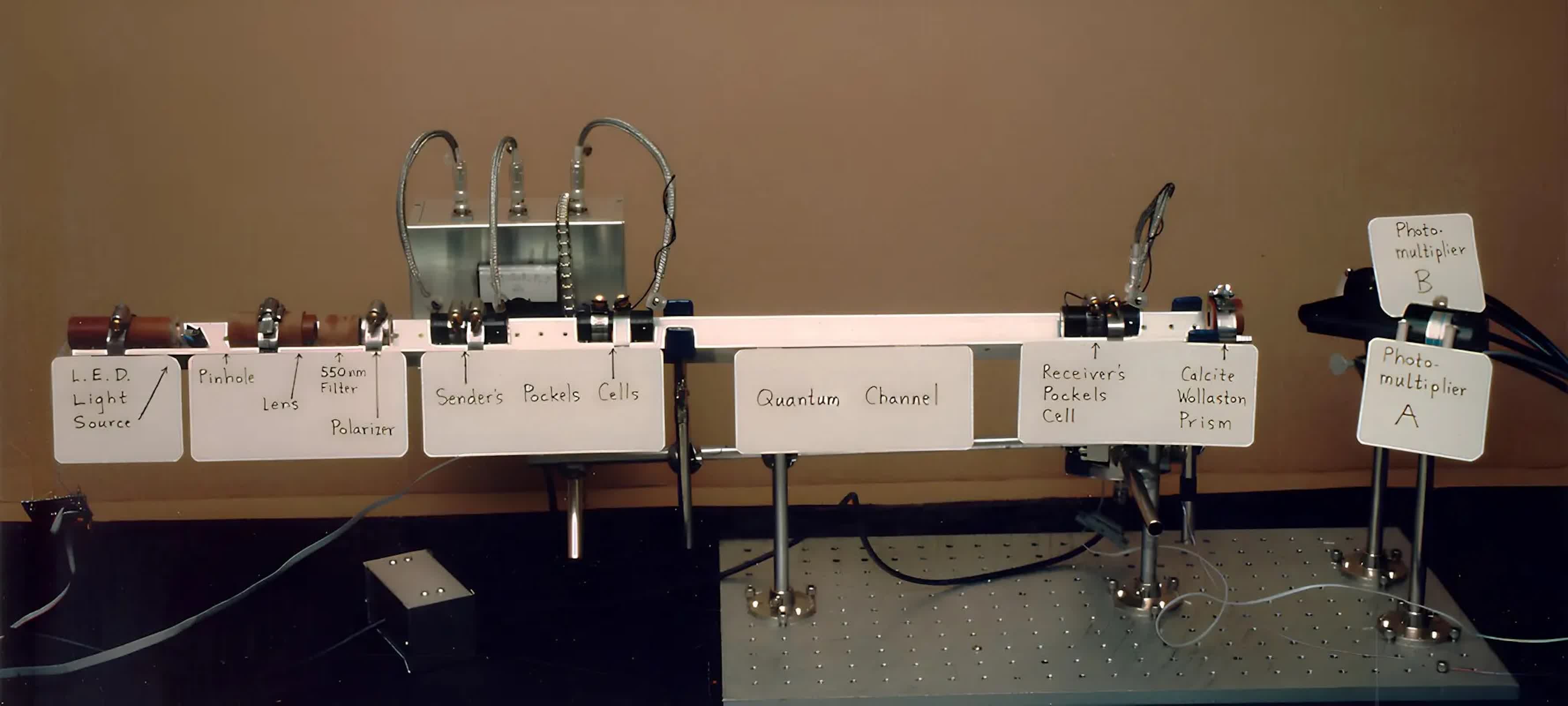
In their 1984 paper, Bennett and Brassard described how photons could be used to create encryption keys that would reveal any attempt at interception. Because measuring a photon changes its properties, a would-be eavesdropper would leave an unmistakable trace. Five years later, they demonstrated the concept experimentally, proving that secure communication could, in fact, be guaranteed by the laws of physics.
"They introduced a totally new way of thinking about encryption," Prineha Narang, a professor of physical sciences and electrical and computer engineering at the University of California, Los Angeles, told The New York Times. "The fundamental laws of physics can make it unhackable."
The significance of their work became even clearer in 1994, when Peter Shor of Bell Labs showed that a quantum computer could easily break conventional encryption methods. That discovery transformed what had seemed theoretical into an eventual necessity.
During the same decade, Bennett and Brassard extended their work to another once-unthinkable idea: quantum teleportation, a process that allows information to be transmitted using a phenomenon called entanglement. Einstein famously described entanglement as "spooky action at a distance," but it is now a cornerstone of quantum networking.
Quantum teleportation does not move objects physically; it transfers the information that defines them. For digital communication, this means data can travel between quantum computers without the risk of interception. In principle, it could enable a future internet where information cannot be copied or stolen – a complete redefinition of cybersecurity.
Today, the technology first conceived during that 1979 swim is being pursued by governments, startups, and major corporations. Companies including Google and Microsoft are racing to build quantum computers powerful enough to render traditional encryption obsolete. At the same time, researchers worldwide are developing quantum key distribution systems that rely directly on Bennett and Brassard's methods.
"For a long time, it was not clear how these ideas would be used," Narang said. "Now, small companies, large companies and even the US government are trying to deploy this technology."
Image credit: The New York Times