Something to look forward to: Imagination Technologies is outlining a return to the PC graphics space, previewing a roadmap built around bringing its PowerVR architecture to desktop, workstation, and cloud markets. In a recent presentation, the UK-based company shared demonstrations of its hardware running Microsoft's DirectX, calling the integration "essential for mainstream PC gaming."
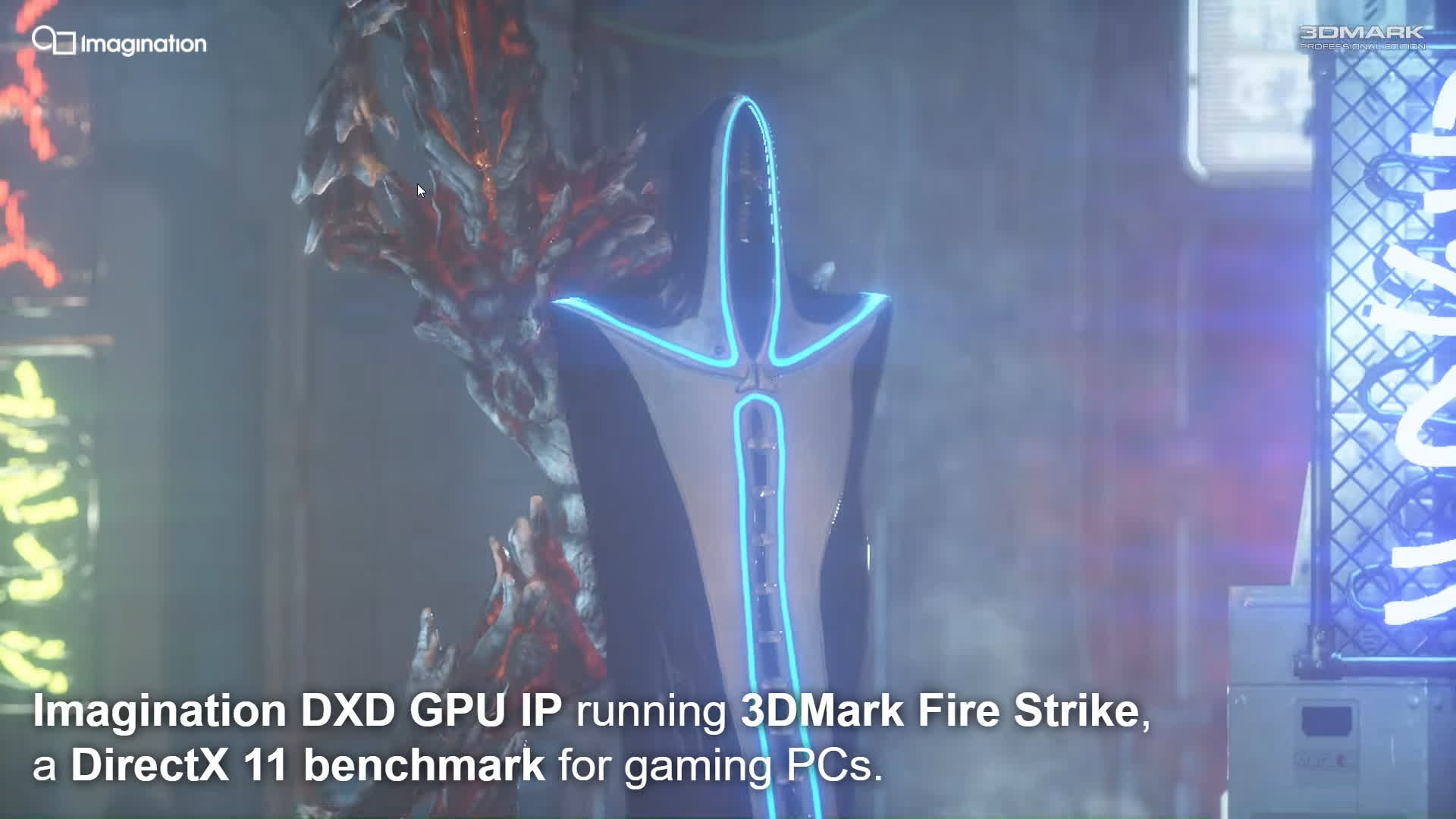
The messaging marks a sharper, more public pivot than the firm has made in years. "We started adding hardware-based support for DirectX to our GPUs with our last generation, D-Series," the company said in the video. "Below you can see it in action, running on real silicon, handling complex DirectX 11 workloads with confidence." Imagination described the milestone as a step toward a long-term plan to deliver scalable PowerVR performance beyond mobile and embedded devices.
The DirectX integration is especially important for game developers, many of whom struggled with poor compatibility when testing Chinese-made GPUs based on Imagination's earlier IP. It said that the firm's latest demo shows that its updated pipeline can now process DirectX workloads using real silicon, a foundation for more mature PC-class products.
Imagination's push into the PC market has been gradual but significant. In 2023, it unveiled its DXD GPU IP line – its first architecture explicitly built for DirectX environments and intended for desktop, laptop, and cloud gaming. DXD represented the company's most serious attempt at mainstream graphics performance since its Kryo architecture, released in 2002.
The DXD launch followed the firm's 2022 announcement celebrating its 30th anniversary, when Imagination confirmed that its technology had powered a new generation of Chinese graphics cards.
These cards, designed by companies such as Moore Threads and Innosilicon, drew on Imagination's B-Series IP – a GPU foundation first introduced in 2020. That release had been a turning point: following Apple's sudden withdrawal as a key customer after a decade-long partnership, Imagination needed to refocus. The B-Series became the platform through which its IP began appearing in domestic Chinese GPUs, including the Xindong "Fantasy 1 Type B" models.
Imagination's long history gives additional weight to its current roadmap. In the late 1990s, its PowerVR graphics technology powered the Sega Dreamcast and several pioneering PC 3D cards. But in the 2000s and 2010s, the company shifted entirely toward mobile and embedded systems, securing a long-running relationship with Apple from 2007 until 2017. That era cemented PowerVR as a leading mobile GPU design, even as Imagination's visibility in the PC market faded.
Now, the firm is leveraging decades of rendering expertise to attempt a comeback in a space dominated by Nvidia, AMD, and Intel. This time, Imagination is framing the pivot not around a specific consumer GPU but around scalable IP designed for OEMs targeting PCs and cloud.